Castle Sween: An Early Gaelic Stone Castle in Scotland



Site at a Glance
- Rating
- 4.6
- Popularity
- Low
- Country
- United Kingdom
- Primary era
- Medieval
- External website
- Open
- Eras represented
- Medieval
- Civilizations
- Kingdom of Scotland
- Site type
- Military
- Remains
- Castle
On this page13 sections
History
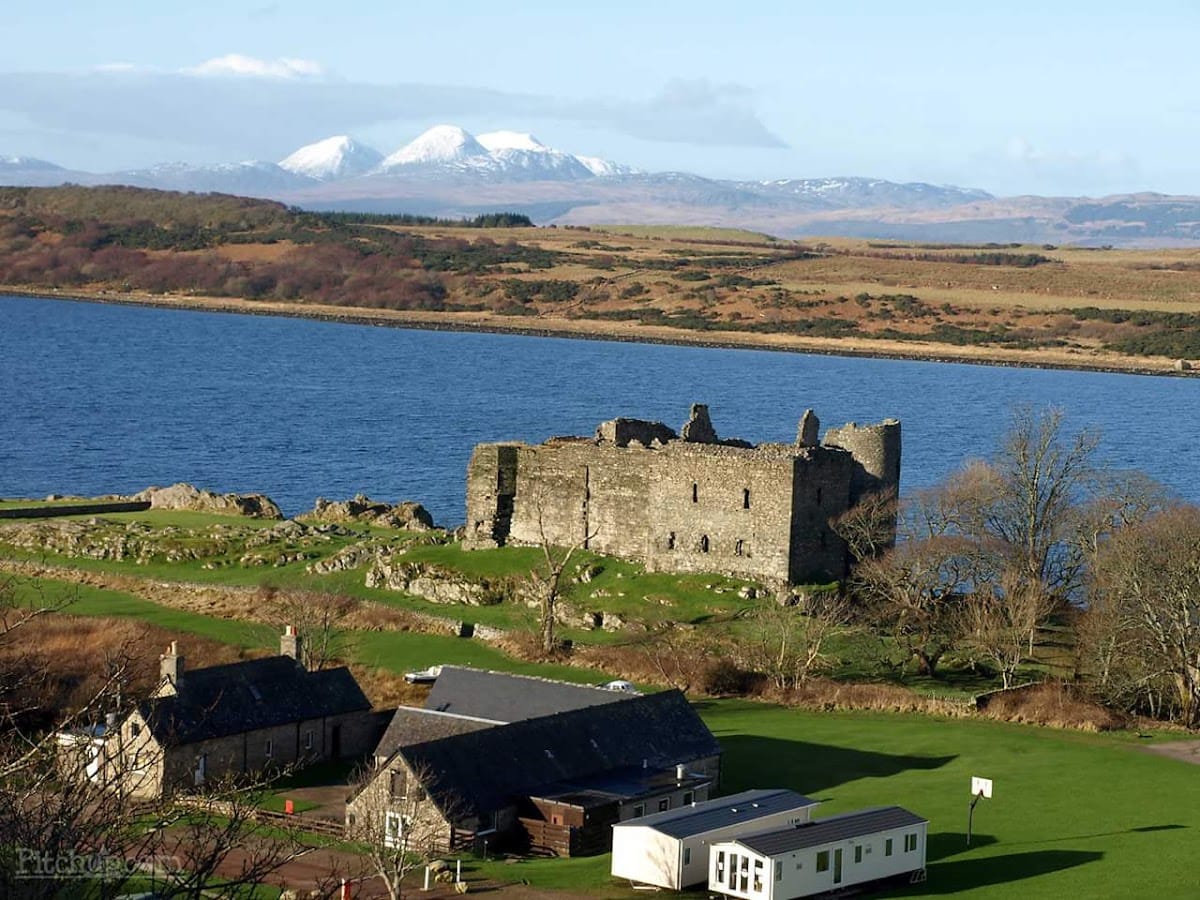
Castle Sween is an early medieval stone castle in the United Kingdom, near Lochgilphead on the eastern shore of Loch Sween in Argyll. Traditionally attributed to Suibhne, a Gaelic nobleman and ancestor of the MacSween clan, its exact construction date is uncertain, although it is regarded as one of Scotland’s earliest stone castles. The castle controlled an important lordship in Knapdale and remained connected with the changing power of western Scotland for several centuries.
The MacSween lordship
Castle Sween and the surrounding lands of Knapdale belonged to the MacSweens until the second half of the thirteenth century. Their influence extended north to Loch Awe and south to Skipness Castle on Loch Fyne. Control then passed to the Stewart/Menteith family, beginning a series of changes in lordship that shaped the castle’s later history.
The MacSweens supported the losing side during the Scottish Wars of Independence, the conflicts in which Scotland resisted English rule and sought to maintain its independence. After Robert the Bruce became King of Scots, their lands were confiscated. In 1308, after defeating the MacDougall Lord of Lorne, Robert the Bruce besieged Alasdair Og MacDonald at Castle Sween. Alasdair surrendered and was later dispossessed. His brother Angus Og, who supported the king, received Islay and Castle Sween.
Fourteenth-century struggles
In 1310, Edward II of England granted John MacSween and his brothers their ancestral lands in Knapdale on the condition that they remove John Menteith, who then held the castle. A Gaelic poem preserved in the sixteenth-century Book of the Dean of Lismore may describe an expedition by John MacSween to recover Castle Sween at about this time, though the identification is uncertain.
After John Menteith died in 1323, the lordships of Arran and Knapdale passed first to his son and later to his grandson. In 1376, half of Knapdale, including Castle Sween, passed to John MacDonald I, Lord of the Isles, through a grant from his father-in-law, Robert II of Scotland. The Lord of the Isles was the title held by the powerful MacDonald rulers of extensive western Scottish territories and island lordships. During approximately 150 years of MacDonald control, members of the MacNeil family first served as castellans, followed later by members of the MacMillan family.
Gaelic memory and Campbell control
Around 1460, Aithbhreac Inghean Coirceadal, the widow of a MacNeil tacksman who had served as constable of Castle Sween, composed a lament for her late husband’s rosary. A tacksman was a leaseholding landholder who managed land under a superior proprietor, while a constable administered and defended a castle. The poem survives in the Book of the Dean of Lismore and is regarded as an important work of Scottish Gaelic literature.
In 1475, John II, Lord of the Isles, committed high treason against James III, and Castle Sween was placed under Campbell control. James IV granted the castle to Colin Campbell, 1st Earl of Argyll, in 1490.
Destruction and preservation
During the Wars of the Three Kingdoms, a series of seventeenth-century conflicts involving Scotland, England, and Ireland over monarchy, religion, and political authority, Castle Sween was attacked and burned in 1647 by Alasdair MacColla and his Irish Confederate followers. It has remained a ruin since that destruction.
The castle was placed in the care of Scotland’s Historic Building and Monuments Directorate in 1933. Archaeological excavations took place during the 1980s and 1990s. Castle Sween became a scheduled monument on 11 September 1995 and is now protected and managed by Historic Environment Scotland, Scotland’s national body for the care of significant historic sites and monuments. A 2018 assessment identified the castle as being at very high risk from coastal erosion associated with climate change.
Remains
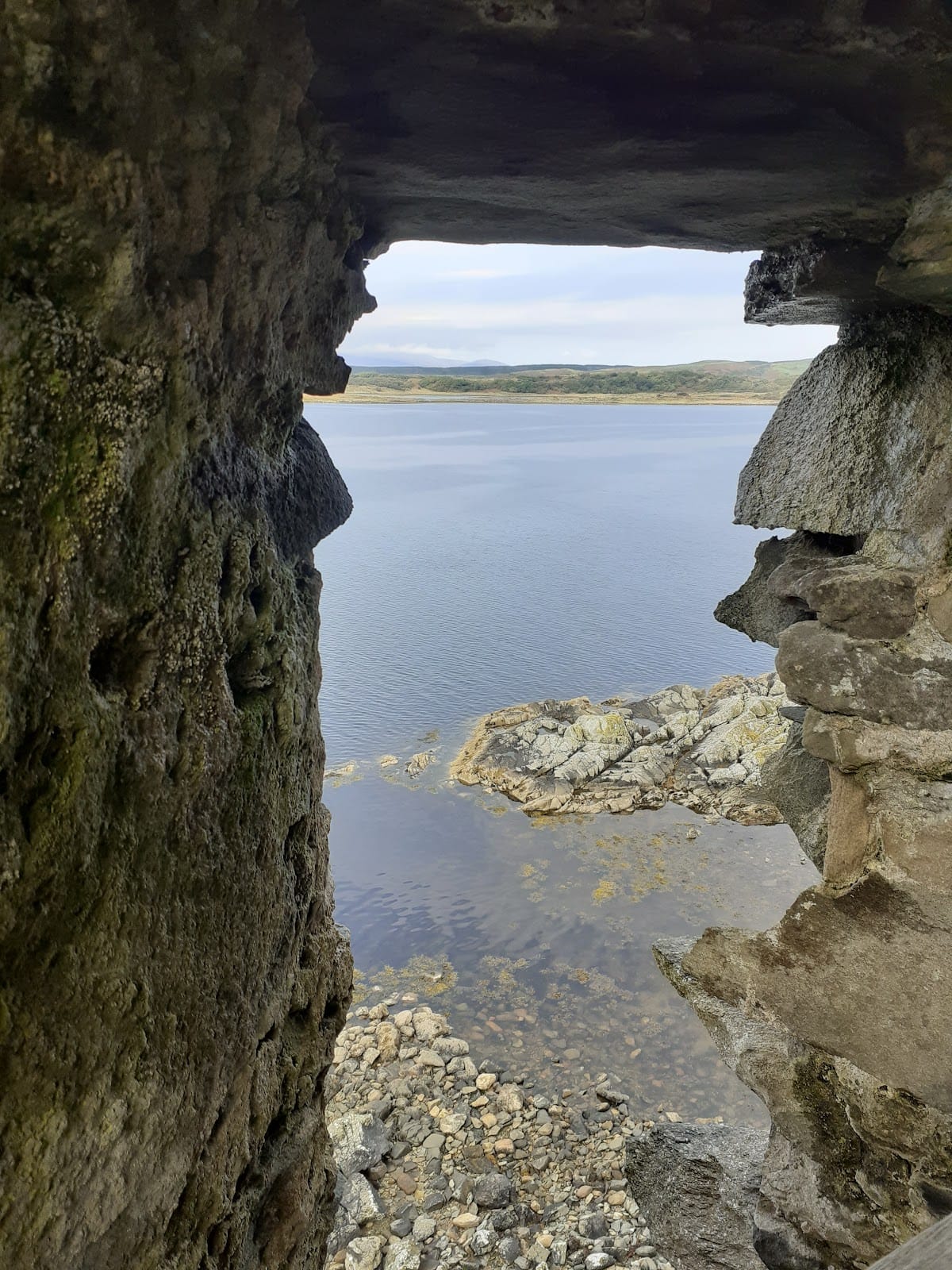
Castle Sween occupies the eastern shore of Loch Sween in Knapdale, on the west coast of Argyll. The surviving ruin has an approximately square plan with external buttresses. Its south entrance passes through a wall about three metres thick. The courtyard combined wooden and stone buildings, and the castle was probably never entirely roofed. The later stone towers were added to an earlier arrangement that included wooden structures, which subsequently vanished.
Inner castle and early additions
Courtyard and entrance
The courtyard forms the centre of the roughly square castle. Access is provided on the south side through the substantial enclosing wall. Its buildings used both timber and stone, creating a complex that developed over time rather than following a single construction phase. The surviving fabric is a ruin shaped by the 1647 burning.
West wing and tower
A rectangular wing was added along the west side in the early thirteenth century. Around 1300, it was rebuilt as a three-storey tower. A round latrine tower occupies the north-western corner of the former wing and dates from the late thirteenth or early fourteenth century.
Corner structures
North-eastern well
A well lies in the north-eastern corner of the castle. Its position within the fortified enclosure formed part of the castle’s internal arrangement and water provision.
South-eastern latrine tower
A latrine tower occupied the south-eastern corner. Together with the later round latrine tower at the west wing, it formed part of the castle’s corner architecture.
MacMillan’s Tower
MacMillan’s Tower was built outside the north-eastern corner in the fifteenth century. Its ground floor contained kitchens, while the lord’s and lady’s rooms were placed above. The tower is one of the later additions to the earlier castle complex and survives within the wider ruin.