Feroz Shah Kotla: The Palace-Fortress of Firozabad
Site at a Glance
- Country
- India
- Primary era
- Medieval
- Eras represented
- Classical, Medieval
- Civilizations
- Delhi Sultanate, Mauryan
- Site type
- Military
- Remains
- Citadel
On this page10 sections
History
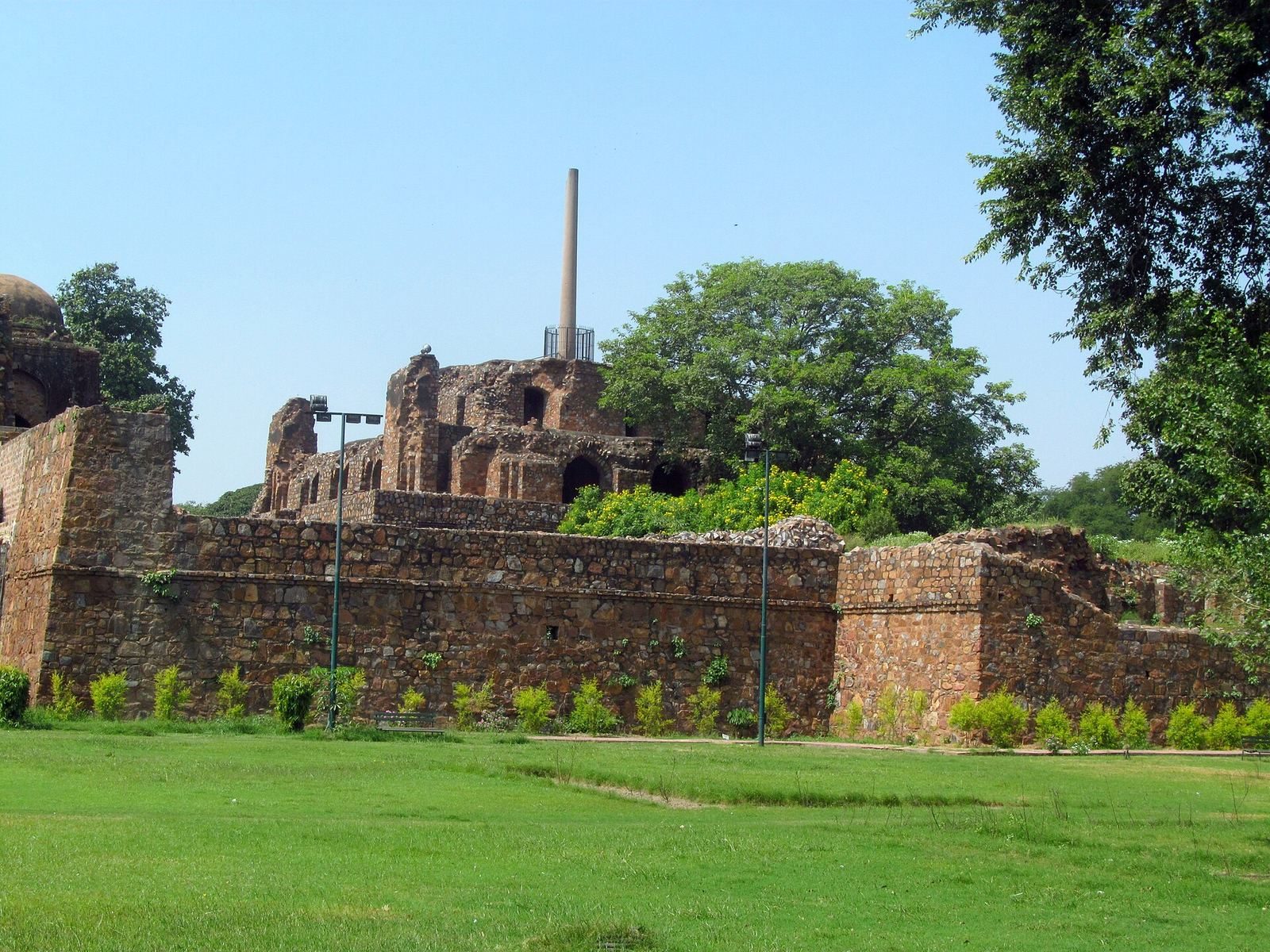
Feroz Shah Kotla is the palace-fortress within Firozabad, a fourteenth-century capital founded in 1354 by Sultan Firoz Shah Tughlaq in Delhi, India. Firoz Shah ruled from 1351 to 1388 as a sultan of the Tughluq dynasty, one of the Muslim ruling houses of the Delhi Sultanate. Firozabad was the fifth fortified city associated with Delhi, and the Kotla formed part of its palace complex.
Firozabad and the Ashokan pillar
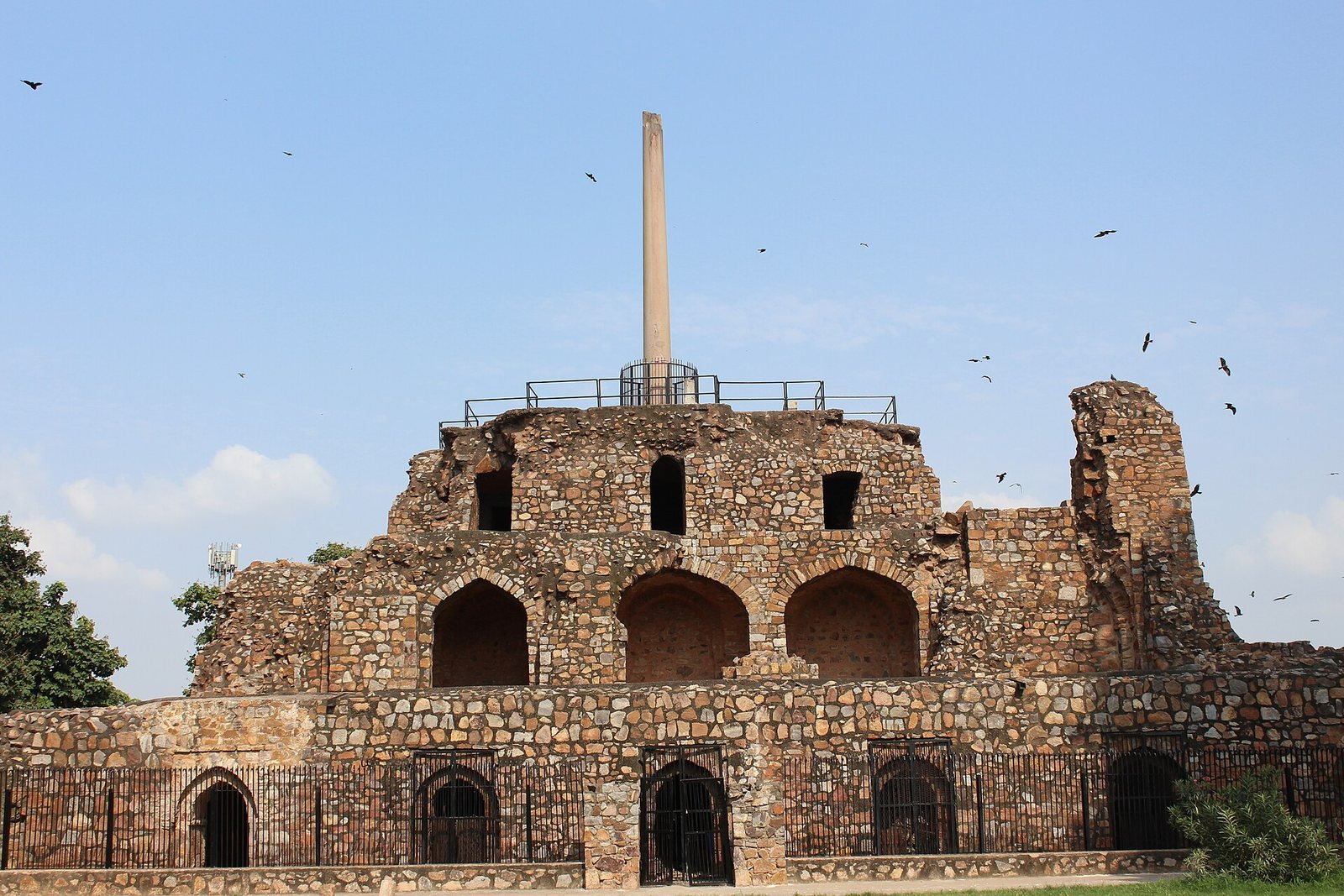
In 1356, Firoz Shah had an Ashokan pillar brought from Topra Kalan, in present-day Haryana, and set up beside the mosque at the Kotla. Ashoka, a Mauryan emperor, was associated with the pillar, which had first been erected between 273 and 236 BC. The Sultanate had considered breaking it apart to reuse as a minaret, but Firoz Shah instead ordered it raised intact. The transfer involved two pillars. They were wrapped in cotton silk, placed on beds of raw-silk reeds, hauled on a 42-wheeled carriage by 200 men, and then taken by large boats to destinations in Delhi. The pillar’s inscription could not be read at the time.
The mosque and later rule
The Jami Masjid, a congregational mosque associated with communal Friday prayers, was standing by 1398. That year, Timur, a Central Asian conqueror and founder of the Timurid dynasty, prayed there and admired its design. He had a mosque built in Samarkand in imitation of it. In 1759, during Mughal rule over much of the subcontinent, Mughal prime minister Imad ul Mulk had Emperor Alamgir II murdered at the mosque.
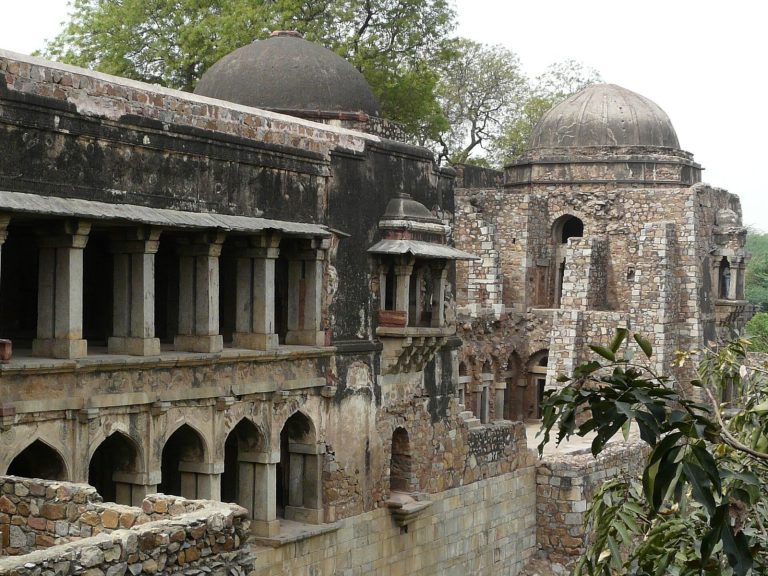
Later rulers dismantled much of the fort and nearby buildings, reusing their materials in subsequent construction. The complex consequently survives largely in ruins.
Decipherment and continuing tradition
In 1837, British scholar James Prinsep deciphered the pillar’s Brahmi inscription by comparing it with inscriptions on other pillars and tablets across South Asia, and translated it into English.
A Thursday custom connects the fort with the belief that jinn, supernatural beings in Islamic belief, descend from heaven there and grant requests. Visitors write wishes on paper and leave them on the site’s walls. Large-scale visits are thought to have begun in 1977.
Remains
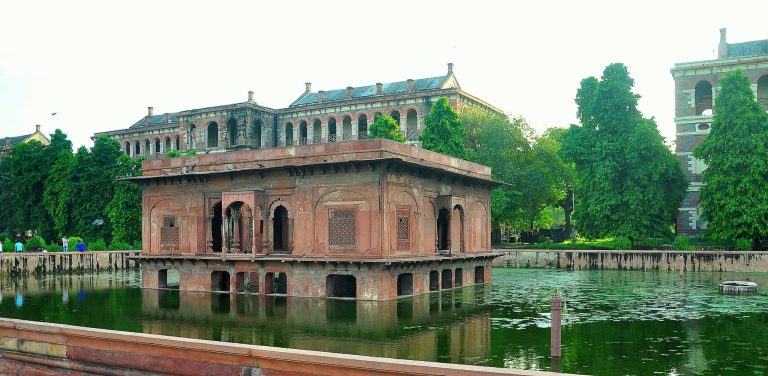
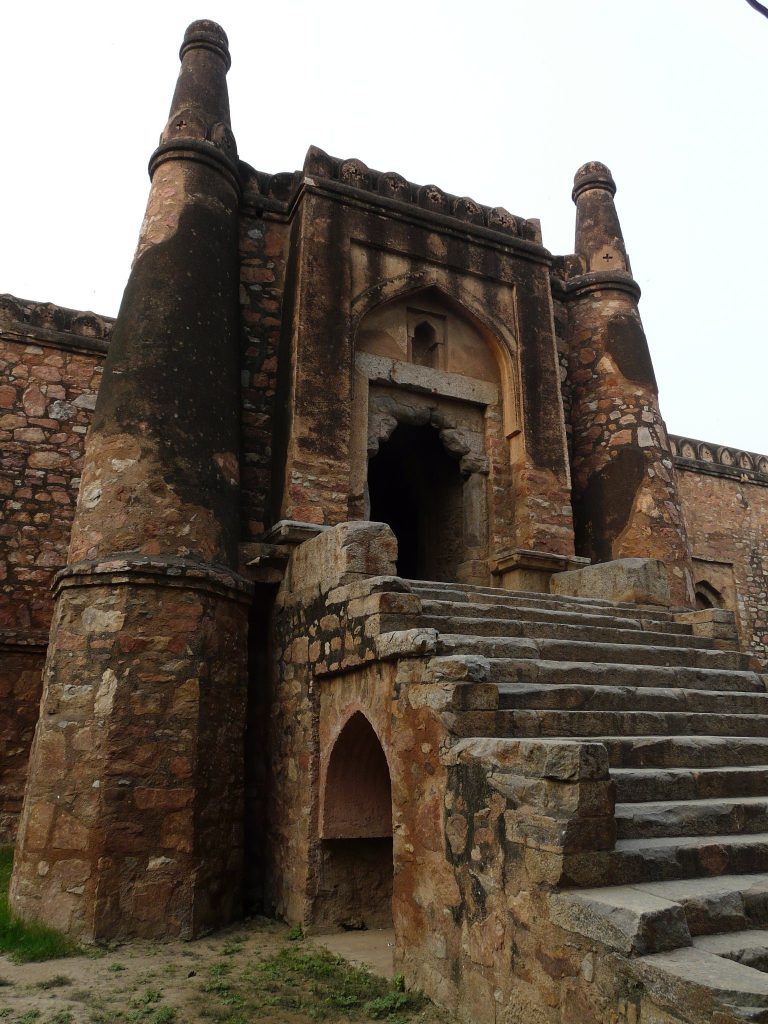
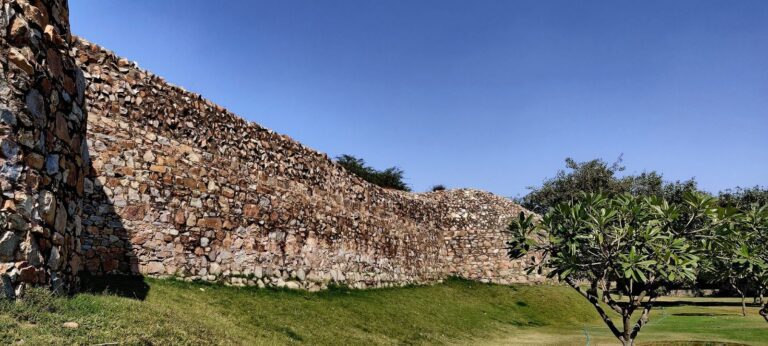
The ruined complex was built with materials including granite and lime mortar. Its Jami Masjid stands within the walled precinct; the Ashokan pillar is to the mosque’s north, joined to it by a causeway. Northwest of the pillar, a circular stepwell lies within a large garden. The fort’s western gate has been destroyed.
The Ashokan pillar
Column and pavilion
The 13.1-metre column is made of polished sandstone and dates to the third century BC. At the Kotla it stands on a three-tiered, pyramidal pavilion with arches. The causeway links this raised structure to the Jami Masjid.
Inscription
The inscription uses Brahmi, an ancient Indian writing system, and is principally in Prakrit, with later additions in Pali and Sanskrit, languages historically used in South Asia. It sets out Ashoka’s policies and appeals to his subjects and future generations on dharma, a concept encompassing ethical conduct and religious duty, as well as religious freedom. Its translated passages describe planting fig trees beside highways to shade people and animals, teaching children dharma, honoring parents, spiritual teachers and elders, and showing kindness to learned people, orphans, the destitute, servants and minstrels. The text also calls for protection from persecution, including prohibitions on killing living beings and performing animal sacrifice. It explains that the edict should be carved on stone pillars so it would endure far into the future.
The Jami Masjid
The mosque is an example of Tughluq architecture, a style associated with the Tughluq rulers and often marked by massive forms and inward-sloping walls. It ranks among Delhi’s oldest and largest surviving mosques and was once the city’s largest. Built over underground cells of quartzite stone covered with limestone, it has a large courtyard bordered by cloisters, or covered walkways, and a prayer hall. The entrance is on the northern side. The prayer hall, formerly used by royal women, is roofless and in ruins, while the mosque remains in use.
The circular stepwell
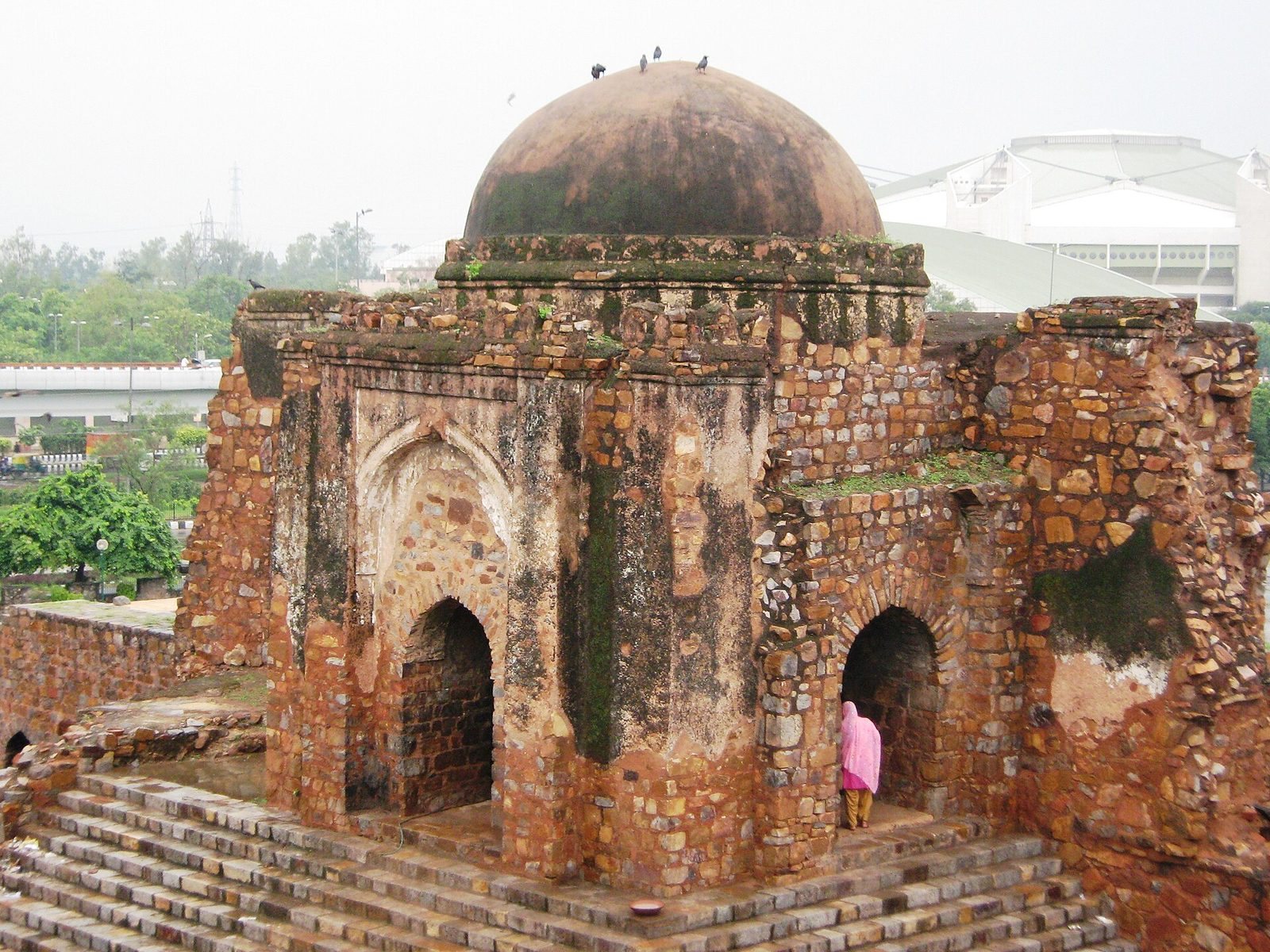
The circular stepwell is the only circular example in Delhi and one of four city stepwells whose water tank is integrated with the well rather than separated from it. Underground chambers form part of the structure, and a canal on its eastern side carries water into the well. The roof collapsed long ago, leaving the tank exposed at the second level. The structure originally had entrances on its eastern and western sides; only the western side is now accessible.