Umrevinsky Ostrog: A Russian Frontier Fort in Novosibirsk Oblast
Site at a Glance
- Popularity
- Medium
- Country
- Russia
- Primary era
- Early Modern
- Eras represented
- Early Modern
- Civilizations
- Russian
- Site type
- Military
- Remains
- Fort
On this page12 sections
History
Umrevinsky Ostrog was a Russian frontier fort established by Russian Cossacks in 1703 in present-day Novosibirsk Oblast, Russia. It was the first ostrog, or Russian frontier fort, in the region now known as Novosibirsk Oblast and extended Russia’s defensive line along the Ob.
Frontier expansion and foundation
Russian migration into the Ob region remained limited during the 17th century amid tense military and political conditions. From the 1590s, forts advanced eastward along the Ob from Tobolsk. Among them were Surgut, established in 1594, Narym in 1595, Ket in 1596, Tomsk in 1604, and Urtam in 1684. Umrevinsky was followed by Chaus in 1713 and Berd in 1716.
In 1695, Alexei Kruglik received permission from the Tomsk governor’s office to use land near present-day Kruglikovo. Kruglik was a Tomsk son of a boyar, a provincial landholder obliged to perform military or administrative service. In 1701, he defeated the Yenisei Kyrgyz, a people of the Yenisei region, at Lake Bozhye and near Pachinskoye on the Tom River. The Russian military figure Ivan Tikhonov Velikoselsky also defeated them at Karakaz. In 1703, the Dzungars, a western Mongol people, moved the Yenisei Kyrgyz into the interior of their khanate, in what is now northwestern China.
A year earlier, Kruglik had led a detachment of men in state service by boat from Urtam Ostrog up the Ob to the Umreva and Oyash rivers, where they chose a site for a new fort. Built on the Umrevinskaya channel about 300 metres from the mouth of the Umreva River, the fort was intended to protect Russian settlements on the southern edge of Tomsk County from raids by nomadic Kalmyk groups.
Church and later use
A church dedicated to the Three Hierarchs, the Christian bishops and theologians Basil the Great, Gregory the Theologian, and John Chrysostom, was founded in 1719. After the fort was abolished, a burial ground formed within its territory during the late 18th and 19th centuries.
Archaeological study
Investigations took place in 2000 and from 2002 to 2009, covering about 550 square metres in total. Further excavations began in July 2019. Umrevinsky Ostrog is designated a Russian federal-level archaeological and cultural heritage site.
Remains
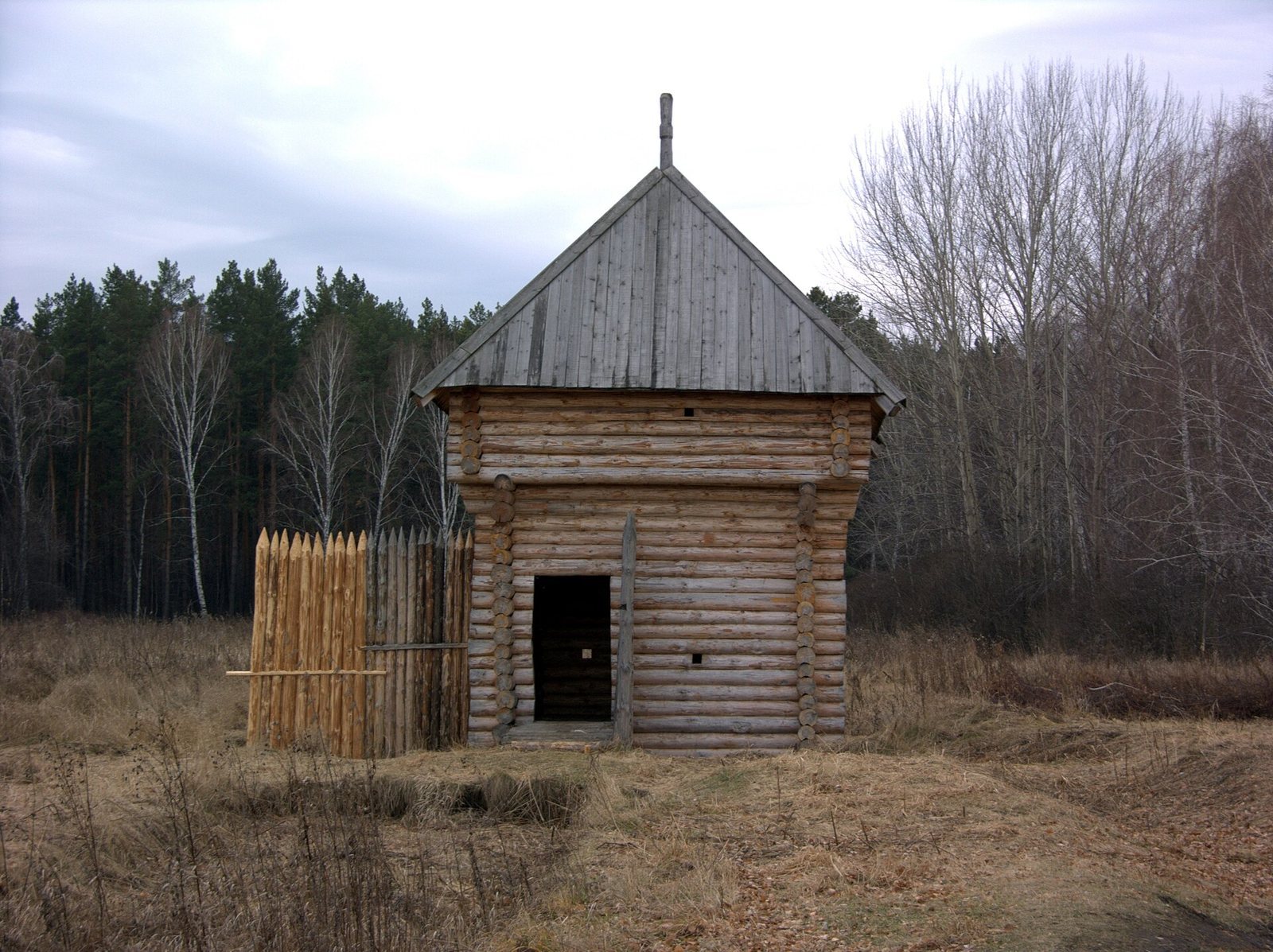
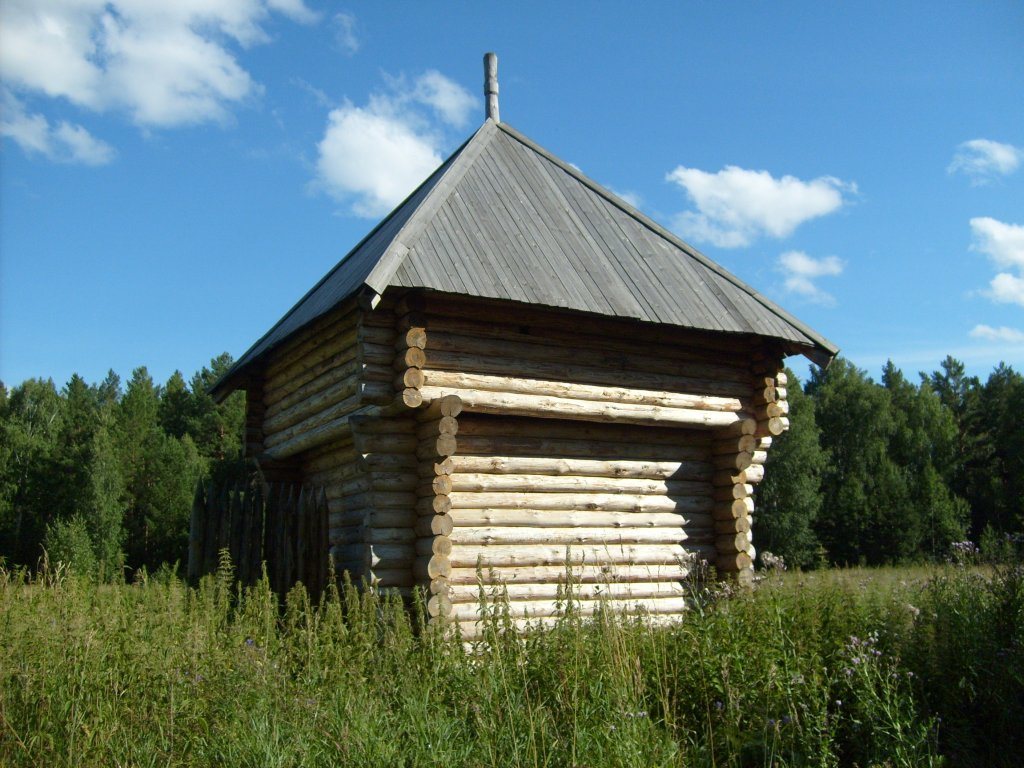
The archaeological complex occupies the bank of the Umrevinskaya channel of the Ob, around 40 to 50 metres from the water, at the edge of a terrace above the floodplain. The mostly level, largely unforested ground extends about 700 metres along the bank and 200 to 300 metres inland. Birch groves grow on the site, with mixed pine, birch, and poplar woodland in the surrounding area. The remains include the fort’s defensive works and interior buildings, a burial ground, a settlement outside the enclosure, a road, and a cache of artillery cannonballs.
Fortifications and interior buildings
Palisades
Investigations examined the western palisade along its full extent and about two-thirds of the southern palisade. Later excavation also focused on the southern and eastern defensive lines.
Tower foundations and corners
Archaeological work examined the southwest corner tower and the northwest and northeast corners. Later investigations also targeted the foundations of the southeast corner tower.
Administrative office
An administrative office stood in the central area of the fort. Excavations included work on this building as part of the study of the interior.
Associated features
Burial ground and outer settlement
The complex includes a burial ground within the former fort territory and a settlement outside the fort’s defensive enclosure.
Road and cannonball cache
A road dating from the 18th to the 21st century is part of the archaeological complex. It also contains a cache of artillery cannonballs.