Exeter College: A Constituent College of the University of Oxford
Site at a Glance
- Rating
- 4.6
- Popularity
- Medium
- Country
- United Kingdom
- Primary era
- Modern
- Eras represented
- Medieval, Early Modern, Modern
- Civilizations
- British, English
- Site type
- Civic
- Remains
- University
On this page10 sections
History
Exeter College is a constituent college of the University of Oxford in the United Kingdom. Founded in 1314 to educate clergy, it is the university’s fourth-oldest college.
Foundation and expansion
The founders were Walter de Stapledon, Bishop of Exeter and treasurer to King Edward II, and his brother Sir Richard Stapledon, a judge and politician. The college first occupied Hart Hall, the predecessor of today’s Hertford College, then moved to Turl Street in 1315. For its first century it was known as Stapledon Hall and had about twelve to fourteen students. From the fifteenth century it grew and began providing student rooms.
Sixteenth-century gifts from Sir William Petre, whose own education at Exeter is considered probable, established eight Petrean Fellowships, academic appointments within the college. His son, John Petre, 1st Baron Petre, made further contributions that supported Exeter’s expansion. Sir John Acland, a Devonshire gentleman who died in 1620, gave £800, largely financing a new dining hall, and created the college’s first two scholarships for students in need. As new buildings were completed, the bursar, the officer responsible for college finances and administration, invited many noble Roman Catholic students to attend classes. They could not, however, become formal members of the university. Exeter later became one of Oxford’s leading colleges. Its motto, Floreat Exon, means let Exeter flourish.
Eighteenth-century decline and reform
Exeter’s popularity fell during the eighteenth century, as did that of other Oxford colleges. University reforms in the 1850s helped bring this period of stagnation to an end. The Adelphi Wine Club was formed among Exeter undergraduates in that decade and is reputed to be one of Oxford’s three oldest wine clubs. College authorities closed it by force several times. It became known for lavish dinners and gambling after meetings, while a single negative vote in a membership ballot could exclude a student. From 1923, students holding an exhibition, a form of student award, were barred from joining. The club is believed to be dormant.
Women and the modern college
Exeter admitted women as students for the first time in 1979. In 1993, literary scholar Marilyn Butler became the first woman elected rector, the college’s head, of a formerly all-male Oxford college. When her term ended in October 2004, journalist and economist Frances Cairncross was elected to the post. In 2014, author J. K. Rowling became an honorary fellow in recognition of her contribution to literature, particularly children’s reading and literacy. Exeter also inspired the fictional Jordan College in Philip Pullman’s His Dark Materials trilogy.
Remains
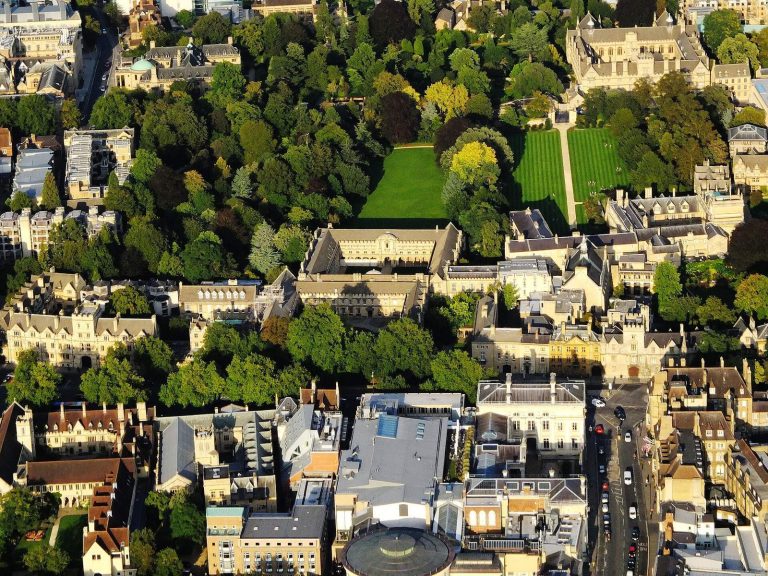
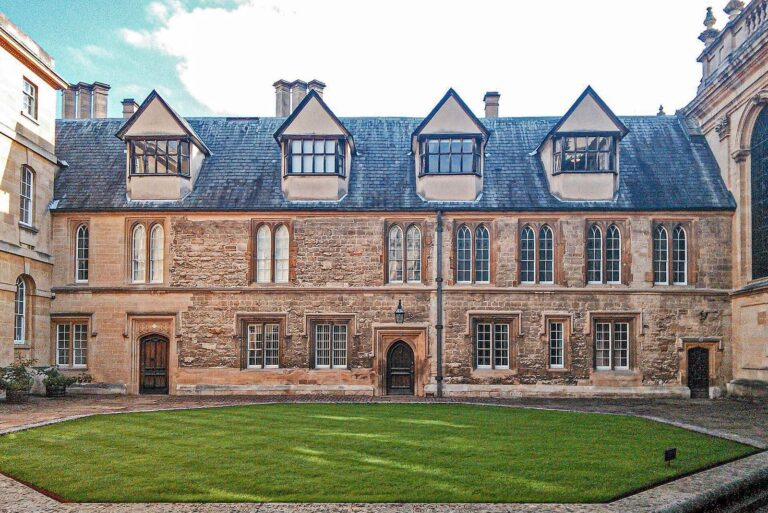
The college’s buildings are arranged around several quadrangles, with Fellows’ Garden reached through a passage from the Front Quadrangle and a later expansion at Cohen Quad. The surviving fabric ranges from medieval and seventeenth-century structures to nineteenth-century Gothic Revival design and contemporary buildings.
Front Quadrangle
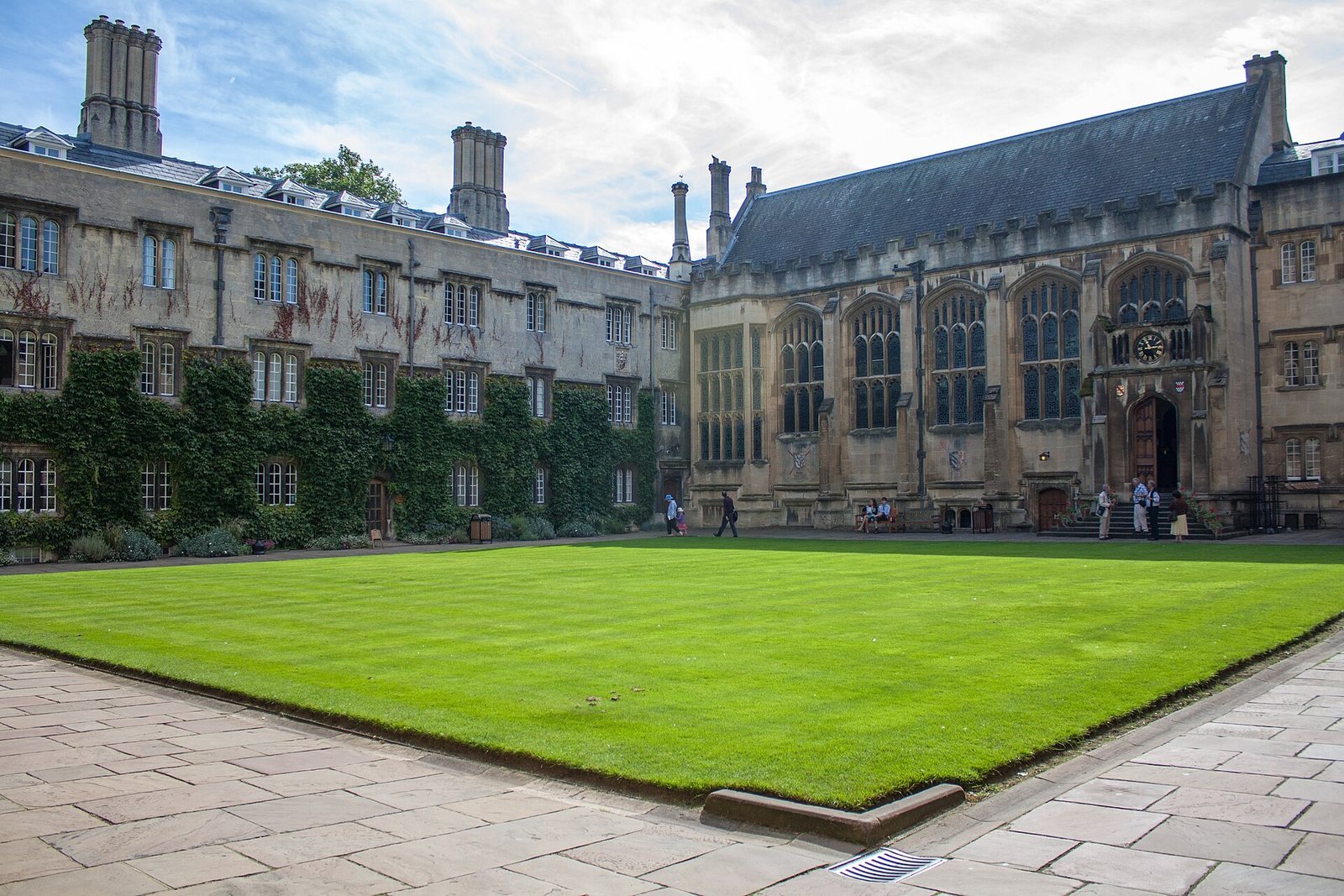
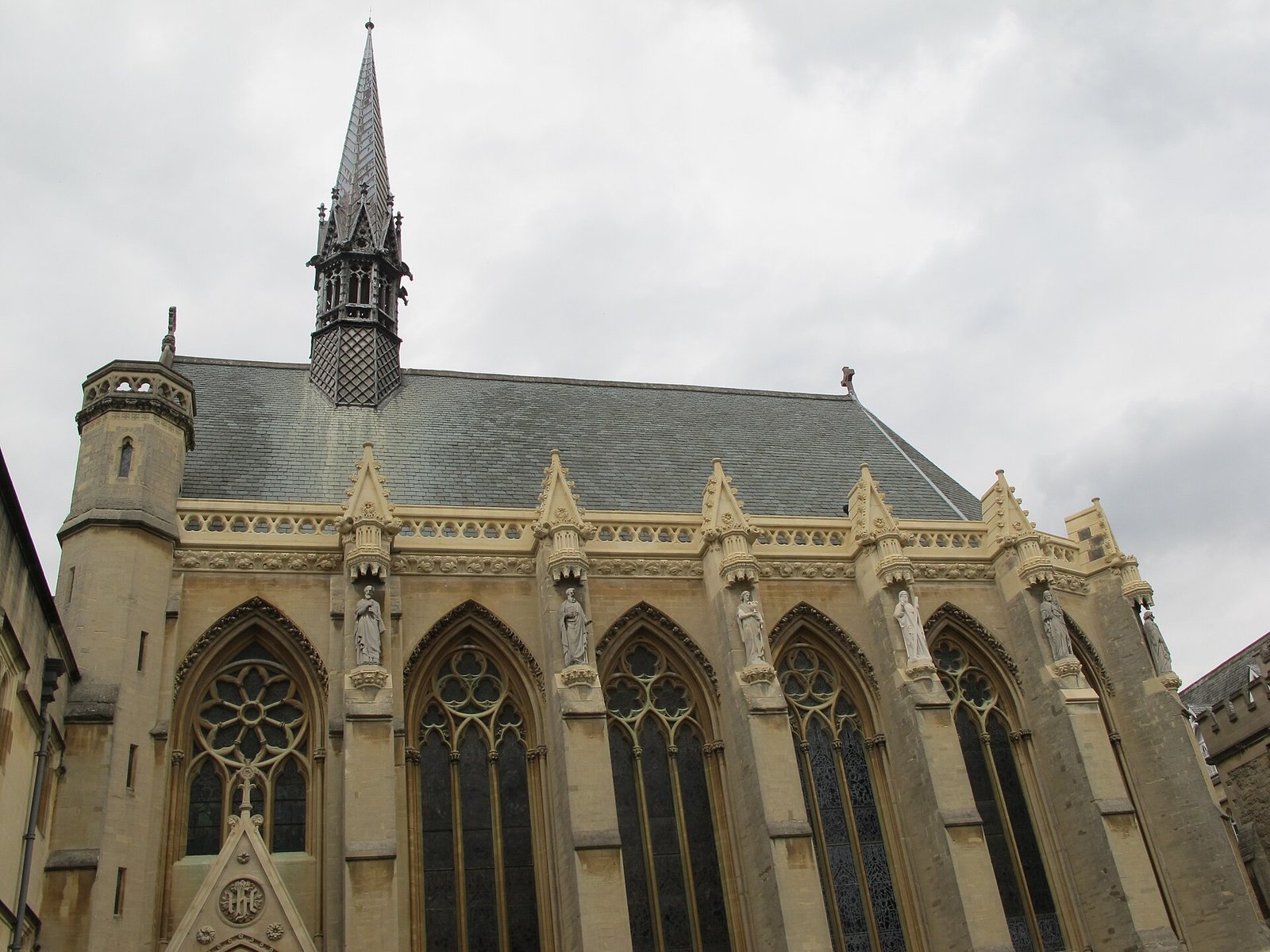
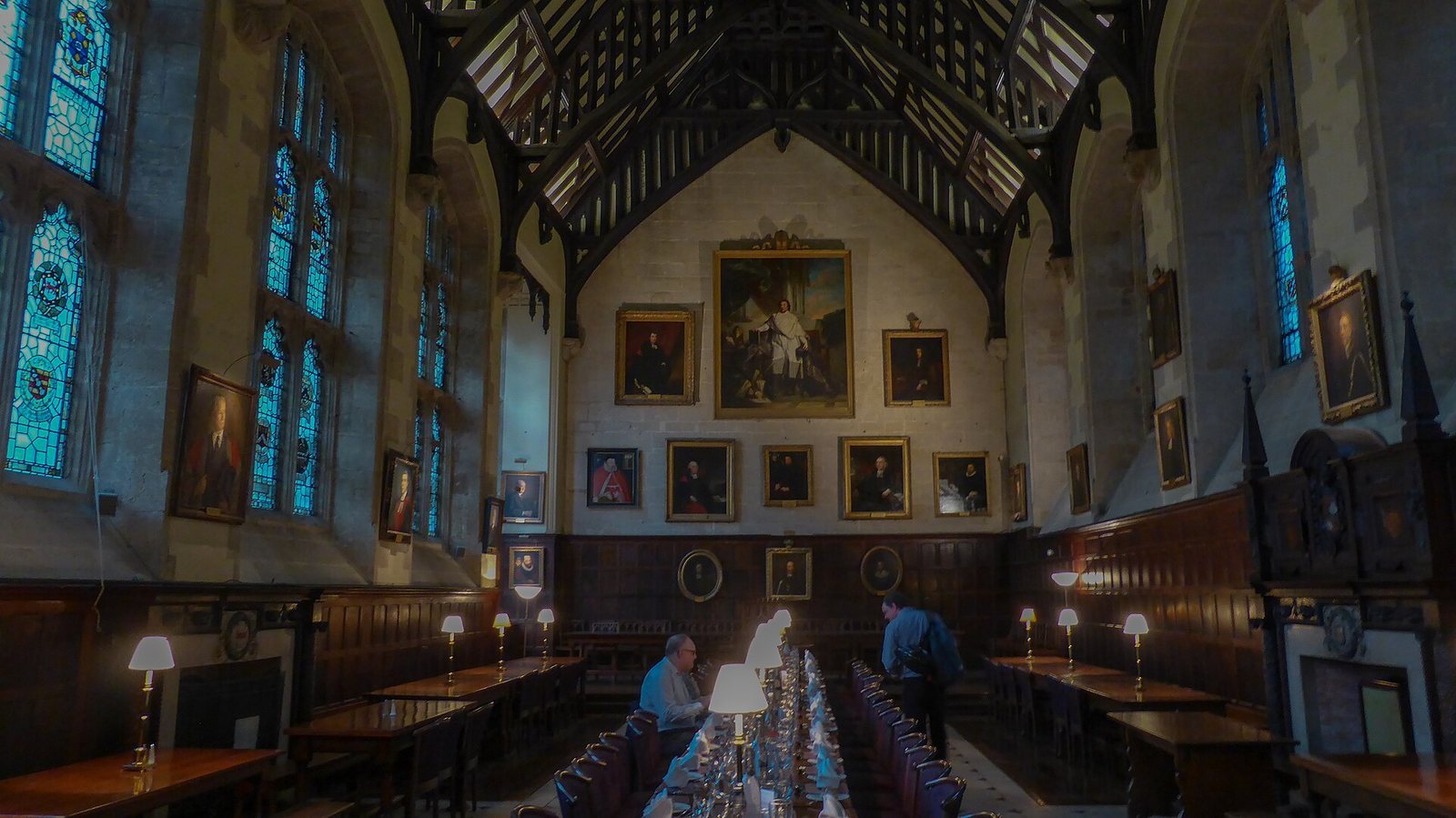
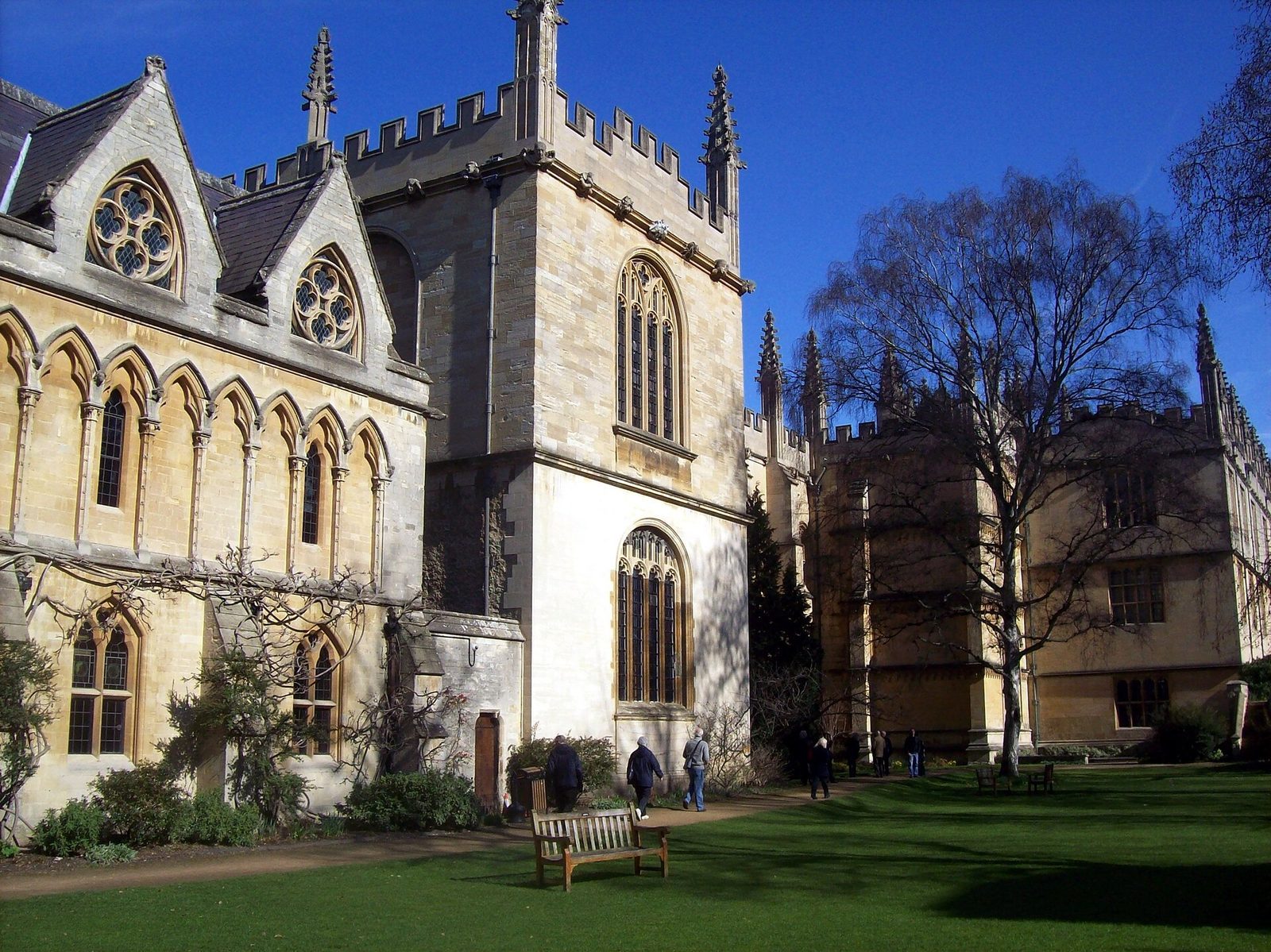
The Front Quadrangle occupies roughly the site of the medieval college. Palmer’s Tower, in its northeast corner, is the only surviving building from Exeter’s earliest period. Built in 1432, it once served as the main entrance and now contains offices and fellows’ lodgings; a memorial to college members killed in the Second World War stands at its base. The chapel, designed by Sir George Gilbert Scott in a nineteenth-century revival of medieval Gothic design and built from 1854 to 1860, was strongly inspired by the Sainte-Chapelle in Paris. Opposite it, the dining hall dates to 1618 and has a ceiling formed by arches, portraits, and the college bar beneath it. Building work over the following century gave the quadrangle its present appearance by 1710. It also contains lodgings and the Junior, Middle, and Senior Common Rooms, social spaces for undergraduates, graduate students, and fellows and other senior members, respectively.
Margary Quadrangle
The Thomas Wood building completed Margary Quadrangle in 1964, the college’s 650th anniversary. The quadrangle is named for historian Ivan Margary, who paid for its restoration. It also includes the rector’s lodgings, designed by Gilbert Scott and built in 1857, and staircases nine, ten, and eleven, all erected during the nineteenth century.
Fellows’ Garden and library
A passage leads from the Front Quadrangle to Fellows’ Garden. Its library, designed by Gilbert Scott, follows a thirteenth-century style. Convocation House, the Divinity School, and the Bodleian Library border one side of the garden, while Brasenose Lane bounds the other. At the far end, the Mound offers views over Radcliffe Square, including All Souls’ College and the Radcliffe Camera.
Cohen Quad
Exeter bought the main Walton Street site of Ruskin College in 2007–08 and redeveloped it to designs by Alison Brooks Architects. Named Cohen Quad in honour of Sir Ronald Cohen’s parents, the complex provides student bedrooms, teaching rooms, and study space. It represents the college’s largest physical expansion since the fourteenth century and received a Royal Institute of British Architects South Award and the Regional Building of the Year award.
Sports grounds
Exeter College also owns sports grounds within University Parks, which student clubs can use.