Eskiyapar Höyük: A Bronze Age and Hittite Settlement in Türkiye
Site at a Glance
- Popularity
- Low
- Country
- Turkey
- Primary era
- Bronze Age
- Eras represented
- Bronze Age
- Civilizations
- Hittite
- Site type
- City
On this page14 sections
History
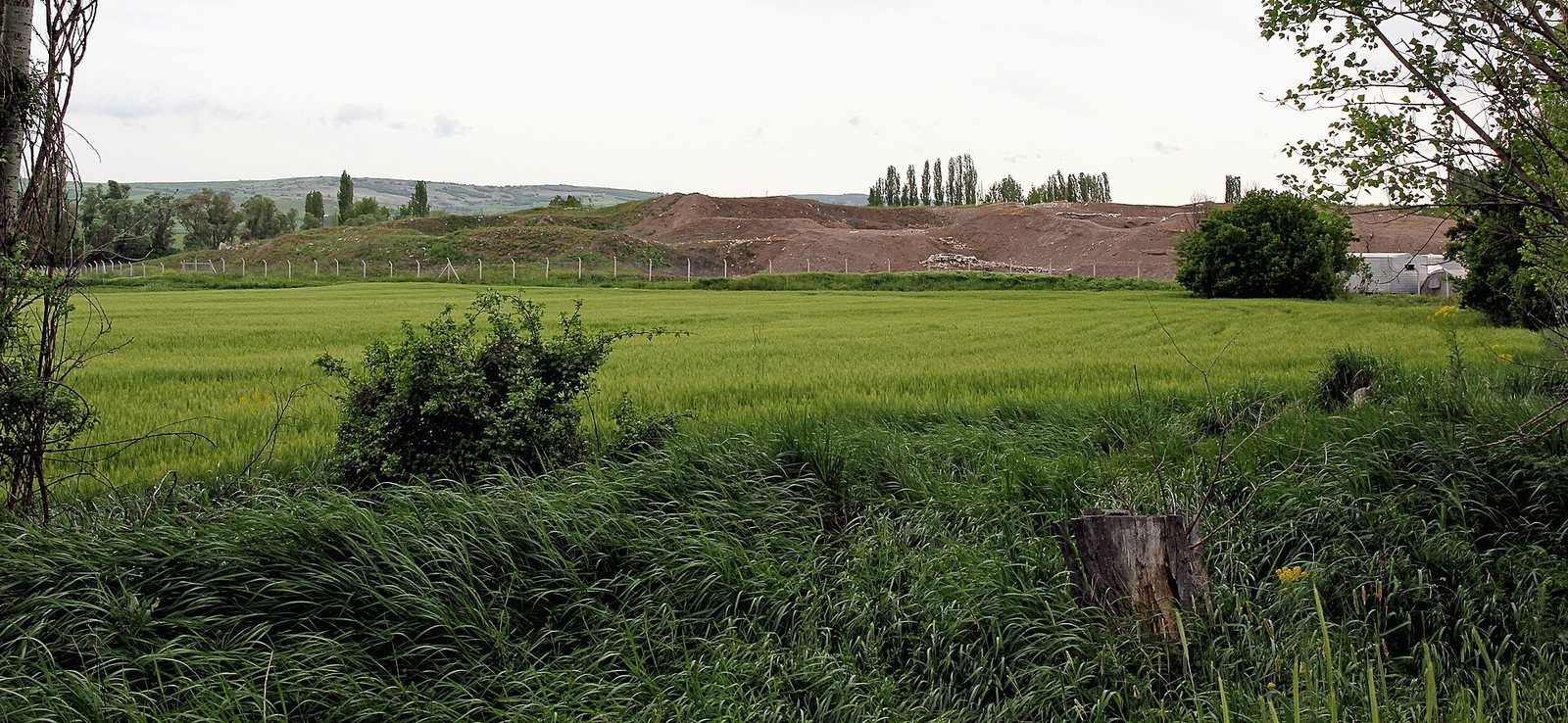
Eskiyapar Höyük is an archaeological settlement mound in Eskiyapar, Alaca district, Çorum province, Türkiye. It was occupied from the Early Bronze Age, the earliest major phase of the Bronze Age, through Byzantine times, and was an important settlement under the Hittites, an ancient Anatolian people whose kingdom became a major power in the second millennium BCE.
Bronze Age settlement
The mound contains settlements from the Early, Middle, and Late Bronze Ages, followed by an extensive Iron Age settlement. Activity before the Early Bronze Age is possible: the foot of a fruit stand has been interpreted as evidence of Chalcolithic, or Copper Age, activity.
Two hoards were concealed in the final phase of Early Bronze Age III, before the buildings above them were destroyed by fire. Their owners may have hidden the objects in response to danger, perhaps an attack, but apparently did not return for them. The hoards are thought to date to about 2200–2000 BCE.
Hittite settlement
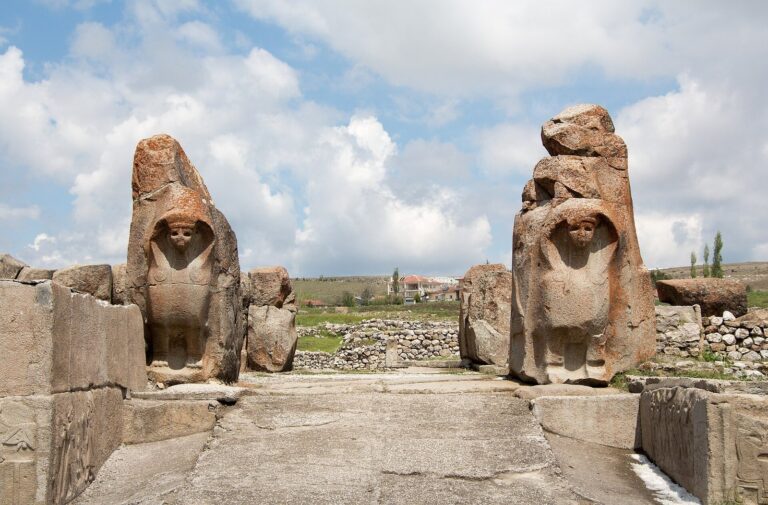
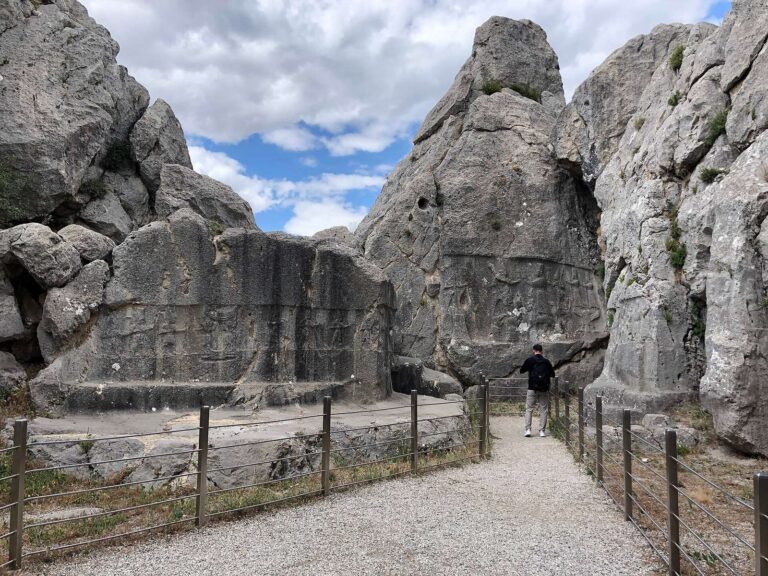
Eskiyapar was important in both the Old Hittite period, an earlier phase of the kingdom, and the later Hittite Empire. Religious and administrative buildings stood at the settlement. Its identification with the Hittite city of Ankuwa has been proposed, while Taḫurpa and Arinna are alternatives; the ancient name of the site remains uncertain.
Later occupation and archaeological work
After the Bronze Age, occupation continued in Phrygian, Galatian, Roman, and Byzantine times. W. J. Hamilton made the earliest known mention of the mound in the nineteenth century. In 1945, Ekrem Akurgal carried out a test excavation and Raci Temizer surveyed the surface. Temizer directed systematic excavations from 1968 to 1983. The village that had spread over the mound was moved in 1983–84 to reduce damage from farming and construction and to allow excavation. The Çorum Museum undertook further work in 1992 under I. Ediz, and excavations resumed in 2010 under Tunç Sipahi with a team from Ankara University.
Remains
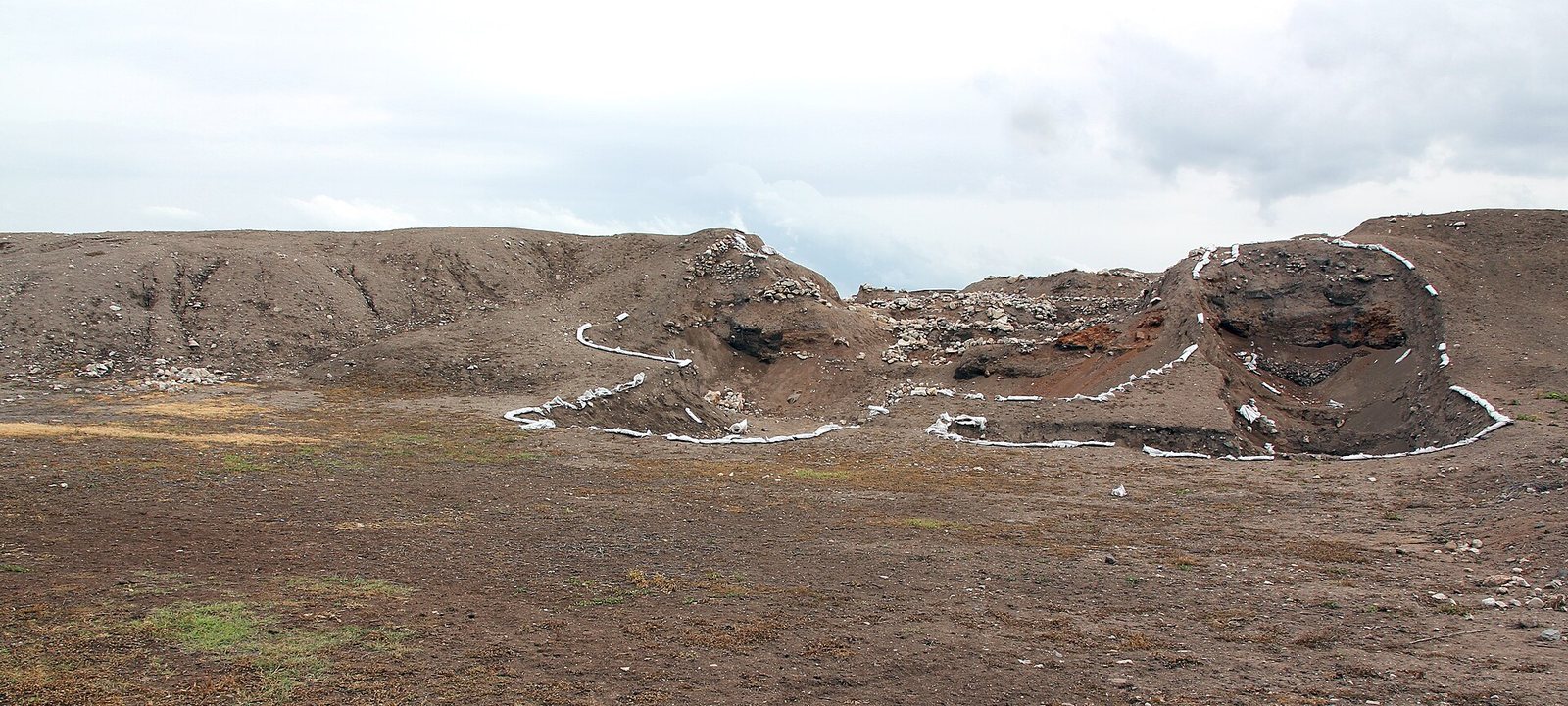
The mound is slightly oval, about 300 metres across, and rises roughly 12 metres above the Hüseyinabad Plain, reaching around 960 metres above sea level. The former village of Eskiyapar once covered it. The site lies near the geometric centre of several major Hittite settlements: Ḫattuša is about 20 kilometres to the southwest, Alacahöyük about 10 kilometres to the northwest, and Šapinuwa about 40 kilometres to the east.
Early Bronze Age remains
Buildings and hoards
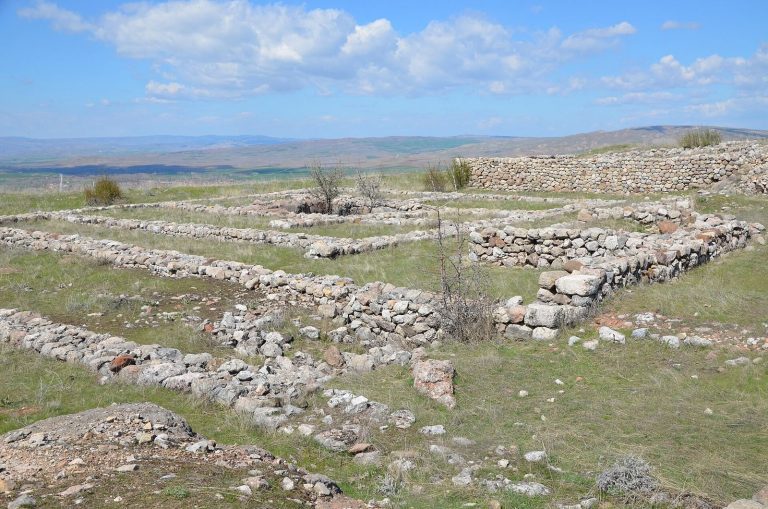
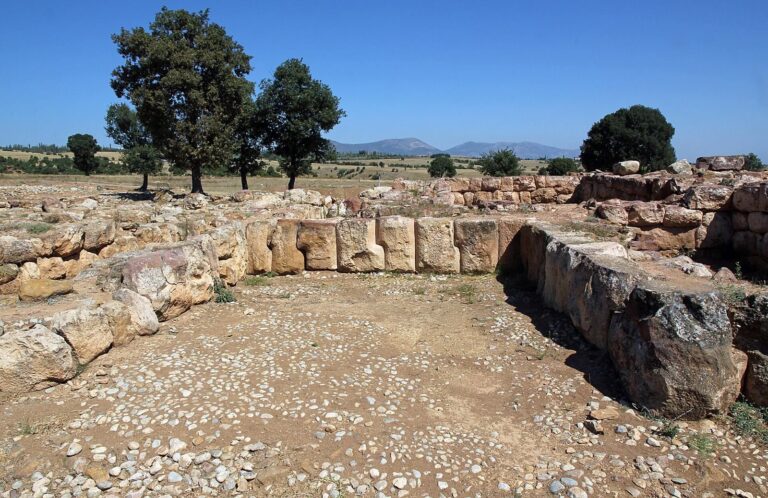
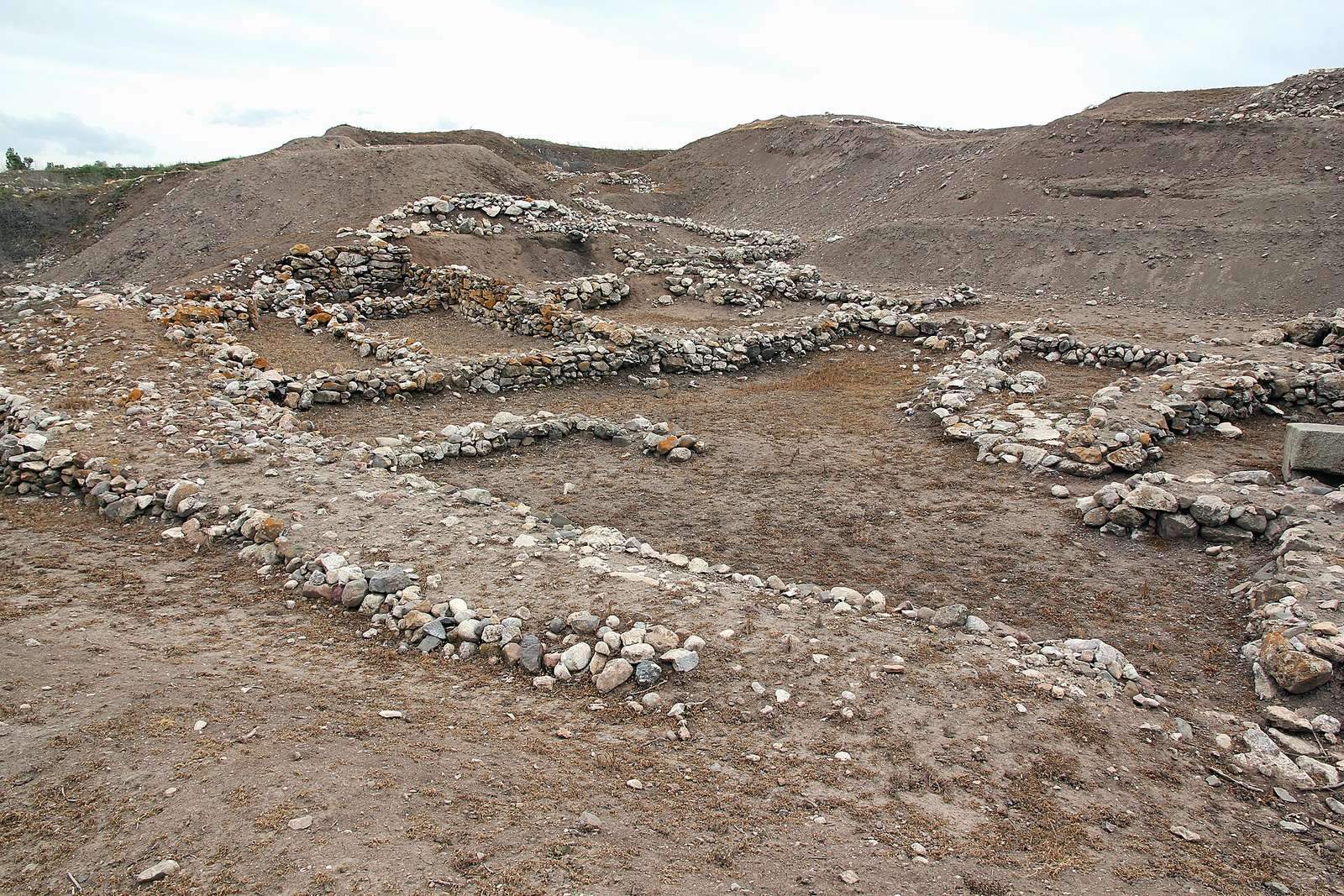
Excavated remains include rectangular buildings from an Early Bronze Age settlement with urban characteristics. In two buildings, pits had been carefully cut beneath the floors to hold hoards. One contained two silver goblets, a silver bowl, a long-handled pan, a ceremonial electrum axe, gold earrings, a bracelet and necklace, beads of gold, silver, and agate, and two gold clothing pins. Electrum is a naturally occurring mixture of gold and silver. The second hoard held similar objects.
Pottery and production
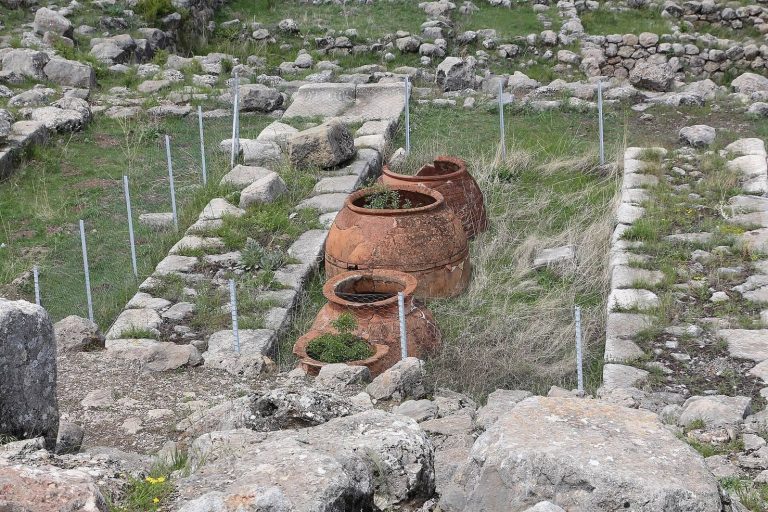
Several kilns and large quantities of pottery point to substantial local production. The pottery resembles Early Bronze Age examples from Alacahöyük. Vessels include offering containers, jugs, cups, and bottles. Many may have served ritual purposes; some bear raised images or figures on their outer surfaces, and in some cases on their interiors as well.
Metalwork and jewelry
The variety of earring shapes in the hoards has been taken as evidence of skilled local goldworkers. Four-spiral beads have been interpreted as having symbolic importance for the ruling class. Related examples include bronze beads from Arslantepe VIA and the İkiztepe III cemetery, as well as beads from Troy’s A, D, and J hoards and from Poliochni on Lemnos. The long-handled pan has comparisons at Troy and nearby sites; the silver goblets are closer to Trojan examples than to those from central Anatolia. The ceremonial axe, with a hole for its handle, resembles examples from northern Cappadocia and settlements south of the Black Sea.
Hittite remains
Residential and public buildings
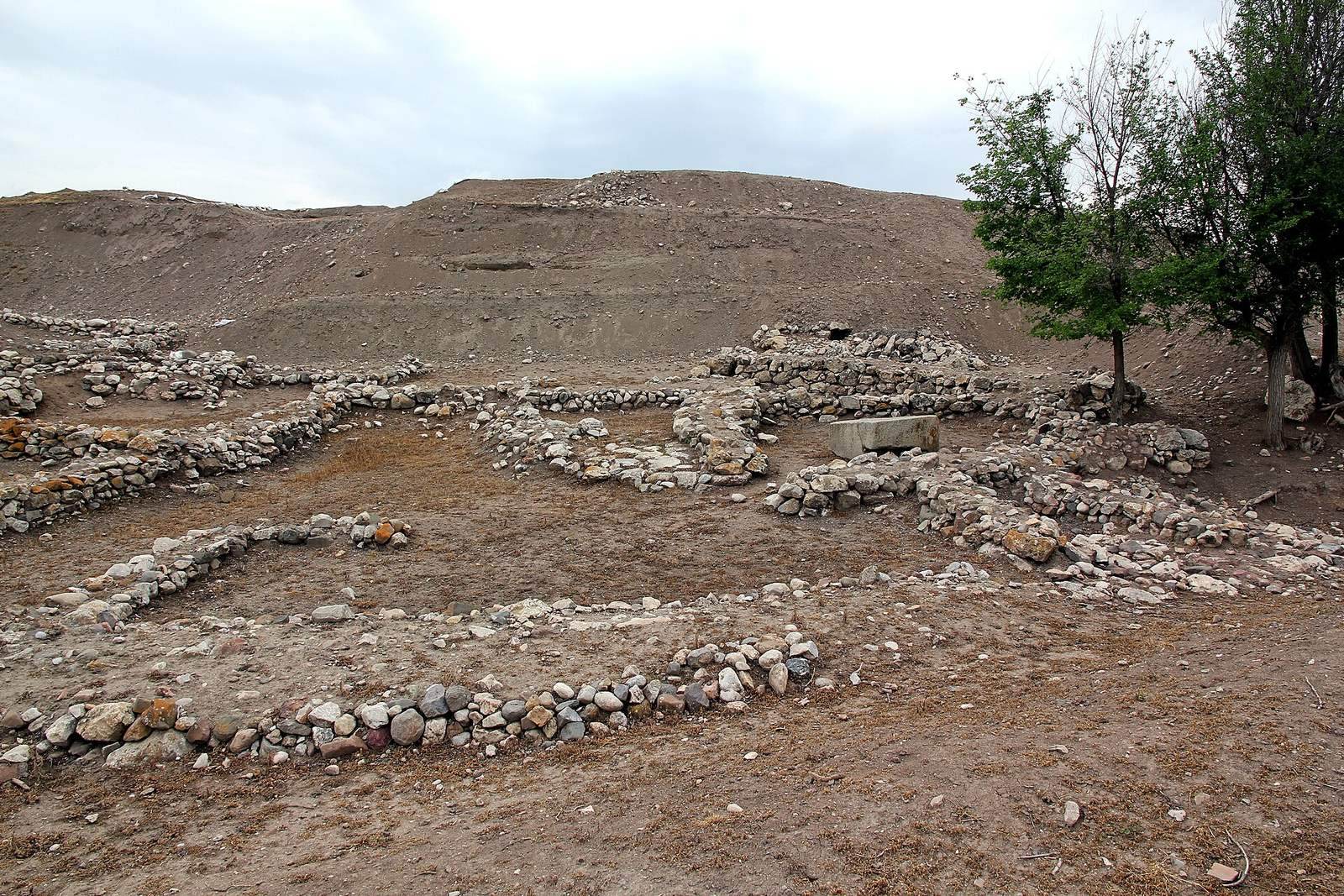
A large residential district from the Old Hittite period was excavated in the mound’s southeastern sector. Remains of religious and administrative buildings were also uncovered, indicating that the settlement included both domestic and public spaces.
Tablet and religious evidence
A cuneiform tablet found in 2011 names Arinna and Taḫurpa. Cuneiform is a writing system made with wedge-shaped marks, and the tablet’s script has Middle Hittite characteristics. Arinna was an important religious centre in the Hatti and Hittite periods. Numerous fragments shaped like bull heads have prompted the suggestion that a temple to the Hittite Storm God, a major weather deity, may have stood at the site; this remains an interpretation.
Vessels, tools, and weapons
An Old Hittite cup-shaped rhyton, a vessel for drinking or pouring, is modelled as a half-figure and has finer workmanship than examples from Boğazköy and Alacahöyük. Other finds include bone tools and handles, a stamp seal used to press a mark or design, and spindle whorls, weights used in spinning thread. Bronze finds include a dagger, spearhead, and knife, most assigned to the Middle Hittite period. The dagger, known as the Eskiyapar Dagger, is described as the only example of its kind found in Hittite territory.
Remains from other periods
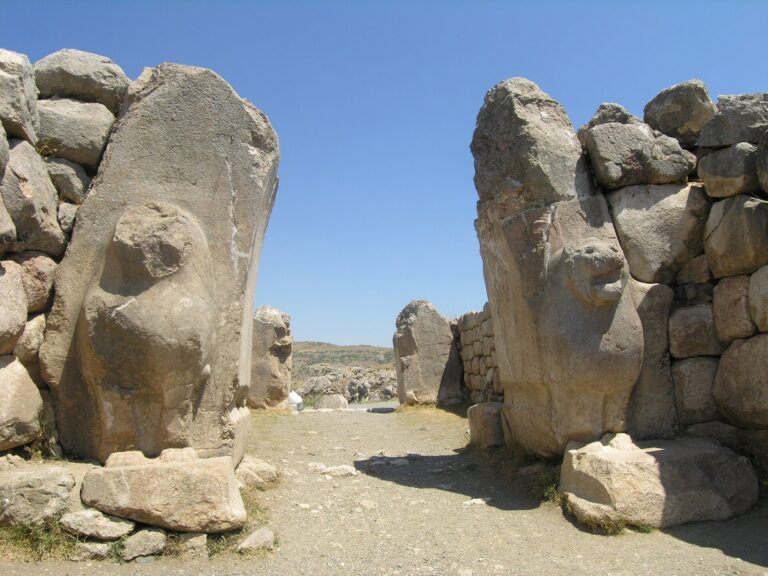
Finds from the mound’s later history include a lion relief, Byzantine tombstones, remains of a religious building, and Roman road-marker stones. Excavated objects from Eskiyapar are exhibited at the Museum of Anatolian Civilizations in Ankara and the Çorum Archaeological Museum.