Hermitage of Santa Elena: A Pilgrimage Sanctuary and Fort in Spain
Site at a Glance
- Rating
- 4.6
- Popularity
- Medium
- Country
- Spain
- Primary era
- Early Modern
- Eras represented
- Stone Age, Medieval, Early Modern
- Civilizations
- Crown of Aragon, Habsburg, Habsburg Spain, Spanish
- Site type
- Religious
- Remains
- Sanctuary
On this page11 sections
History
The Hermitage of Santa Elena is a Catholic sanctuary in Spain, set above the Santa Elena gorge at the southern end of the Tena Valley. Its foundation is attributed to James I of Aragon, a thirteenth-century king, in 1221, though the date of the present church is uncertain. The building combines Mozarabic traditions, associated with Christians living under Muslim rule in medieval Iberia, with Gothic and Baroque forms. Its position beside a narrow approach to the valley and the route between Spain and France through the Portalet pass also gave the site military importance.
Origins and religious traditions
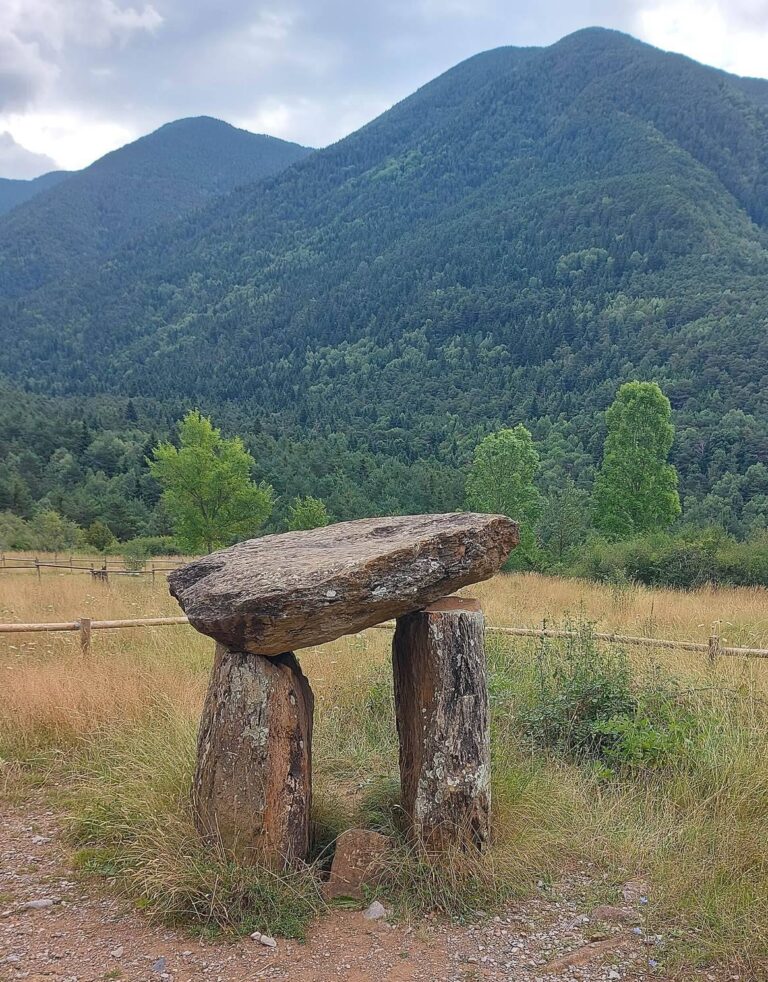
Worship took place here before the Christianization of the region. The site’s pre-Christian religious associations are linked to dolmens in the area. Some local interpretations also connect the place with supposed energies in the earth, comparing them with beliefs attributed to Stonehenge and the Pyrenean sanctuary of Saint Orosia.
Christian worship became established over the Gloriosa spring. The sanctuary is dedicated to Saint Helena of Constantinople, the fourth-century Christian empress and mother of Constantine the Great. She is the patron saint of Biescas and the Tena Valley, and the sanctuary belongs to the Diocese of Jaca, a church jurisdiction overseen by a bishop.
Legend places Helena at the site in the fourth century. In one telling, she fled France while pursued by enemies; other versions describe Muslim pursuers arriving from the south or refer more generally to non-Christians. A farmer led her to a cave beneath the hermitage, where a spider’s web concealed her. After the danger passed, she emerged, and the Gloriosa spring was said to have appeared miraculously. Local belief also treats changes in the spring’s flow as a warning of coming hardship or a promise of prosperity.
Another tradition links the spring’s water to the Jordan, the river associated in Christian belief with Jesus’s baptism. A medieval pilgrim travelling from the Holy Land through the Tena Valley toward Santiago de Compostela was attending Mass at the hermitage when a stick floated in the spring. He recognized it as one he had lost in the Jordan and said Saint Helena had returned it to him.
Foundation and pilgrimage
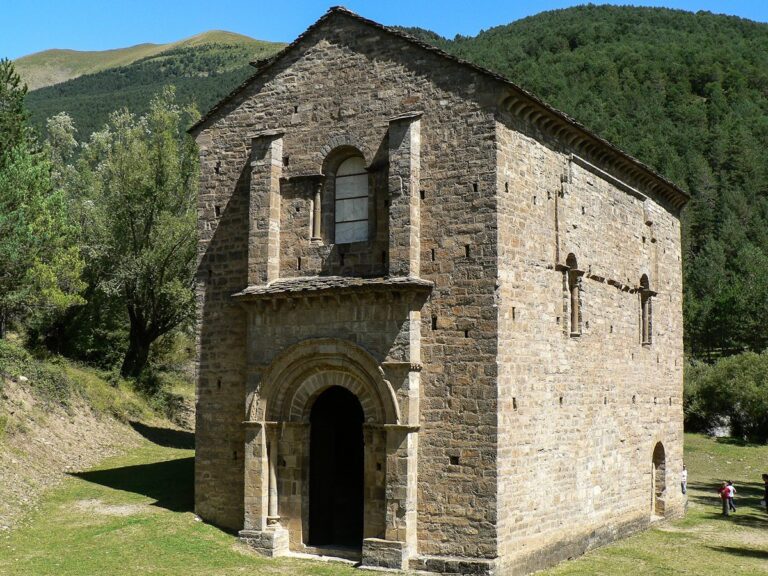
The earliest chapel is described as Mozarabic. Ferdinand II of Aragon, also known as Ferdinand the Catholic, and Charles I of Spain, who was also Holy Roman Emperor as Charles V, later confirmed their protection of the hermitage. Major enlargement in the seventeenth and eighteenth centuries, particularly in 1710, gave the sanctuary its present appearance.
The hermitage has long drawn pilgrims from across the region. The traditional gathering on 18 August marks Saint Helena’s feast day. Other annual celebrations include the 13 June feast of Saint Anthony, Biescas’s patron saint, and the Pentecost pilgrimage of the Crosses. At Pentecost, a Christian feast observed seven weeks after Easter, representatives of valley villages attend carrying their parish crosses, the ceremonial crosses of their local churches. Local verses also express the belief that Saint Helena, like Saint Anthony, helps people find a spouse.
Territorial disputes and military role
The sanctuary’s position between Biescas and the Tena Valley led to disputes over which community owned it. On 25 July 1545, the boundary was fixed at the Espumoso ravine, placing Santa Elena on the Biescas side. A local tale offers a more cunning explanation: a bishop asked rival priests to swear which territory they stood on, and the priest from Biescas secretly put soil from his town in his shoes before taking the oath. The bishop then ruled for Biescas.
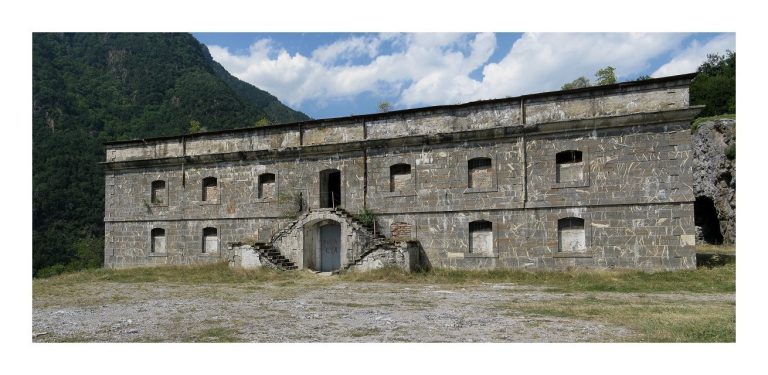
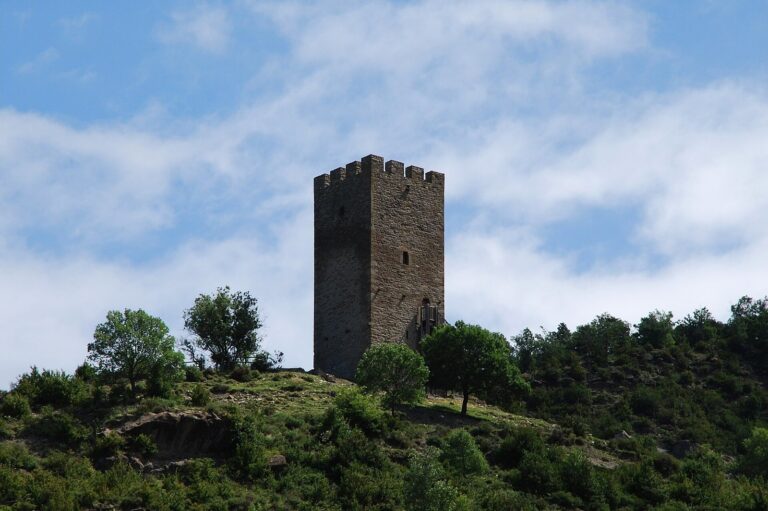
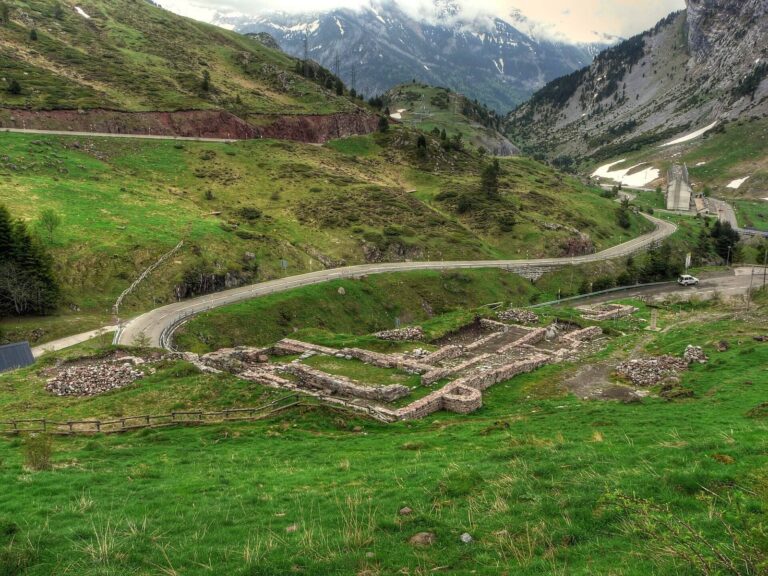
The site also commanded a narrow approach to the Tena Valley and the route toward France over the Portalet pass. A military fort was built during the sixteenth-century reign of Philip II of Spain and later enlarged under the eighteenth-century king Charles III. In 1592, during the Aragonese Alterations, a period of political disturbances in Aragon, the old castle was involved in events surrounding the invasion of the valley by Calvinists from Béarn, a historical region in southwestern France. Military buildings at the site were also used during Huguenot incursions, involving French Protestants, and in the War of the Convention, the conflict between Spain and revolutionary France in the 1790s, and the Peninsular War in Spain and Portugal during the Napoleonic Wars.
Later changes and protection
The fort was partly destroyed in 1808 during the Napoleonic invasion. Reconstruction began in 1887, but the work remained unfinished for lack of funds. Aragon’s Cultural Heritage Law of 10 March 1999 lists the hermitage as an Inventoried Property, a category in the region’s cultural-heritage register. The sanctuary was restored in 2007.
Remains
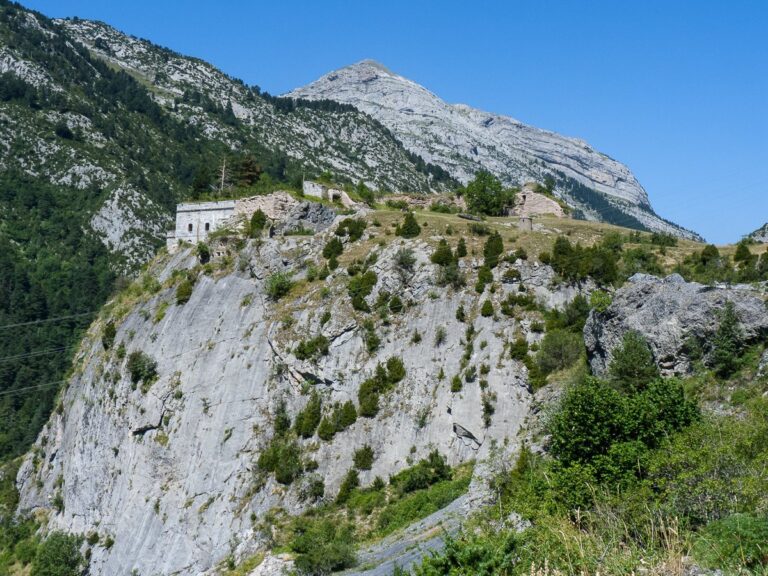
The hermitage occupies projecting high ground at about 1,080 metres above sea level, overlooking the Santa Elena gorge. The Gállego River cuts the gorge between the Telera and Tendeñera ranges. The built remains include a church and an abandoned fort, while a dolmen stands at the foot of the hermitage.
Sanctuary
Church
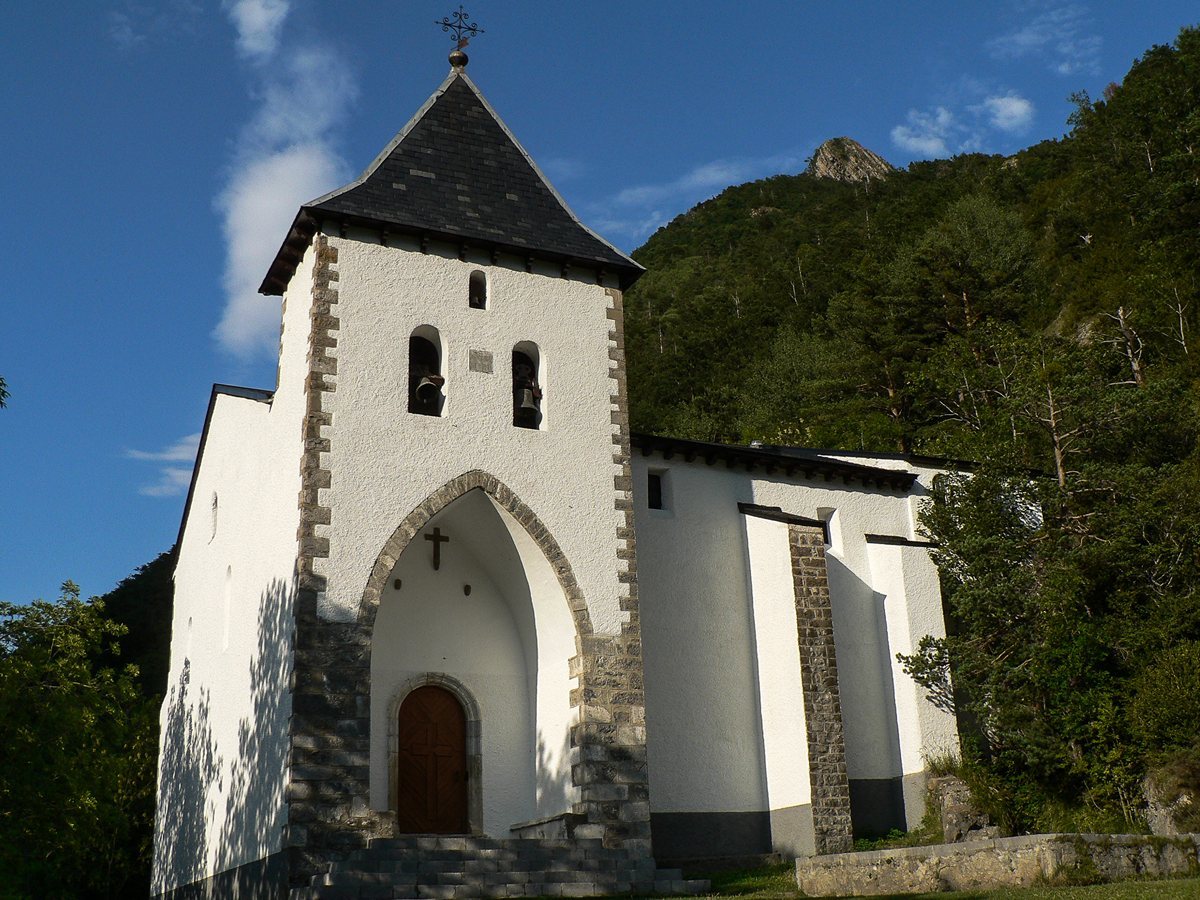
The church has a single main body divided into three bays, or sections, and covered by a lunette vault, a curved ceiling section formed where a smaller vault intersects a larger one. At the altar end is a five-sided apse, a projection at the end of a church, with ribbed vaulting supported by intersecting ribs. A bell tower rises above the small entrance porch. Some columns built into the walls are attributed to the first chapel.
Cave and spring
A doorway from the area around the main altar leads to a small cave associated with Saint Helena’s legend. The church contains a Baroque altarpiece dated to 1693, with an image of the saint at its centre. The Gloriosa spring lies beneath and beside the hermitage. Its intermittent flow may continue for about 15 minutes before stopping for a long interval, and its water falls in a cascade from the church esplanade. Stones near the cave are traditionally identified as bearing the impressions of Helena’s footprints.
Dolmen
A dolmen stands at the foot of the hermitage, at the entrance to the Asieso Valley, with other dolmens noted nearby. Its position ties the prehistoric remains to the same landscape as the sanctuary.
Fort
The fort comprises an upper section of 8,765 square metres, an outer battery of 1,845 square metres, and a lower defensive section of 2,755 square metres. Its stores included a 592.64-square-metre building for materials and a 31-square-metre food store. The provisions were intended to sustain 200 men, their officers, and four horses for about four months. The fort is now abandoned.