Hospital of Santa Cristina de Somport: A Medieval Pilgrim Hospital in Spain
Site at a Glance
- Popularity
- Medium
- Country
- Spain
- Primary era
- Medieval
- Eras represented
- Medieval, Early Modern
- Civilizations
- Crown of Aragon, Spanish
- Site type
- Civic
- Remains
- Hospital
On this page12 sections
History
The Hospital of Santa Cristina de Somport was a refuge for travelers and pilgrims, founded in the late 11th century at the high Somport Pass in Aísa, Huesca, Spain. Its church was a small Romanesque building of the 12th–13th centuries. The hospital served a difficult Pyrenean crossing on the Camino de Santiago, the network of pilgrimage routes leading to Santiago de Compostela.
Foundation and institutional growth
The hospital’s founder is uncertain. King Pedro I of Aragon and Gaston IV, Viscount of Béarn, are possible founders. A separate tradition tells of two Frankish knights caught in a snowstorm who planned to build a refuge. In the story, a white dove bearing a golden cross showed them where to build a church. Donations then allowed them to establish a large hospital, and the dove and cross became its emblem.
By the end of King Sancho Ramírez’s reign, a hostel stood at Canfranc and may later have been transferred to Somport. An early 12th-century grant gave revenues to the hospital. Gaston and Talesa, Viscounts of Béarn, and other Aragonese nobles also gave support and protection. The institution consolidated during the 12th century and reached its greatest expansion in the 13th.
Initially associated with the Order of the Holy Sepulchre, a Catholic order linked to Jerusalem, the hospital became autonomous in the early 13th century. It then served as the headquarters of the Order of Santa Cristina, a religious order combining military and charitable duties. Its prior, the senior head of the community, also governed dependent monasteries on both sides of the Pyrenees, including houses at Maltray, Tarazona, Calatayud, and Castejón de Valdejasa, as well as churches and hospitals at Roncesvalles, Tudela, and Soria.
Pilgrimage and royal burial
Many pilgrims crossed the Pyrenees by way of the Via Tolosana, a route approaching the mountains through southern France, and the Aspe valley. This was an alternative to entering the Iberian Peninsula by way of Mauleón-Licharre and Roncesvalles. Severe weather and difficult mountain conditions made the Somport crossing arduous. The hospital offered pilgrims free lodging and meals for up to three days, cared for sick travelers until they recovered, and buried those who died there.
The Codex Calixtinus, the best-known manuscript of the medieval pilgrimage compilation Liber Sancti Jacobi, traditionally associated with Aymeric Picaud, describes the hospital’s standing. It placed Santa Cristina among Christendom’s three leading hospitals, alongside those at Jerusalem and Mont-Joux on the Great St Bernard Pass. The institution was also called Unum Tribus Mundi, meaning “one of the three hospitals in the world.” Its renown on the pilgrimage route was especially strong in the 14th century.
After the Battle of Muret in September 1213, in which French crusaders defeated the Aragonese, hospitaler knights brought the body of Pedro II of Aragon from Toulouse to Santa Cristina for temporary burial. Pedro II had died excommunicated. In 1217, Pope Honorius III authorized the body’s transfer to the Royal Monastery of Santa María de Sigena, where Pedro was ultimately buried outside the monastery’s sacred precinct.
Decline, abandonment, and archaeological recovery
The hospital’s decline began in the 14th century amid disputes within its religious community and the dispersal and reduction of its revenues. Augustinian canons regular, clergy who followed the Rule of Saint Augustine, were replaced by Dominicans. Pilgrims increasingly chose other routes, and the busiest Pyrenean crossing shifted to Roncesvalles.
During 16th-century wars along the frontier between Catholics and Huguenots, French Protestants, the monks left the hospital and settled in their church-palace at Jaca. Regular clergy were suppressed in 1607, after which the prior lived at Zaragoza Cathedral. A fire in 1706 destroyed almost the entire complex, and only part of it was rebuilt. The surviving buildings were badly damaged during the 1808 Defence of Canfranc, fought between Aragonese guerrillas and Napoleonic troops. The Spanish disentailment of 1835, the transfer or sale of property held by institutions such as the Church, brought the institution’s final abandonment.
Looting and other damage followed. A road scheme proposed in 1869 would have crossed and destroyed the site, but the Third Carlist War, a Spanish conflict between rival claimants to the throne and their supporters, halted the work. When construction resumed in 1876, the route was altered to avoid substantial damage. The site remained identifiable in the 1920s, but continued looting had made its layout difficult to recognize by 1965. Archaeological campaigns took place in 1987–1993, 1999–2007, and 2021–2022. In 2006, the site was declared a Spanish Asset of Cultural Interest as an Archaeological Zone.
Remains
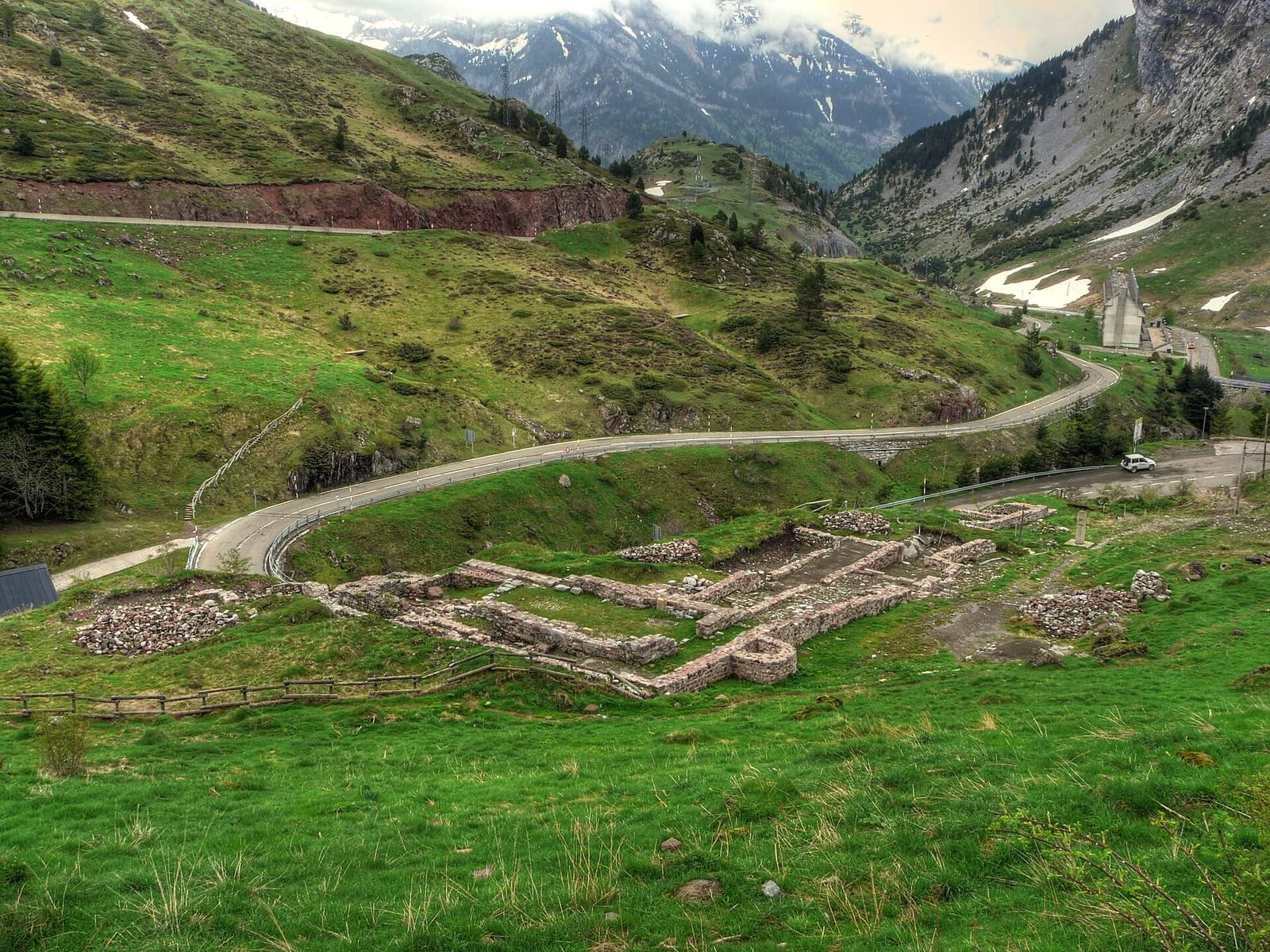
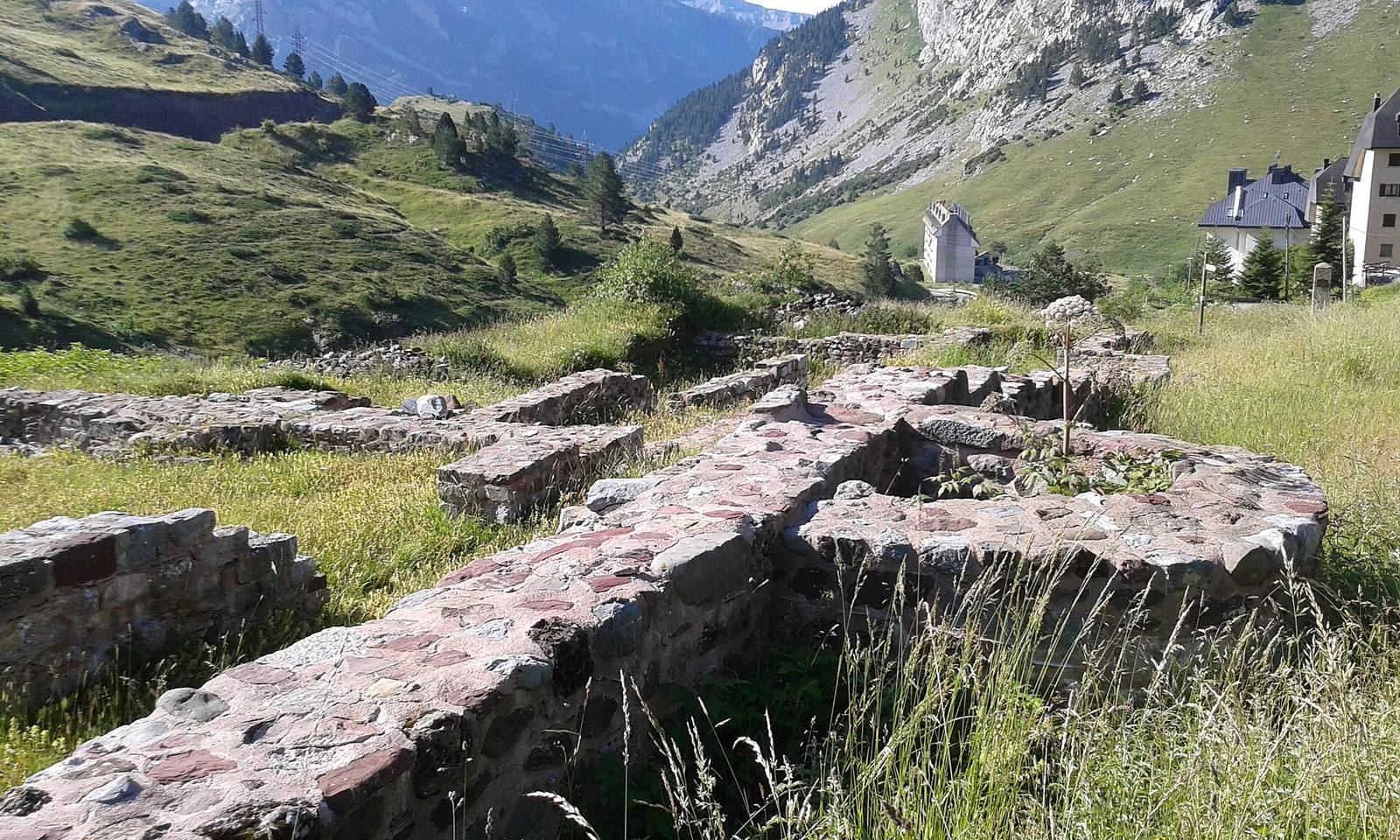
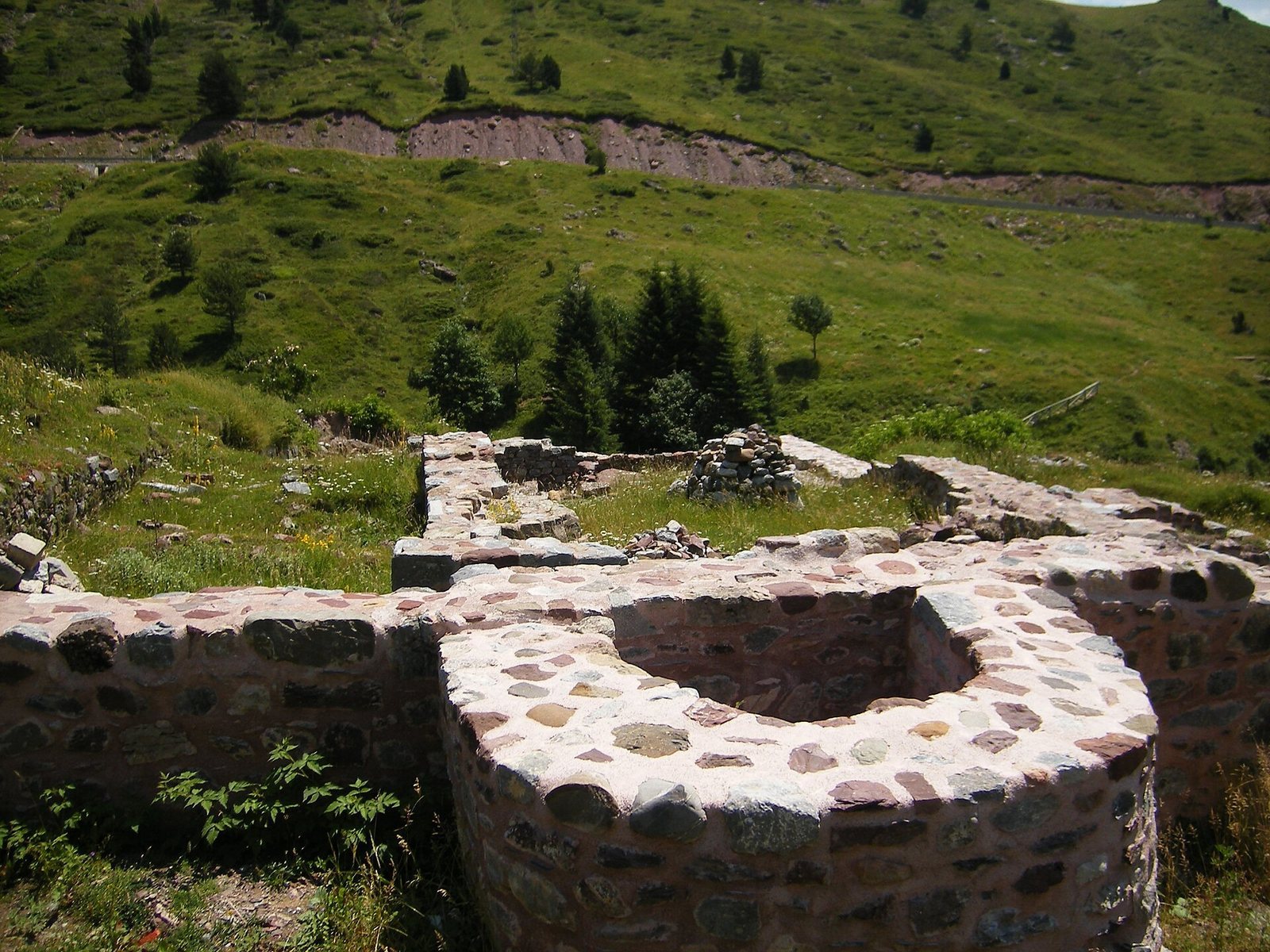
The complex occupies about 2,000 square metres at the high Somport Pass, near Candanchú and along the Camino de Santiago. About 900 square metres have been excavated. Its remains are consolidated ruins, including building foundations and excavated walls. The complex included a church, cemetery, hermitage, monks’ house, prior’s palace, hospital, inn, and other buildings for religious and charitable work.
Church and burial grounds
Church
The small Romanesque church had a single nave, its main interior space, and a semicircular apse, the rounded end of the building, on the east. Excavations identified the apse as a 12th-century feature. The church also had a sacristy, a room for religious objects and vestments. Excavation extended from the church to its western façade, which connects with the Camino.
Necropolis
A cemetery lay on the other side of the church, where stone graves remain visible. Another cemetery area lies between the church and the inn and remains unexcavated.
Monastic and service buildings
Monastery and prior’s palace
The monastery stood beside the church on the side nearer France. The prior’s palace and the Hermitage of Saint Barbara were situated farther down from the church. Most of the former monastery-hospital area north of the church remains unexcavated, between the path and the slope toward the Aragón River. A 1597 inspection by Father Jerónimo Xavierre suggests that the refectory, a communal dining hall, and a large partly underground cellar were in this northern area.
Hospital, inn, and tavern
The complex included a hospital and an inn. Recent excavation reached the old inn south of the church. An 18th-century tavern stood beside the church and served meals to pilgrims.
Excavated and unexcavated areas
Excavations first focused on the church and later extended to its western façade and the inn to the south. Work has revealed the Romanesque apse, medieval graves, walls, and other archaeological material. The areas still unexcavated include the cemetery ground between church and inn and most of the former monastery-hospital north of the church.