Elaiussa Sebaste: An Ancient City and Port in Türkiye
Site at a Glance
- Rating
- 4.3
- Popularity
- Medium
- Country
- Turkey
- Primary era
- Classical
- Eras represented
- Classical, Medieval
- Civilizations
- Byzantine, Roman
- Site type
- City
On this page18 sections
History
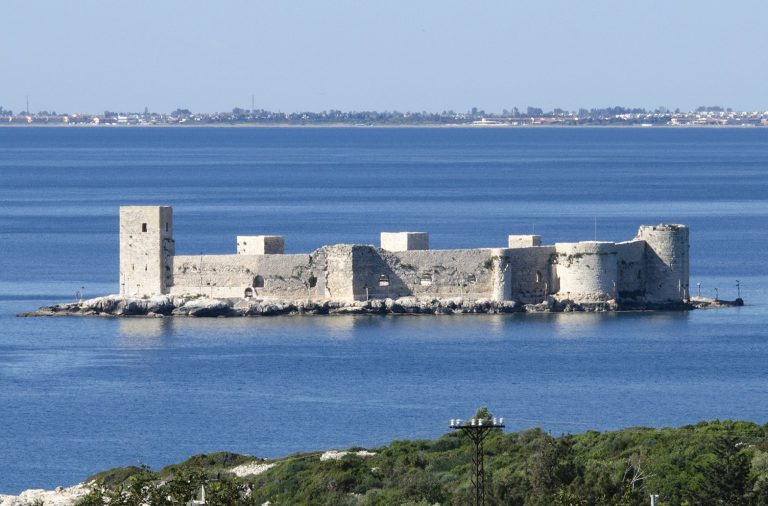
Elaiussa Sebaste was an ancient city in Türkiye, at present-day Ayaş in the Erdemli District of Mersin Province, founded by the people of ancient Cilicia on the southern Anatolian Mediterranean coast. Its earliest settlement probably dates to the second century BCE. Originally called Elaiussa, it occupied a small island protected by harbors on both sides. A narrow isthmus connected it to the mainland, and the island later became a peninsula as the landform joined the coast.
From island settlement to royal capital
A major transformation took place around 25 BCE, when Augustus, the first Roman emperor, transferred part of Cilicia and Lesser Armenia to Archelaus Philopator, the king of Cappadocia. Archelaus moved his capital to Elaiussa, founded a new urban area on the isthmus, and constructed a palace there. He renamed the city Sebaste in honor of Augustus. The name was the Greek equivalent of the Latin honorific Augusta.
Sebaste also formed part of the political and familial networks of the eastern Mediterranean. Herod the Great, the Roman-supported king of Judaea, visited the city after he had been reconciled with his sons. Herod’s son Alexander had married Glaphyra, the daughter of Archelaus, and the marriage had produced two sons. The two rulers met at Sebaste and exchanged royal gifts.
Prosperity and transformation
The city’s prosperity was linked to olive cultivation and to the settlement of Archelaus. It entered a period of renewed prosperity after 74 CE, when the Roman emperor Vespasian suppressed piracy in Cilicia. During this period, Elaiussa Sebaste had two harbors, supporting its position on the Mediterranean coast.
Decline began toward the end of the third century CE. The Sasanian king Shapur I attacked the region in 260, and later incursions by the Isaurians, a people from the mountains of southern Anatolia, added further pressure. Churches and basilicas nevertheless continued in use during the Late Roman and Early Byzantine periods, when Roman political and Christian institutions remained influential in the eastern Mediterranean.
Byzantine decline and archaeological investigation
Elaiussa Sebaste declined further as the neighboring city of Corycus, identified with present-day Kızkalesi, flourished during the sixth century. A Byzantine palace was abandoned by the beginning of the seventh century, and the city gradually disappeared from historical prominence.
Excavations on the peninsula have been carried out since 1995 under the direction of the Italian archaeologist Eugenia Equini Schneider, with financing from the University of Rome La Sapienza. The ruins now form an archaeological site that is largely in ruins, while sand covers much of the former settlement.
Remains
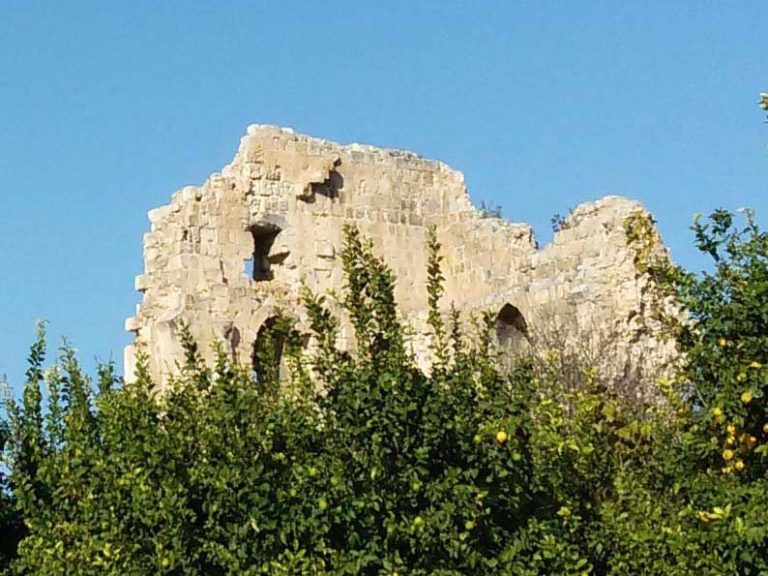
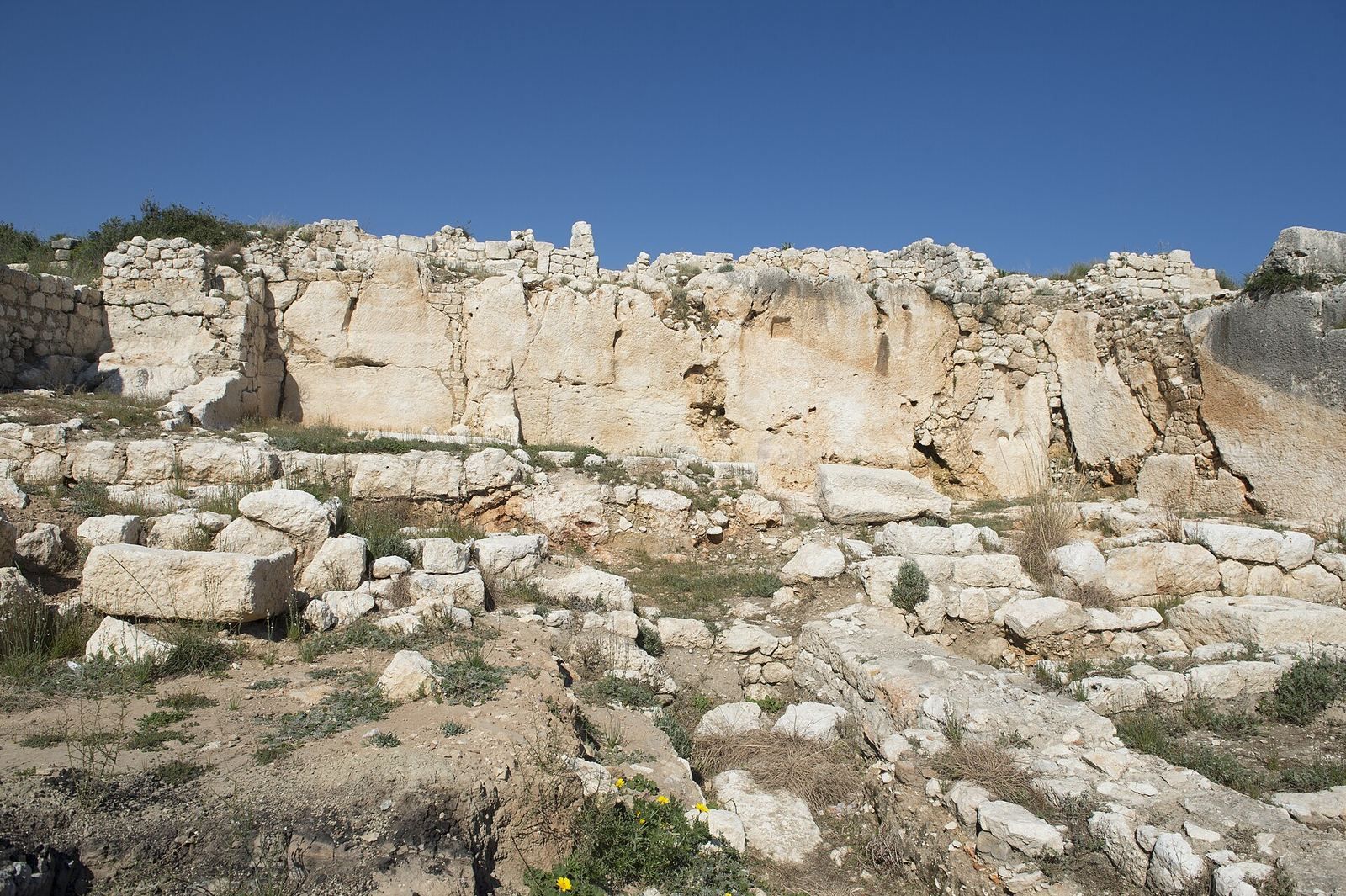
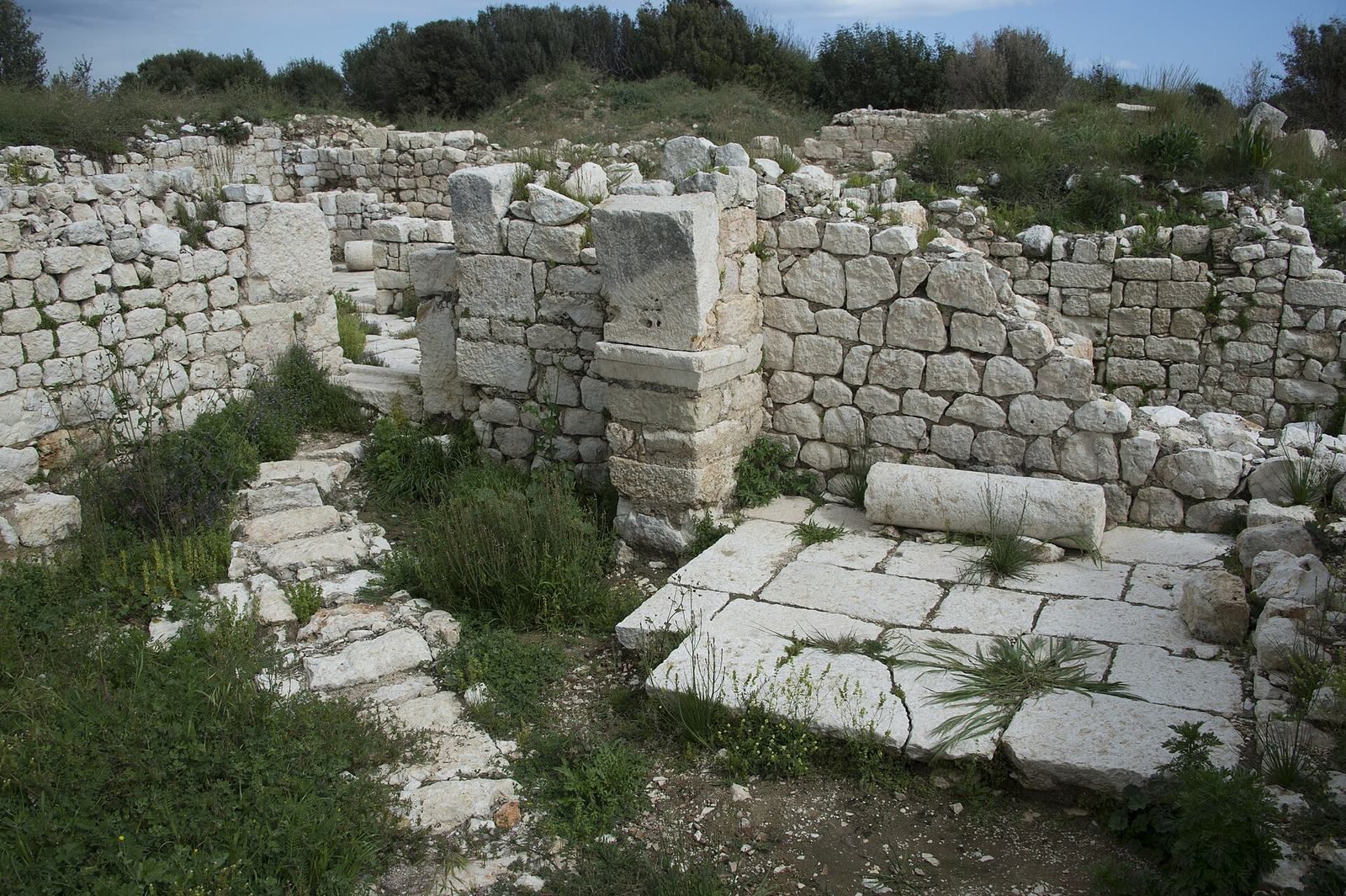
Elaiussa Sebaste extends across a former island and the adjoining isthmus, with its urban remains distributed around two ancient harbors. The site includes fortifications, civic buildings, religious structures, waterworks, baths, a theater, and extensive funerary areas. The combination of surviving masonry, buried remains, and later Byzantine construction reflects the city’s long development from a coastal settlement into a royal and regional center.
Harbors and the fortified peninsula
Northern harbor and portico
The northern harbor lay beside the former island in an area that is now on land near the D400 highway. A portico from the Roman imperial period followed the shoreline. Its entrance was formed by a monumental doorway flanked by two towers, which were incorporated into the city’s fortification system.
Byzantine palace
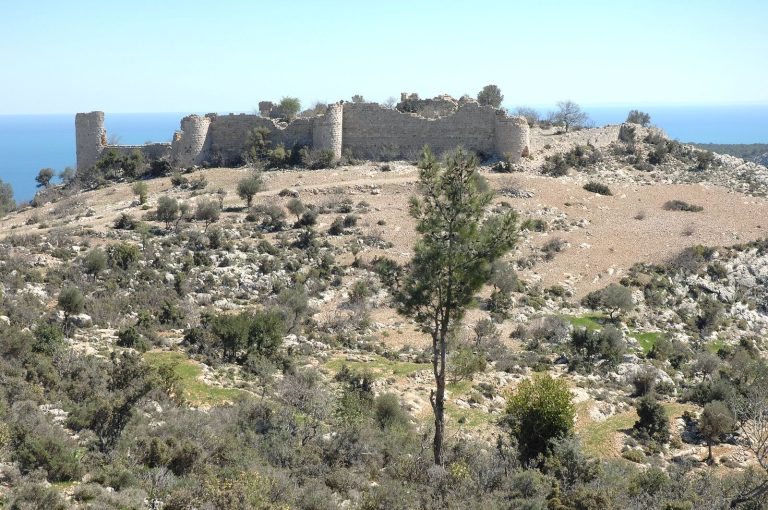
The Byzantine defensive walls were strengthened in the fifth century. Inside the fortified perimeter stood a large palace, probably the residence of a senior Byzantine military commander. Its central circular hall had a multistory colonnade and was surrounded by numerous halls and residential rooms. The building was partly destroyed around 530 and finally abandoned by the beginning of the seventh century.
Western bay structures
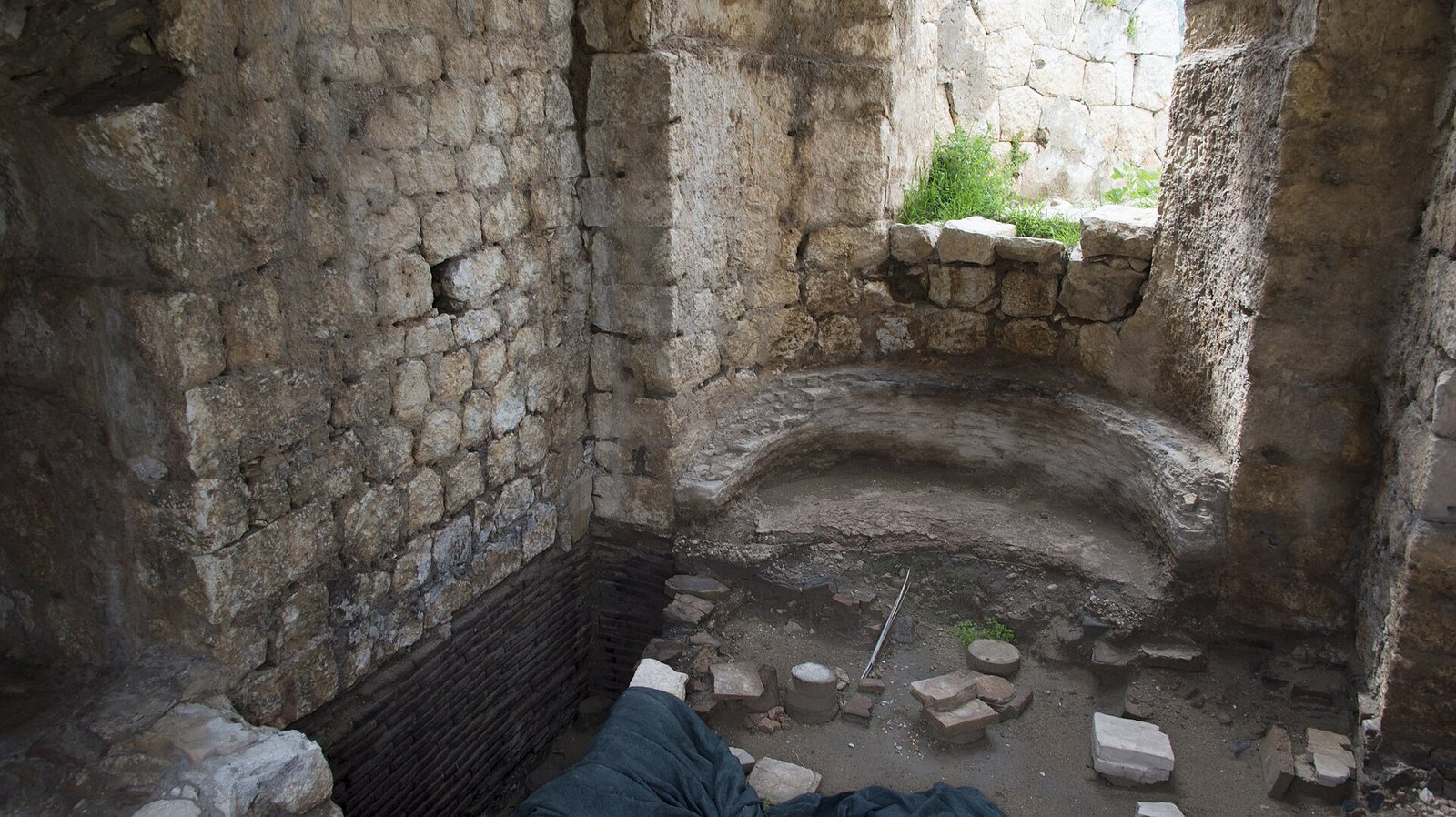
On the side of the peninsula overlooking the western bay are the remains of a bath, a cistern, a defensive wall, and a breakwater. The bath contains a mosaic floor. Nearby stands a small basilica with a circular ground plan, among the principal excavated remains in this part of the city.
Theater and agora
Theater
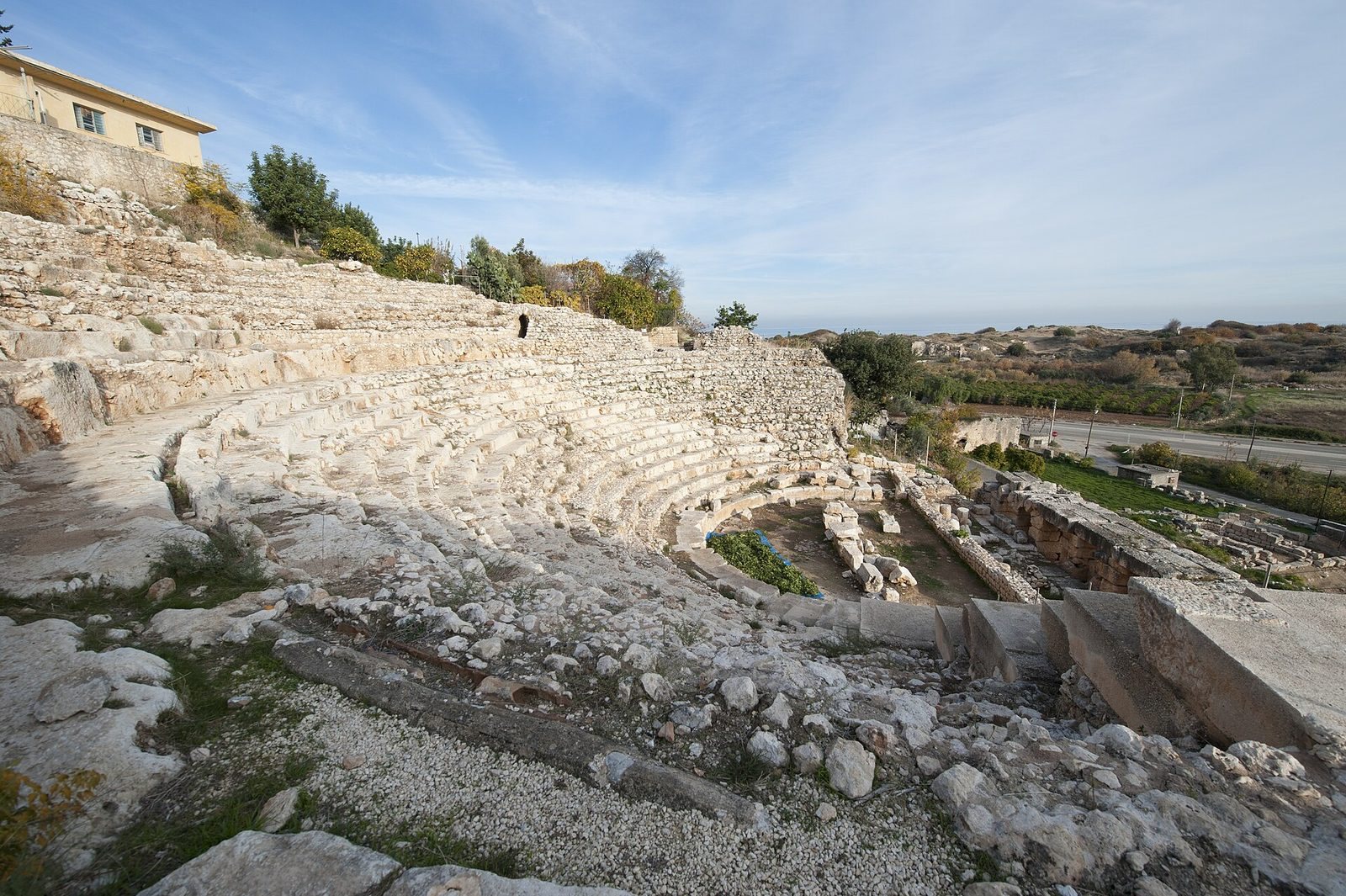
The theater stands on the opposite side of the D400 highway, which now divides Elaiussa from Sebaste. Construction began in the first half of the second century CE, and the building was completed during the reigns of Marcus Aurelius and Lucius Verus, between 161 and 169 CE. It contained about 23 seating rows and accommodated approximately 2,300 spectators. Centuries of stone robbing heavily damaged its steps and decoration, and the theater had ceased to function by the end of the third century.
Agora
An agora, the public civic and commercial space of a Greek or Hellenistic city, stood beside the theater and was probably built during the imperial period. A partly demolished defensive wall enclosed it, and two monumental lion-shaped fountains once marked its entrance. A large church later occupied the interior, where its mosaic pavement has been covered with sand for protection.
Temple and bath complex
Hilltop temple
A temple stood outside the urban area on a hill overlooking the sea. Its original design included twelve Corinthian columns along each long side and six along each short side. Corinthian columns have capitals decorated with acanthus leaves. Two columns remain standing.
Large bath complex
A large bath complex lay among lemon groves between the temple and the agora. It was built with a construction technique characteristic of ancient Roman building but rarely used in Anatolia. Its position forms part of the wider archaeological landscape between the hilltop temple and the civic center.
Necropolis and water supply
Avenue of Graves
Elaiussa Sebaste’s necropolis, or designated funerary district, extends across a hill north of the city. The Avenue of Graves contains nearly one hundred burials of different forms and sizes, scattered among lemon trees. Its monumental tombs display forms characteristic of Cilicia Tracheia, the rugged western part of ancient Cilicia.
Aqueducts and the Grave of the Princess
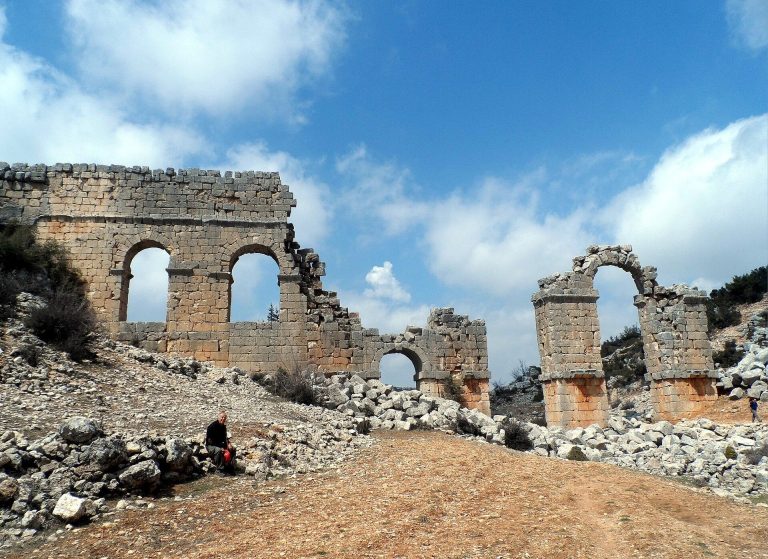
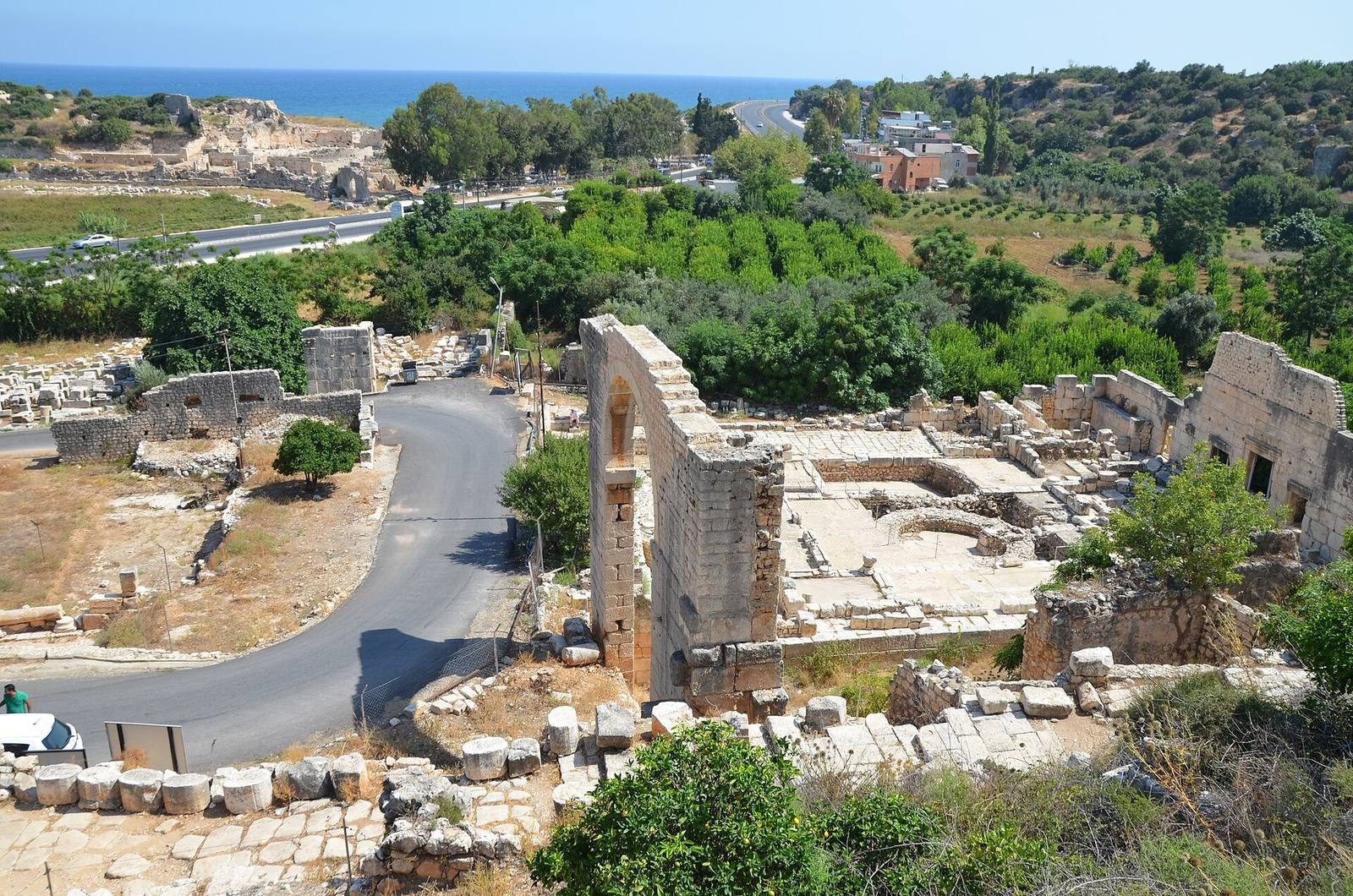
Ancient aqueducts carried water from the Lamos River to the ruins and adorned the city’s two entrances. The western aqueduct remains relatively well preserved. Together, the aqueducts once formed a canal system extending as far as Corycus.
Directly opposite the aqueduct, on a small rise, stands a lidded sarcophagus known as the Grave of the Princess. It is regarded as a prime example of the Anatolian tomb tradition and forms a distinct funerary feature within the remains surrounding the ancient city.