Église Notre-Dame-des-Ardents de Lagny-sur-Marne: Former Abbey Church and Catholic Parish Church
Site at a Glance
- Popularity
- Medium
- Country
- France
- Primary era
- Medieval
- Eras represented
- Medieval, Early Modern, Modern
- Civilizations
- County of Champagne, French
- Site type
- Religious
- Remains
- Church
On this page19 sections
History
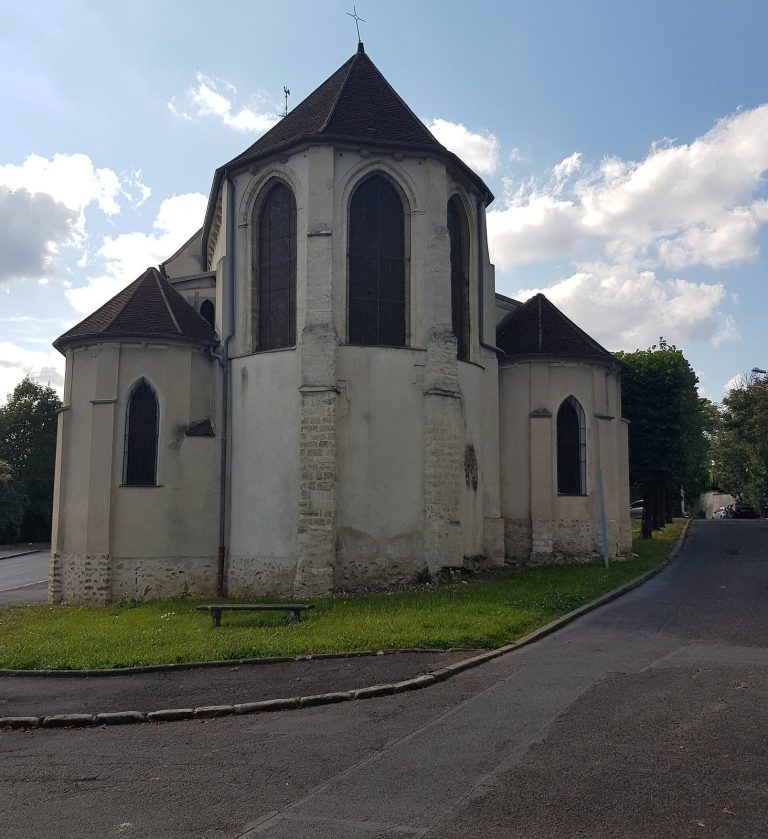
Église Notre-Dame-des-Ardents de Lagny-sur-Marne is a former abbey church and present Catholic parish church in France. The Abbey of Saint-Pierre was founded in 648 by Fursy, an Irish monk, and successive abbey churches occupied the site. The present Gothic church, with Rayonnant features, was begun around 1206 and completed in its upper parts around 1250.
The abbey and medieval rebuilding
The Normans ravaged the church in 910. In 987, Herbert II of Troyes and his son Étienne I began a replacement on the ruins, with work ending in 1017. Archbishop Léothéric of Sens, the senior bishop responsible for the region, consecrated it in 1019 to Saint Peter, Saint Paul, and the Holy Innocents. King Robert the Pious gave the church relics, objects venerated for their association with sacred people or events, including a thorn said to come from Christ’s crown, a nail associated with the Crucifixion, and bones of the Holy Innocents.
An epidemic illness known as the burning sickness affected Lagny and other parts of France in 1033 and returned in 1127. After the later outbreak, residents appealed to the Virgin Mary, and a chapel took the name Notre-Dame-des-Ardents, meaning Our Lady of the Burning Sickness. The church also received visits from Pope Pascal II in 1107 and Pope Innocent II in 1131, while he was on pilgrimage. Fires damaged the building in 1134, 1157, 1176, and 1184. Abbot Jean Britel, head of the monastery, began a rebuilding campaign in 1206. Its planned scale, about 110 metres long with vaults 27 metres high, was not achieved; repairs followed in the fourteenth century.
The church became the burial place of Herbert II, who died in 995, and Thibaut IV of Blois, count of Blois and Champagne, who died in 1152. It also held the burials of Saint Déodat, an abbot of Lagny who later became bishop of Castres, and Saint Ausilion, a martyred monk and follower of Fursy.
Joan of Arc and the abbey
During her second visit to Lagny in 1430, Joan of Arc prayed before an image of the Virgin with local girls for a child said to have been dead for three days. At her trial in Rouen on 3 March 1431, Joan recounted that the child yawned three times and regained some colour. The child was baptized, then died and was buried in consecrated ground. People regarded the event as a miracle, and it was considered during Joan’s canonization.
On 5 May 1430, as she left for Senlis, Joan entrusted six swords to the abbey. One was the sword of Sainte-Catherine-de-Fierbois, which had belonged to Charles Martel and, according to the tradition described for it, was used at the Battle of Poitiers in 732. Its present whereabouts are unknown. A local legend places it in an underground passage or walled inside a pillar in the Virgin’s chapel.
Rebuilding, religious conflict, and revolution
Calvinists, followers of the Reformed Protestant tradition, sacked the monastery in 1567 and destroyed relics. They specifically stole the nail associated with the Passion. Major repairs in 1686 required the removal of the first seven bays of the side aisles. A new façade of timber framing and plaster infill followed, and the church was reconsecrated in 1687. In 1750, safety concerns led to the demolition of the four remaining bays of the twelfth-century nave and its bell tower. A new tower, Saint Joseph’s Chapel, and a sacristy formed part of the rebuilt entrance arrangement.
A revolutionary decree issued in 1789 required communes with fewer than 6,000 inhabitants to keep only one church. Lagny, then home to 1,723 people and four churches, selected Saint-Pierre; the other churches closed on 17 August 1792. The church’s eight bells were taken down and melted for cannonballs and other cannon fittings. Saint-Pierre was renamed Saint-Fursy and later became the Temple of Liberty.
Nineteenth- and twentieth-century changes
Work in 1860 added a sacristy and presbytery, and in 1865 plaster rib vaults, ceilings supported by projecting ribs, were added to the central part of the church. During the 1870 Franco-Prussian War between France and Prussia, German soldiers and French prisoners occupied the building and burned wooden fittings for warmth, including the parquet floor, organ woodwork, and benches. King William of Prussia, later German Emperor William I, saw the organ’s condition and donated 400 francs. A new organ made by the Stoltz firm was installed in 1874. The church received French Historic Monument classification in 1886.
After Joan of Arc’s canonization in 1922, a public subscription paid for a statue by Armand Roblot. It was installed in the town hall square in 1923 and moved to the square behind the church in 1966. In 1940, the German army destroyed the First World War memorial and threw it into the Marne; surviving parts were later assembled into a replacement. German shelling damaged the church, its stained glass, and its roof in 1944. In 1950, the abbey church adopted the name Notre-Dame-des-Ardents-et-Saint-Pierre, recalling the epidemics and the Virgin’s miracle associated with their end.
Remains
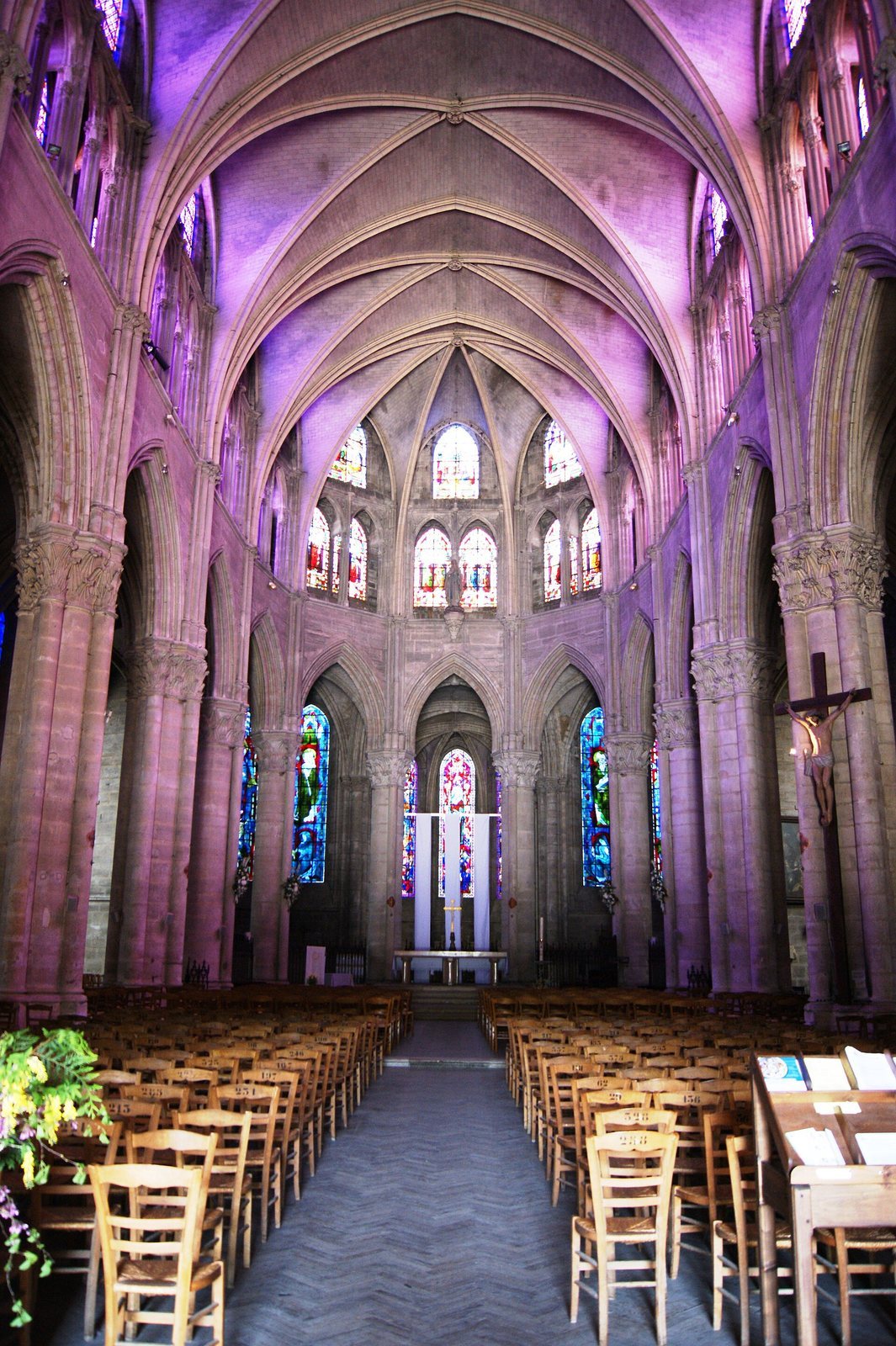
The church measures 48 metres long and 37 metres wide. Its Gothic interior has three levels: large arches, a triforium, which is a gallery-like level above the main arches, and upper windows. Massive piers with attached small columns support the vaults; their carved capitals feature buds, foliage, birds, and monsters. Short column shafts above the triforium indicate that a taller building had been planned.
Medieval fabric and entrance
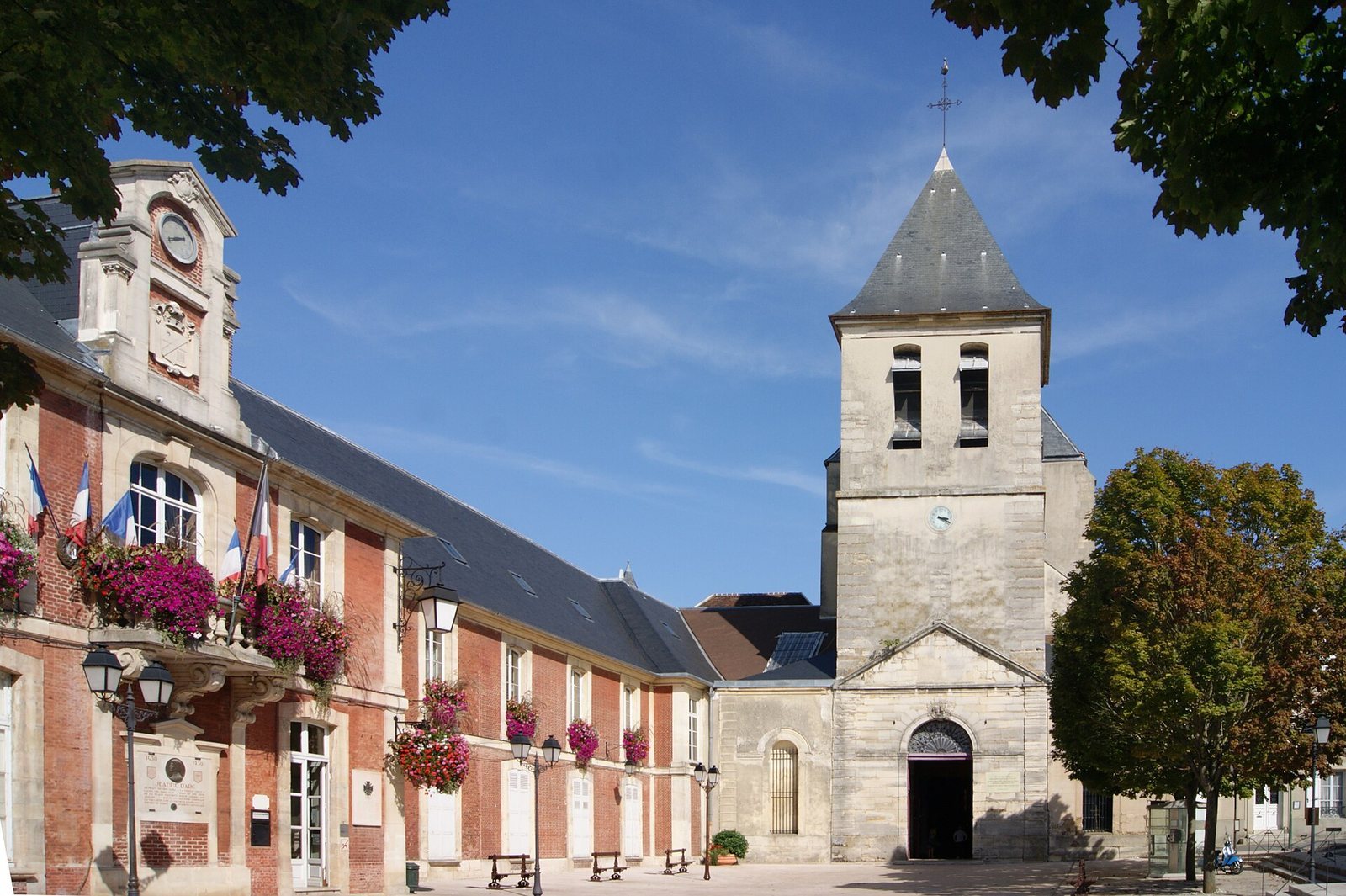
Remains of the twelfth-century church are incorporated into the wall along the west side of the transept, the crosswise part of a church that intersects the nave, on both sides of the entrance. The present façade and porch-bell tower, an entrance porch combined with a bell tower, date from the rebuilding of 1750. Since the eighteenth century, the entrance from the forecourt has passed through this tower. Western chapels form part of the church’s layout.
Chapels and devotional features
Saint Joseph’s Chapel
Set within the bell tower, Saint Joseph’s Chapel contains a marble altar and an altarpiece with columns donated by Louis XIV, king of France from 1643 to 1715.
Chapel of Joan of Arc
A statue of Joan of Arc stands before a pillar associated with her prayer for the child in 1430. The pillar is known as the Pillar of Joan of Arc.
Virgin’s Chapel
The Virgin’s Chapel holds a reliquary, a container for sacred remains or objects. A tradition says that during an outbreak of the burning sickness in Arras in 1105, the Virgin brought a lit candle there and saved 144 inhabitants. In 1939, Bishop Outoit of Arras gave Lagny fragments of the candle, enclosed in a crystal tube shaped like a candle. A slab in the chapel bears an inscription meaning, “Here the child revived through Joan’s prayer, 1430.”
Other chapels
The remaining chapels are dedicated to the Holy Savior, Saint Denis, and Saint Furcy. Parts of a twelfth-century portal were moved into Saint Furcy’s Chapel.
Interior artworks and fittings
Paintings and statues
Two oil paintings on the west wall depict the Resurrection and Ascension. Their date is uncertain, and they have been tentatively attributed to Jean-Baptiste Hutin around 1772–1775. The Resurrection painting was restored in 1998–1999 and later damaged by roof leaks. Polychrome wooden statues of Saints Peter and Blaise stand beside the porch doors. A twentieth-century statue of Saint Anthony of Padua by Yvonne Parvillée stands near the entrance to Saint Joseph’s Chapel.
Reliquaries and inscriptions
Below the paintings are eighteenth-century reliquary caskets for Saint Teresa of Ávila and an unidentified saint. Made of carved, gilded wood, they were restored in 2018. A plaque in the south part of the church commemorates Joan of Arc’s miracle.
Stained glass and choir
Stained-glass windows installed in 1860 depicted subjects from the Old and New Testaments. Some were destroyed during the Second World War. The oldest windows still visible are by Claudius Lévêque of Beauvais; later windows were made by Roger Calixte Poupart in 1951 and 1956. Engraved dedication crosses appear on the choir pillars.
Monuments in the square
Joan of Arc statue
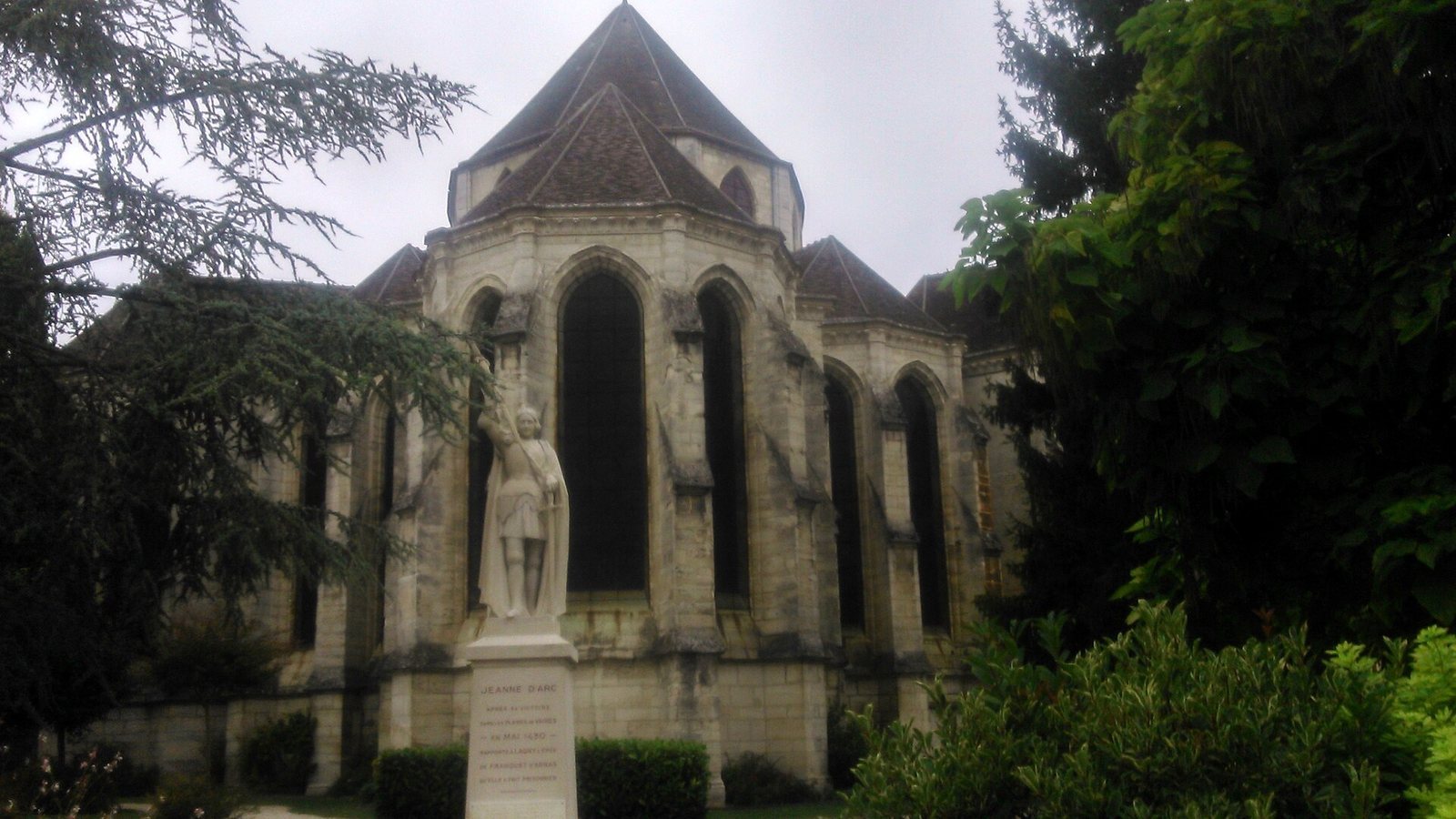
Roblot’s statue in the square behind the church shows Joan holding the sword of Franquet d’Arras in her right hand and the sword of Sainte-Catherine-de-Fierbois in her left. Its pedestal inscription says that after her victory on the plains of Vaires in May 1430, she brought back to Lagny the sword of Franquet d’Arras, whom she had captured.
War memorial
The surviving parts of the First World War memorial were assembled in the square as a replacement monument honoring those killed in combat.