Church of the Epiphany in Yaroslavl: A Russian Orthodox Church
Site at a Glance
- Popularity
- Medium
- Country
- Russia
- Primary era
- Early Modern
- Eras represented
- Early Modern
- Civilizations
- Russian
- Site type
- Religious
- Remains
- Church
On this page8 sections
History
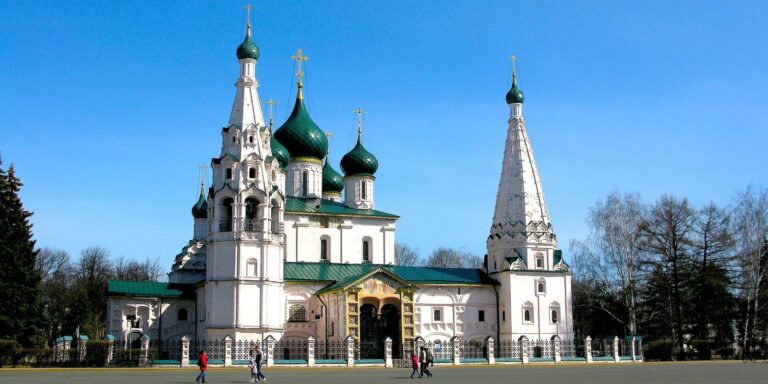
The Church of the Epiphany is a Russian Orthodox church in the historic center of Yaroslavl, Russia. Built in brick from 1684 to 1693, it combines Moscow and Yaroslavl church-building traditions. It replaced an earlier wooden church and has served both religious and museum roles.
Foundation and construction
An 11th-century foundation date is associated with the church, although its first recorded mention is from the 16th century. The wooden church that preceded the brick building may have dated from the medieval period or may instead have been built in the 16th century.
Merchant Alexei Avraamovich Zubchaninov paid for the brick church. He belonged to the Guest Hundred, a privileged association of Russian merchants. Metropolitan Joasaph of Rostov, a senior bishop in the Eastern Orthodox Church, consecrated the building on 2 July 1693. The church belongs to the Russian Orthodox Church and is within the Yaroslavl Diocese and Central Deanery, an area grouping local parishes.
Alterations and changing use
A fire in 1753 led to the replacement of the church’s original wooden cupolas with new ones in Baroque forms.
The church closed after the October Revolution. Repairs took place in the 1950s, when its cupolas and tilework were restored under a project by senior researcher V. N. Zakharova and restoration-workshop head Sergei Davydov. V. Bryusova and A. Rogozin cleaned and strengthened the interior paint. The building passed to the Yaroslavl Museum-Reserve of Architecture, History and Art in 1959, and a permanent exhibition opened there in 1973. Orthodox services resumed in 2002; the church now serves both as a place of worship and as a museum. It is a federal-level cultural heritage site in Russia.
Remains
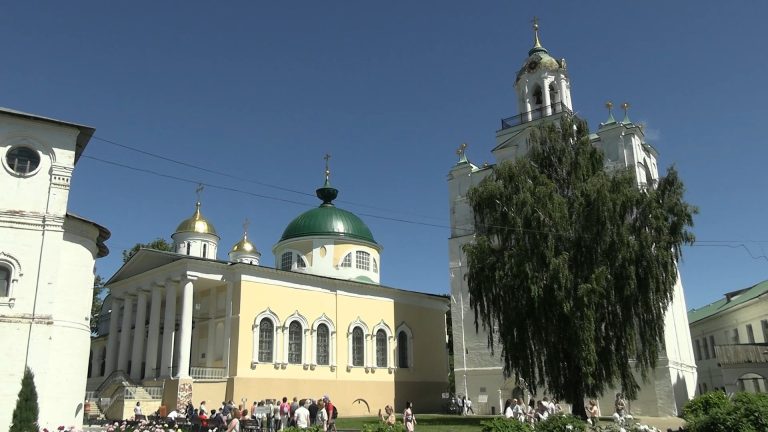
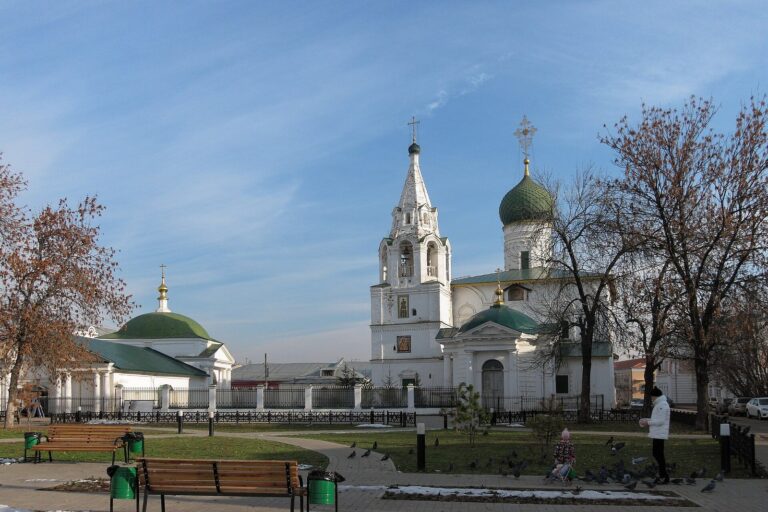
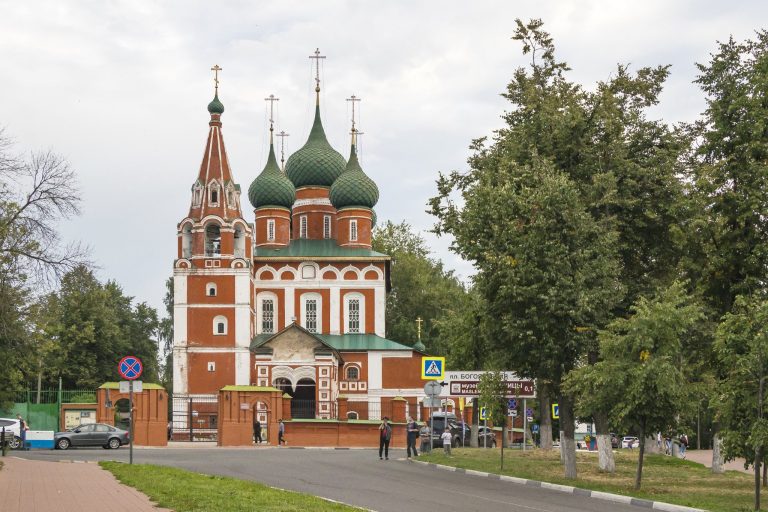
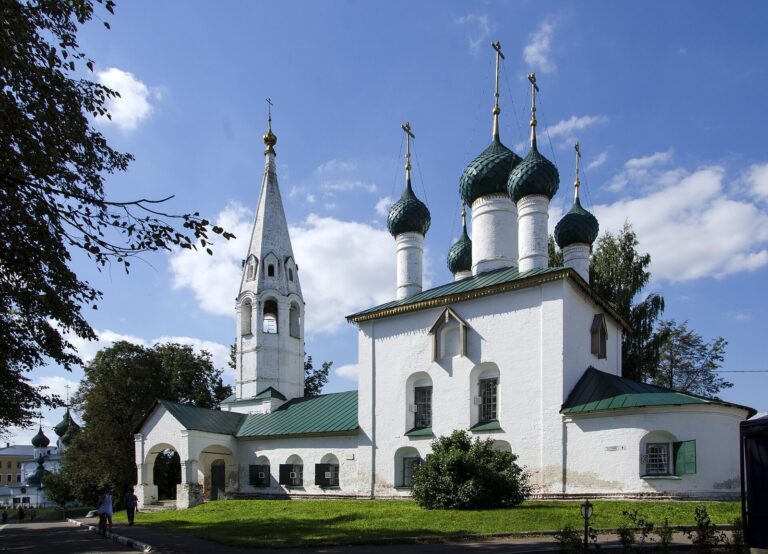
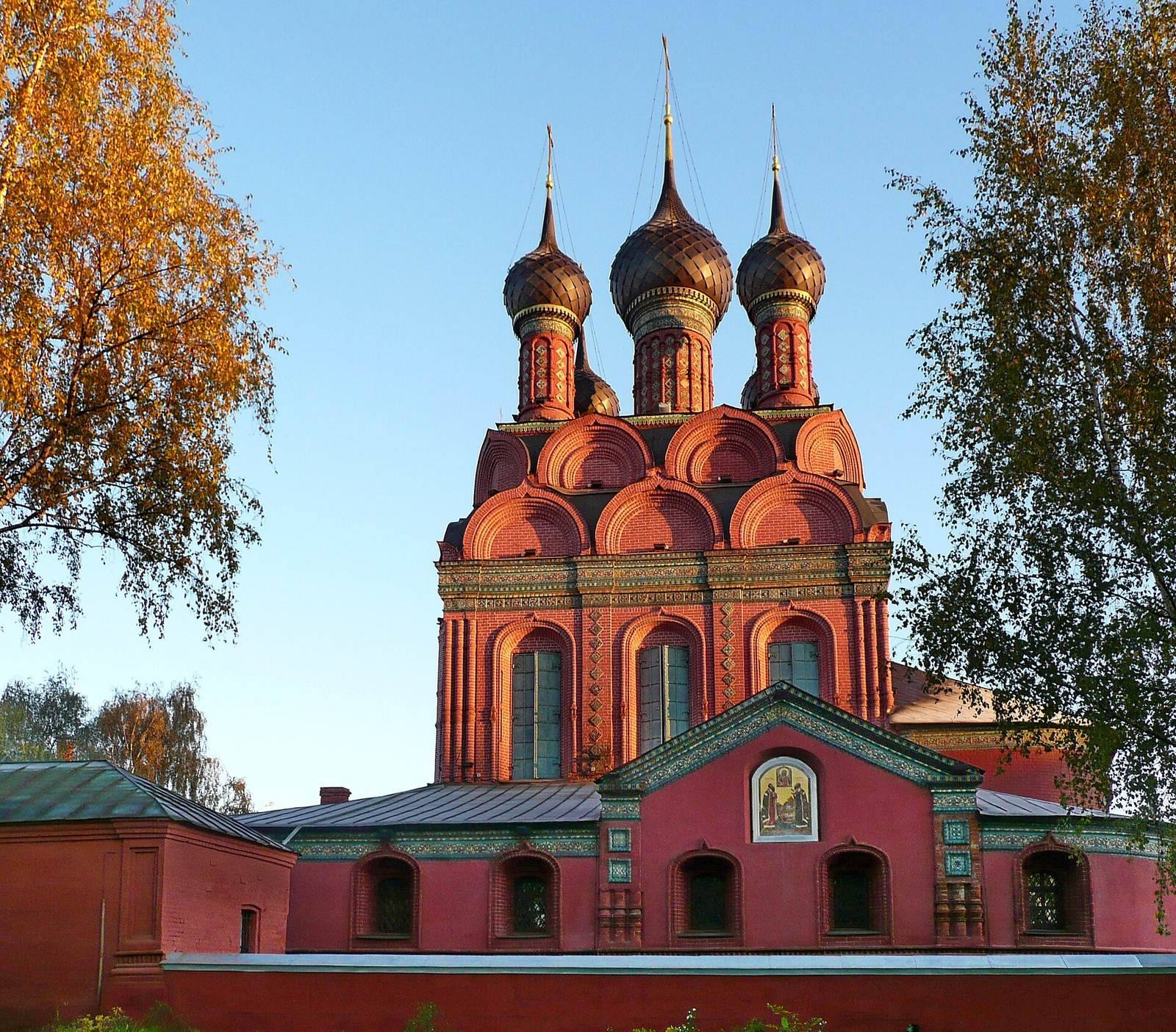
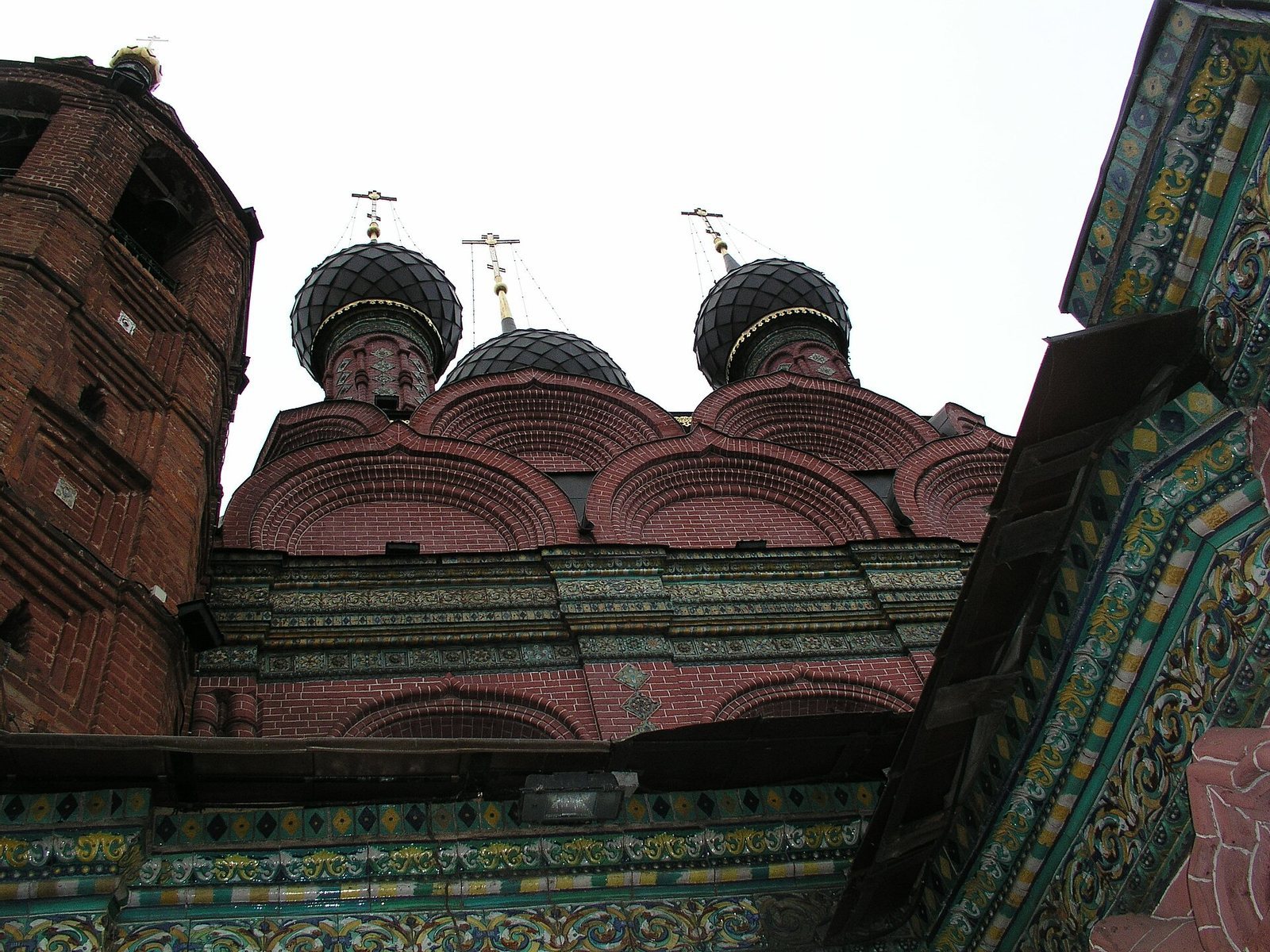
The church stands on a square named for it. Its brick structure is arranged around a square central space, with galleries around three sides and attached chapels. Five domes and polychrome tilework define the exterior, while extensive frescoes and three iconostases fill the interior.
Exterior and plan
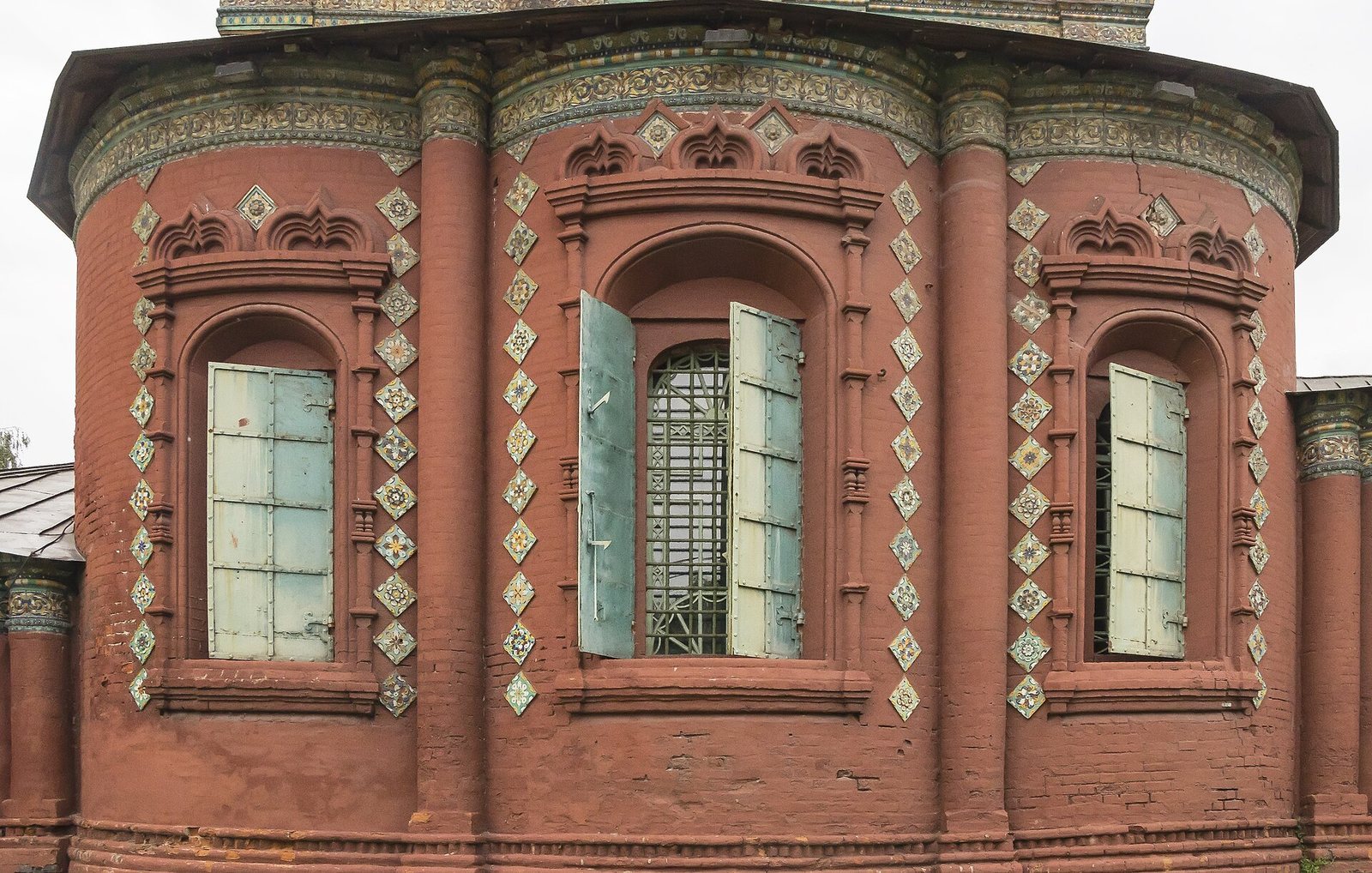
The main space has high walls and a high vault, and nine tall windows admit light. The surrounding galleries are lower than those of older churches in Yaroslavl. A chapel dedicated to Dmitry Prilutsky adjoins the south side, while a chapel on the north commemorates the Last Judgment, the Christian belief that God will judge humanity at the end of time. The church has three side chapels, with side-altar dedications that include Saints Basil and Constantine and the Last Judgment. At the gallery’s northwest corner, an attached bell tower rises above the building. Two tiers of kokoshniks, curved ornamental gables in Russian architecture, support tall circular bases topped by onion-shaped cupolas. Polychrome tiles decorate the frieze around the building.
Interior decoration
Iconostases
Three iconostases stand inside the church. An iconostasis is a screen bearing icons that separates the sanctuary from the main body of an Orthodox church. The Baroque example has pronounced Ukrainian artistic influences and may have come from the circle of Russian icon painter Simeon Kholmogorets.
Frescoes
Late-17th-century frescoes cover the interior in eight tiers. Their painting is thought to have begun in 1692 and finished in 1693, though the exact dates are uncertain. The scenes include the Dormition of Mary, understood in Eastern Christianity as her death and assumption into heaven, as well as the Resurrection and Ascension of Christ. The western part of the vault shows the Trinity, God as Father, Son and Holy Spirit, adored by Mary and John the Baptist. A western wall scene depicts Christ’s Passion, and floral ornaments divide the compositions.
The frescoes’ authorship remains unsettled. Differences in style point to the involvement of two artistic teams, associated with the painters Dmitry Plekhanov and Fyodor Ignatyev. During the 19th century, Semyon Stepanov Zavyazoshnikov renewed the lower tier of wall paintings and a decorative border using a glue-based painting technique. The altar paintings were renewed in the 1860s.