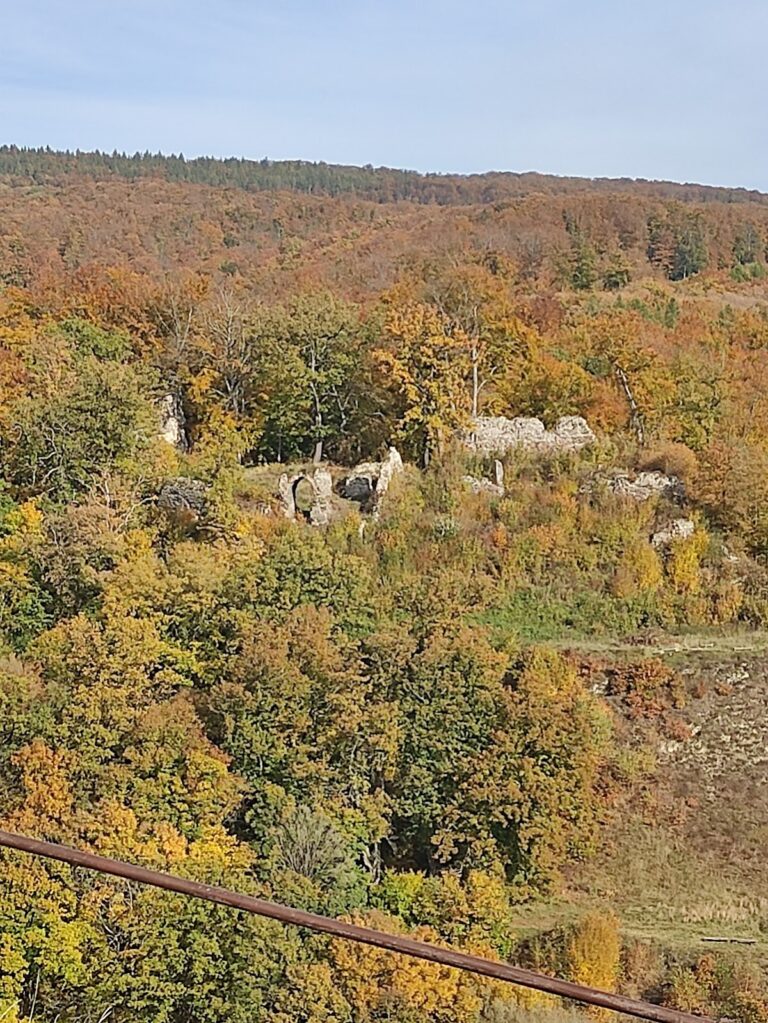
Ebersburg Castle Ruin: A Medieval Hilltop Fortress in Germany


Site at a Glance
- Rating
- 4.3
- Popularity
- Low
- Country
- Germany
- Primary era
- Medieval
- External website
- Open
- Eras represented
- Medieval
- Civilizations
- Holy Roman Empire, Landgraviate of Thuringia
- Site type
- Military
- Remains
- Castle
On this page8 sections
History
Ebersburg Castle Ruin is a medieval hilltop fortress in Germany, built in the twelfth century in the southern Harz and associated with the regional group known as the Allzunah castles. Originally called Ebersberg, it stood within a former royal forest and probably protected the Mainz court at Rottleberode while also serving as a threat to the imperial city of Nordhausen.
Mainz Origins and Thuringian Control
A charter issued in 1189 or 1190 records Archbishop Konrad of Mainz redeeming Ebersberg Castle and its revenues, which had been pledged to his relative, the Count Palatine of Saxony. Konrad then granted the castle and its revenues to him as a fief. This evidence makes the commonly held idea that the fortress was newly built or expanded around 1182 during Hermann I’s territorial advance toward Nordhausen unsustainable.
Ebersburg and Furra Castle at Großfurra, in the Wipper valley, formed part of the Thuringian landgraves’ fortifications in northern Thuringia. A landgrave’s hereditary marshal was recorded at Ebersburg in 1207 as a ministerial, a princely or ecclesiastical official and military retainer. The family name Marschälle von Ebersberg developed from this association. The marshal was replaced in 1246.
Succession, Feuds, and Later Decline
The death of Heinrich Raspe, the last ruler of the older Thuringian landgrave dynasty and the anti-king elected in opposition to Emperor Frederick II, ended that dynasty in 1247. The lordship then passed by inheritance to the Wettins, a German ruling dynasty that acquired extensive territories in central Germany.
In 1249, Count Siegfried of Anhalt claimed Ebersburg as the marriage portion of his wife, Katharina Birgersdottir of Sweden. He took possession after a feud, but further conflicts followed and the Wettins eventually recovered the castle. In 1326 they granted it as a fief to the Counts of Stolberg, a noble family with territories and fiefs in the Harz and central Germany.
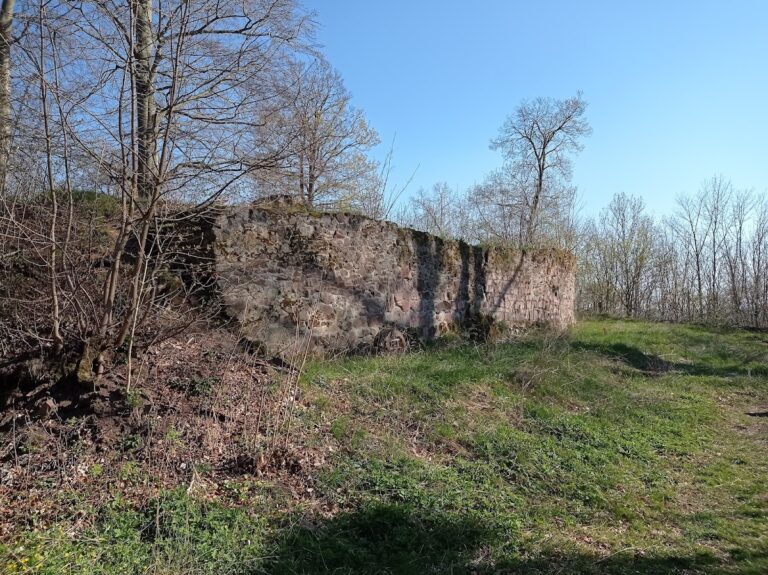
The castle began to decay during the sixteenth century. Since 2006, the Verein für lebendiges Mittelalter association has carried out maintenance work on the surviving ruin.
Remains
The ruin occupies the Burgberg at approximately 387.5 metres above sea level within the Südharz Nature Park. The Krebsbach, a tributary of the Thyra, flows southwest past the hill. Herrmannsacker’s village centre lies about 1,000 metres to the south, and the hamlet of Sägemühle is about 280 metres to the south-southeast at the foot of the Burgberg.
Inner Castle Structures
Gate Complex
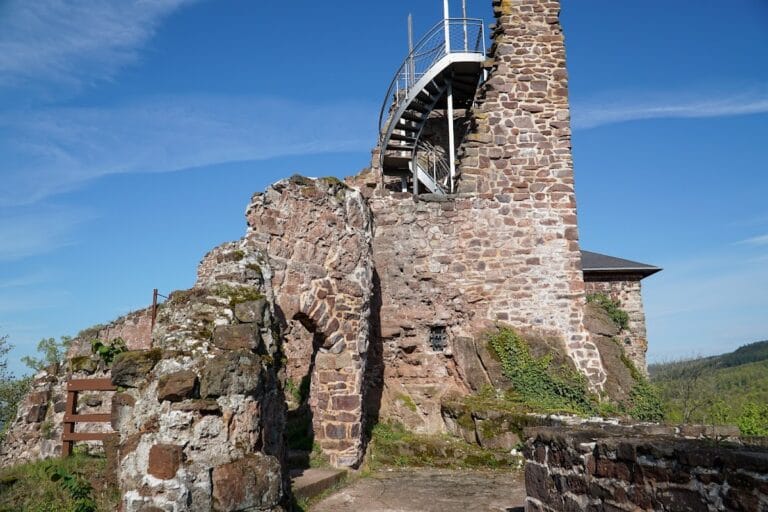
The surviving medieval complex includes the ruins of the gate complex of the inner castle. These remains form part of the physical evidence for the castle’s fortified arrangement on the elevated Burgberg.
Keep
A keep, the principal strong tower of a medieval castle, survives to approximately 19 metres in height. Its walls reach up to 4.5 metres thick, reflecting the tower’s defensive construction and its role as a major element of the castle complex.
Vockenrode Church Tower
Near Sägemühle stands the remnant of the church tower from the vanished village of Vockenrode. The surviving tower fragment forms a separate remnant in the landscape below the castle hill.