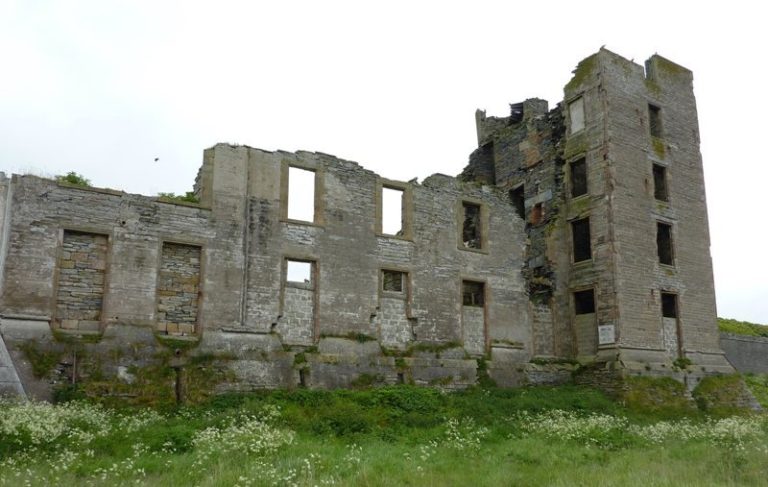
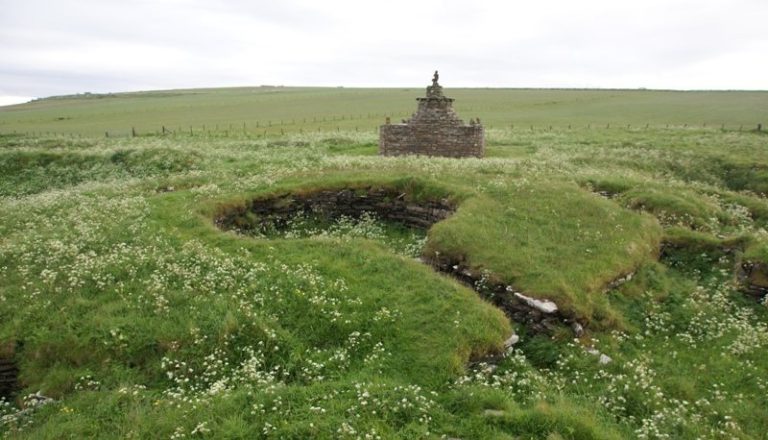
Dunbeath Castle: A Seventeenth-Century Castle in Caithness
Site at a Glance
- Rating
- 5
- Popularity
- Very Low
- Country
- United Kingdom
- Primary era
- Early Modern
- Eras represented
- Early Modern, Modern
- Civilizations
- British, Kingdom of Scotland
- Site type
- Domestic
- Remains
- Castle
On this page7 sections
History
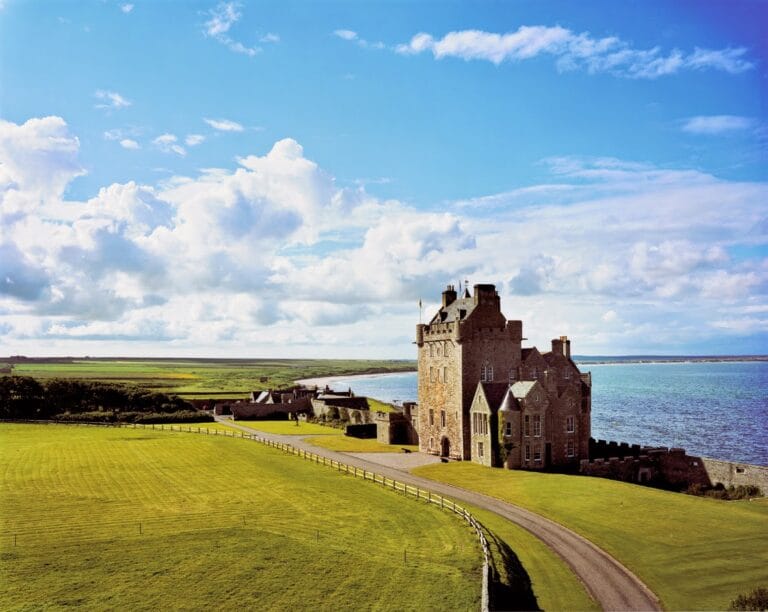
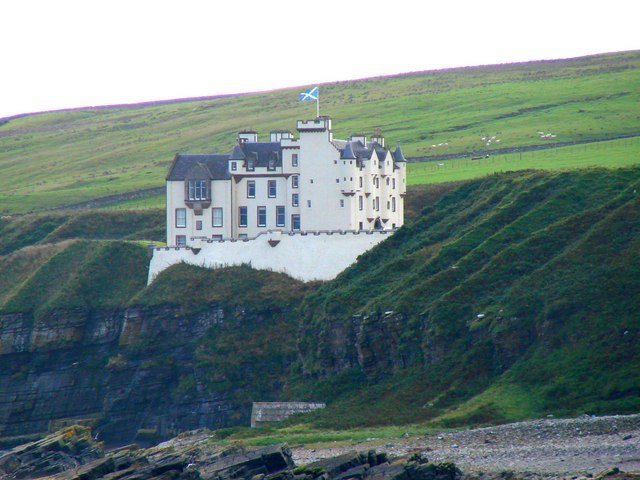
Dunbeath Castle is a castle in the United Kingdom, mainly seventeenth-century in origin, with later Scots Baronial additions. It stands on a rocky peninsula on the east coast of Caithness, about 2 kilometres south of Dunbeath in northern Scotland. A castle was first recorded here in 1428, when the lands belonged to the Earls of Caithness, and Alexander Sutherland was the first recorded laird.
From Sutherland to Sinclair ownership
The property passed to Clan Sinclair through the marriage of Marjory Sutherland, Alexander Sutherland’s daughter, to William Sinclair (1410–1484), the first Earl of Caithness from the Sinclair family. The earlier castle was replaced in 1620 by a four-storey tower house, a fortified residential building arranged around a tall tower with living and defensive spaces.
After a period under the control of Lord Forbes of Geanies, Baron of Dunbeath, the property returned to John Sinclair around 1624. He was probably the owner who remodelled the castle extensively and added its upper storeys during the 1630s. Sir William Sinclair also carried out substantial remodelling in the seventeenth century.
Conflict and later remodelling
In March 1650, during the Wars of the Three Kingdoms, a series of interconnected conflicts in Britain and Ireland involving Royalist and opposing forces, Dunbeath was attacked by Royalist troops commanded by James Graham, 1st Marquess of Montrose. Sir John Sinclair had gone to Edinburgh to warn of Montrose’s approach, leaving his wife, Catherine Fraser, to defend the castle against Sir John Hurry. She soon surrendered, and a Royalist garrison occupied the building. After Montrose was defeated at the Battle of Carbisdale in April, forces led by David Leslie recaptured Dunbeath.
David Bryce directed further remodelling in 1853 and 1881. The principal nineteenth-century changes included making the northern front symmetrical and creating a three-quarter-mile-long, arrow-straight, tree-lined drive approaching the castle.
Private ownership and protection
Vice-Admiral Sir Edwyn Alexander-Sinclair owned Dunbeath from 1894 to 1945. After 325 years of Sinclair ownership, the castle was sold to Bertram Currie in 1945. Harry Blythe and Helen Sinclair Blythe acquired it in 1967, Ray Stanton Avery in 1976, and Stuart Wyndham Murray-Threipland and his wife in 1997.
The estate was offered for sale again in 2023, including the castle and 20 houses and cottages. The castle and grounds were sold in 2024 for £25 million to Dunbeath Estates Limited. Dunbeath remains privately owned and is not generally open to the public. The grounds entered the Inventory of Gardens and Designed Landscapes in Scotland in 2003, and the castle is a Category A listed building, Scotland’s highest level of statutory protection for structures of national or outstanding architectural or historic importance.
Remains
Castle and defensive setting
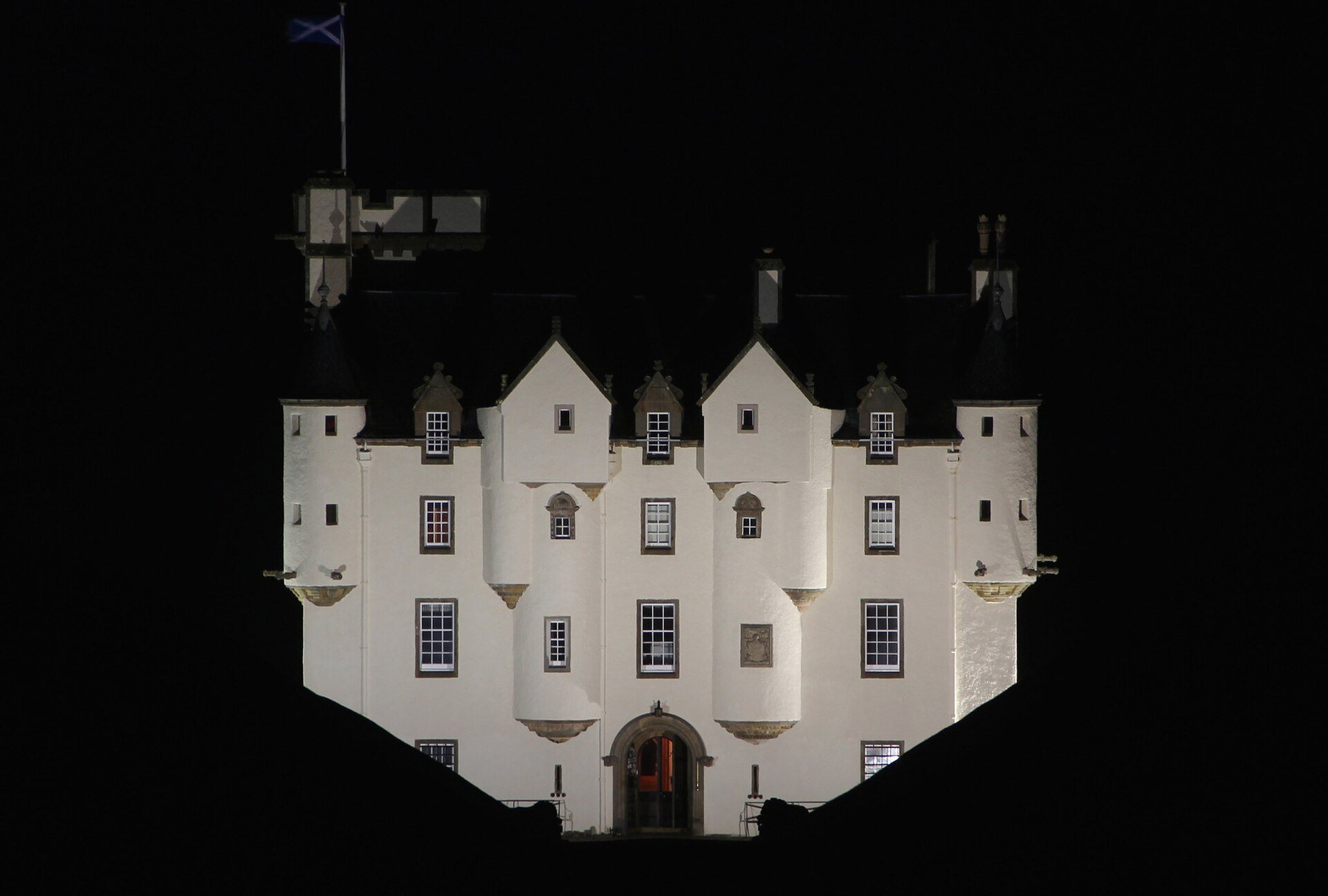
The castle occupies a narrow rocky promontory, with the oldest part of the present building in its south-west corner. The building is mainly seventeenth-century in origin, while its northern and eastern extensions were added in the nineteenth century in a Scots Baronial style, a revival that used forms associated with Scottish fortified houses and medieval castles. These additions were designed to harmonise with the earlier structure, although the interiors have since been substantially altered.
A dry ditch crosses the landward side of the promontory, separating the castle site from the mainland and reinforcing its defensive character. The building has an approximate total floor area of 19,669 square feet, or 1,827.3 square metres.
Designed grounds
The nineteenth-century approach is formed by a three-quarter-mile-long, straight drive lined with trees. The designed grounds also include walled gardens and a garden pavilion, extending the planned landscape around the castle beyond its rocky defensive site.