Dove Cottage: William and Dorothy Wordsworth’s Home in Grasmere
Site at a Glance
- Popularity
- High
- Country
- United Kingdom
- Primary era
- Early Modern
- Eras represented
- Early Modern
- Civilizations
- British, English
- Site type
- Domestic
- Remains
- House
On this page14 sections
History
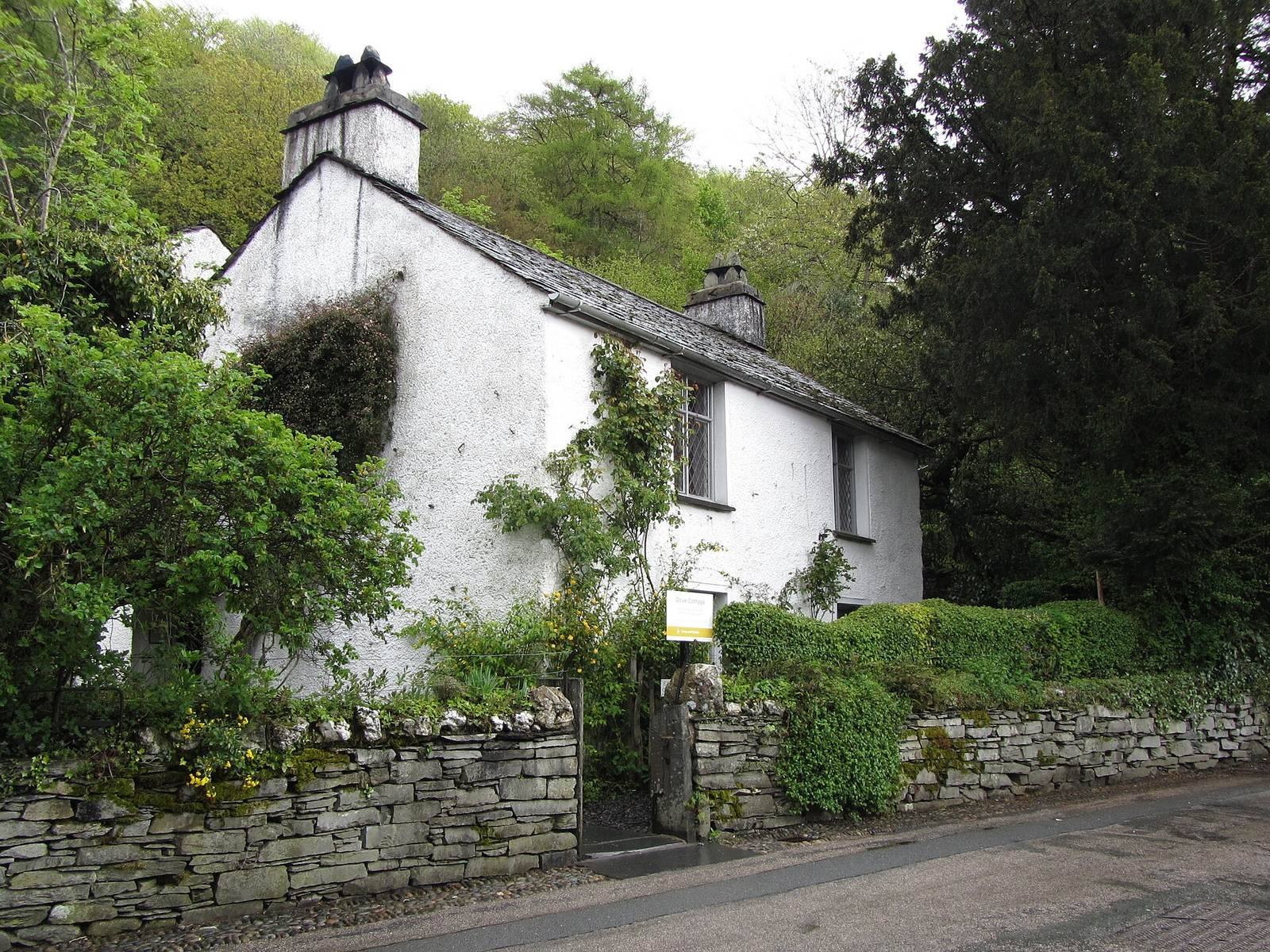
Dove Cottage is an early-seventeenth-century former inn on the edge of Grasmere in the Lake District, United Kingdom, and the former home of William and Dorothy Wordsworth. Its history connects an old roadside inn with the family life and writing that shaped its later identity as a literary house museum.
From inn to Wordsworth home
Built beside the main road between Ambleside and Keswick, the cottage probably began as a public house. It was known in 1617 as the Dove and Olive, and later as the Dove and Olive Branch. It continued operating as an inn until 1793. William Wordsworth recalled this earlier use in his 1806 poem The Waggoner.
William first saw the cottage in 1799 while walking in the Lake District with the poet Samuel Taylor Coleridge. On 20 December that year, William and his sister Dorothy moved in, having rented it from John Benson of Grasmere for £5 a year. They sought a permanent home together after previously living in Somerset and Germany.
The Wordsworth household, 1799 to 1808
William and Dorothy lived at the cottage until May 1808. William’s finances improved in 1802 when debts owed to his father by the 1st Earl of Lonsdale, a hereditary British noble, were repaid with interest after the earl’s death. The repayment helped William marry his childhood friend Mary Hutchinson later that year. Mary and her sister Sara joined the household, which already included Dorothy. William and Mary’s first three children, John, Dora and Thomas, were born there in 1803, 1804 and 1806.
During these years William wrote several of his best-known poems, including “Ode: Intimations of Immortality,” “Ode to Duty,” “My Heart Leaps Up” and “I Wandered Lonely as a Cloud,” as well as parts of The Prelude. Dorothy kept a journal of family life and visitors; published in 1897 as The Grasmere Journal, it also supplied William with poetic inspiration. Her 1802 account of daffodils near Ullswater inspired “I Wandered Lonely as a Cloud” in 1804.
William became a leading member of the Lake Poets, a group of writers associated with the Lake District. Coleridge and Robert Southey frequently visited, and Coleridge returned after leaving Keswick in 1804. Other guests included Walter Scott, Humphry Davy, and Charles and Mary Lamb. The growing family and steady flow of visitors eventually led the Wordsworths to leave for Allan Bank in Grasmere in May 1808.
De Quincey and later residents
Thomas De Quincey, an essayist and friend of the Wordsworths, moved into the cottage in 1809 and remained until 1820. His Confessions of an English Opium-Eater describes him relaxing there with a quart of laudanum, an opium tincture. His changes to the house, particularly the garden, displeased the Wordsworth family. As his own family grew, he moved to Fox Ghyll, but continued renting Dove Cottage and storing books there until debt forced him to leave in 1835.
The cottage then housed a succession of tenants. Its name first appears in the 1851 census, when coal agent Christopher Newby lived there with his wife and six children. In the 1860s a sign advertised it as “Dixon’s Lodgings: Wordsworth’s Cottage.” Edmund Lee, a county court registrar, bought the house in the late 1880s and wrote poetry and the first biography of Dorothy Wordsworth while living there.
Preservation as a literary home
The Wordsworth Trust, founded by the Reverend Stopford Brooke to preserve the place associated with Wordsworth’s works, bought the cottage in 1890. Lee remained involved as a trustee. The house opened to the public as a writer’s home museum in July 1891 and was designated a Grade I listed building in 1967, the highest English listing category for buildings of exceptional interest. A major redevelopment of the Wordsworth Grasmere site in 2020–21 included renovations to the cottage and the creation of new outdoor spaces.
Remains
The cottage and its grounds
The two-storey cottage is built from local stone, with limewashed walls and a slate roof. It has four rooms on each floor and remains largely unchanged from the Wordsworths’ time. Its ground-floor rooms retain oak panelling and slate floors.
Ground floor
The main room beside the entrance, called the houseplace or kitchen-parlour, served as the principal living space and setting for the main daily meal. It had a cooking range and a window seat. Dorothy’s bedroom adjoined it; the other ground-floor rooms were a separate kitchen and a buttery, used to store food.
Upper floor
Above the houseplace, William’s study looked across meadows towards the lake. The room also served for light meals and entertaining. Three other rooms upstairs were bedrooms, including a small room above the buttery that was later used as a nursery for William and Mary’s children. In 1800, newspapers were put on the walls of a small bedroom as insulation. Those papers were later removed, and copies were installed in the 1970s. The fireplaces were altered in the 1790s to burn coal rather than local peat.
Garden and domestic arrangements
The garden and orchard lie behind the cottage and were deliberately arranged in an informal, “wild” style preferred by William and Dorothy. The Wordsworth Trust restored the garden to that character. A toilet stood outside in the garden.
Nearby collections buildings
Wordsworth Museum
The adjacent Wordsworth Museum displays manuscripts, landscape paintings and portraits. It began in 1935 in a converted barn at Syke Side and moved in 1981 to a nearby coach house.
Jerwood Centre
Built near the cottage to house the Wordsworth Trust’s collections, the Jerwood Centre opened in 2005. Its 65,000 items include 90 percent of William Wordsworth’s manuscripts. The reading room contains a large library, including first editions by Romantic poets.
A commemorative stone
A stone from Dove Cottage is represented in the Walk of Fame at Rollins College in Winter Park, Florida.