The Dolmen of Mander: A Neolithic Passage Grave in the Netherlands
Site at a Glance
- Popularity
- Low
- Country
- Netherlands
- Primary era
- Stone Age
- Eras represented
- Stone Age
- Civilizations
- Unclassified
- Site type
- Burial
- Remains
- Tomb
On this page6 sections
History
The Dolmen of Mander is a Neolithic passage grave near Mander in the Netherlands. It belonged to the western group of the Funnel Beaker culture, a Neolithic culture named for its distinctive funnel-shaped pottery. The tomb was probably built between 3470 and 3300 BCE. It is the southernmost known megalithic tomb in the Netherlands.
Neolithic use
Pottery from three pits south of the presumed entrance belongs to the tomb’s construction phase. Sherds from inside the chamber indicate continued use around 3300 to 3075 BCE. A nearby cemetery of six flat graves, or burials without covering mounds, was in use around 3250 to 3075 BCE, overlapping with the dolmen’s later use.
Discovery and later history
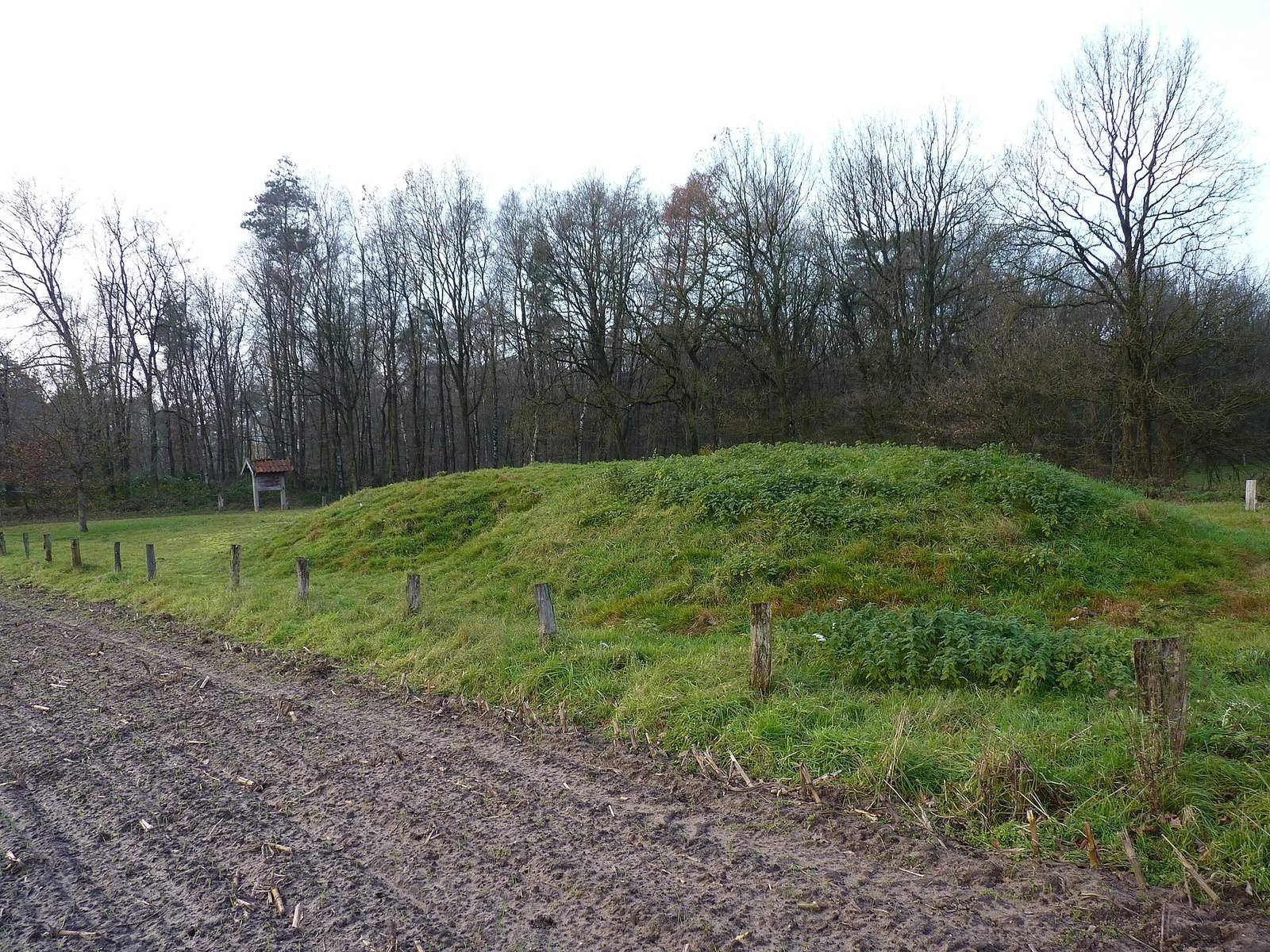
The dolmen was destroyed at an unknown date. After its discovery in 1957, Cornelus Coenraad Willem Jan Hijszeler, a curator at Rijksmuseum Twenthe and Oudheidkamer Twente, investigated the site. He recorded subsurface traces in drawings, and pottery sherds were recovered. Arie D. Verlinde, a provincial archaeologist with the Dutch national archaeological service, led further work in 1995. The mound was reconstructed after the investigations. The dolmen and nearby cemetery have been designated Dutch national monuments since 2000. In the numbering system associated with Dutch archaeologist Albert Egges van Giffen, the dolmen is O2.
Remains
Chamber and mound
The tomb stood in a field northeast of Mander, in eastern Overijssel near the German border. It was isolated from other megalithic groups, with the nearest in the Lingen–Rheine area about 30 kilometres away and those in Drenthe about 35 kilometres away. The chamber was oriented approximately east to west and measured about 13 metres long by 2 metres wide; its outer dimensions are estimated at about 13 by 5 metres. A covering mound stood over it. Reconstructions suggest six or seven pairs of side stones along the long sides, with an end stone closing each short end. The entrance probably lay near the middle of the southern side. The original stone chamber was destroyed, and investigation revealed traces of three pits for its supporting stones. The mound was rebuilt after excavation.
Pottery and nearby graves
Decorated Funnel Beaker pottery from inside the chamber represents about 300 vessels; the recovered fragments have also been described as coming from more than 300 pots. Funnel Beaker pottery was also found in the three pits south of the presumed entrance. Southeast of the dolmen lay the cemetery of six flat graves associated with the same culture.