Dolmen of Magacela: A Prehistoric Passage Tomb in Spain
Site at a Glance
- Popularity
- Low
- Country
- Spain
- Primary era
- Stone Age
- Eras represented
- Stone Age
- Civilizations
- Unclassified
- Site type
- Burial
- Remains
- Tomb
On this page7 sections
History
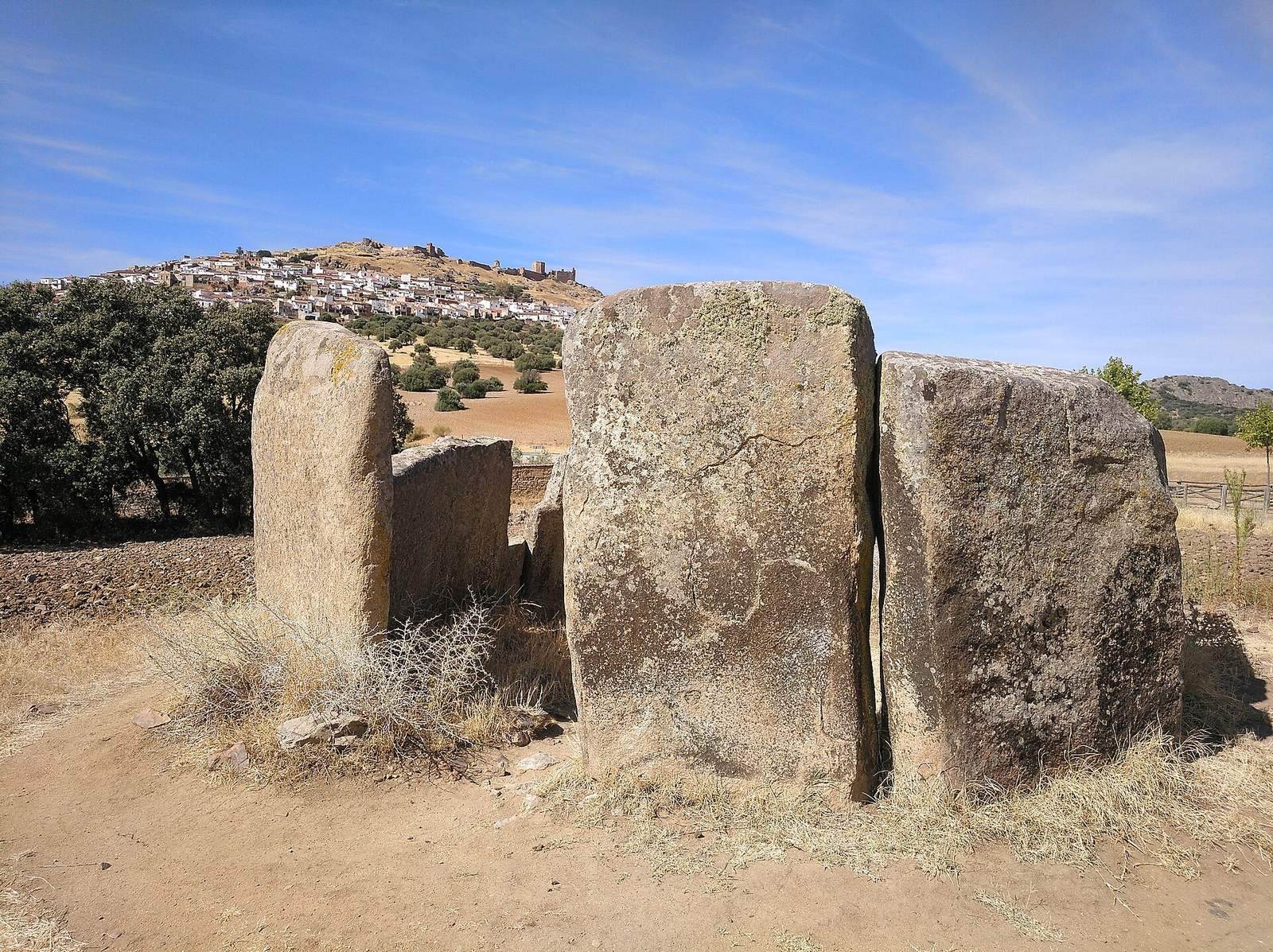
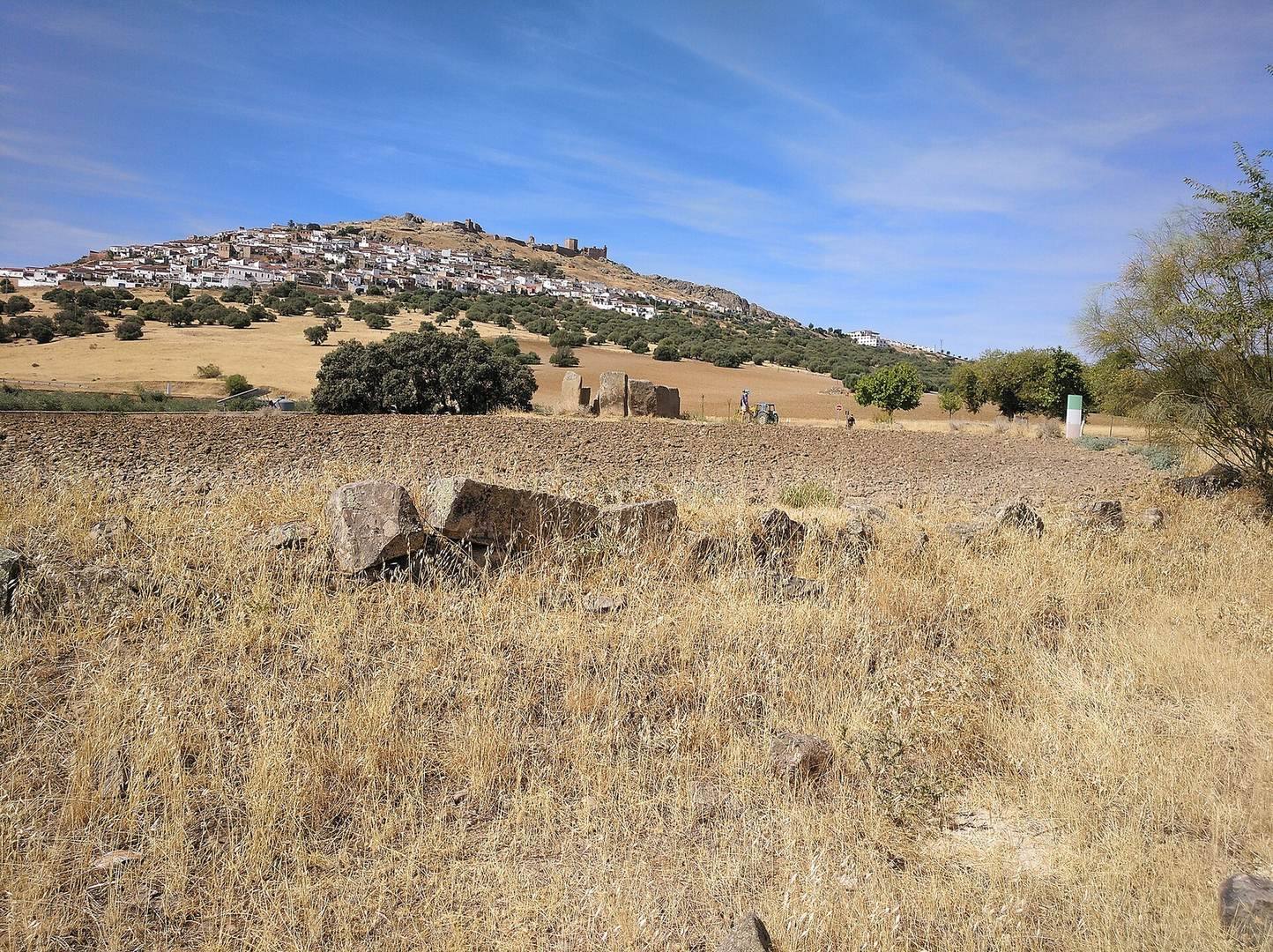
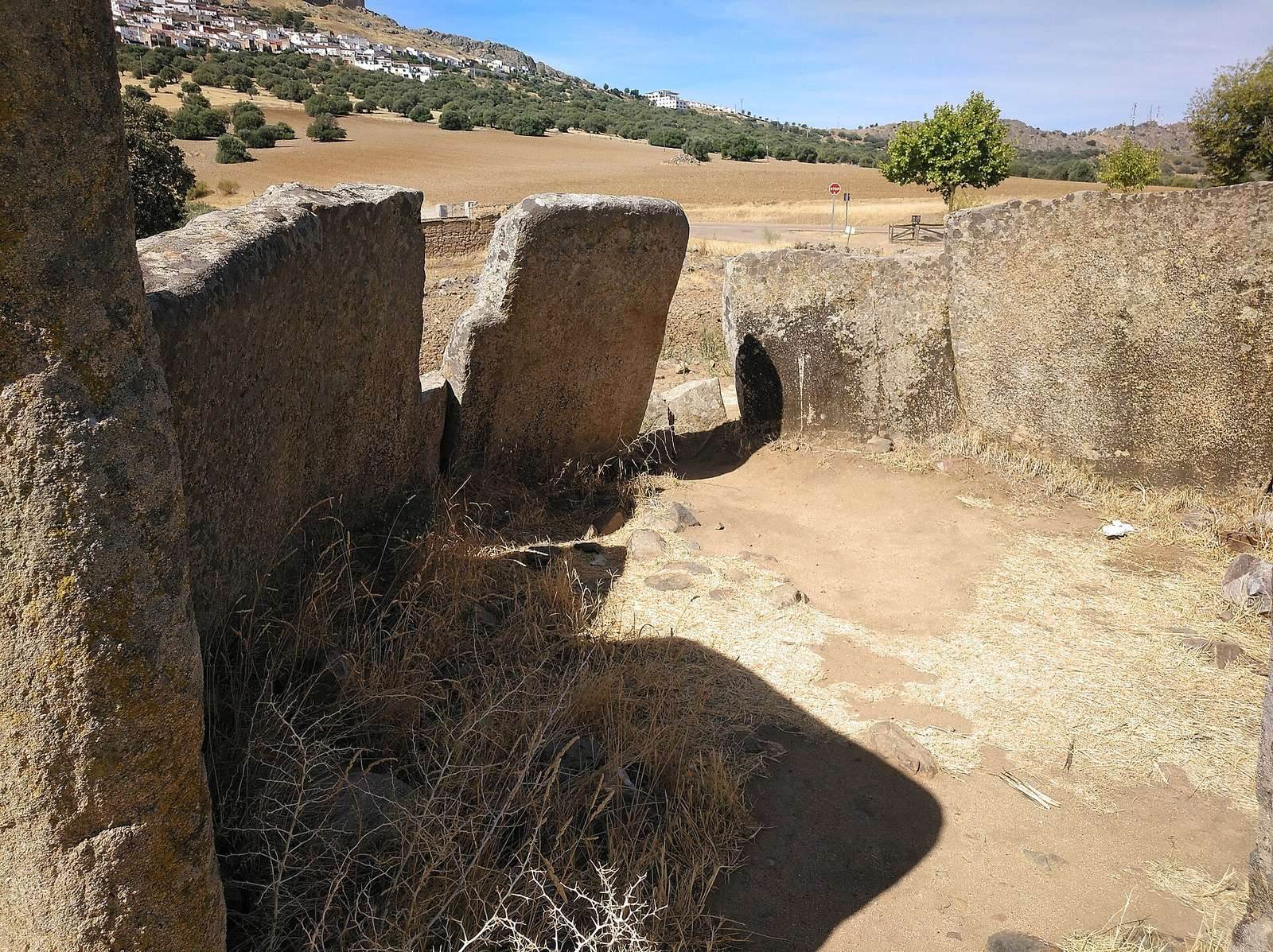
The Dolmen of Magacela is a prehistoric passage tomb near Magacela in the La Serena area of Badajoz Province, Spain. Its date is inferred to be the Chalcolithic, or Copper Age, based on similarities with the dolmens of Toriñuelo in Badajoz and Azután in western Toledo Province. The tomb was used for burial and was discovered in 1913. It has been designated a Spanish Asset of Cultural Interest since 1994.
Remains
Chamber and passage
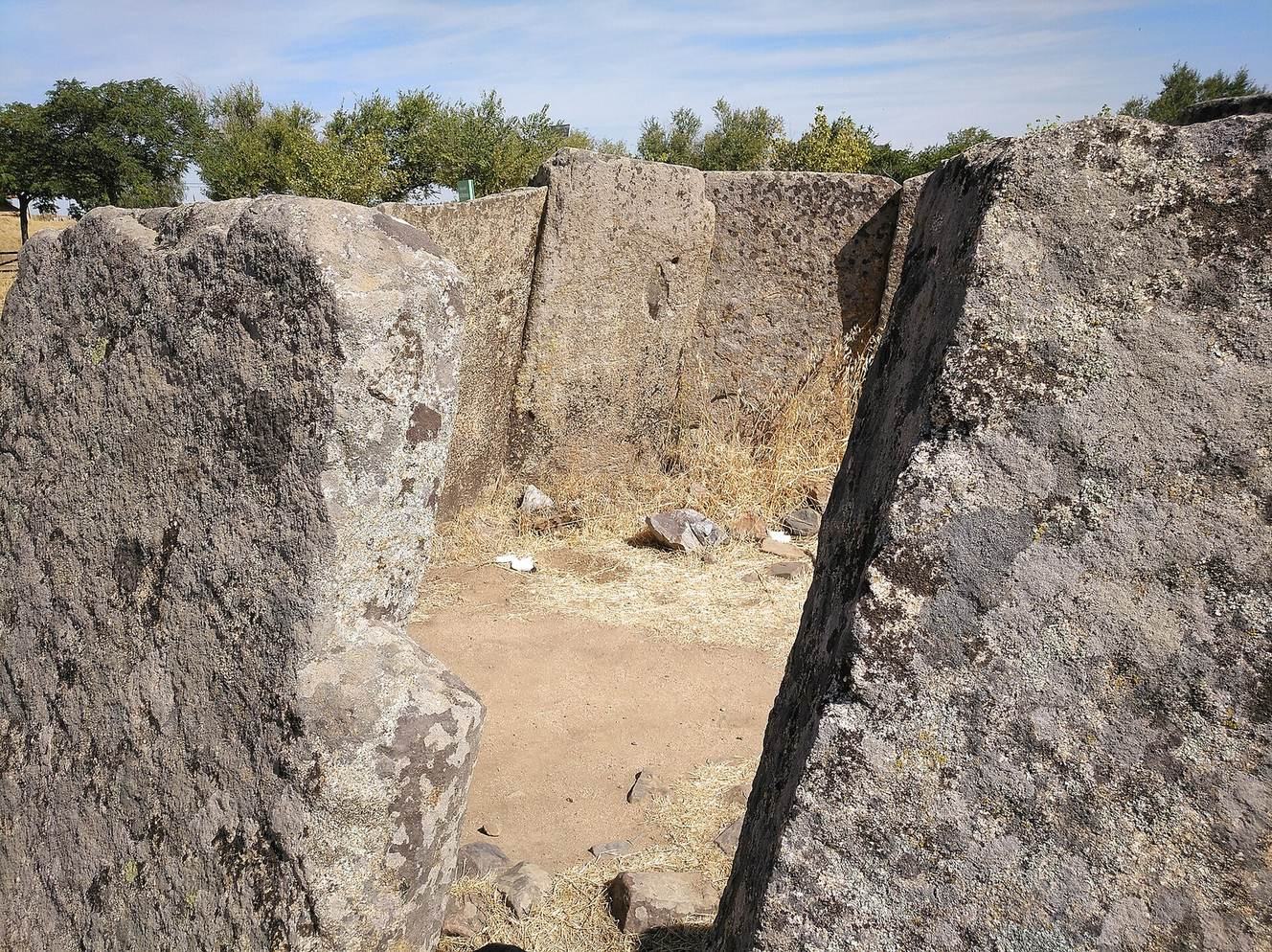
The remains center on a circular chamber about 5 metres in diameter, formed by 12 granite upright slabs arranged in a ring. The slabs average 1.75 metres in height, while the two entrance stones are about 2 metres high. The chamber’s circular plan is similar to those of the dolmens at Cerro de la Barca, Carmonita, and La Granja.
Investigations indicate that the chamber was connected to a passage approximately 9 metres long. The form of the roof is uncertain. Proposed possibilities include a dome made from overlapping masonry, a single large stone slab, or a wooden covering.
Carved stones
Stone 4
Five stones have carvings on their inner faces. Stone 4 carries the widest range of motifs: a solar design about 24 centimetres across with 11 rays, and a vertical feather-shaped carving measuring 41 by 22 centimetres. Small cup-shaped hollows, known as cupules, appear above and below the feather design, which has been described as unique among megalithic engravings on the Iberian Peninsula. A horizontal serpent about 54 centimetres long points toward a cupule 4 centimetres across. Several more cupules, each 3 to 8 centimetres wide, lie near the bottom of the stone.
Stones 6, 7, and 9
Stone 6 bears cupules up to 10 centimetres across, some accompanied by grooves as long as 55 centimetres. The carvings on stones 7 and 9 are more difficult to identify.
Stone 8
Near its top, stone 8 has an oval depression measuring 31 by 19 centimetres. Below it is a horizontal, leaf-shaped carving like the one on stone 4, with a 4-centimetre cupule above and a smaller depression below. A hook-shaped motif also appears on the stone. The original stone 5 has been replaced and was probably carved as well.