Vasagård Langdysse: A Neolithic Burial Monument on Bornholm
Site at a Glance
- Popularity
- Very Low
- Country
- Denmark
- Primary era
- Stone Age
- Eras represented
- Stone Age
- Civilizations
- Unclassified
- Site type
- Burial
- Remains
- Burial Mound
On this page12 sections
History
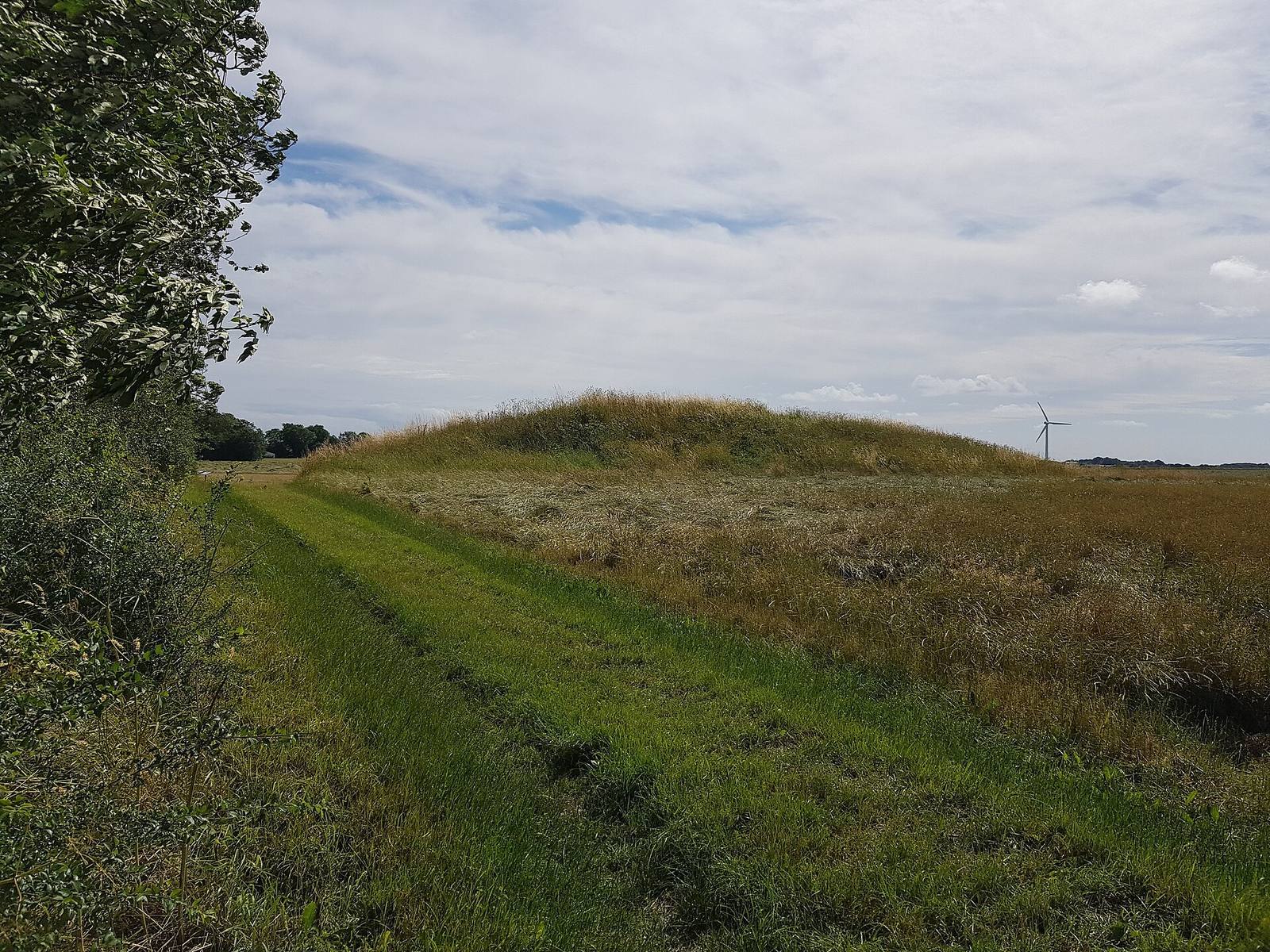
Vasagård Langdysse is a Neolithic burial complex on Bornholm, Denmark, about 2 km southwest of Aakirkeby. Communities of the Funnel Beaker culture, a Neolithic culture of northern Europe, built it between 3500 and 2800 BCE. In Danish archaeological usage, a langdysse is a dolmen, or stone burial chamber, within an elongated rectangular or trapezoidal mound. The complex also includes a passage grave, a chamber reached through a passage.
The Funnel Beaker complex
The dolmen probably predates the passage grave. Both tombs were later used for secondary burials, in which human remains were placed in a different burial location after an earlier burial phase.
An earthwork at Vasagård is thought to have been built or used around the same time as the tomb complex. In Denmark, earthworks of this type are called Vasagård earthworks. The Sarup earthworks on Funen were identified earlier as a parallel, while related sites have been found in Scania and Zealand. A larger palisaded enclosure lies at Rispebjerg, 8 km east. No fully matching example is known in northern Europe, and the enclosure form has also been compared with Woodhenge, a British prehistoric monument with a circular arrangement.
Later burial and ritual change
The latest burials in the passage grave date to the final phase of the Bronze Age, around 1100 to 500 BCE. During restoration in 2008, archaeologists found that the chamber had been closed and that burials and ritual activity had taken place outside the monument. They interpreted this as evidence that the tomb had lost its original religious purpose, comparing the change to the transition from Catholicism to Protestantism.
Remains
The site combines an elongated earthen mound containing stone-built tombs with a separate system of oval earthwork enclosures.
Long mound and burial chambers
Long mound
The mound runs from north-northwest to south-southeast. It measures 35 m long and 20 m wide, and rises 2.5 to 3.5 m.
Passage grave
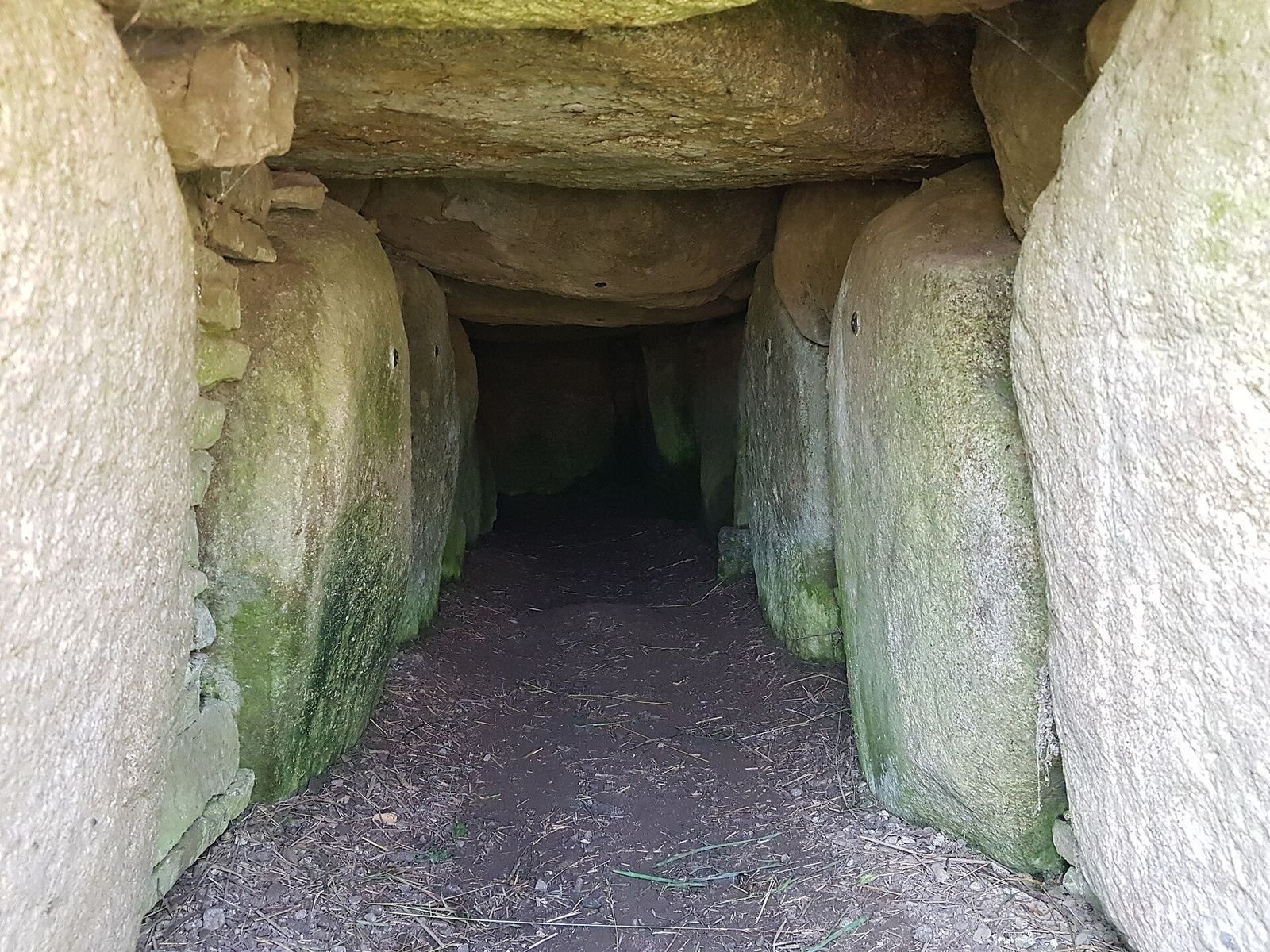
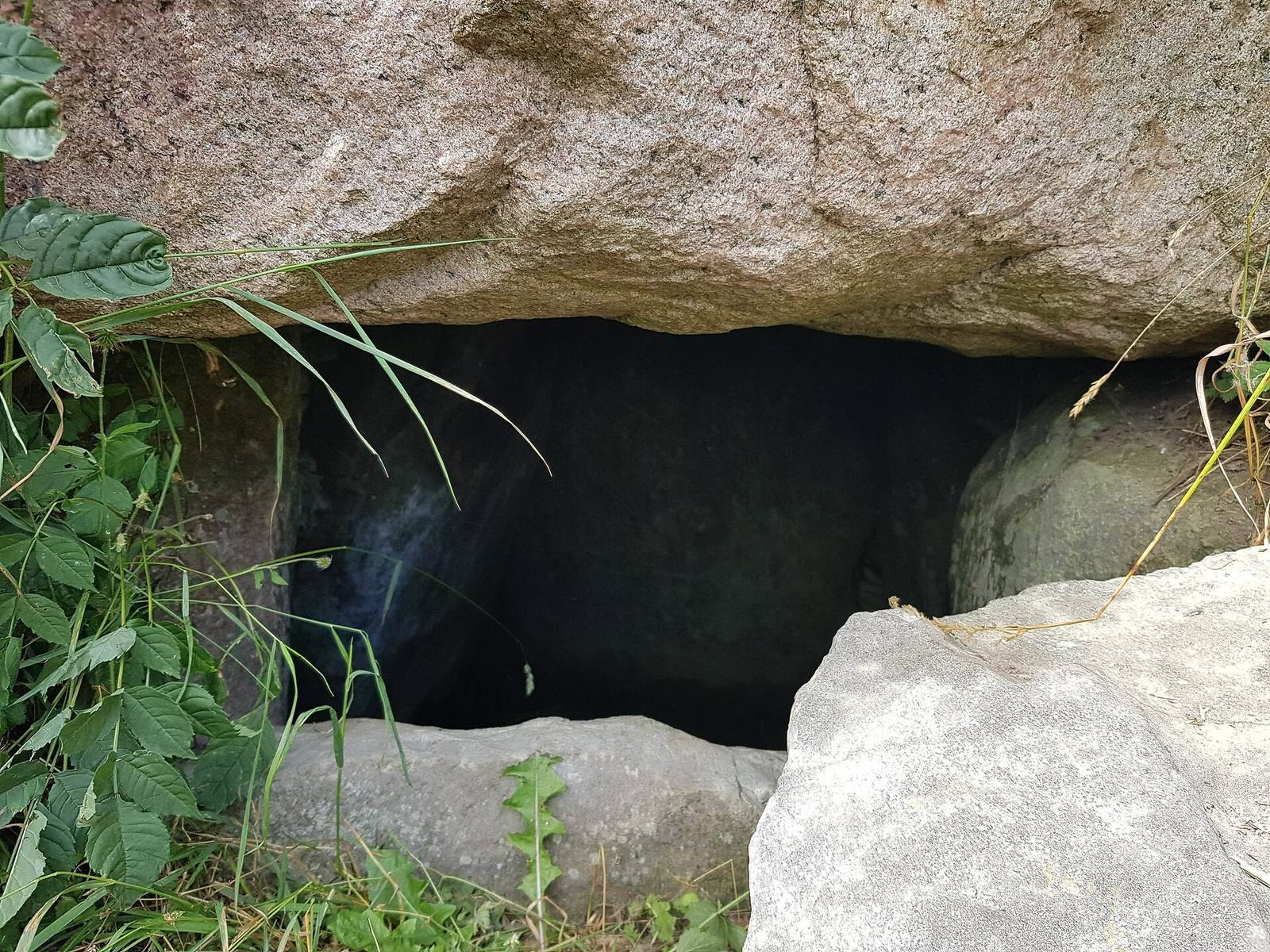
At the mound’s western end, the passage grave measures about 3.2 m long, 1.8 m wide, and 1.25 m high. Seven supporting stones and three roof stones form its chamber. A paved forecourt lies before the passage, which meets the chamber on its eastern side.
Dolmen
The dolmen stands at the mound’s eastern end, an uncommon pairing with a passage grave in the same mound. It measures about 1.05 m high, 2.0 m long, and 1.15 m wide, and is formed from seven supporting stones. Its roof stone measures 2.35 by 1.85 by 0.9 m. Six small cup-shaped hollows and carvings of ships appear on its surface.
Earthwork enclosures and settlement
Enclosures and defenses
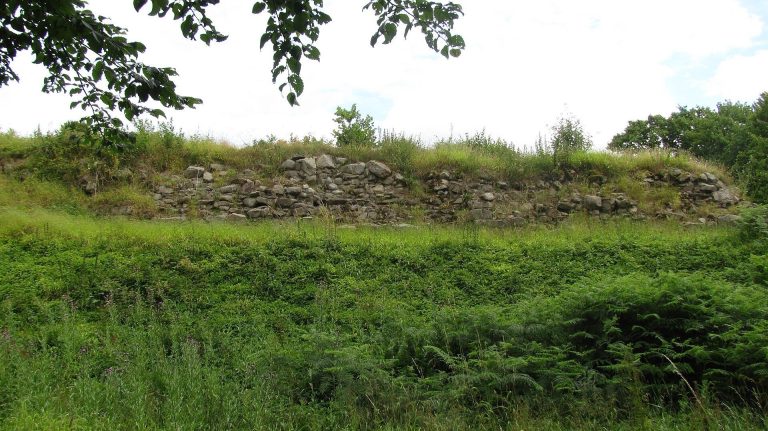
The earthwork comprises two oval enclosures, Vasagård West and Vasagård East, separated by a river valley about 150 m wide. Later ramparts accompanied the enclosures, along with palisades, fences made of upright wooden stakes.
Settlement traces
Traces of a settlement lie west of the ditch system.
Carved stones
Further sun stones were found at Vasagård in 2017. These small carved stones are about 5,000 years old. Roughly 300 stones and fragments have been found on Bornholm, including round examples with circular carvings that appear to radiate from the center and square stones with other patterns. Some bear spiderweb designs.