Castle of Benquerencia de la Serena: An Almohad Fortress in Spain
Site at a Glance
- Popularity
- Very Low
- Country
- Spain
- Primary era
- Medieval
- Eras represented
- Medieval, Modern
- Civilizations
- Almohad, Crown of Castile, Spanish
- Site type
- Military
- Remains
- Castle
On this page12 sections
History
Almohad foundation and Christian capture
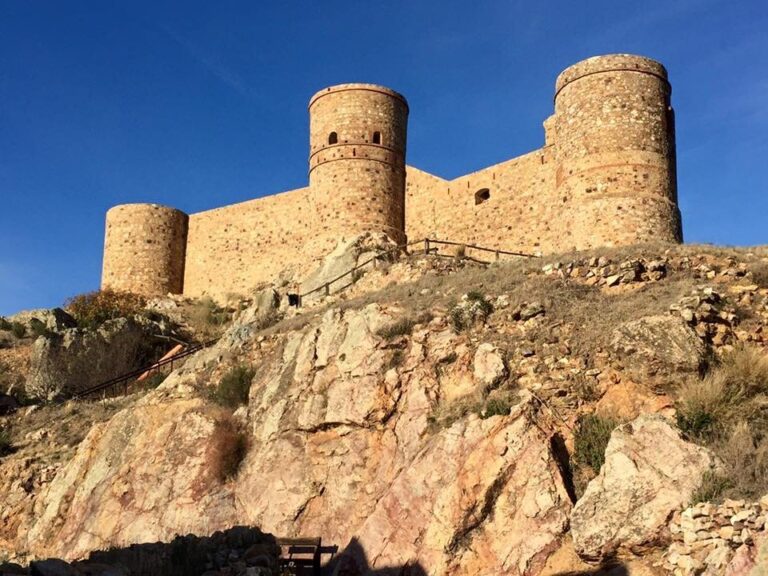
The Castle of Benquerencia de la Serena, in Spain, is an Almohad fortress built between the 12th and 13th centuries. Its position on steep, rocky ground gave it strategic value. In 1236, troops of the Order of Alcántara, a Spanish military-religious order, captured the fortress while fighting under Ferdinand III, king of Castile and León, known as the Saint. Ferdinand gave it to the order in 1241, and the castle was rebuilt during the 13th century.
Later alterations and abandonment
The fortress underwent repeated reforms during the Middle Ages and the 16th century, followed by further alterations in the 17th century. It fell into ruin and was abandoned late in that century.
Spanish Civil War and heritage status
During the Spanish Civil War, a casemate, a protected military chamber, was built on the castle’s north flank to serve as an artillery observation post. In 1991, the castle was declared a Site of Cultural Interest as a Historic Complex.
Remains
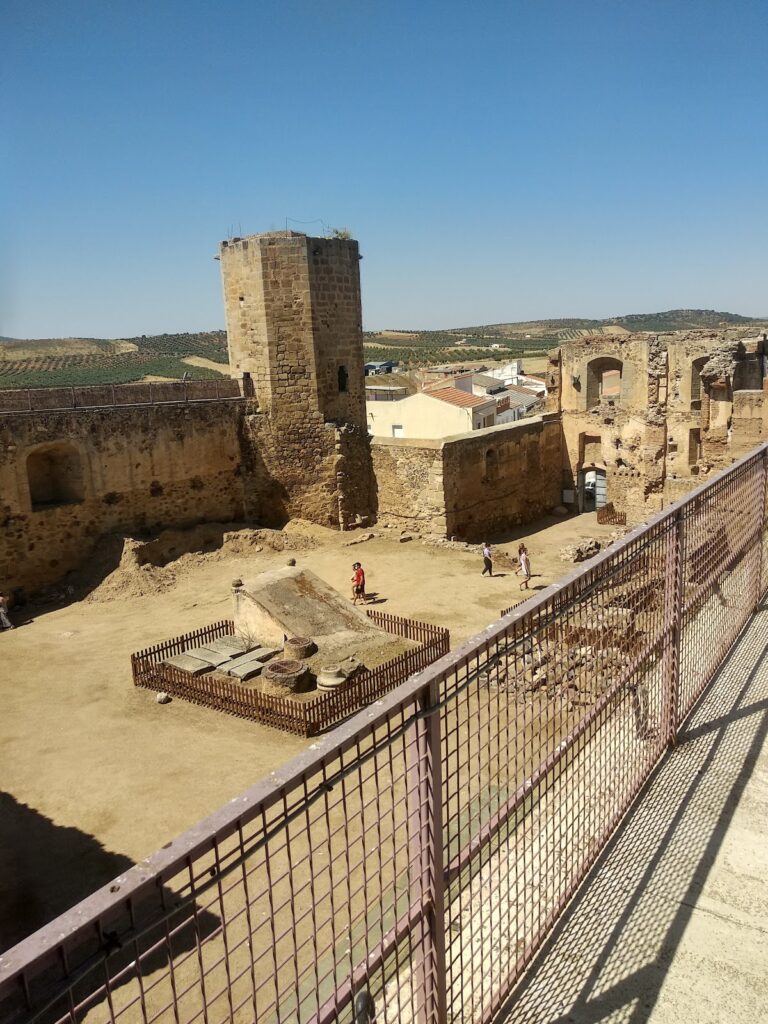
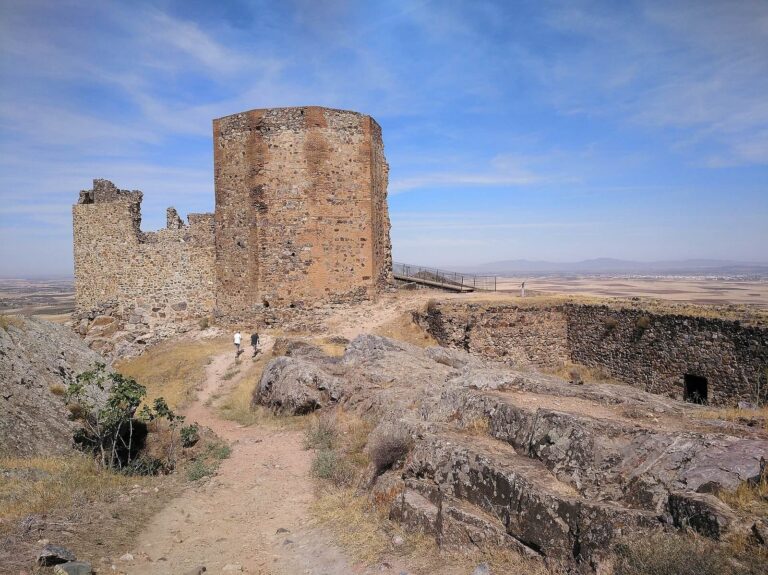
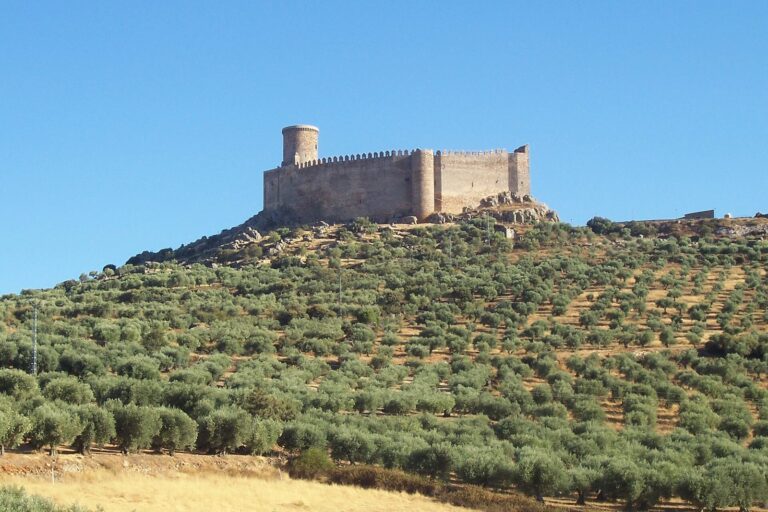
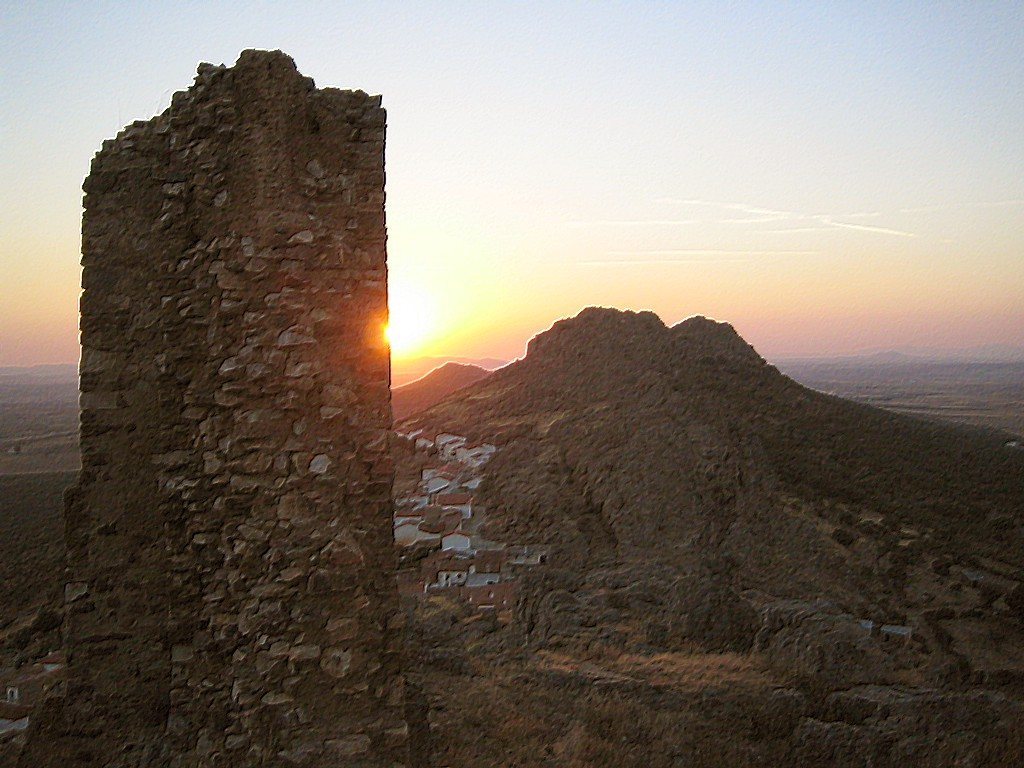
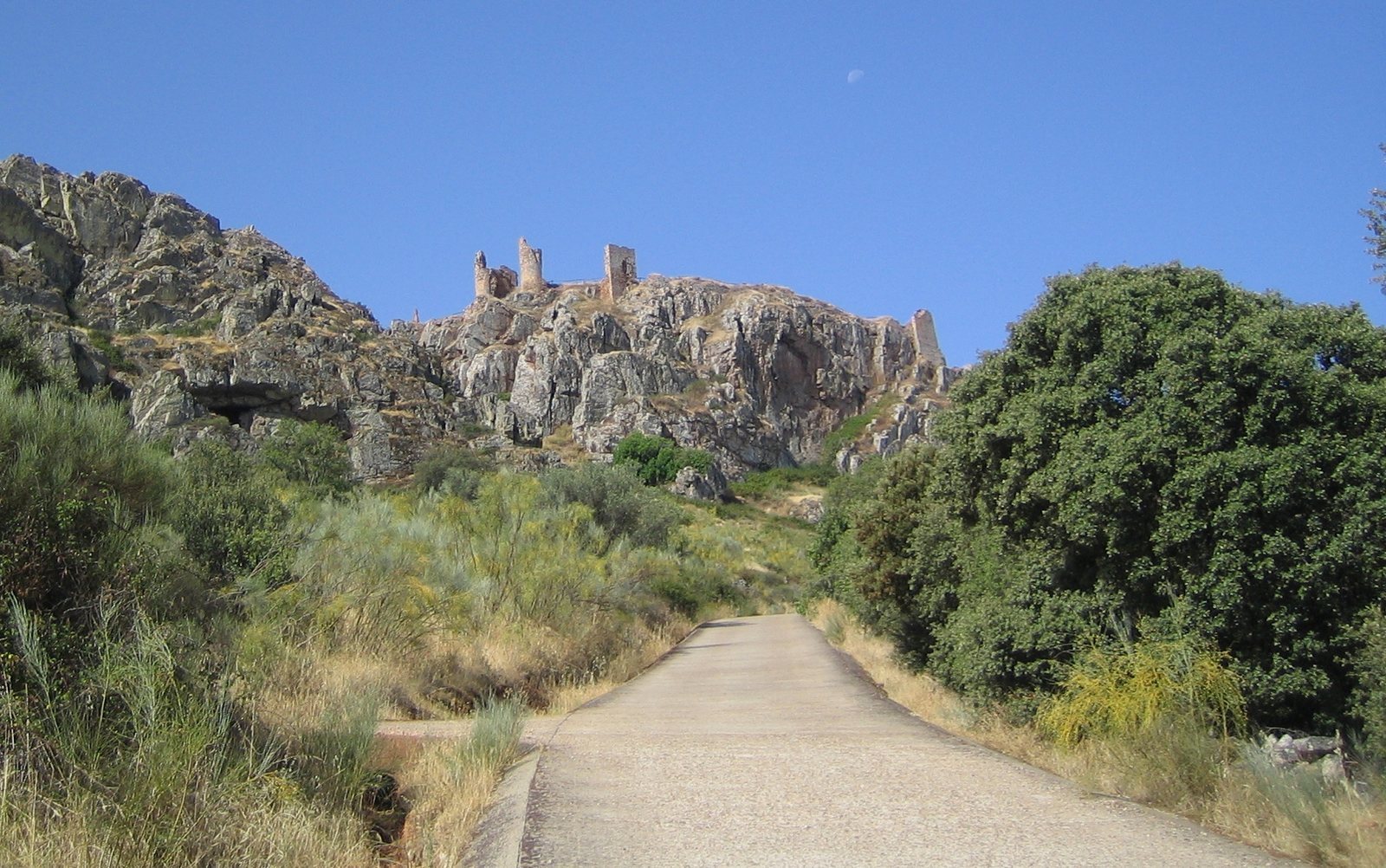
The ruins occupy a rocky height at 690 metres. Stone and rubble masonry form the surviving fabric, while steep slopes, almost vertical in places, frame the summit. The principal Christian enclosure occupied nearly the entire summit.
Defensive layout
Summit enclosure
Enclosure walls followed the upper edges of the steep sides, enclosing the summit where the principal Christian section stood.
Barbican tower
A barbican, or second outer defensive wall, included an attached, prism-shaped tower that survives.
Northern casemate
A casemate remains visible on the castle’s north flank.
Almohad construction and interior remains
Rammed-earth walls
Almohad builders shaped compacted earth and stones within temporary supports. This construction method remains visible in sections of wall and attached towers.
Cisterns and vaulted spaces
The surviving remains include cisterns and three interior spaces covered by barrel vaults, continuous arch-shaped ceilings.