Dolmen of Cunha Baixa: A Prehistoric Collective Tomb in Portugal
Site at a Glance
- Popularity
- Low
- Country
- Portugal
- Primary era
- Bronze Age
- Eras represented
- Bronze Age
- Civilizations
- Unclassified
- Site type
- Burial
- Remains
- Tomb
On this page9 sections
History
The Dolmen of Cunha Baixa is a prehistoric collective tomb in Cunha Baixa, Portugal. Built between 3000 and 2500 BC, it was probably associated with the Beaker culture, a prehistoric culture named for its distinctive pottery. Deposited material indicates that burial use continued into the Bronze Age, the later prehistoric period named for the widespread use of bronze. The monument is also known as Anta de Cunha Baixa, using the Portuguese word for a dolmen.
Discovery and conservation
Portuguese archaeologist Leite de Vasconcelos discovered and first documented the tomb in 1892. He cleared its chambers and excavated to a depth of about 1.17 metres, reaching the capstone. On 16 June 1910, the dolmen was declared a National Monument.
In 1934, archaeologists Georg and Vera Leisner prepared a plan and cut a cross-section through the monument. When archaeologist Irisalva Moita saw it in 1955, scrub surrounded the tomb and rocks blocked the corridor.
Archaeologists Raquel Vilaça and Domingos Cruz led cleaning and restoration work in 1987. Further cleaning of the dolmen and its surroundings followed in 1994.
Remains
Setting and overall layout
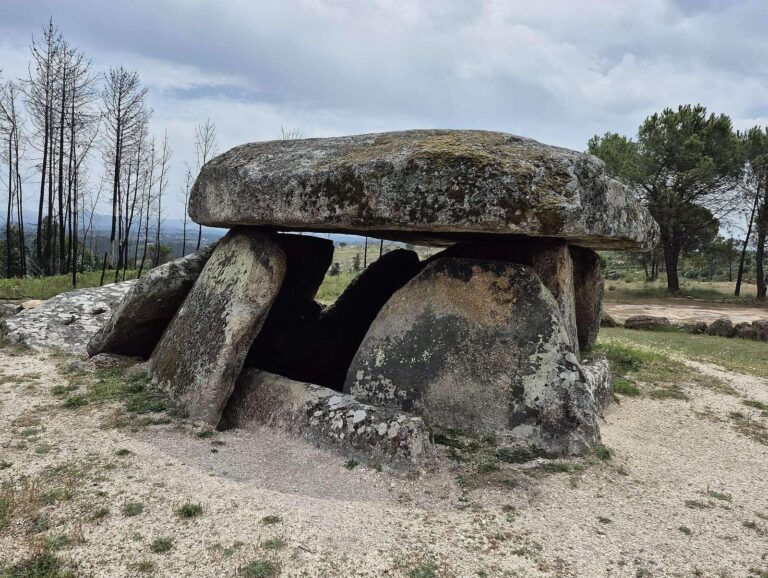
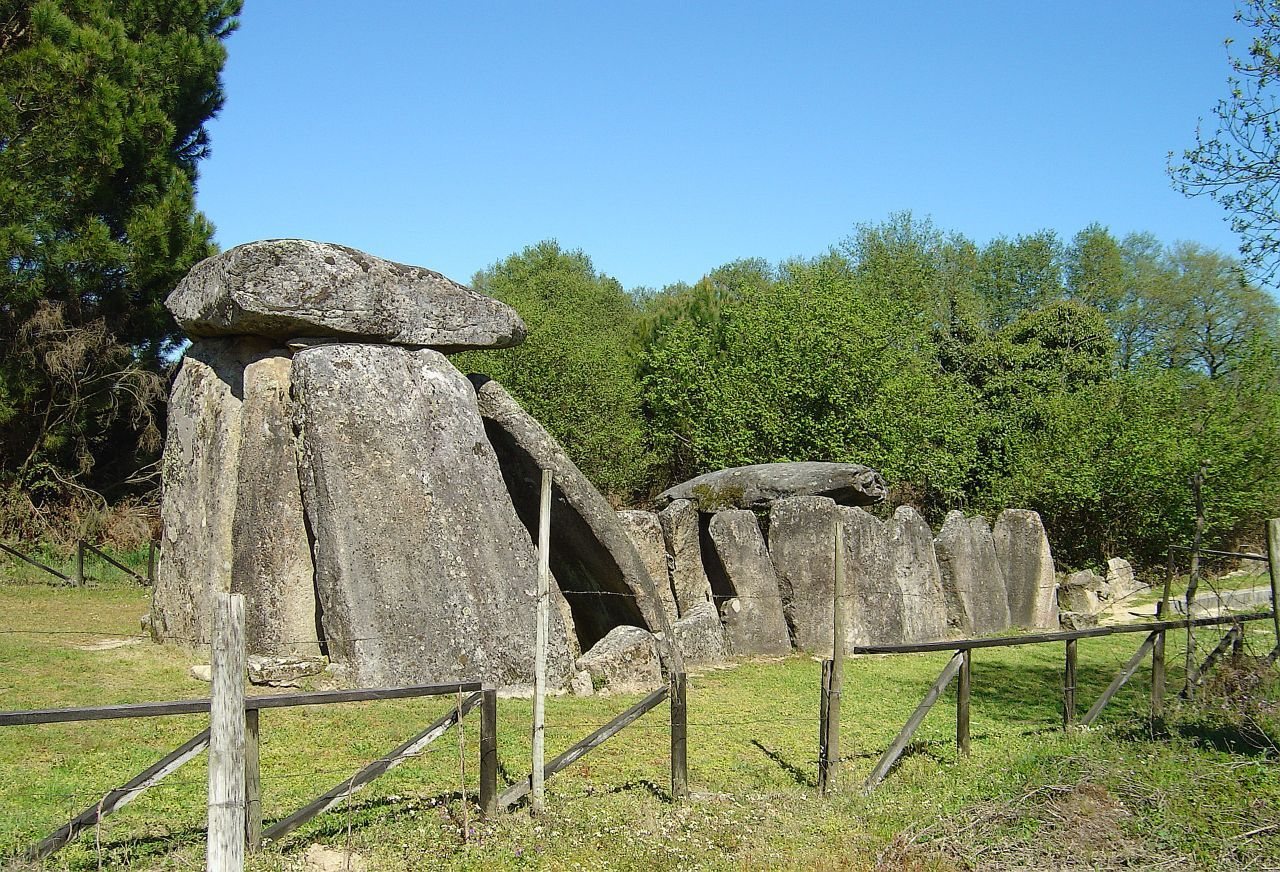
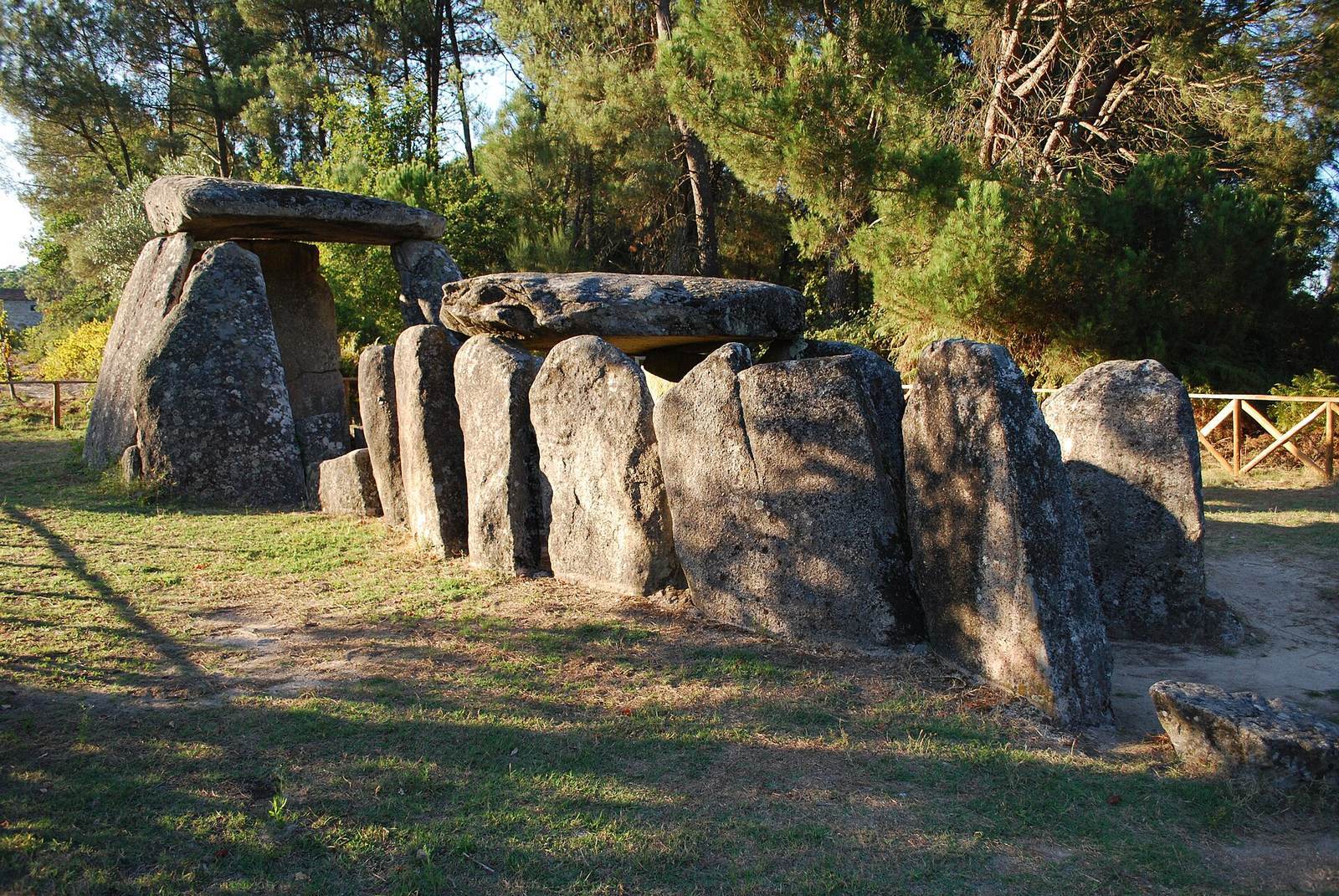
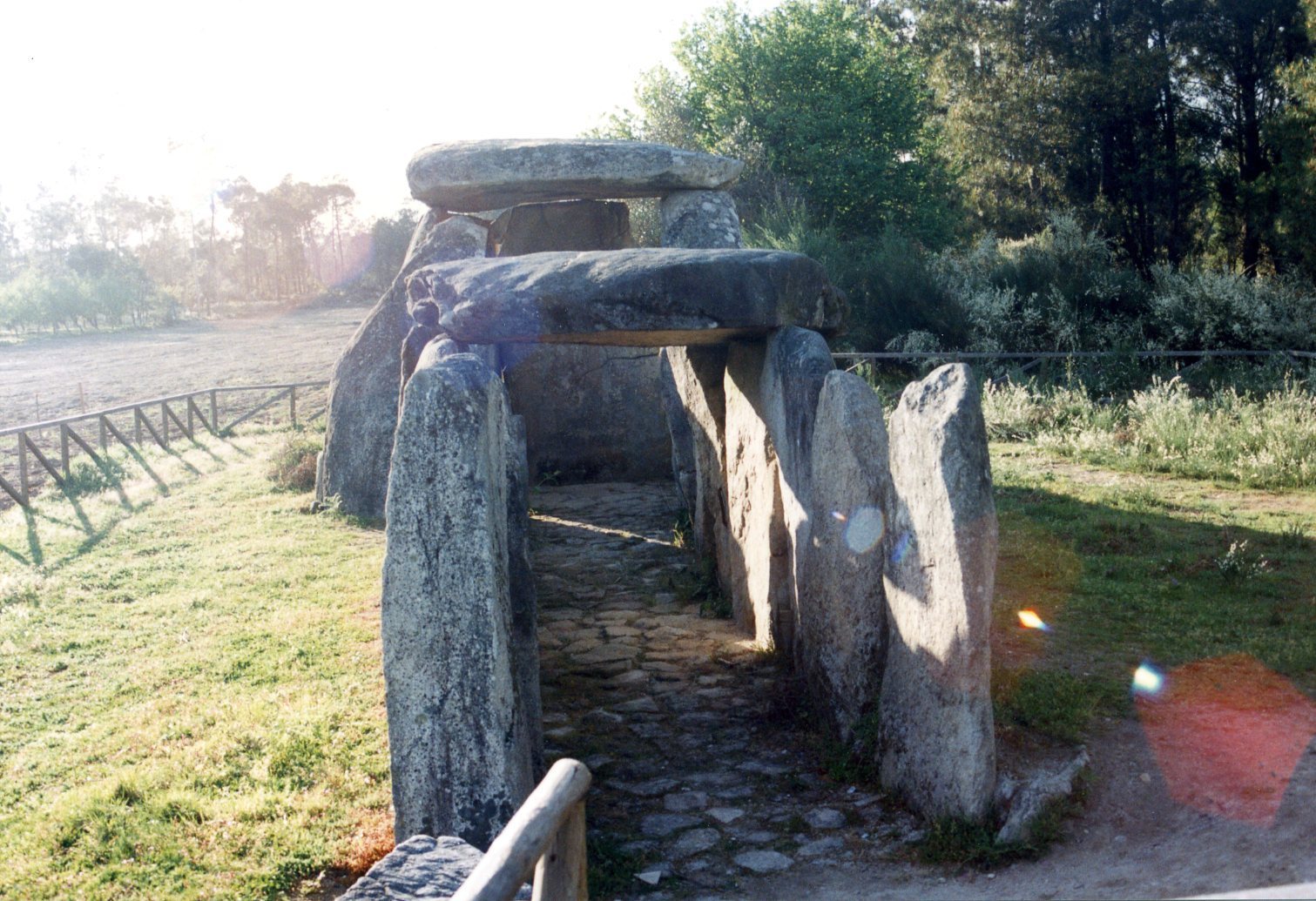
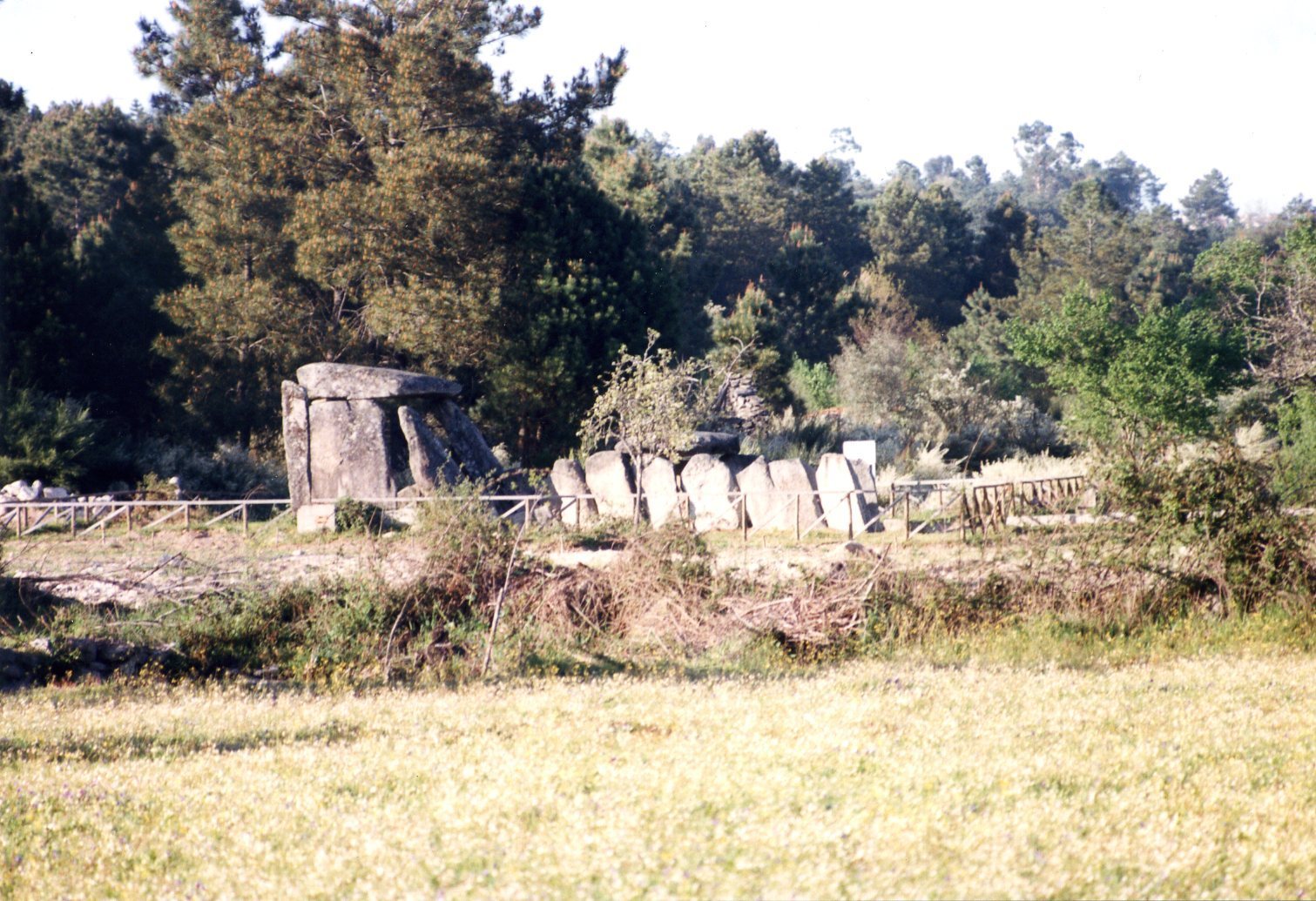
The dolmen stands in a fertile valley beside the Rio Castelo, on the river’s western bank between Cunha Baixa and Espinho. The rural site lies 491 metres above sea level, with vineyards to the south and east and pine forest to the north and northwest; a wood-and-wire fence marks its boundary. The monument is built from granite slabs and consists of a polygonal burial chamber connected to a passage extending southeast.
Chamber and entrance
The chamber is about 3 metres across and 3.2 metres high, formed by nine upright stones, some now fractured or incomplete. A long, rounded rectangular capstone, about 4.5 metres across, rests on three of them. The floor is paved with granite and retains areas of pitting or scoring; painted and engraved pillars were also found during excavation. Two rectangular pillars at the entrance supported a closing slab, which has fallen into the passage. Measuring 1.2 by 0.2 metres, it has 15 grooves along each edge and was set parallel to the main stone at an inward angle. A small standing stone marks the approach to the chamber.
Access corridor
The corridor is about 7.2 metres long and 1.4 metres high. Eight upright slabs form each side wall, dividing the passage into 16 sections. The walls broaden around the middle and narrow slightly near the chamber, and steel beams reinforce some of the stones. Most are roughly square, while trapezoidal and triangular stones also occur in the chamber. A smaller trapezoidal capstone covers part of the corridor. By the early twentieth century, only one of the corridor’s roof slabs remained in place.
Excavated finds
Finds from the tomb
Objects recovered from the tomb include polished stone axes and trapezoidal adzes, roughly worked and retouched flint blades, and small stone tools shaped as trapezoids, triangles and crescents. Pottery fragments in red and black include decorated pieces. Other finds include yellow ochre identified as a pigment for body painting, burnt berry seeds, a human bone, a grooved stone hammer, and burnt material linked to a forge or furnace.
Finds from nearby ground
Material recovered from ground beside the monument includes a flint axe, a polished stone tool, six small blades, some jagged, and flint arrowheads. The recovered archaeological remains are held at the National Archaeological Museum in Lisbon.