Dólmen da Orca: A Late Neolithic Passage Tomb in Portugal
Site at a Glance
- Popularity
- Low
- Country
- Portugal
- Primary era
- Stone Age
- Eras represented
- Stone Age
- Civilizations
- Unclassified
- Site type
- Burial
- Remains
- Tomb
On this page10 sections
History
Dólmen da Orca is a Late Neolithic burial monument at Fiais da Telha, Portugal. Built as a tomb, it was later reused during the Bronze Age and became part of a wider landscape of prehistoric activity on the Ameal Plateau.
Prehistoric use
The monument was constructed during the Late Neolithic. People returned to use it during the Bronze Age, a prehistoric period when bronze was used for tools and weapons.
The plateau may also have served as winter land for communities who occupied the highlands of the nearby Serra da Estrela in spring and summer. Burning cleared woodland without full forest regeneration, a pattern that suggests the land was opened for grazing. Cultivation was probably limited by the largely unsuitable soils. Food may also have come from grazing and hunting animals and collecting oak acorns. The proposed seasonal movement may have followed oak flowering on the journey towards the highlands and the formation of acorns before the return.
Archaeological investigation and protection
Maximiano Apolinário and José Leite de Vasconcelos carried out the first excavation in 1895. Irisalva Moita later revisited the plateau’s megalithic monuments, but these early investigations were not systematic. More detailed studies followed in the 1980s and 1990s, including fieldwork from 1986 to 1988 and from 1994 to 1995 by João Carlos Senna-Martínez and José Manuel Quintã Ventura. Their work formed part of the Archaeological Studies Programme of the Middle and Upper Mondego Basin.
Research continued into the twenty-first century and helped identify other dolmens and archaeological sites on the plateau. The broader concentration became known as the Ameal-Azenha Megalithic Nucleus, a group of megalithic monuments and related sites. Portugal designated Dólmen da Orca a National Monument, a heritage status for places of national importance, in 1974.
Remains
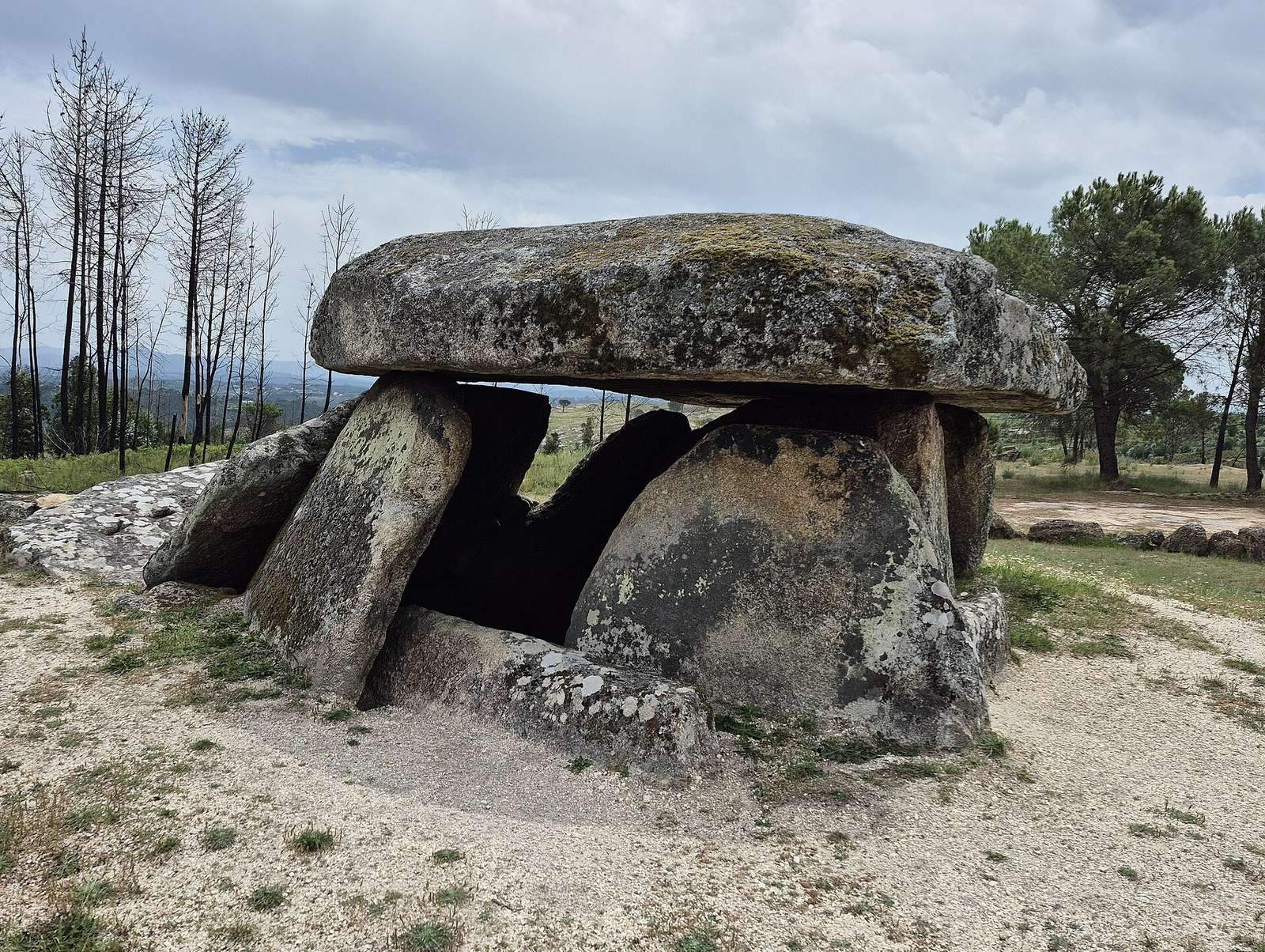
The monument is a granite passage dolmen, a megalithic tomb reached through a stone corridor leading to a burial chamber. It stands at about 313 metres above sea level on the Ameal Plateau, part of the broader Mondego Plateau. The Mondego River lies to the south and the Ribeira de Azenha stream to the northwest. The tomb occupies a small hill in woodland dominated by pines and eucalyptus. It is among Portugal’s largest passage tombs and among the best-preserved examples of its type in the area.
Chamber and passage
Burial chamber
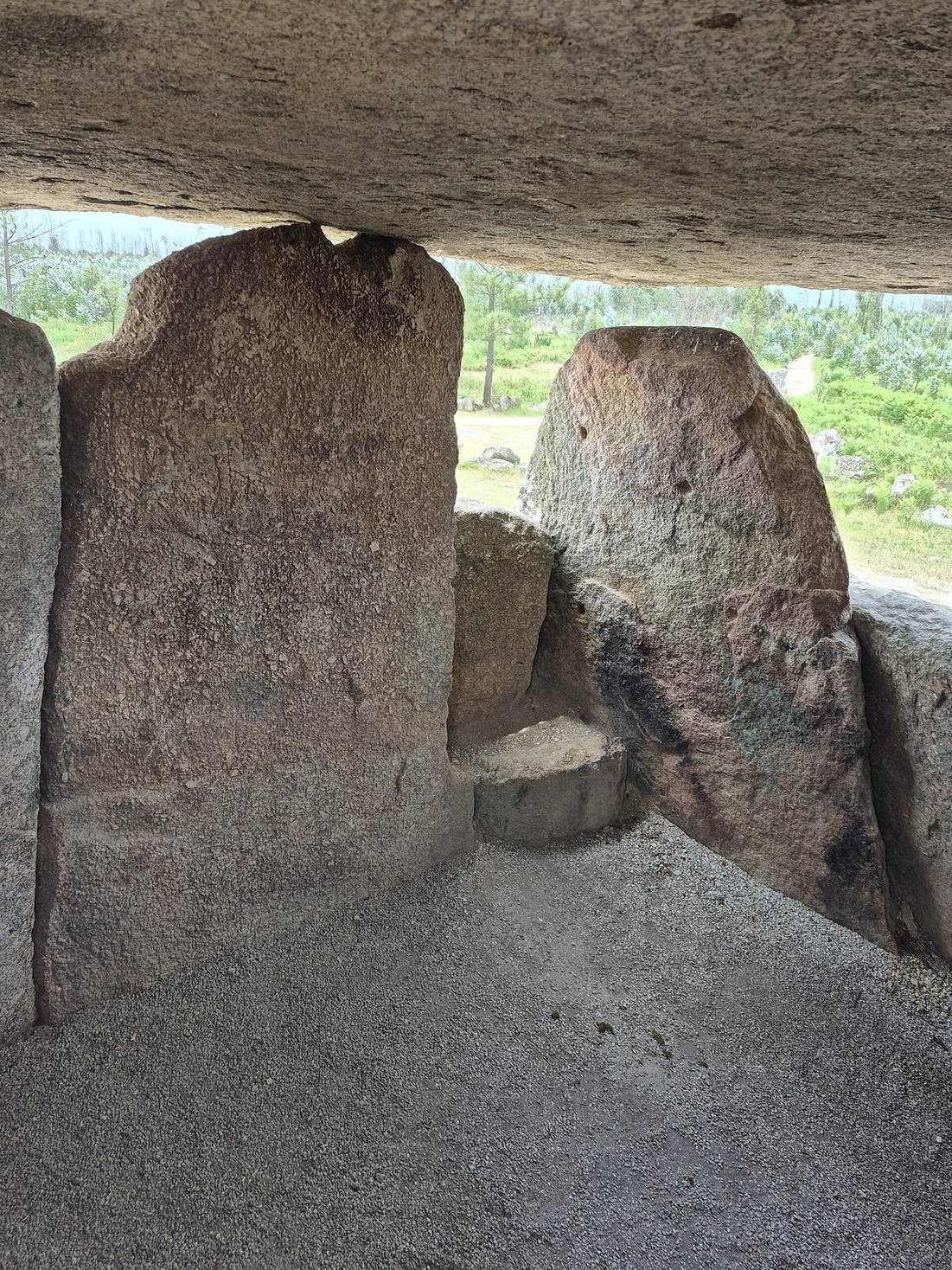
The polygonal chamber is about three metres high. Its capstone rests on nine granite orthostats, or upright supporting stones, which had fallen and were repositioned during archaeological investigations. Pillar-like supports flank the rear slab, while three further stones on each side overlap like roof tiles, extending the rear wall and widening the chamber.
Antechamber and passage
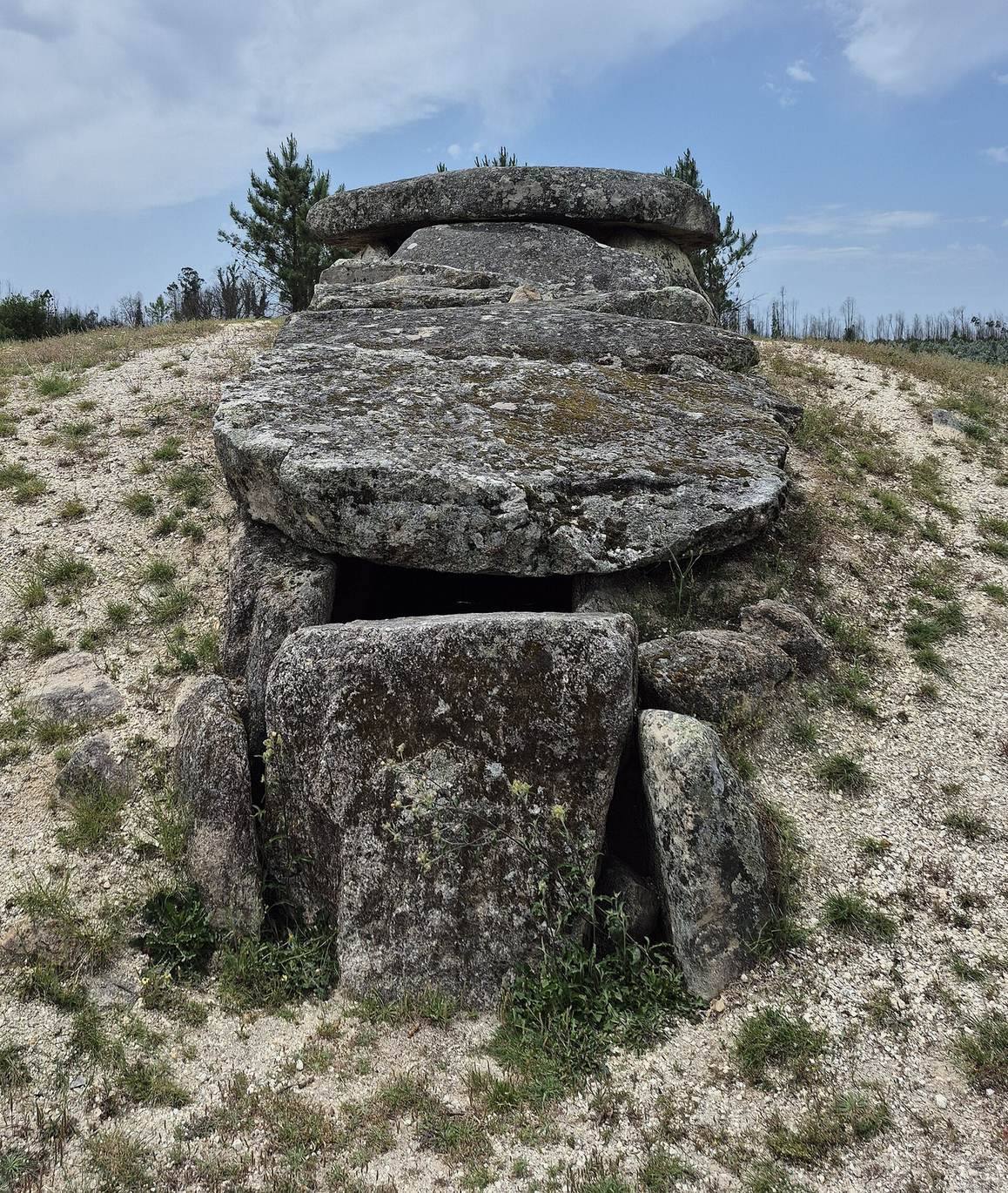
At the chamber entrance, the closure slab rests on two lower upright stones. Together with another crossbeam, these elements form an antechamber leading into the passage. The passage is about 7.5 metres long and has 15 upright stones, eight along one side and seven along the other. Its original covering stones remain, and the corridor and blocking stone are well preserved. Holes in some stones beside the chamber entrance may have held door fittings.
Outer features and finds
Mound and forecourt
The tomb was originally covered by a mound nearly 20 metres in diameter. Excavations have also suggested that a semicircular forecourt lay in front of the passage.
Archaeological finds
Finds from the monument include flint and quartz arrowheads, pottery fragments, microliths, or small stone tools, slate beads shaped as discs, and a bronze dagger. The dagger and some of the pottery are associated with the Bronze Age use of the tomb.