Old Uppsala Archaeological Area: Burial Grounds and an Ancient Center of Power
Site at a Glance
- Popularity
- High
- Country
- Sweden
- Primary era
- Medieval
- Eras represented
- Classical, Medieval
- Civilizations
- Norse
- Site type
- Burial
- Remains
- Necropolis
On this page18 sections
History
Royal burials and later traditions
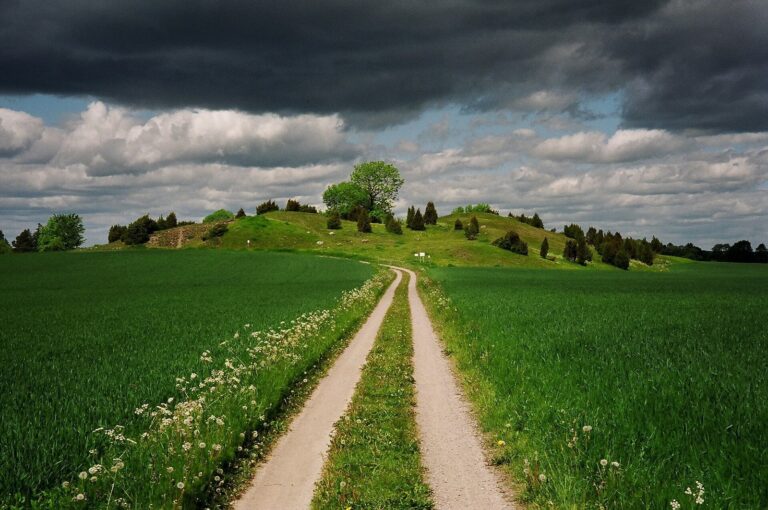
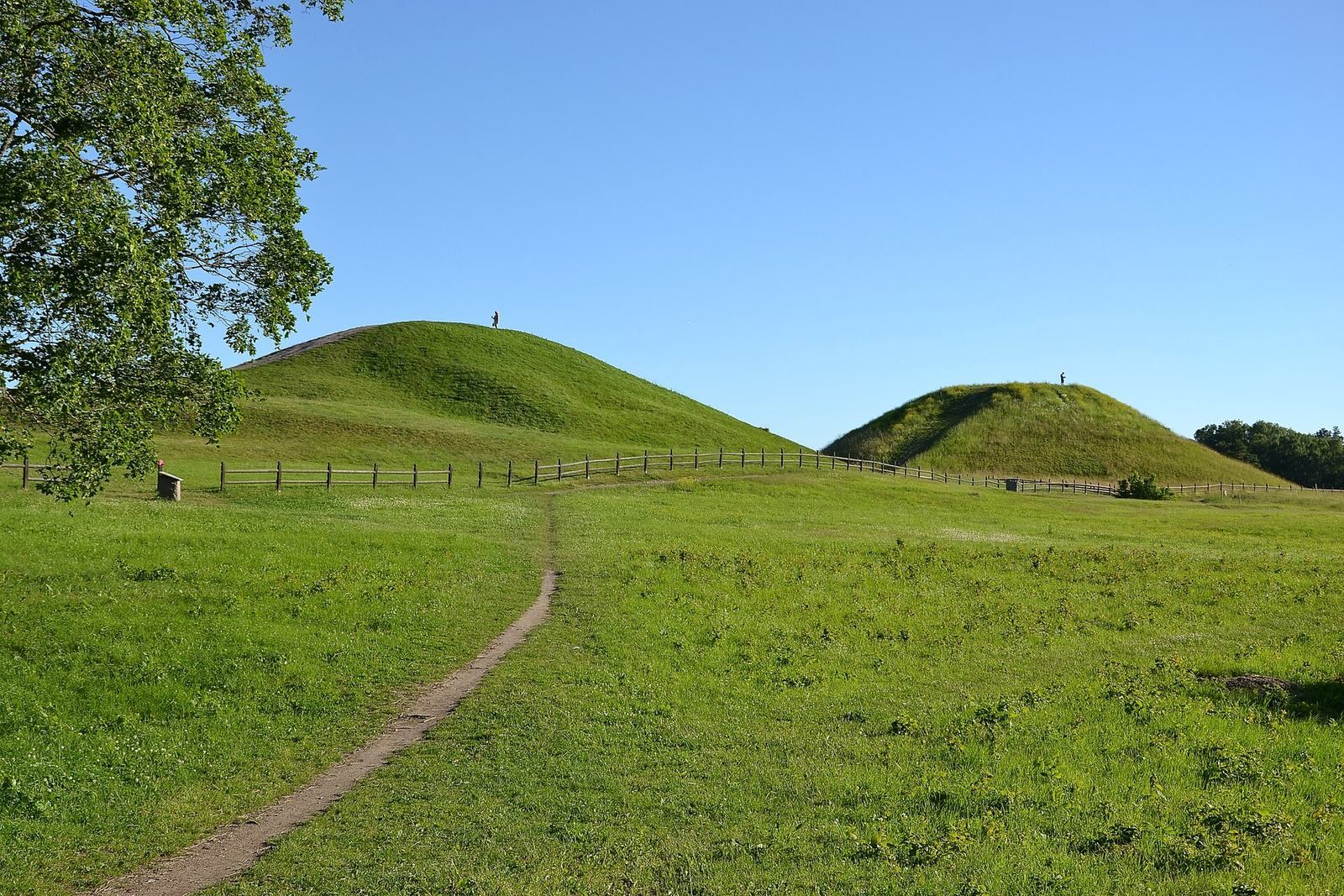
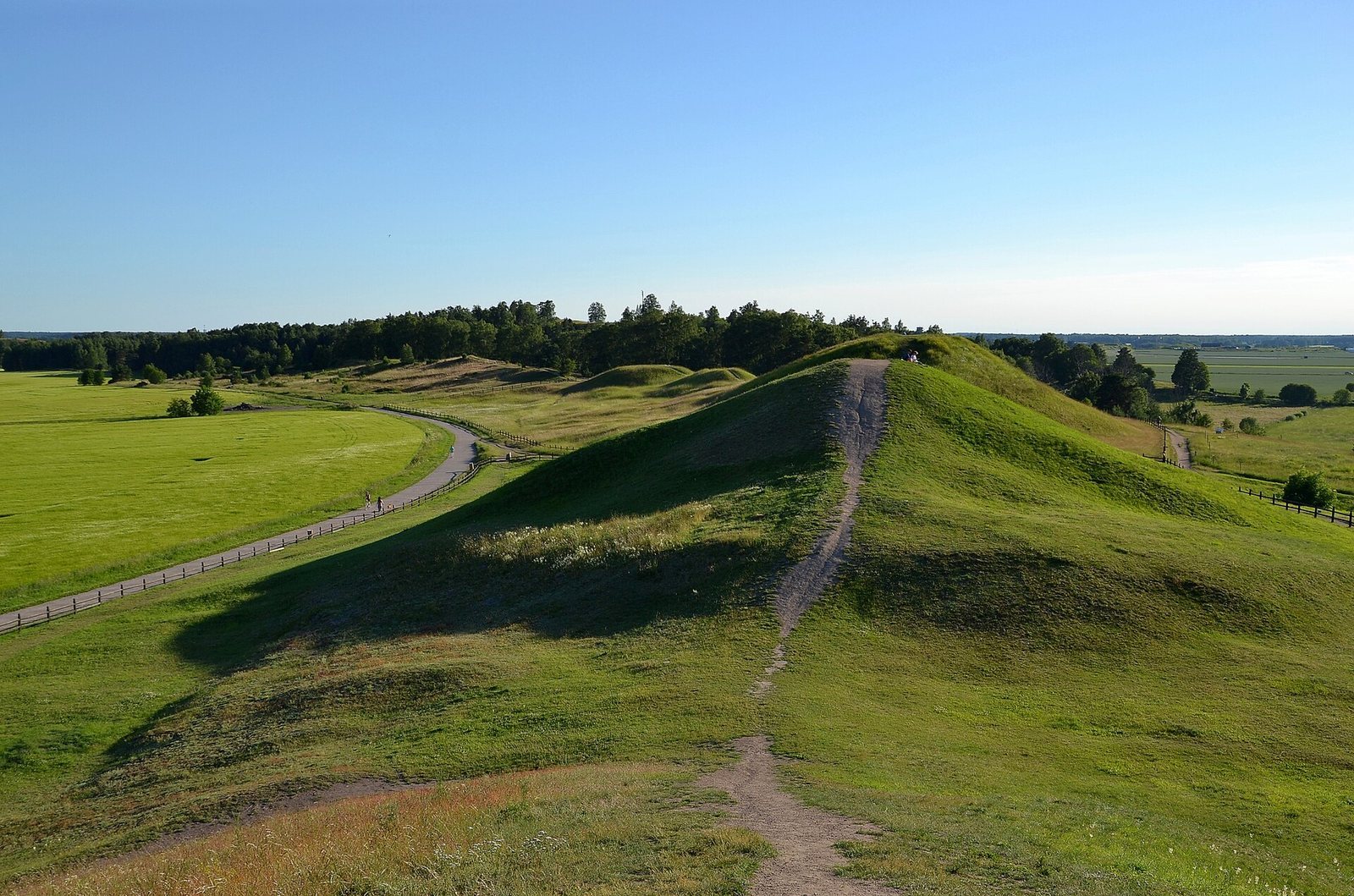
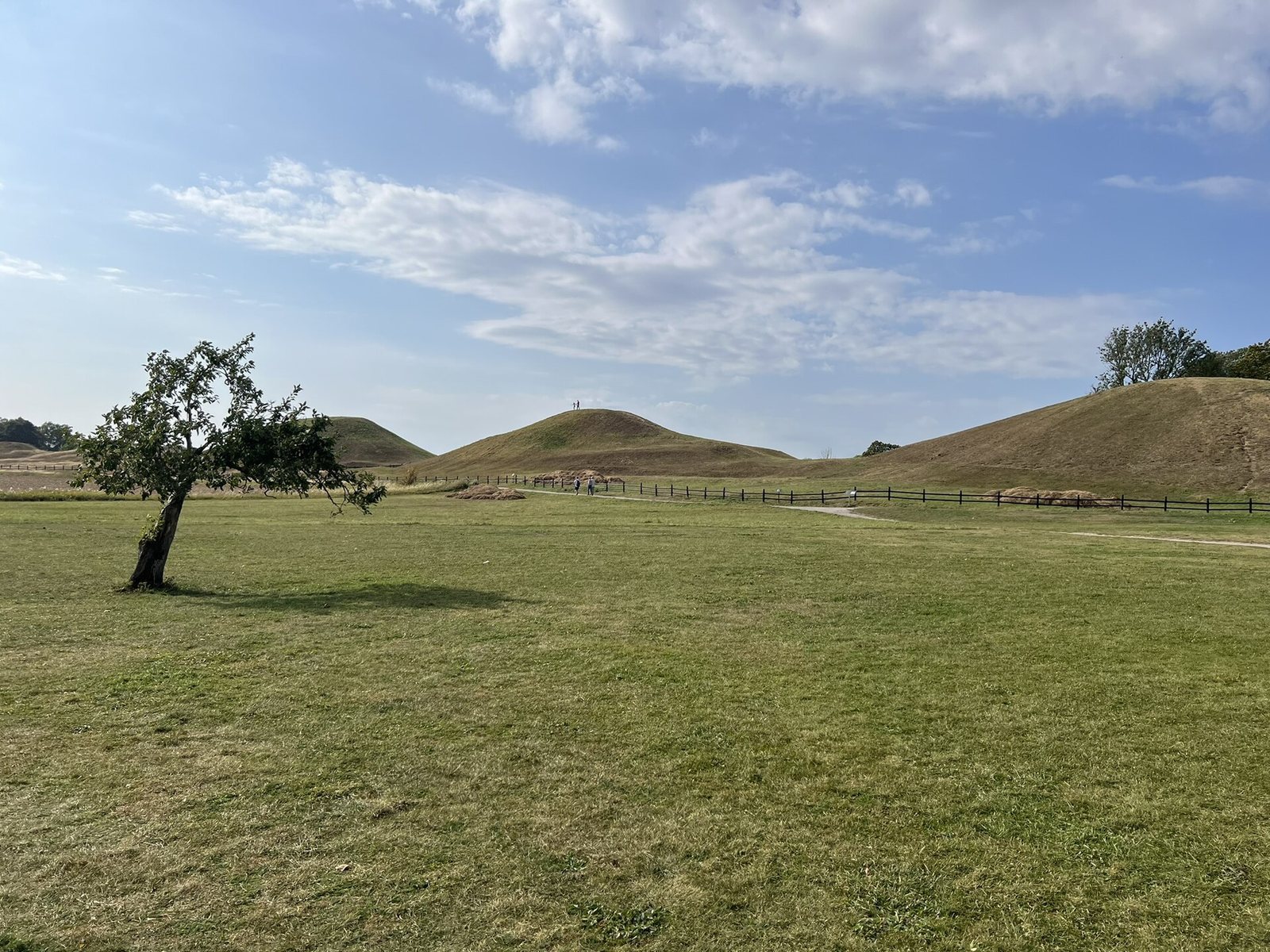
The Old Uppsala archaeological area in Uppsala, Sweden, is a landscape of burial grounds and settlement remains that includes royal mounds dating to the fifth or sixth century. Tradition linked the three largest mounds with the Norse gods Odin, associated with wisdom and rule, Thor, associated with thunder, and Freyr, linked with prosperity and fertility. The archaeologist Birger Nerman argued that the mounds held the legendary Swedish kings Adils, Aun, and Egil, figures in Ynglingatal, an Old Norse poem about a royal lineage. Today, the mounds are distinguished by their positions as the East, Middle, and West Mounds.
Tingshögen, a mound near the Royal Mounds, was once considered the burial place of Domar, a legendary Swedish king. That identification was abandoned after the mound was found to lie level with the ridge’s original surface, although radar surveys indicate that it was constructed. It may have had a role in royal elections. When the historic districts of Tiundaland and Attundaland chose a king jointly, the election is said to have taken place at the Mora Stones, several kilometres south of present-day Uppsala. In the sixteenth century, King Gustav Vasa is believed to have used Tingshögen as a symbolic place from which to address people on about ten occasions.
An ancient center of power
Excavations on the royal-estate plateau revealed a sequence of large halls. Their scale and position suggest that the area had a special public function, possibly hosting religious and political feasts. Historian Dick Harrison and archaeologist Kristina Ekero Eriksson have proposed that one hall may have been the pagan temple at Uppsala described by the eleventh-century chronicler Adam of Bremen.
Discoveries of more than 30 pit houses, buildings with floors set below ground level, and evidence of craftwork have reinforced the interpretation of Old Uppsala as an ancient power center. Similar concentrations of pit houses are known from ancient power centers in Denmark and Germany.
Excavation and interpretation
Investigation of the burial landscape began in the seventeenth century, with major excavation campaigns in the 1840s, 1870s, 1990s, and 2010s. Debate about whether the great mounds were natural formations prompted an excavation of the East Mound in 1846, initiated by the future King Carl XV and directed by Swedish antiquarian and archaeologist Bror Emil Hildebrand. Most of the human remains were reburied, leaving the burial’s identity unresolved. It has been interpreted as that of a woman, or of a young man and a woman, and the deceased belonged to the royal family. The West Mound was excavated in 1873-74.
Remains
Mounds and burial grounds
The wider mound complex contains about 800 mounds, while the archaeological area is thought to have held between 2,000 and 3,000 graves. The three largest mounds measure about 55 to 70 metres across and stand 7 to 11 metres high. They were raised on the Uppsala ridge, which was cut down to increase the mounds’ height above the surrounding landscape.
East Mound
A stone cairn, a heap of stones, covered a cremation burial at the centre of the East Mound. Finds included a clay vessel holding cremated bones and traces of burnt offerings. Numerous bronze panels show warriors dancing with spears and probably came from a helmet of the Vendel period, an early medieval era in Scandinavia dated to about AD 550-800. The panels have been compared with the helmet from Sutton Hoo, an Anglo-Saxon burial site in England. Gold from the grave may have decorated a large single-edged sword or a belt. Other objects included glass cups, a Scandinavian strategy board game, a comb, and a whetstone.
West Mound
Cremated remains from the West Mound were collected in a small bucket. The grave also held a man’s remains, animal bones that may have been provisions for a journey, and military equipment. Among its unusually rich finds for about AD 550-625 were part of a Vendel-period helmet, a small gold mask made with fine wirework that probably belonged to a gold neck ring, and a Frankish sword decorated with gold and garnets. A board game had iron pieces of Roman origin, while four cameos from the Middle East may once have belonged to a box. The deceased had worn costly Frankish fabric woven with gold thread and a belt with an elaborate buckle. These objects point to extensive trade connections in sixth-century Uppland.
Tingshögen
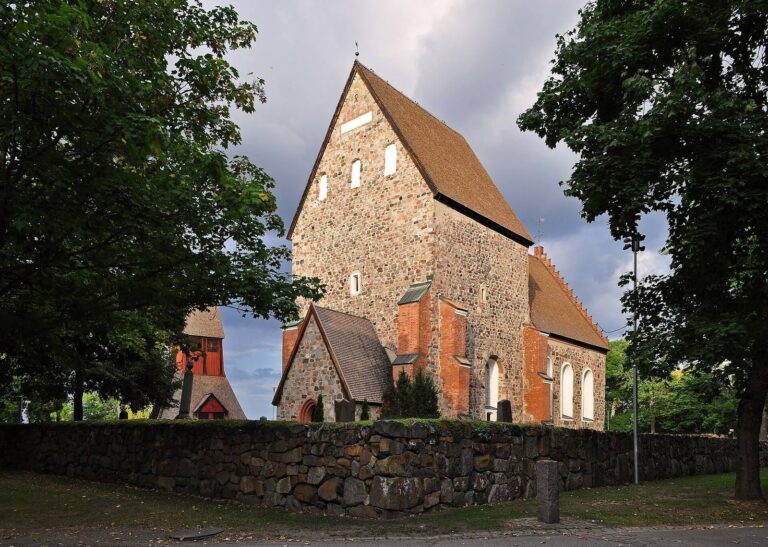
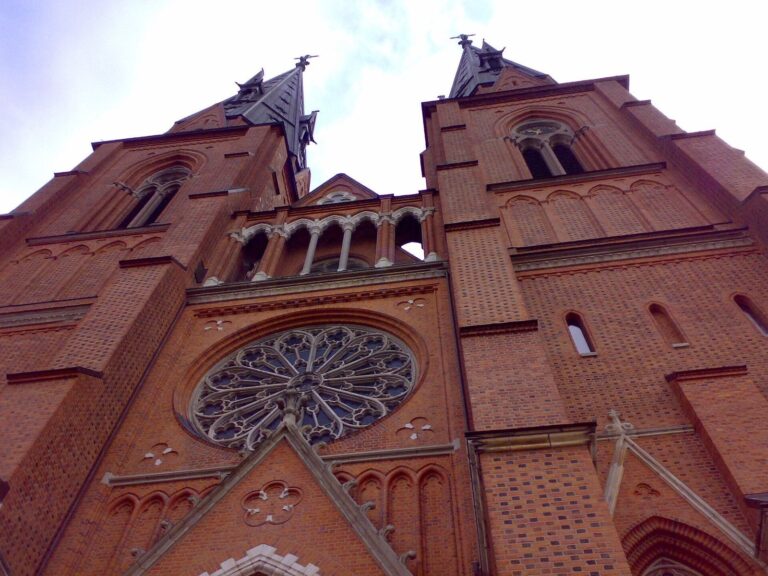
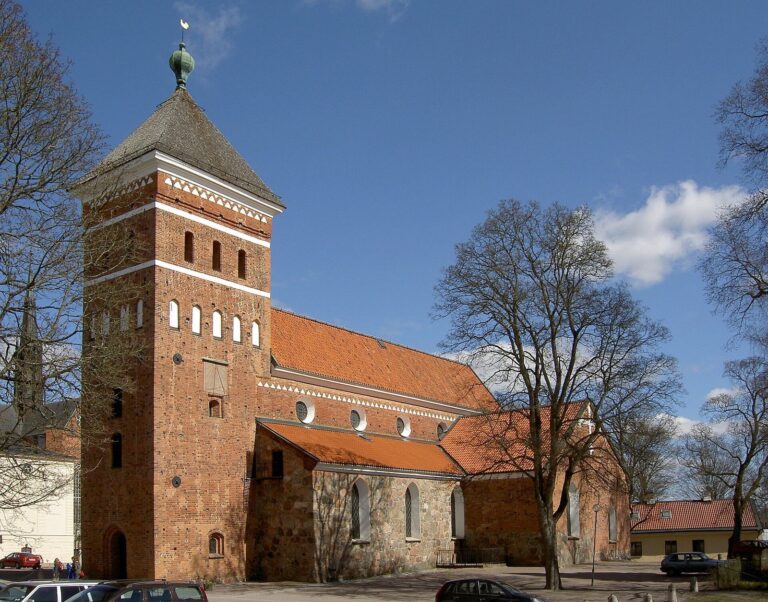
Tingshögen is a low, flat mound directly east of the Royal Mounds and beside Old Uppsala Church.
Late Iron Age cemetery
A nearby cemetery dates to the Late Iron Age. Uncremated burials from the Viking period and boat graves have been found near the parsonage. Cultivation has removed several neighboring burial fields. A map made in 1669 shows 669 graves in the cemetery, of which about 300 remain.
Royal-estate plateau and settlement
The royal-estate plateau lies immediately northeast of the present church. It was originally lower, then raised with layers of fill as successive halls were demolished and new buildings erected in the same place. One hall was a longhouse with tapered short ends, measuring about 50 to 60 metres long and 12 metres wide, with a floor area of roughly 500 square metres. It closely resembles a hall at Askahögen near Vadstena, almost 50 metres long and 14 metres wide. Halls of this scale are associated with the richest estates of the period, including Lejre.
The hall had double walls with clay packed between them and entrances about three metres wide on each long side. Such broad entrances were unusual for longhouses of the period, which typically had smaller openings to retain heat. The exterior was clad in boards or may have been whitewashed. The fire was intense enough to turn the clay wall material into brick and melt much of it. Excavations in 2011-12 found large iron spirals in the building’s postholes, the holes left by its supporting posts. The spirals were not scorched, supporting the interpretation that the hall was deliberately burned in a ritual act rather than destroyed by accident.
Residential and craft areas
Residential buildings stood in the field east of the plateau, now beside the railway tracks. A bank of some kind lay north of the houses, between the church and the Fyris River. More than 30 pit houses were found east and southeast of Tingshögen; several contained traces of weaving and metalworking.
Large building near Sivs väg
A previously unknown building was found near Sivs väg, southeast of Tingshögen, in 2012. Heavy posts about one metre in diameter supported its southern gable, suggesting a monumental upper structure or loft. The posts were replaced several times while the building was in use. Its purpose is uncertain. Comparable buildings are known at Barksta near Köping and at Björkgärdet in Rasbo.
Burial, ritual, and boundary evidence
Cremation pyre and human remains
A well-preserved cremation pyre found in 2012 contained wooden logs, charred human bones, and bones from horses and dogs. The bones were not completely burned, particularly those of the animals, which appear to have been placed farther from the fire’s centre.
Possible sacrificial grove
A pagan sacrificial grove may have existed at Old Uppsala, though the evidence is limited. Human remains found in 2012 included skull fragments among animal bones and bones marked by dog bites. They may have been carried there by a dog that had visited a possible grove, but this explanation remains unproven. A well sometimes associated with ancient activity at the site dates to several centuries later.
Posthole row
A line of substantial postholes, first identified about a kilometre south of the Royal Mounds in 1996, was shown by excavations in 2011-12 to extend around much of the archaeological area. It may have marked a monumental road or a boundary. Fireplaces just south of several postholes suggest that the posts were lit. Radiocarbon dating places the row around AD 600, in the middle of the Vendel period. Adam of Bremen described a “flaming chain” around Old Uppsala, but whether the post row enclosed the entire area is uncertain.
Animal remains and diet
Animal bones show that people ate cattle, pigs, sheep, goats, and horses, along with elk, roe deer, and crane. The range of wild game suggests a high-status setting. Many sheep and horses had reached considerable age, indicating they were probably kept mainly for work rather than slaughter. Finds from 2012 also show that cod and herring were eaten, although these fish had to be carried several miles inland from the coast.