Dochiariou Monastery: An Orthodox Monastery on Mount Athos
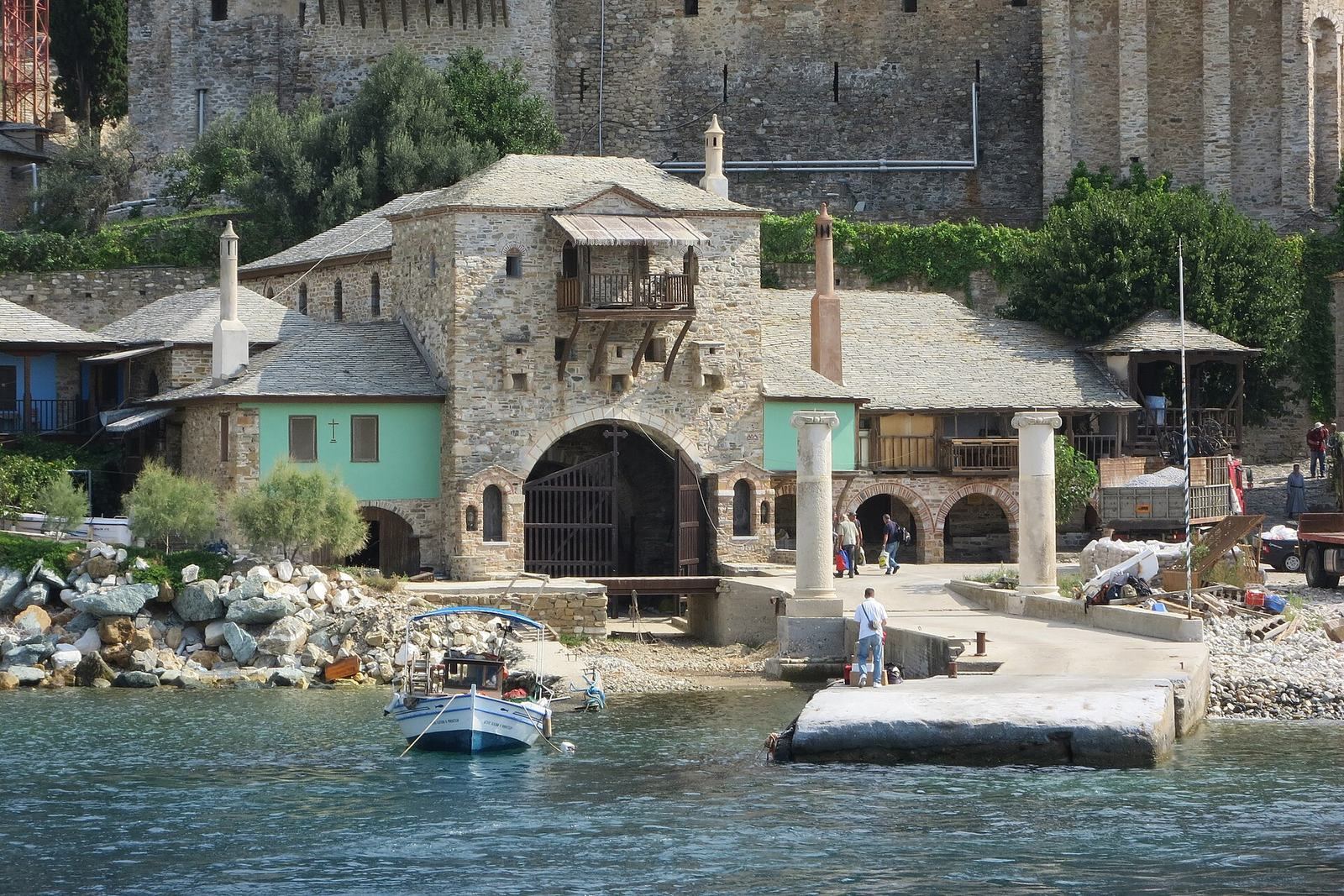
Site at a Glance
- Popularity
- High
- Country
- Greece
- Primary era
- Early Modern
- Eras represented
- Early Modern
- Civilizations
- Ottoman
- Site type
- Religious
- Remains
- Monastery
On this page13 sections
History
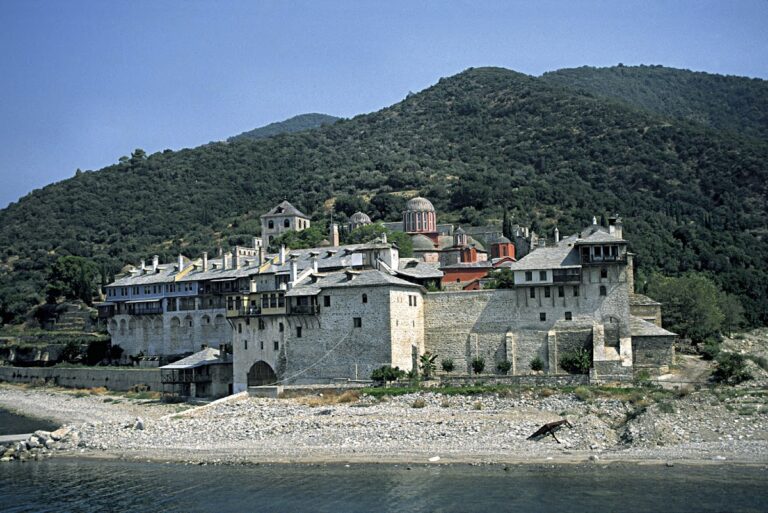
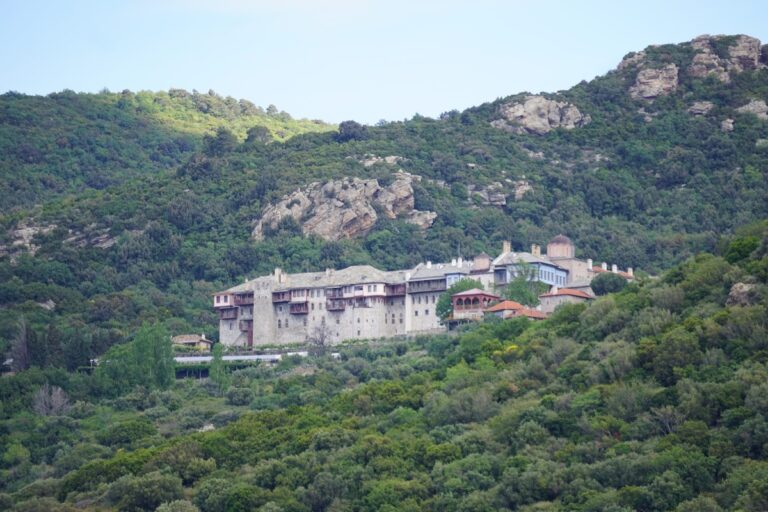
Dochiariou Monastery is an active Orthodox monastery for men on the southwestern coast of Mount Athos in Greece. Traditionally founded around the late tenth or early eleventh century, it ranks tenth in the hierarchy of Athonite monasteries and is also described as the seventh oldest. It remains under the authority of the Ecumenical Patriarchate.
Traditional foundation
Tradition credits the monastery’s foundation to the monk Euthymius, who was associated with Athanasius the Athonite, a Byzantine monk linked to the establishment of monasticism on Mount Athos. Euthymius had served as a cellarer, the monk responsible for a monastery’s stores and provisions, at the Great Lavra, a major historic monastery on the mountain. Dochiariou’s name derives from that office.
One tradition says Euthymius first established a church and a skete, or small monastic community, near the port of Daphne. He later founded a church dedicated to Saint Nicholas farther north. In the early eleventh century, monks moved to another site to escape pirate raids. The monastery’s principal church eventually took as its patrons Michael and Gabriel, archangels understood as senior angels.
A related account connects the foundation of an Archangel church with the reign of Byzantine Emperor Nikephoros Phokas. Euthymius and his relative Nicholas, a senior court official, are said to have established it, with Nicholas paying for the work. Nicholas then became a monk under the name Neophytos and followed Euthymius as abbot. An early benefactor and renovator is identified uncertainly as either Emperor Michael VII Doukas or his successor, Nikephoros III Botaneiates.
The dedication is also linked to a story about a novice thrown into the sea with a stone tied around his neck. Heavenly powers rescued him, and he entered the monastery as Barnabas. After Neophytos, Barnabas became abbot and completed the construction when a treasure was discovered.
Medieval and Ottoman-era changes
In the fourteenth century, the monastery received support from Byzantine Emperor John V Palaiologos and Serbian ruler Stefan Dušan. Following Turkish devastation in the sixteenth century, it was revived with assistance from Abbot Alexander and a Wallachian ruler and his wife. Its towers were restored in the seventeenth century. In 1660, the monastery gained stavropegial status, meaning it was directly subordinate to the patriarch rather than to a local bishop.
During the Greek uprising against Ottoman rule, Ottoman forces tortured the monks and looted the monastery completely.
Religious traditions and observances
The monastery celebrates the feast of the Archangel Michael on November 21. Its annual celebration of the icon known as the Quick to Hear, an Orthodox title for an icon of the Virgin Mary, has taken place on October 14 since 1919. A tradition about the icon’s cellarer, Neil, places a healing there in 1664: after careless handling of the icon left him blind, he repented and regained his sight.
Remains
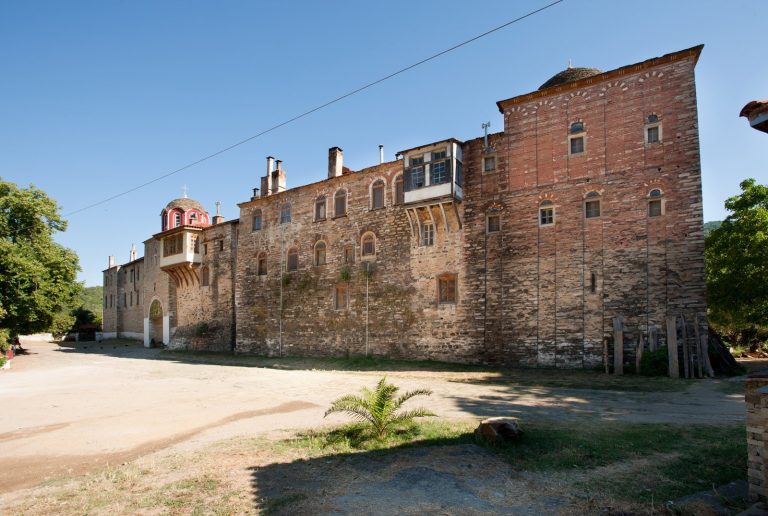
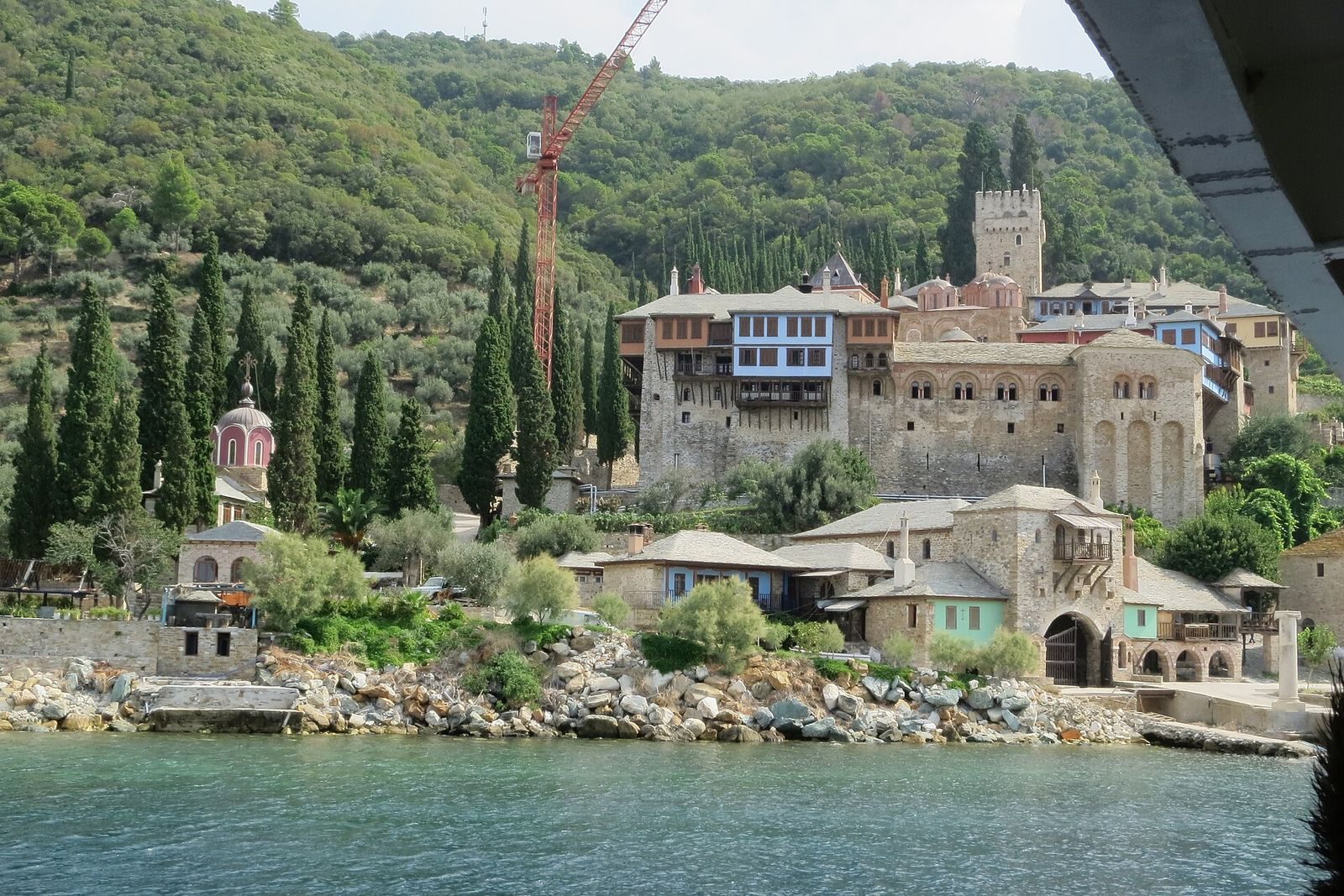
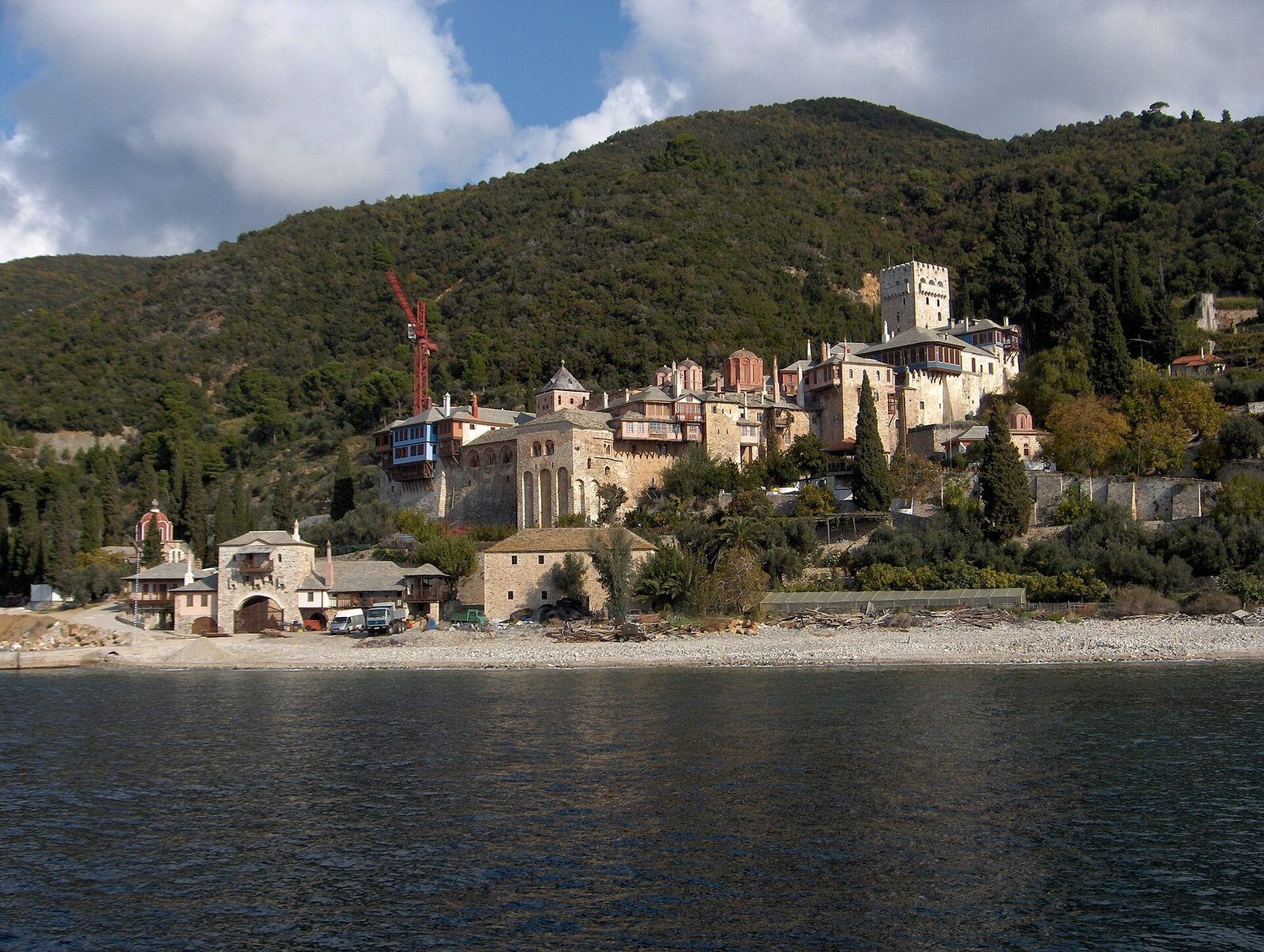
The monastery’s buildings include a principal church, numerous chapels and other churches, and a bell tower. Its religious collections and library form part of the surviving complex.
Monastic architecture
Principal church
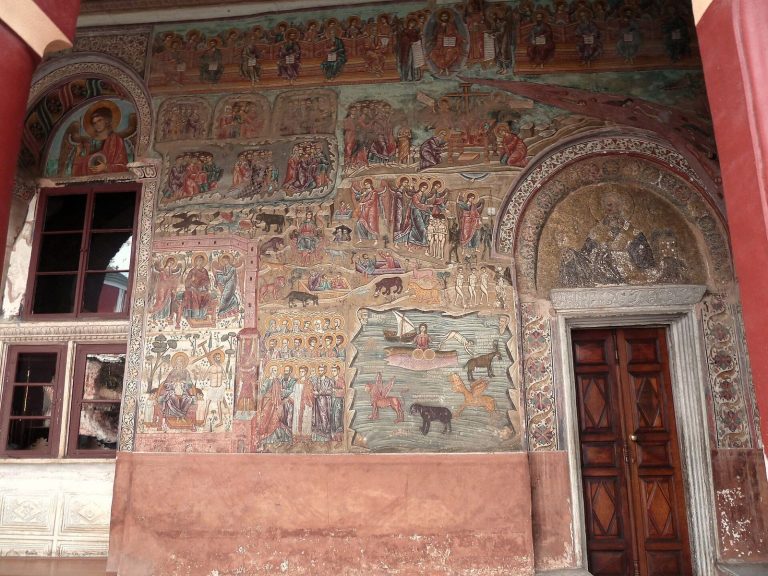
The principal church was built and decorated with frescoes in 1568. Its exterior is faced with marble, and it rises higher than the other churches on Mount Athos. Images of the monastery’s first three abbots occupy the passage between the church and the refectory, the communal dining hall.
Churches, chapels, and bell tower
The complex has nine chapels. Within the monastery grounds are twelve churches, with four more situated outside the enclosure, opposite its walls. The bell tower was built in the eighteenth century.
Icons, well, and collections
Quick to Hear icon
The Quick to Hear icon is dated to the tenth century and associated with the abbacy of Neophytos. It is kept in a chapel built for it, to the right of the refectory entrance.
Holy Well
The Holy Well is associated with a tradition that it appeared miraculously in 1299.
Relics
The monastery keeps a fragment of the True Cross; the head of Saint Dionysius the Areopagite, identified as the first bishop of Athens; and the head of Saint Mitrophanes, Patriarch of Constantinople. Its collection also includes a cloth bearing the blood of Demetrius of Thessaloniki, the head of George of Ephesus, a hand relic of Marina, and relics of Paraskeva. Other fragments are associated with John the Baptist, Panteleimon, Hermolaus, Charalambos, John the Russian, and Niketas. The collection represents 75 saints, alongside unnamed fragments kept in crosses used for blessing water.
Library
The library contains 545 books, including 62 written on parchment, as well as 5,000 printed books. It also holds more than 400 manuscripts and documents of Byzantine, Ottoman, and other origins.