Dobrușa Monastery: An Orthodox Monastic Complex in Moldova
Site at a Glance
- Popularity
- Medium
- Country
- Moldova
- Primary era
- Modern
- Eras represented
- Early Modern, Modern
- Civilizations
- Ottoman, Principality of Moldavia, Russian
- Site type
- Religious
- Remains
- Monastery
On this page11 sections
History
Dobrușa Monastery is an Orthodox monastic complex in Moldova, founded in 1772 by Ioasaf, a monk from Probota. Its origins reach back to 1527, when Petru Rareș, ruler of Moldavia, established a dependent monastic property at Dobrușa. The monastery that later grew there remained subordinate to Probota, which belonged to the Church of the Holy Sepulchre, a major Christian sanctuary in Jerusalem.
Founding and relocation
Ioasaf administered the Dobrușa property before founding the monastery. An initial hermitage, a small religious retreat, included a wooden church dedicated to St Nicholas. Its construction may date to 1772 or 1783. Monks from Curchi, an Orthodox monastery, helped with the work under a hieromonk, a monk ordained as a priest.
The hilltop site did not provide enough drinking water, so the monks left it and moved into the valley. There they established a new community and built a church to St Nicholas in 1785–86.
Growth in the nineteenth century
In 1813, Dobrușa came under the newly formed Chișinău and Hotin Diocese of the Russian Orthodox Church. From 1817 it operated as a cenobitic monastery, where monks lived and worshipped communally, but was classed as non-staff, outside the official category of monasteries assigned an approved complement of monks.
Building work during the first half of the nineteenth century received financial support from a boyar, a member of the landed aristocracy, from Iași and his widow, who later became a nun. A monastery school opened in 1878. Services were conducted in Romanian until 1863, when Church Slavonic, a language used in Orthodox worship, was imposed. The library held many Romanian-language books printed in the Romanian principalities during the seventeenth and eighteenth centuries.
The community numbered 89 monks and lay brothers in 1890, all identified as Bessarabian or Moldovan. After Bessarabia became part of Romania in 1918, Dobrușa came under the Romanian Orthodox Church. Some of its property was secularized, though it remained among the region’s wealthiest monasteries. In 1923 it transferred from the Chișinău Diocese to the Hotin Diocese. The monastery had 95 residents in 1925, and its printing press operated from that year until 1931.
Wartime occupation, closure, and revival
In 1944 the monks left when the Red Army’s 7th Corps temporarily used the complex as its headquarters. After the Second World War, the monastery returned to the Russian Orthodox Church. It closed in 1959, when 55 people lived there, and by 1960 its buildings had been converted into a boarding school for children with disabilities. The school continued until 1994. During that period the winter church became a club, while the summer church served first as a canteen and food store, then as a grocery shop. The cemetery was leveled and made into a sports field.
The complex was returned to the Church in 1993. A metropolitan decree reactivated the monastery on 28 October 1994, and a decision by the Russian Orthodox Church’s Holy Synod, its governing council of bishops, followed on 5 May 1995. An abbot was appointed to lead the community.
Remains
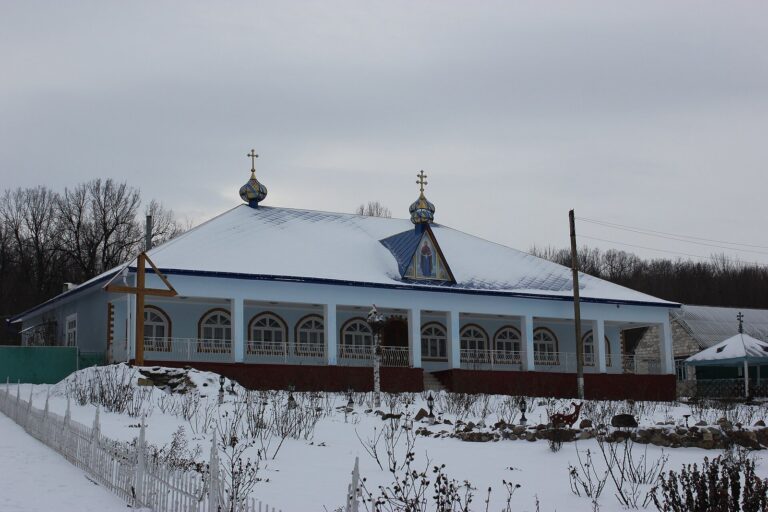
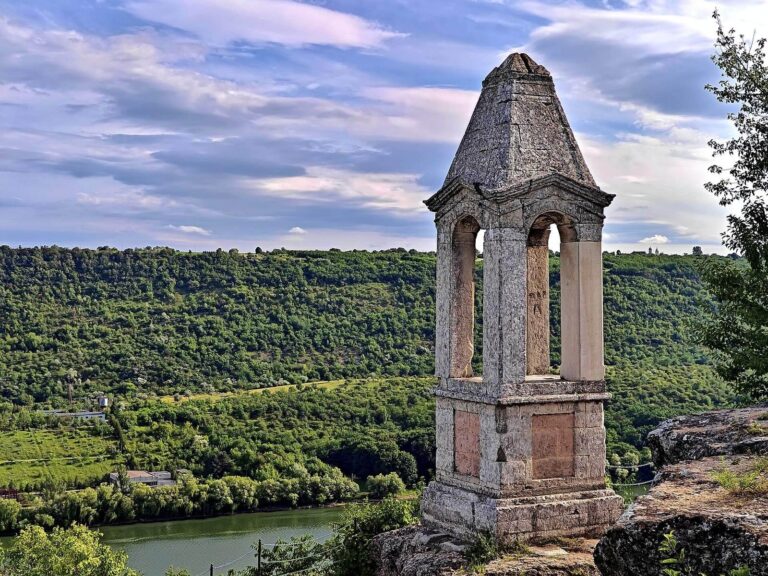
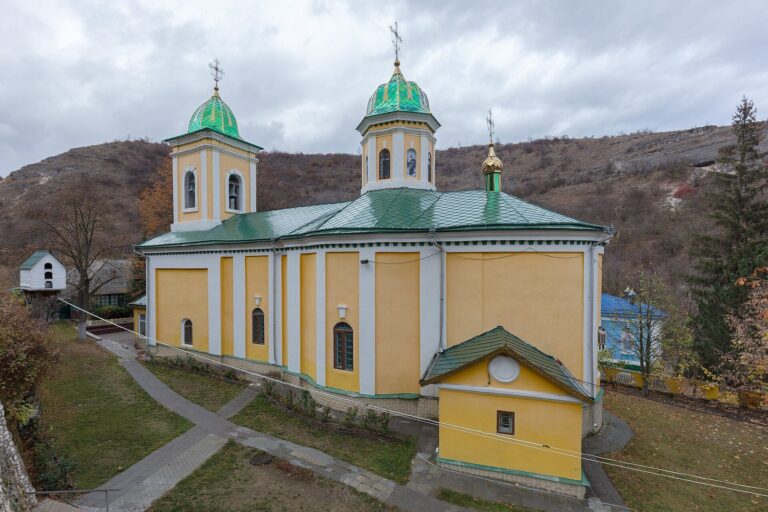
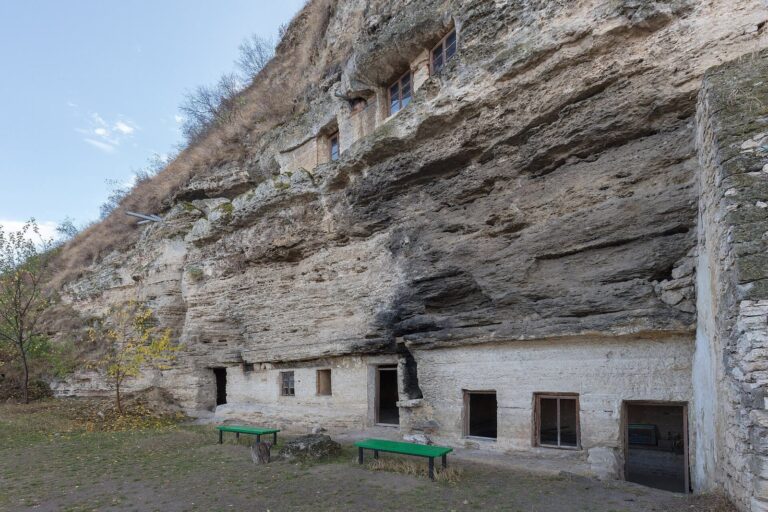
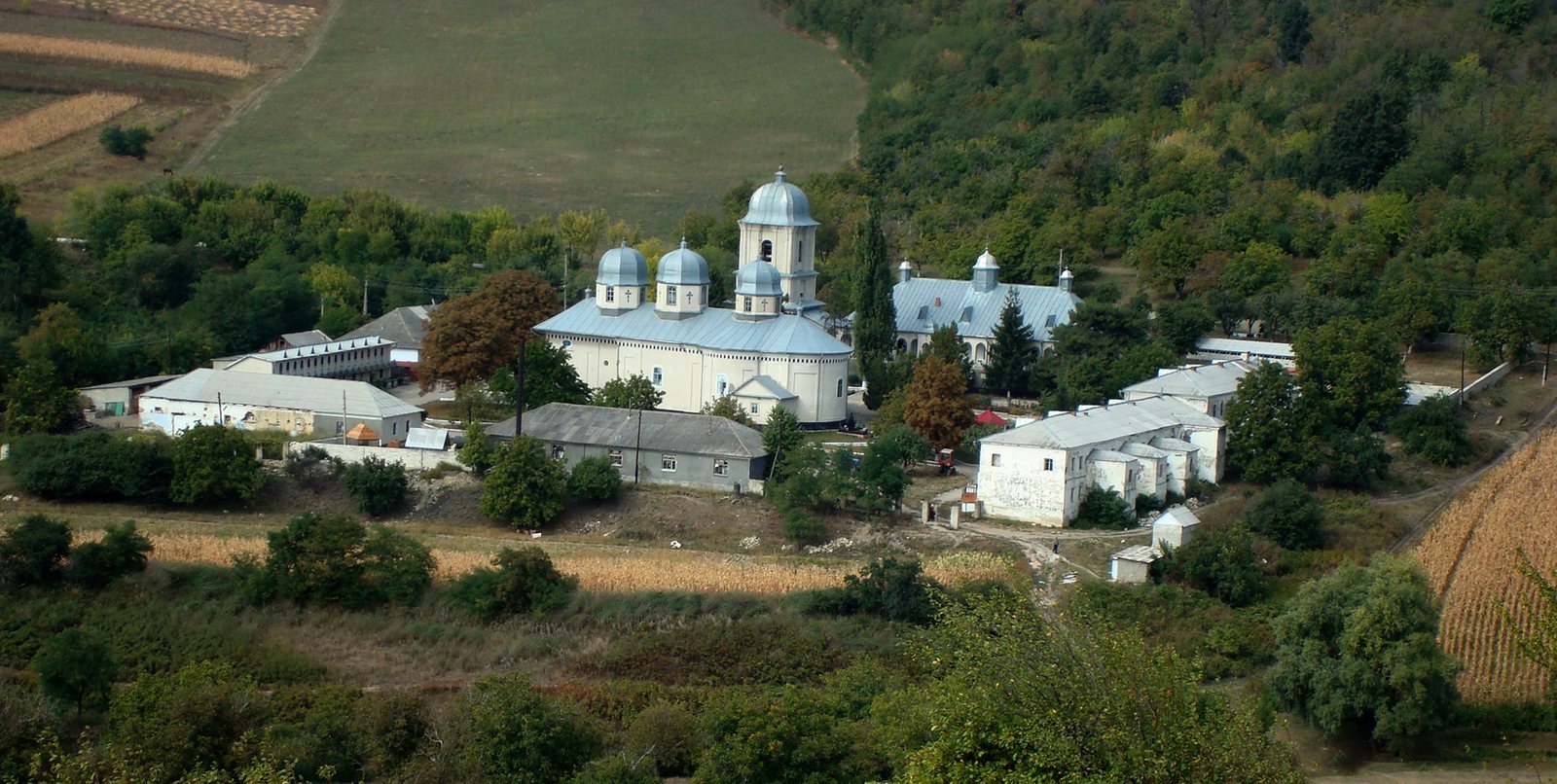
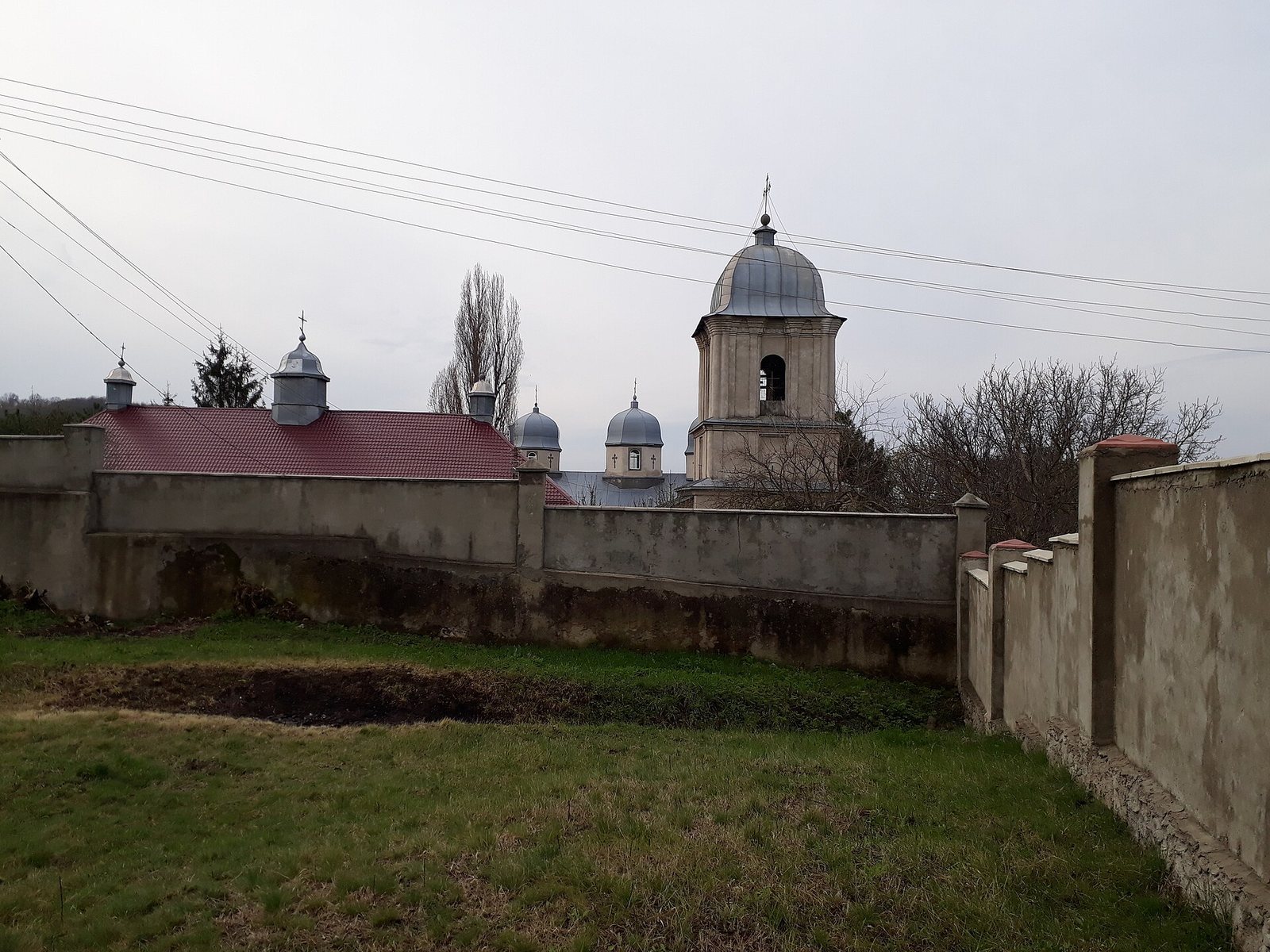
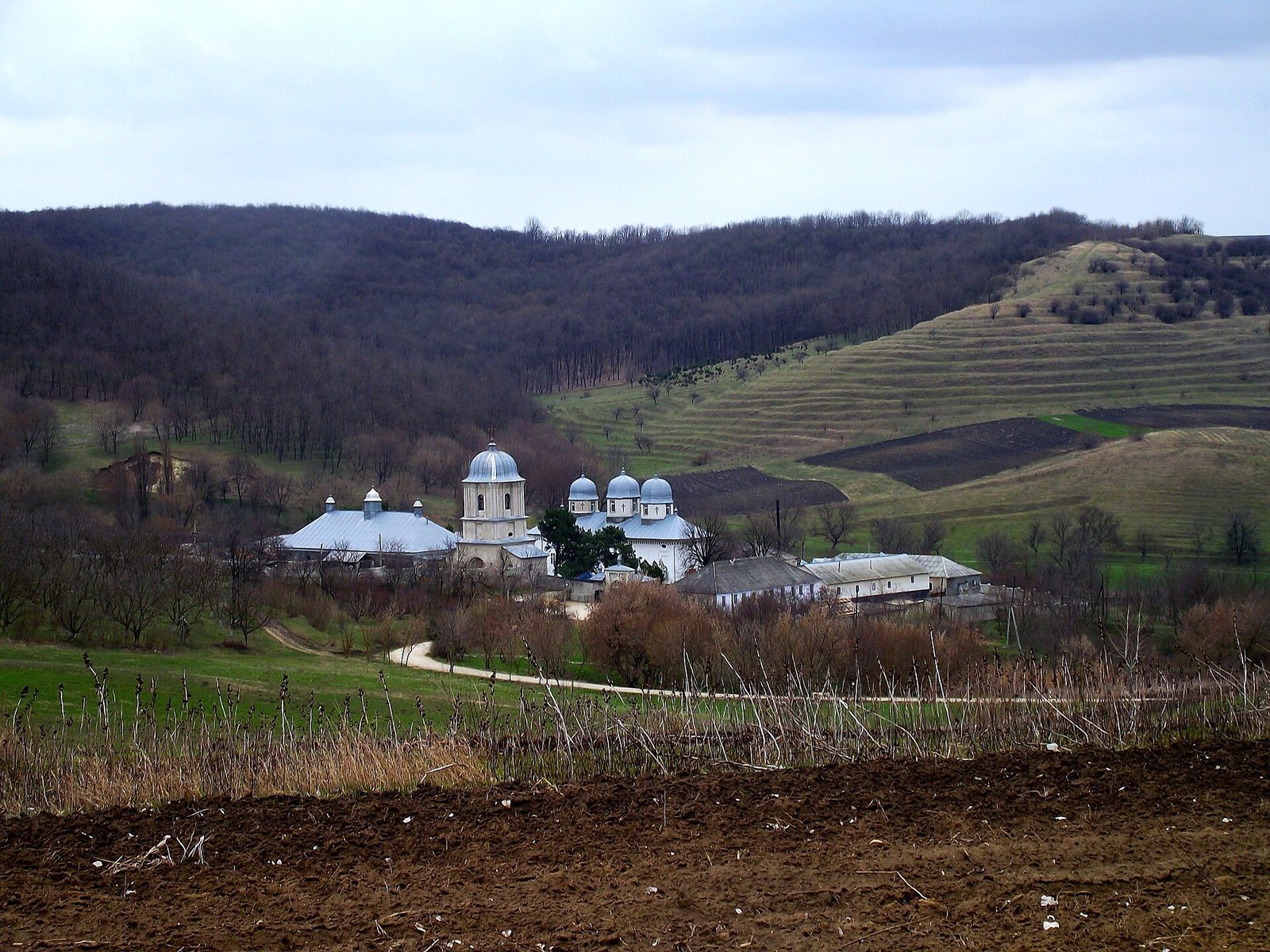
The complex extends across the valley and hilltop, with the main monastery in the valley and a cemetery church and skete, a small monastic settlement, on the hill. Its churches represent successive building phases; recorded materials include wood for an earlier church and stone for the cemetery church.
Valley churches
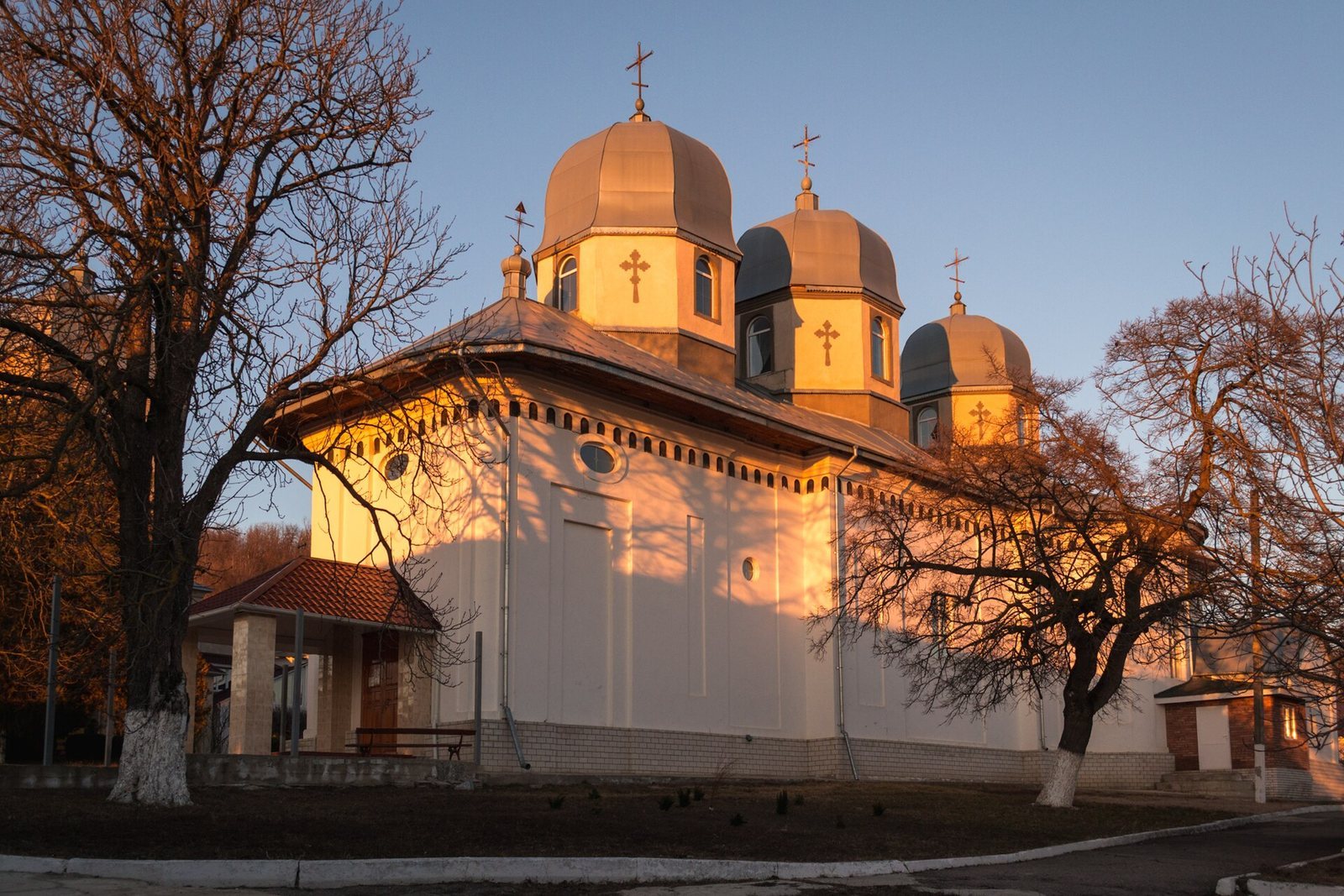
Summer Church of St Nicholas
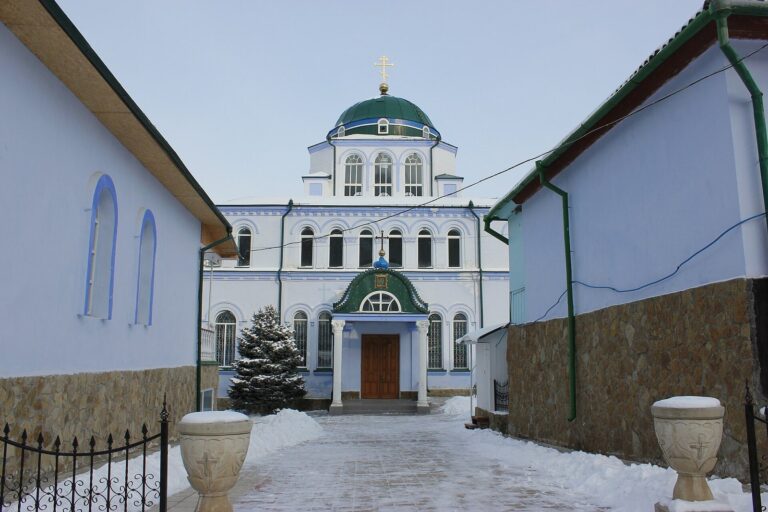
The summer Church of St Nicholas was built in the first half of the nineteenth century and consecrated on 13 May 1822 by the archbishop of Chișinău and Hotin. A bell tower was added in 1826. Restoration of the church followed work on the winter church.
Winter Church of the Transfiguration
The winter church, dedicated to the Transfiguration, dates to 1847. Its restoration was completed in 1997.
Hilltop religious buildings
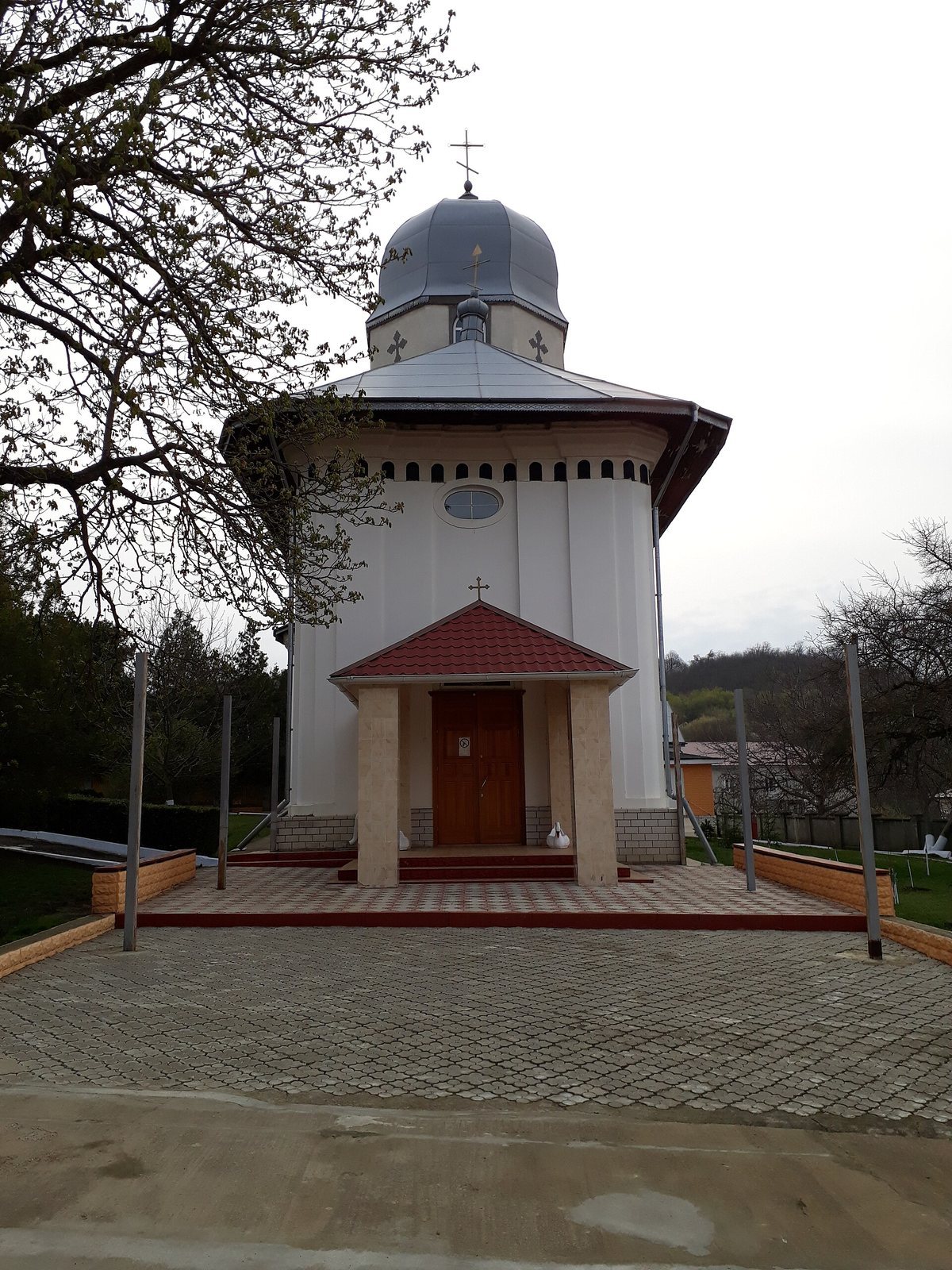
Cemetery Church of St Nicholas
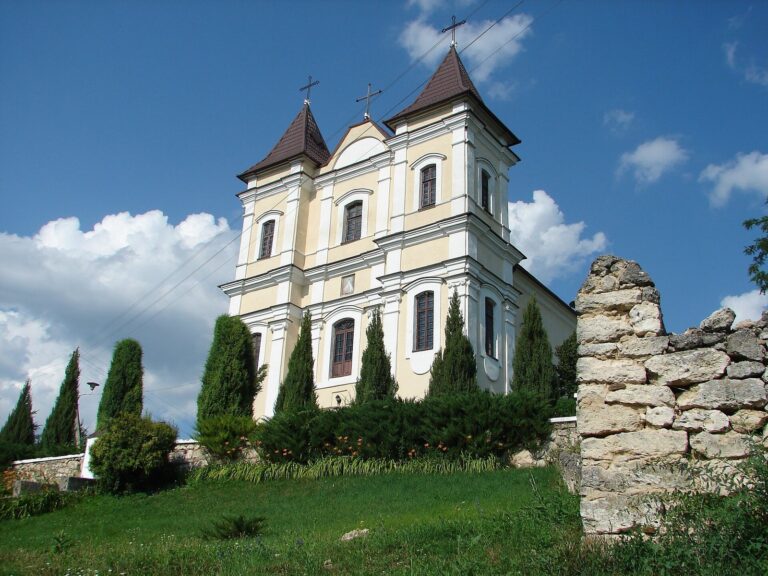
This stone church was built on the hill between 1837 and 1839, replacing an earlier wooden church. An architect designed the building, which the archbishop of Chișinău and Hotin consecrated on 14 November 1839.
Hilltop skete
The hilltop also contains a skete with a church dedicated to the archangels Michael and Gabriel.