Arad Fort: A Historic Defensive Stronghold in Bahrain

Site at a Glance
- Rating
- 4.2
- Popularity
- Medium
- Country
- Bahrain
- Primary era
- Medieval
- External website
- Open
- Eras represented
- Medieval, Early Modern
- Civilizations
- Omani
- Site type
- Military
- Remains
- Fort
On this page8 sections
History
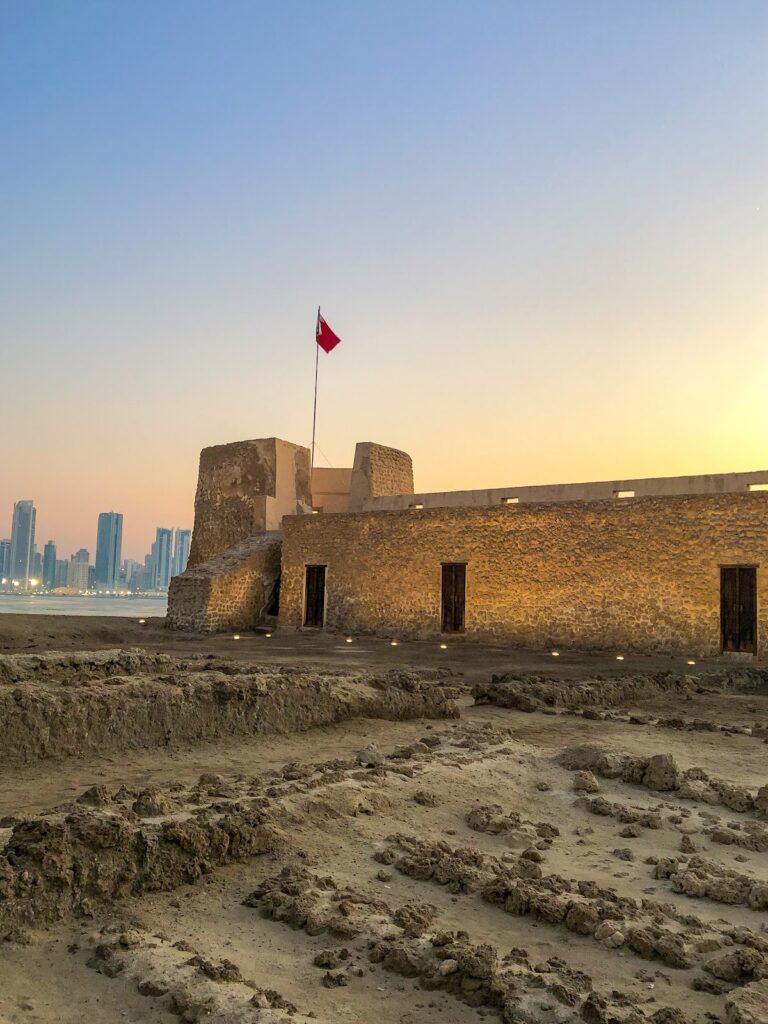
Arad Fort is a fifteenth-century defensive stronghold in Bahrain, located in Arad near Muharraq. Its construction probably belongs to the late fifteenth or early sixteenth century, before the Portuguese invasion of Bahrain in 1622, although its exact date remains uncertain. The fort guarded the waterways between Bahrain and Muharraq and continued to serve a defensive role through the Portuguese occupation and the period of nineteenth-century Al Khalifa rule.
Origins and early defensive role
The fort is traditionally attributed to Imam Sultan bin Saif al-Yarubi, the Omani imam of the period. A Portuguese map called Demonstracao da Ilha de Baren, produced around 1635 during a Portuguese siege, shows fortified walls both outside and inside the fort. These correspond to the structural arrangement that survives today and provide an early visual record of its defenses.
Arad Fort took its name from Arados, an ancient Greek name for Muharraq Island, which later became Arad. The fort and its surrounding area once stood on a separate island. Land reclamation subsequently connected them to Muharraq Island, changing the setting of the defensive site while leaving its historical association with the nearby waterways intact.
Omani occupation
The fort was probably built or used by Omani forces during their brief occupation of Bahrain around 1800 and 1801. Sultan bin Ahmad Al Bu Said captured Bahrain, installed his son Salem as governor, took twenty-five prominent Bahraini hostages, and placed an Omani garrison in Arad Fort. Al Khalifa forces later recovered Bahrain and expelled the garrison. Sultan bin Ahmad withdrew from another attempt to retake the island in 1803.
Restoration and investigation
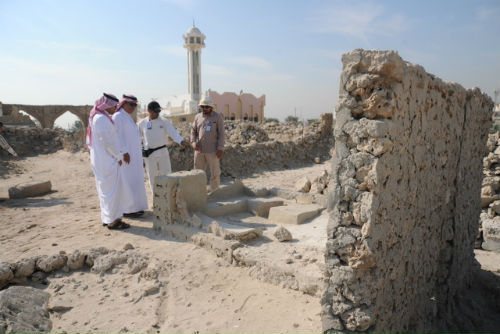
Comprehensive excavations have investigated the fort’s earlier development. A major restoration took place from 1984 to 1987 under the direction of the conservation architect Dr Archie Walls. The work sought to preserve the fort’s historical authenticity, using traditional materials identified through analysis of its original fabric rather than cement and other materials considered incompatible with the historic structure.
Remains
Fortification layout
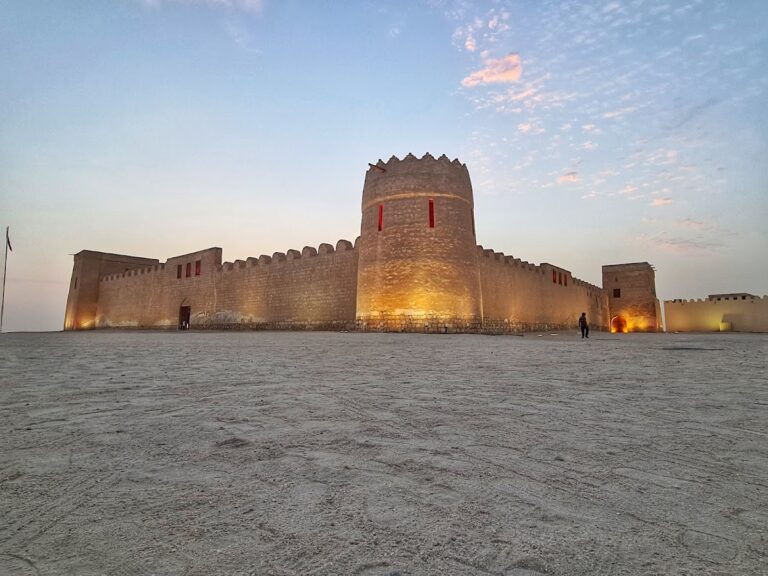
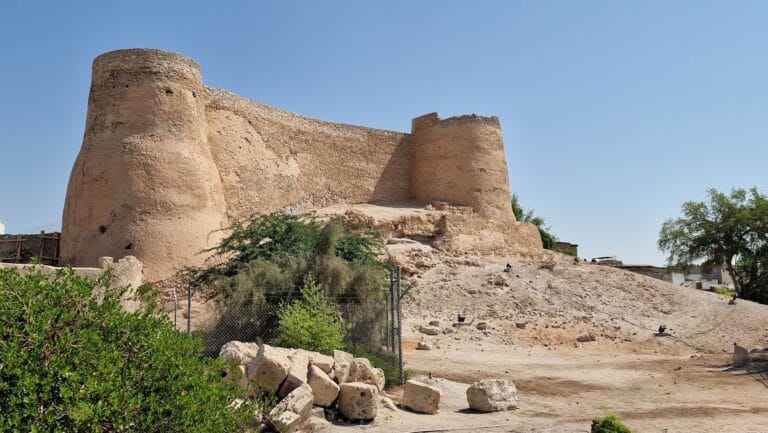
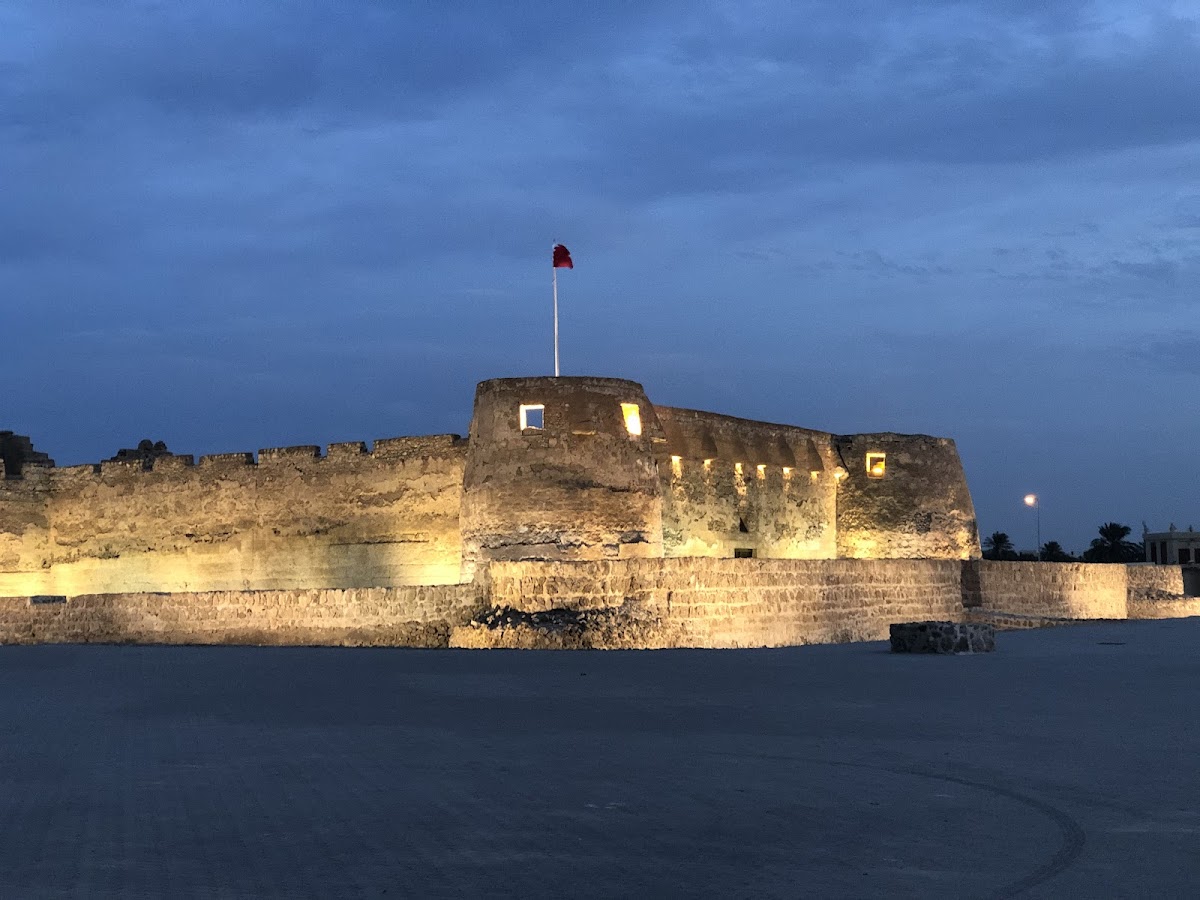
Arad Fort has a compact square plan with a cylindrical tower at each corner. A small trench surrounds the structure. Wells dug specifically for the purpose once supplied water to the trench, which functioned as a water defense but did not form a fully developed European-style castle moat.
The upper outer wall and the tops of all four towers contain successive nose-shaped projecting openings for marksmen. Unlike conventional European loopholes, these projections placed the shooter physically forward of the main wall. Together with the corner towers and enclosed plan, they formed a tightly organized defensive system.
Construction and surviving materials
The original building used a layered technique associated with early mud-brick construction. The method consists of building substantial walls through successive layers of material and was identified by Archie Walls in the mid-1970s. Restoration and maintenance used traditionally compatible materials, including coral or sea stone, lime, sand, and palm trunks, helping retain the character of the historic fabric.
Maritime defenses
A cannon on the southern bastion, a projecting part of a fortification designed to provide defensive fire along the surrounding walls, dates from the Omani occupation. It faced the narrow entrance channel leading to Muharram Bay, where reefs formed both sides of the passage. The fort formerly overlooked an inaccessible marine channel controlled by local inhabitants to prevent unwanted vessels from reaching the island. In its present setting, it overlooks several maritime passages along Muharraq’s shallow shores.