Diana Veteranorum: A Roman-Berber City in Numidia
Site at a Glance
- Rating
- 5
- Popularity
- Very Low
- Country
- Algeria
- Primary era
- Classical
- Eras represented
- Classical, Medieval
- Civilizations
- Byzantine, Roman
- Site type
- Settlement
- Remains
- Town
On this page14 sections
History
Diana Veteranorum was a Roman-Berber city in Numidia, in present-day Algeria, shaped by Roman and indigenous North African influences. It developed near important military and road connections, and its origins are associated with both Roman veterans and Emperor Trajan’s reign.
Origins and civic status
The settlement may have begun in the Flavian period, during the reigns of Vespasian, Titus, and Domitian, as a community of veterans from the Third Augustan Legion. An indigenous settlement may have existed alongside it. Diana perhaps began as a small community with a police post and a local council. An early inscription describes its inhabitants as a public civic body.
When Diana became a self-governing Roman town is uncertain. An inscription suggests it held this status by 149, and the status is securely attested by 162. Its elevation has been proposed for Trajan’s reign and has also been linked to the governorship of D. Fonteius Frontinianus around 161/162.
A regional center
Diana grew rapidly at a road junction and maintained close links with the military garrison at Lambaesis, serving as its outpost. Lambaesis, headquarters of the Third Augustan Legion, lay about 40 km southeast of the city. Diana was also about 85 km southwest of Cirta and 40 km east of Zaraï, a customs post controlling passage into Mauretania Caesariensis, a Roman province in North Africa. Milestones indicate that the city’s territory extended at least 26 km west, 15 km southwest, 16 km north, and 20 km northwest.
In 164/165, civic building and renovation continued, although the specific projects are uncertain. Around 185, local council members pooled funds to honor Valerius Maximianus, a senior legionary commander associated with Marcus Aurelius and a patron of local notables.
Christianity and late antique change
A Christian community with a bishop was present at Diana from the mid-third century, and a church was later built in the city. The surrounding region appears to have been strongly affected by Donatism, a North African Christian movement shaped by disputes over church authority and the treatment of Christians who had compromised their faith. Near Zana, at Nova Petra, Marculus died under suspicious circumstances on 29 November 347. Donatists said Catholics had killed him by throwing him from a height, while Catholics described his death as ritual suicide. Donatists venerated him as a martyr, a person who dies for the faith, and his martyrdom account was mentioned at the Conference of Carthage in 411. A memorial shrine associated with his relics was found at Ksar el-Kelb.
The late-fourth-century Peutinger Table, a map of the Roman road network, names the city Ad Dianam. Diana later came under Byzantine rule, when Roman buildings were replaced or adapted for new construction. The expanding Arab empire captured the city in the second half of the seventh century. Diana is also the name of a titular see, a title for a former diocese without a resident bishop.
Archaeological investigation
Exploration began in the mid-nineteenth century and often concentrated on inscriptions. Léon Renier cleared the basilica, a large public hall, in 1850. Gustav Wilmanns and Émile Masqueray carried out inscription surveys in the 1870s, followed by Stéphane Gsell in the 1880s and 1890s. In 1882, Charles Diehl led a mission to examine the Byzantine remains. Systematic excavation was limited outside work between the world wars.
From 1928, Jeanne Alquier directed excavations that uncovered the forum and part of its surroundings. R. Godet’s work in the late 1940s and early 1950s, supervised by Louis Leschi, yielded important inscriptions. A brief inscription survey followed in 1964.
Remains
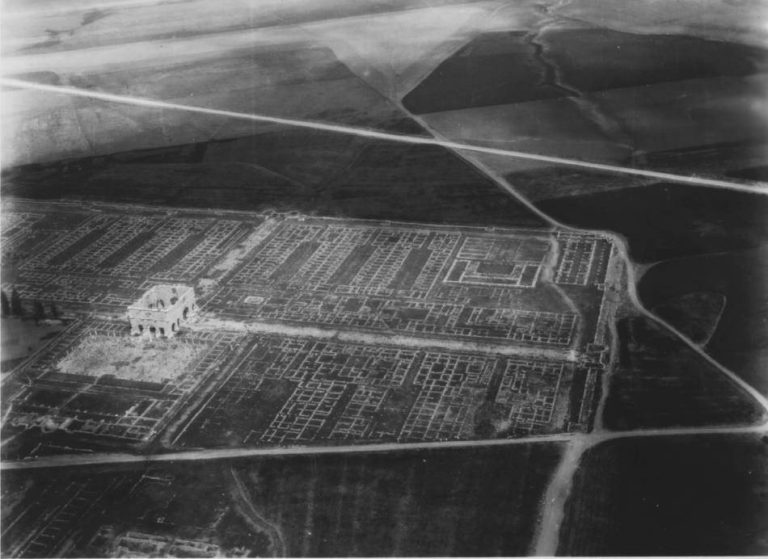
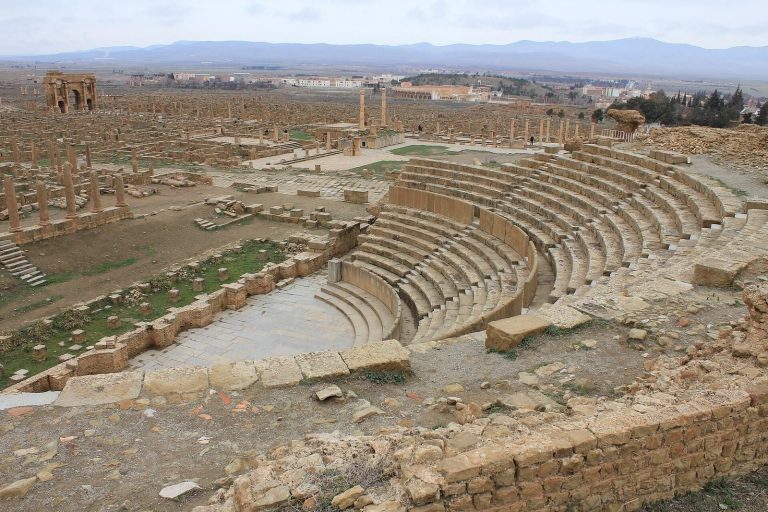
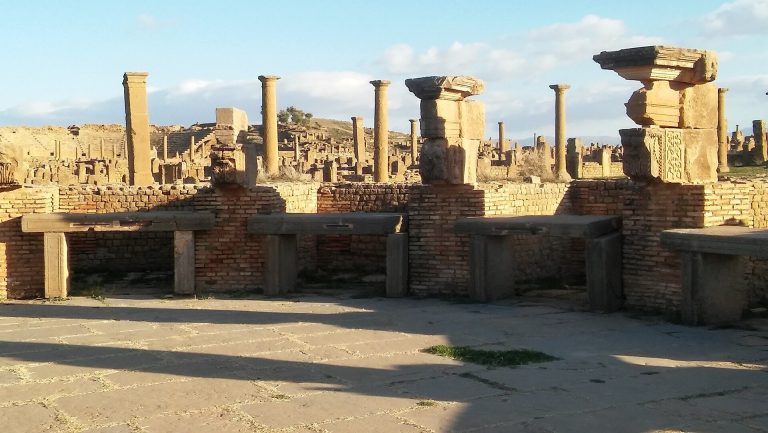
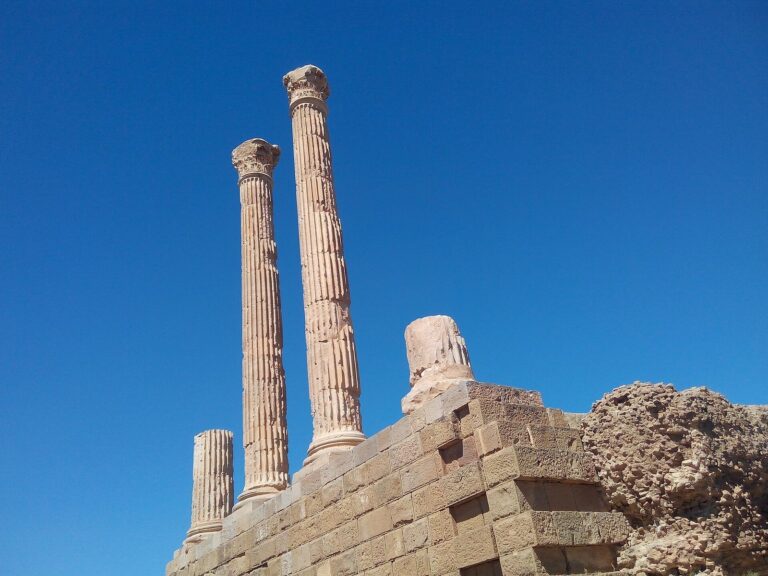
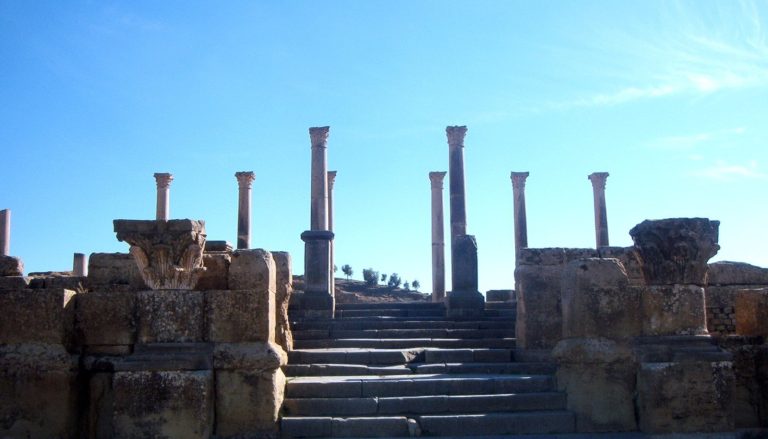
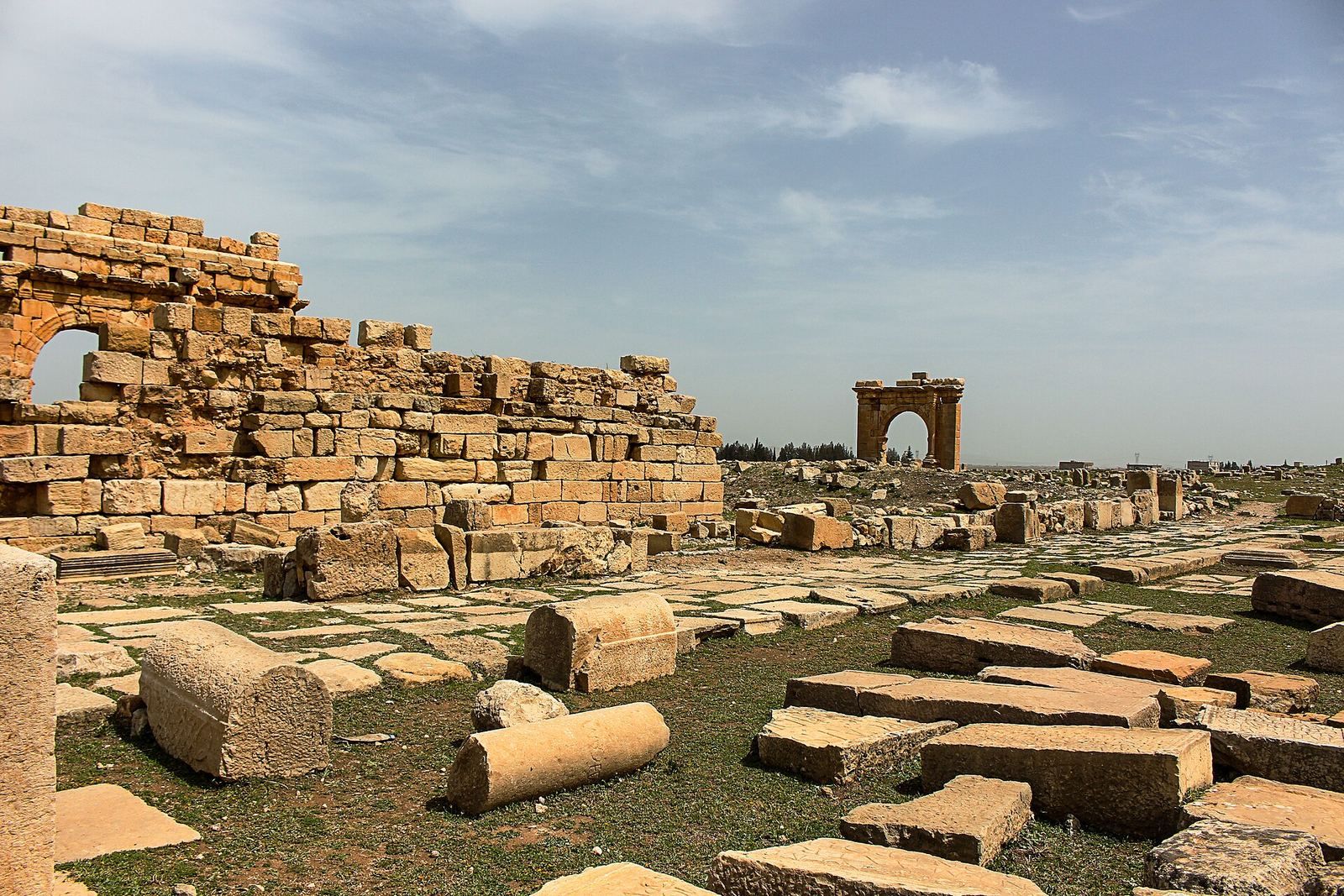
The abandoned site preserves a civic center, monuments, and later military works. The large paved forum forms a central feature; the remains of a temple lie in the southeastern part of the city, while monumental tombs occupy its western area. A larger Byzantine fort stood east of the forum, and an aqueduct is also among the remains. Ruins and scattered stone slabs at the site are unprotected.
Civic center and monuments
Forum and church
The forum is a large rectangular paved space. A Christian church built over it measures 33 by 17.1 m, placing a later religious building within the city’s civic center.
Triumphal arches
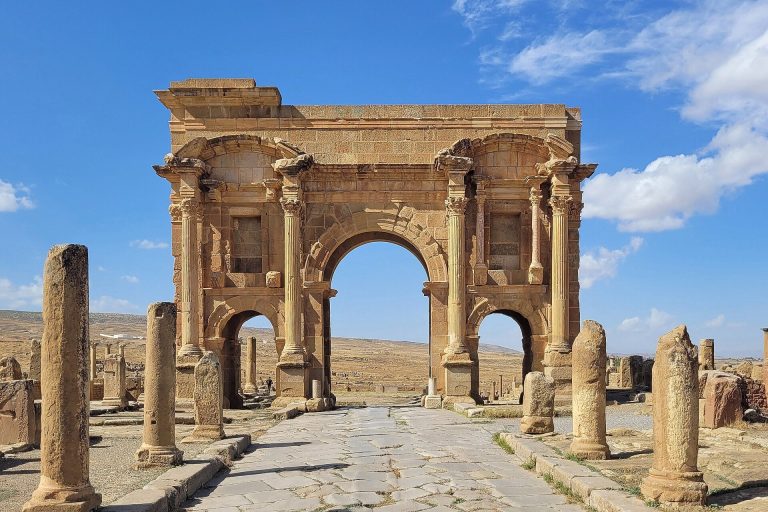
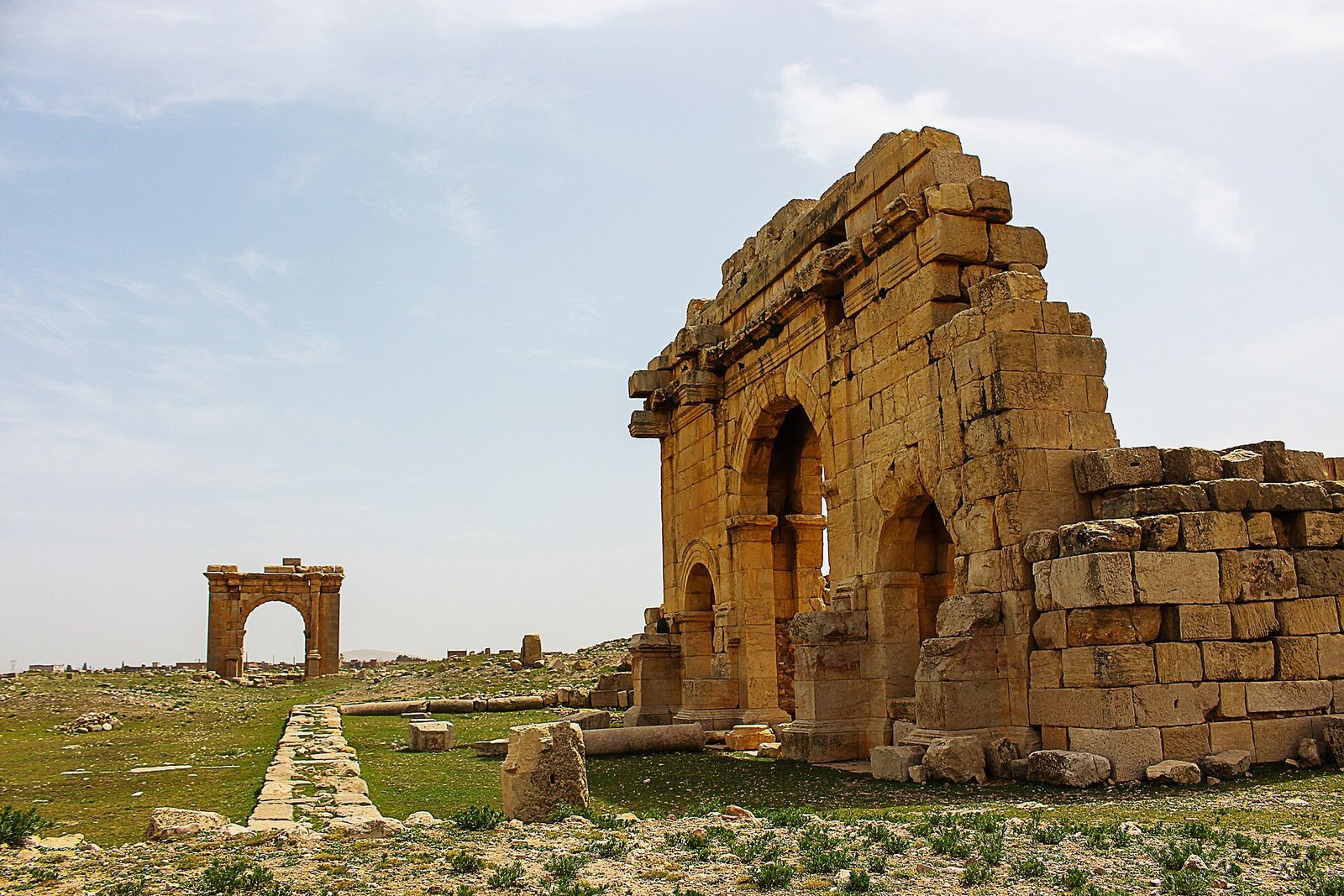
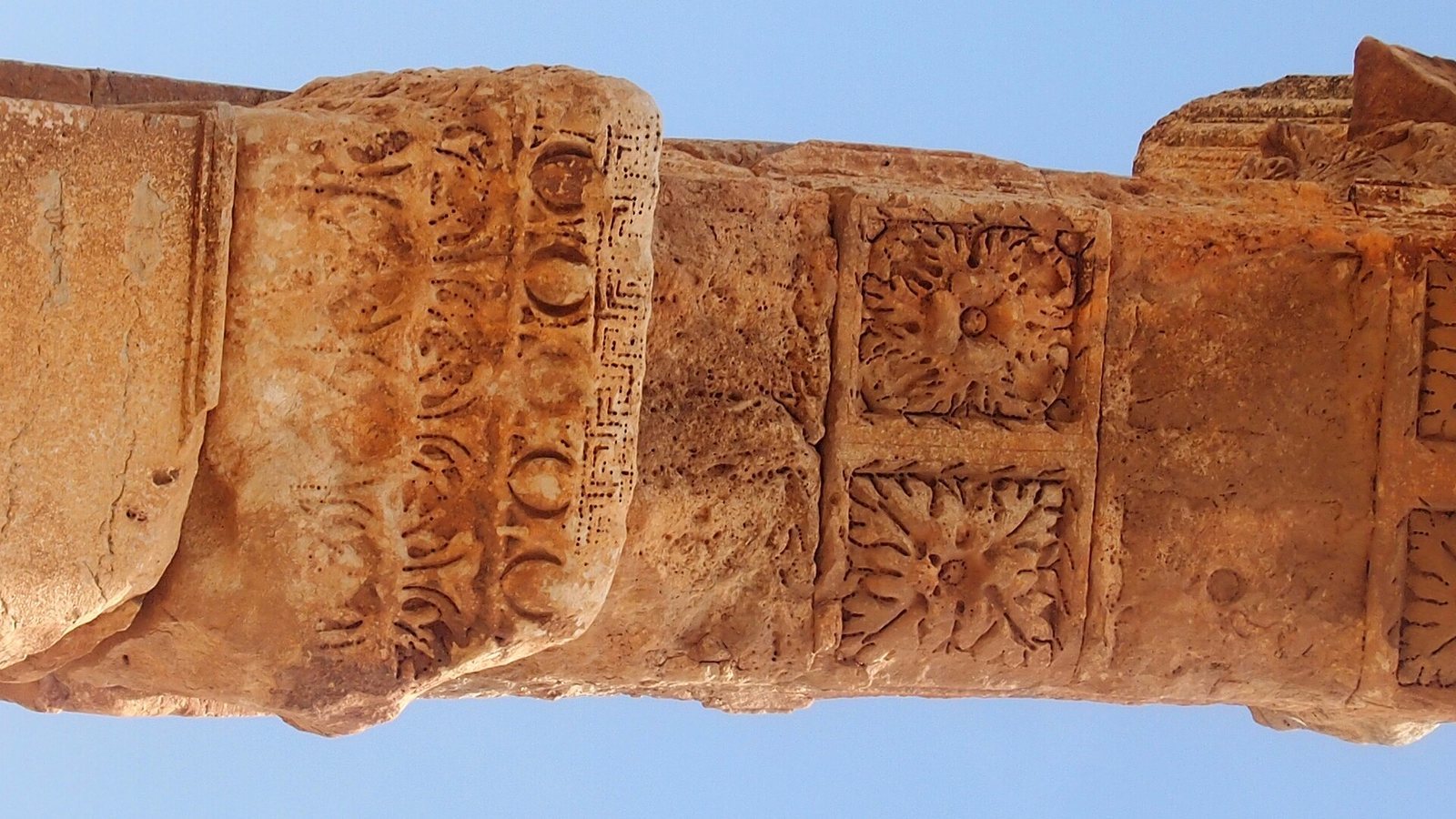
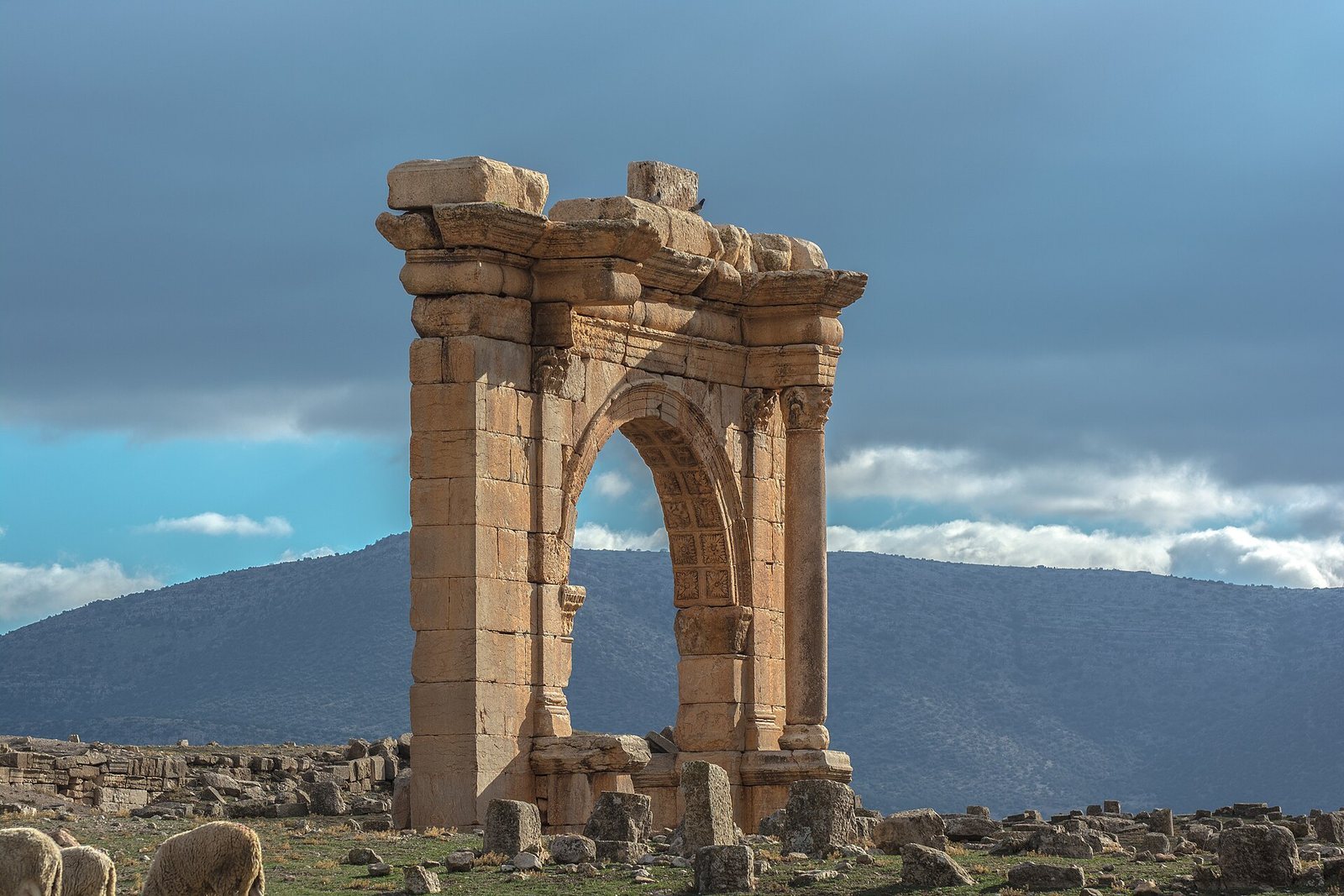
Two triumphal arches, monuments commemorating imperial honors, survive at Diana. The larger has three openings and an inscription recording its construction for Emperor Macrinus in 217. The other is the memorial arch commissioned in 164/165 by legionary legate C. Maesius Picatianus for the co-emperors Marcus Aurelius and Lucius Verus.
Temple, defenses, and other remains
Temple
Remains of a temple lie in the southeastern part of the site. Its dedication to the goddess Diana has been proposed, but is uncertain.
Byzantine forts
A small fort measuring 20.2 by 16 m was attached to the Macrinus arch, which was reused in its defenses. A larger fortress, measuring 61 by 53 m and equipped with four corner towers, stood about 100 m east of the original forum.
Aqueduct and tombs
An aqueduct and several monumental tombs in the western part of the city add to the surviving picture of Diana’s urban remains.
Inscriptions
Inscriptions found at the site include the early text describing Diana’s community as a public civic body and a record of Valerius Maximianus’s public and military career.