St Mary’s Guildhall: A Medieval Guild and Civic Building in Coventry
Site at a Glance
- Rating
- 4.7
- Popularity
- High
- Country
- United Kingdom
- Primary era
- Medieval
- Eras represented
- Medieval, Early Modern, Modern
- Civilizations
- British, English
- Site type
- Civic
- Remains
- Town Hall
On this page13 sections
History
Guild headquarters and civic administration
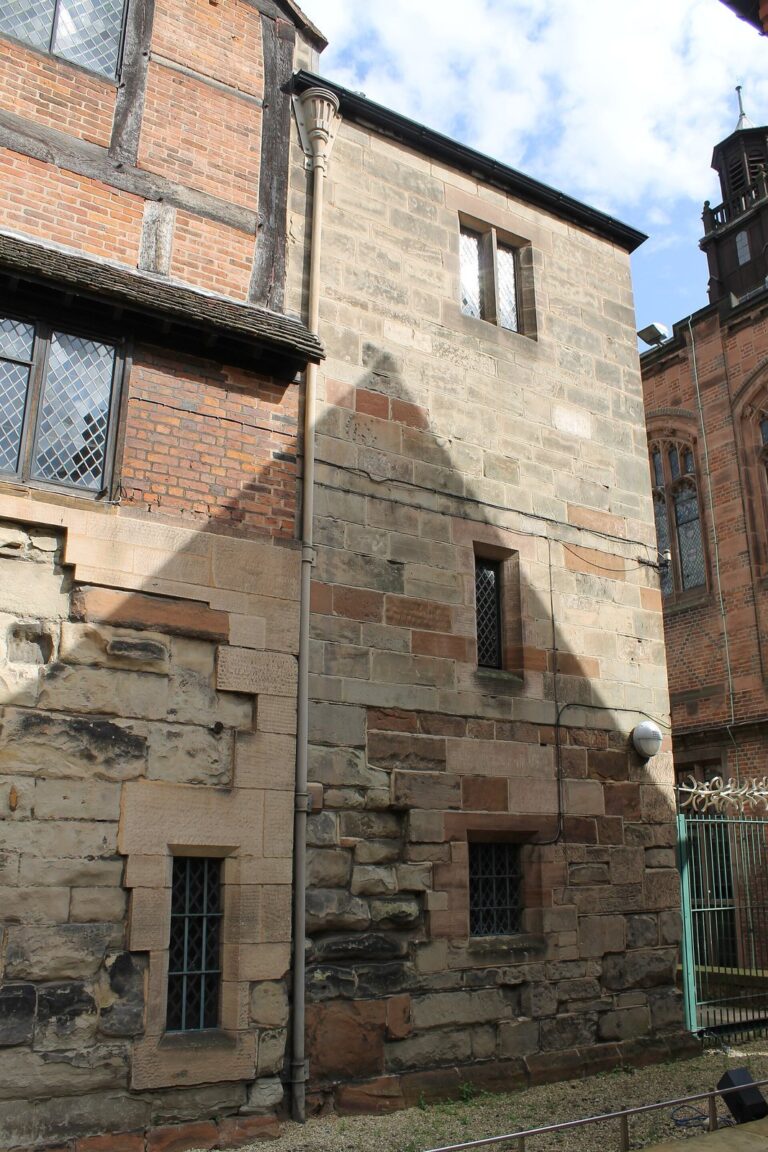
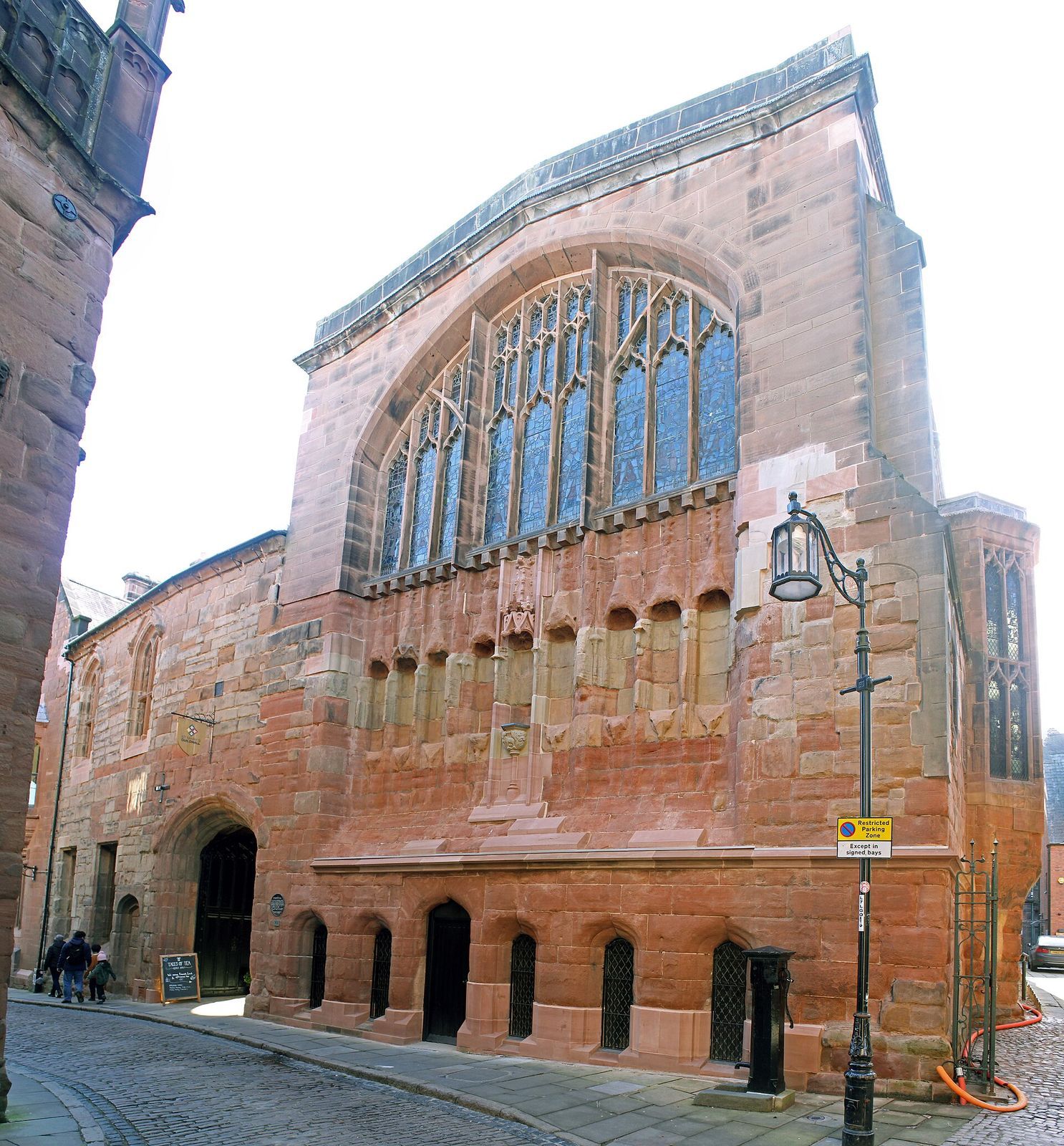
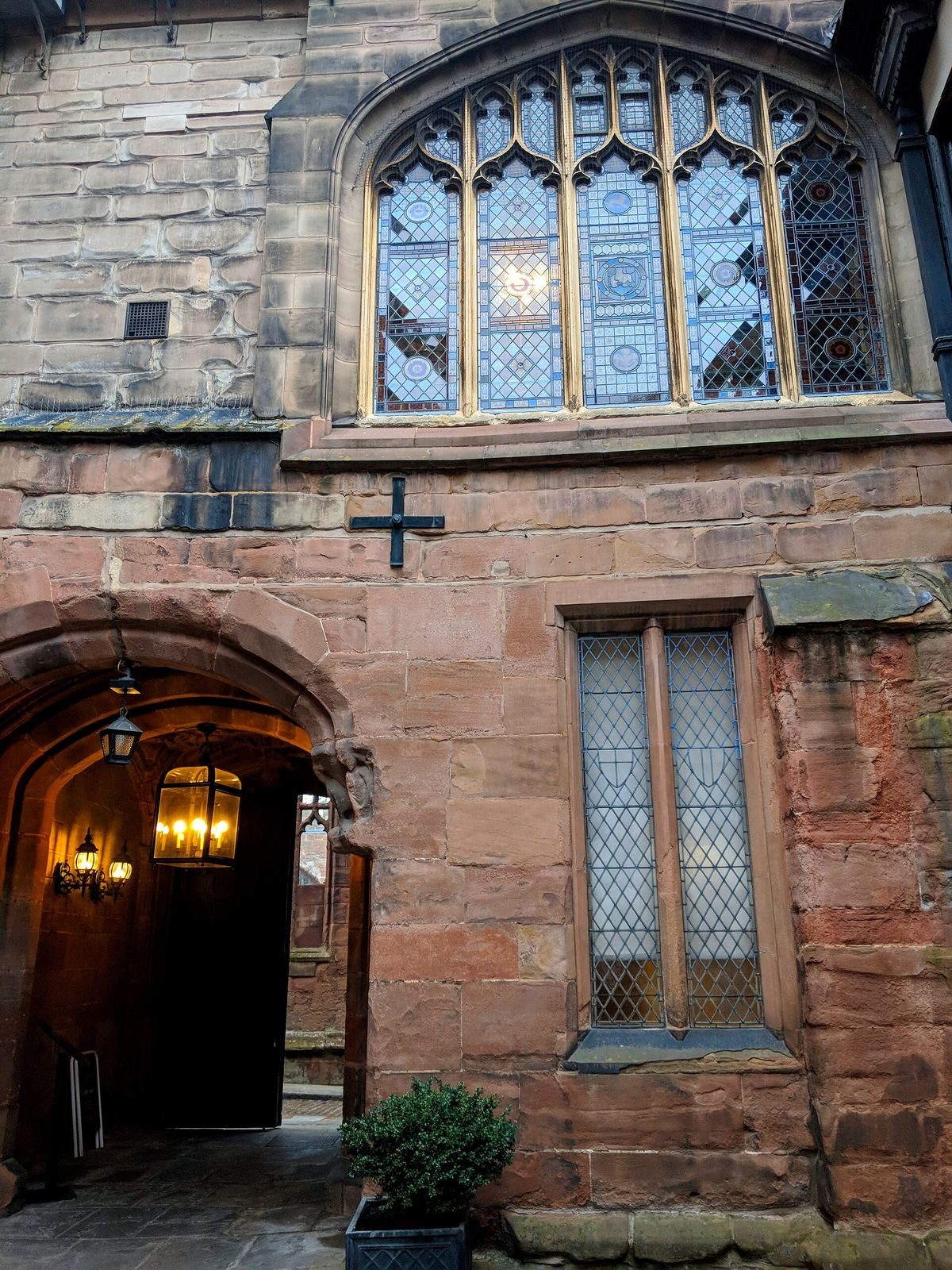
St Mary’s Guildhall is a medieval municipal building on Bayley Lane in Coventry, England, built between 1340 and 1342. It first served as the headquarters of the merchant guild of St Mary. A medieval guild was an association whose members shared a trade or profession and, in religious guilds, devotional activities.
In 1392, the guilds of the Holy Trinity, St Mary, St John the Baptist and St Katherine united, and the Guildhall became the headquarters of their combined organization. After religious guilds and chantries, foundations supporting prayers for the dead, were suppressed under Edward VI in 1547, the building served as the city armoury and treasury. The treasury remained there until 1822, while the city council continued to use the Guildhall for its administration until the Council House opened in 1920. During the English Civil War, the building again served as an armoury.
Royal custody and visits
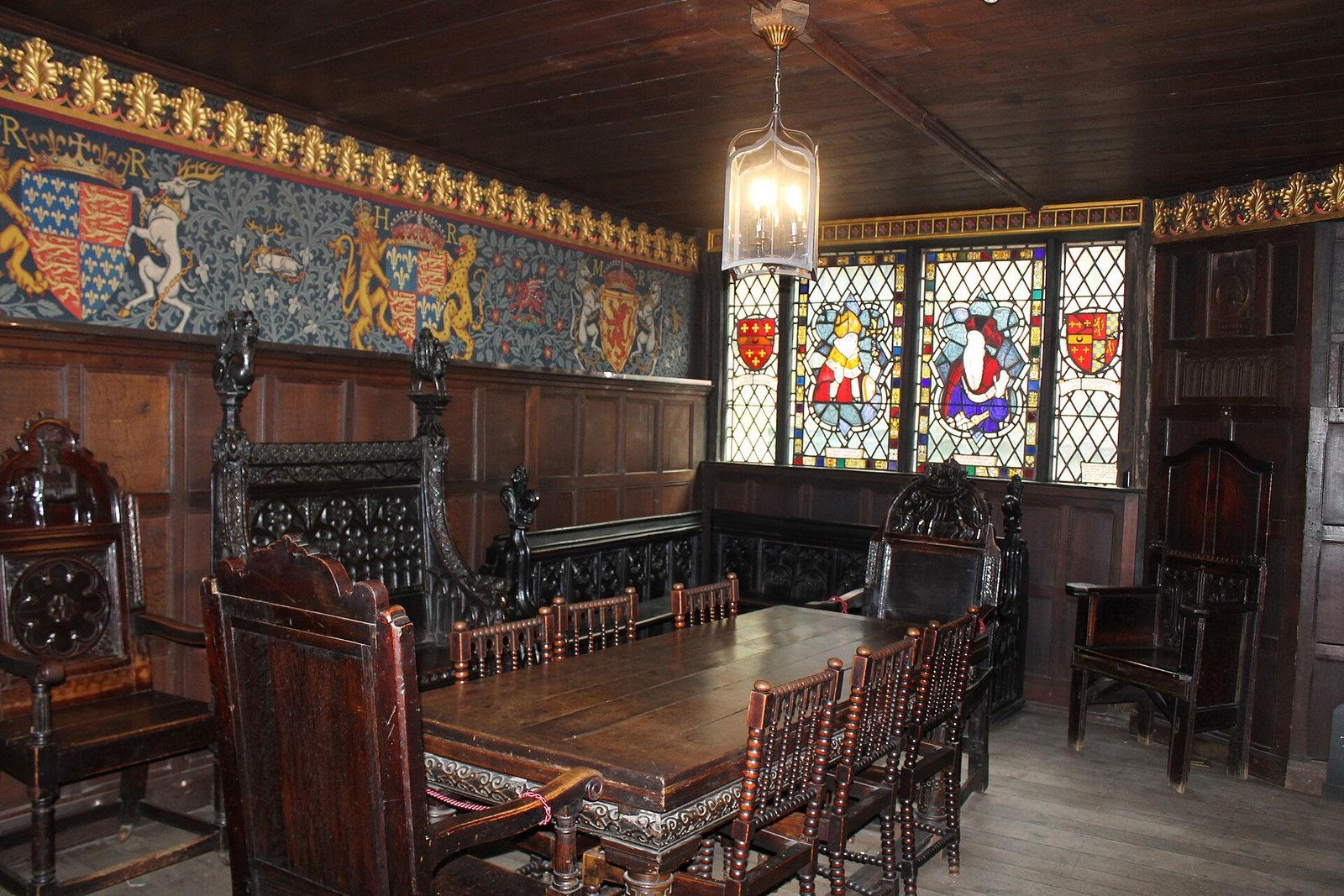
In November 1569, following the Catholic Rising of the North, a rebellion against Elizabeth I, Mary, Queen of Scots, was brought south from Tutbury Castle to Coventry. Elizabeth instructed the city’s residents to care for Mary and suggested a secure place such as Coventry Castle, but the castle was too decayed to use. Mary was first held at the Bull Inn on Smithford Street, then in the Guildhall’s Mayoress’s Parlour. After the rebels were defeated, she was sent north to Chatsworth in May 1570.
Princess Elizabeth Stuart, later queen of Bohemia, visited Coventry on 3 April 1604 while travelling from Coombe Abbey. After attending a sermon at St Michael’s Church, she dined at the Guildhall. On 20 August 1612, her brother, Prince Henry Stuart, rode from Leicester to Coventry, supped at the Guildhall and then stayed at a house on Little Park Street.
Civic and public life
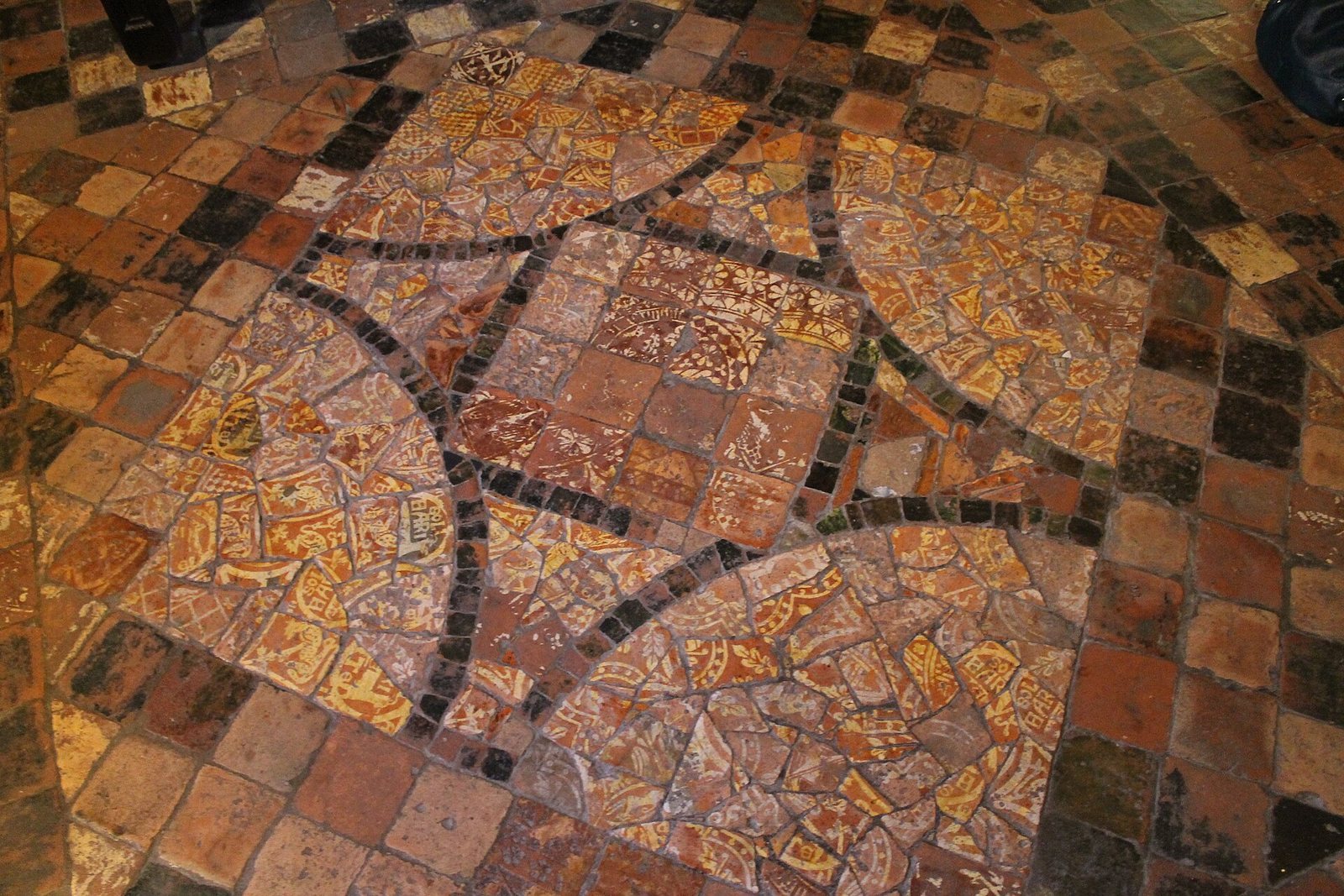
In the 1750s, a sprung wooden floor replaced the medieval floor, adapting the hall for dancing. In January 1847, the American abolitionist Frederick Douglass, who had himself been enslaved, spoke at the Guildhall during his tour of Great Britain and Ireland. He recalled the faces of the audience and said their presence encouraged his hope that slavery would eventually end throughout the world.
In 1861, the Guildhall was used as a soup kitchen. These uses followed its earlier civic and guild functions, keeping the building part of public life in Coventry.
Restoration and heritage
Coventry mayor and antiquarian George Eld, mayor in 1834–35, initiated restoration of the fourteenth-century interior of the Mayoress’s Parlour. The Great Hall’s north stained-glass window was restored in 1893, and a Muniment Room for keeping records and documents was added in 1894. The Coventry City Guild committee approved a further restoration campaign in 1930.
St Mary’s Guildhall was designated a Grade I listed building on 5 February 1955. Grade I is England’s highest listing category for buildings of special architectural or historic interest. Another restoration began in 2020 and was completed in July 2022. It added a lift giving wheelchair access to the first floor and brought the medieval kitchen back into view after more than a century.
Remains
Spaces and fabric
The medieval building contains the Great Hall, the Mayoress’s Parlour, a Muniment Room, a crypt and a fore-crypt. The crypt is a chamber beneath the building, while the fore-crypt is an adjoining entrance chamber. A vaulted space below the building is used as a tea room.
The Great Hall
An oriel, a projecting upper-storey bay, extends from the Great Hall and houses a marble statue of Lady Godiva by William Calder Marshall. Fragmented stained-glass windows are displayed alongside it. Godiva was an English noblewoman associated with Coventry and a well-known local legend.
The Mayoress’s Parlour and Muniment Room
The Mayoress’s Parlour retains a fourteenth-century interior. The Muniment Room, added in 1894, was designed for the safekeeping of important records and documents.
The crypt and lower chambers
The north entrance door to the crypt was repaired during the 1930 restoration campaign. Glass and grilles were fitted to the fore-crypt windows, and crumbling exterior stonework was stabilized. The separate vaulted space beneath the building serves as a tea room.
Tapestry and collections
The Coventry Tapestry
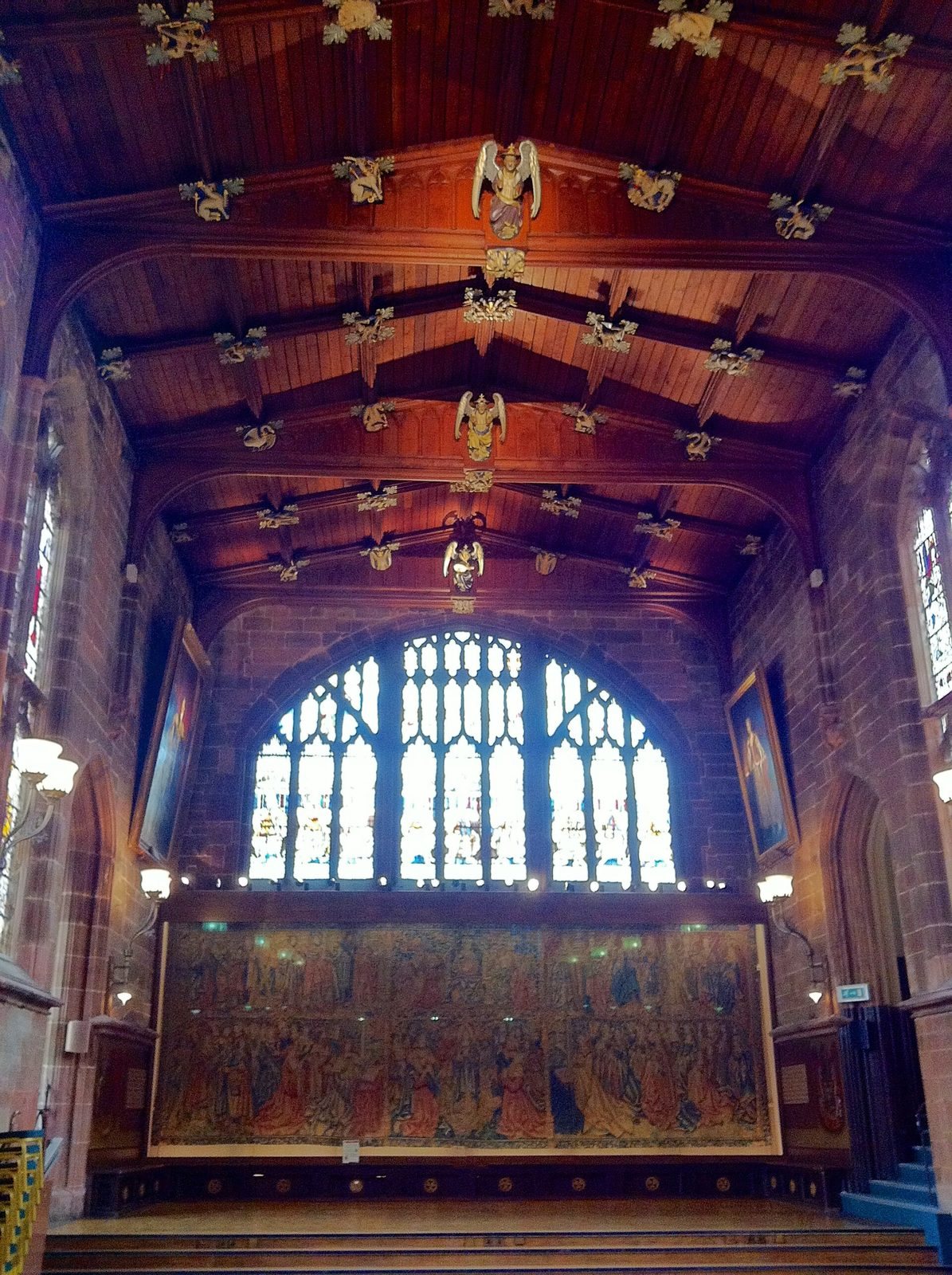
Made for the Guildhall between 1505 and 1515, the Coventry Tapestry depicts a couple thought to be Henry VI and Margaret of Anjou. Other figures are identified as Henry Beaufort, Bishop of Winchester; John Talbot, 1st Earl of Shrewsbury; and Lady Buckingham. The tapestry and the stained-glass window above it are regarded as among England’s last shrines to the devotional following that formed around Henry VI after his death. This devotion rivalled that given to Thomas Becket, the medieval archbishop of Canterbury venerated as a martyr after his murder.
Portraits and other artworks
The Guildhall holds royal portraits dating from the seventeenth to nineteenth centuries, arms and armour, and other stained glass. Among the paintings are a portrait of King George I by John Shackleton and one of Queen Caroline of Ansbach by Godfrey Kneller. David Gee’s 1861 painting The Godiva Procession Leaving St Mary’s Hall, depicting a procession departing the Guildhall, is displayed at the nearby Herbert Art Gallery and Museum in Coventry.