Datue Palace: Ancestral Home of the Aldekoa Family in Baztan
Site at a Glance
- Popularity
- Very Low
- Country
- Spain
- Primary era
- Early Modern
- Eras represented
- Early Modern
- Civilizations
- Kingdom of Navarre, Spanish
- Site type
- Domestic
- Remains
- Elite Residence
On this page4 sections
History
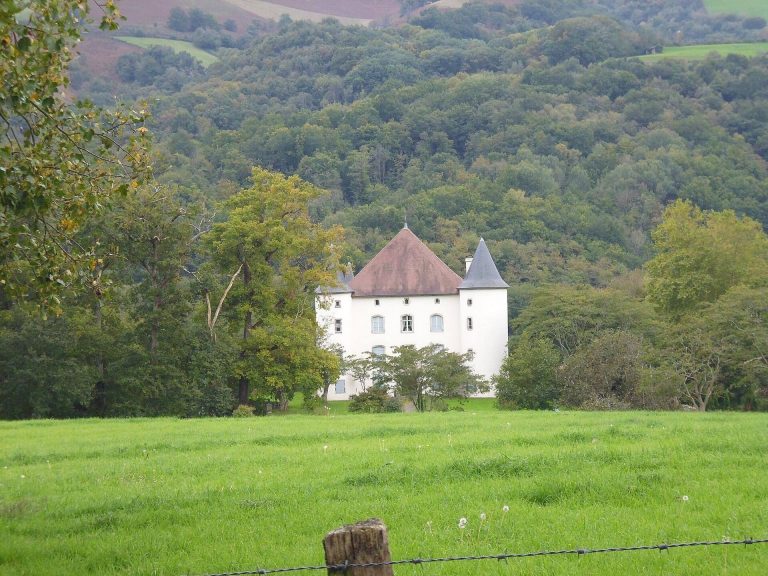
Datue Palace, also known as Datueberria Palace, is a Baroque residence in Datuzelai, at the southern entrance to Elizondo in Baztan, Navarre, Spain. It was the ancestral home of the Aldekoa family, whose lineage predates the present building.
The Aldekoa family and its public figures
Among the family members named as owners were Joan Aldekoa in 1568, Agustin Aldekoa in 1696, and Frantzisko Aldekoa in 1723. Miguel Aldekoa Datue was born at the house in 1692 and went on to serve as treasurer to the Prince of Asturias, the traditional title of the Spanish heir, and as a financial councillor.
Miguel’s sister, Joana Maria Aldekoa Datue, was the mother of Agustin Jauregi Aldekoa (1711–1784), who served as governor of Chile and viceroy of Peru. A viceroy governed a territory on behalf of a monarch.
The Carlist Wars and later use
After marrying Maria de los Angeles Iturralde Aldekoa, Martin Luis Etxeberria, mayor of Baztan and a military man, lived at Datue. He became a prominent Carlist leader during the First Carlist War, one of the nineteenth-century Spanish conflicts between Carlist supporters and their liberal opponents. Etxeberria was killed at the Battle of Erreniega in 1838. When liberal forces took Elizondo, they burned the palace as punishment, and the family archive was lost.
Maria de los Angeles went into exile because of the war. Her son with Martin Luis, Damaso Etxeberria Iturralde, was born in Bordeaux in 1834. After the war he returned to Datue and later became mayor of Baztan. In 1857 he wrote a poem honoring Francis Xavier, the sixteenth-century Catholic missionary and saint, and worked on the linguist Luis Luziano Bonaparte’s writings for a map of the Basque language. Bonaparte stayed at Datugaraia, a house beside the palace.
During the Second Carlist War, Damaso was a member of Navarre’s Carlist Junta, or governing committee. From 1874 to 1876, while Baztan was under Carlist control, Datue sheltered 35 priests and students of the Congregation of the Mission, a Roman Catholic congregation associated with missionary work. They had been exiled from Burgos.
Remains
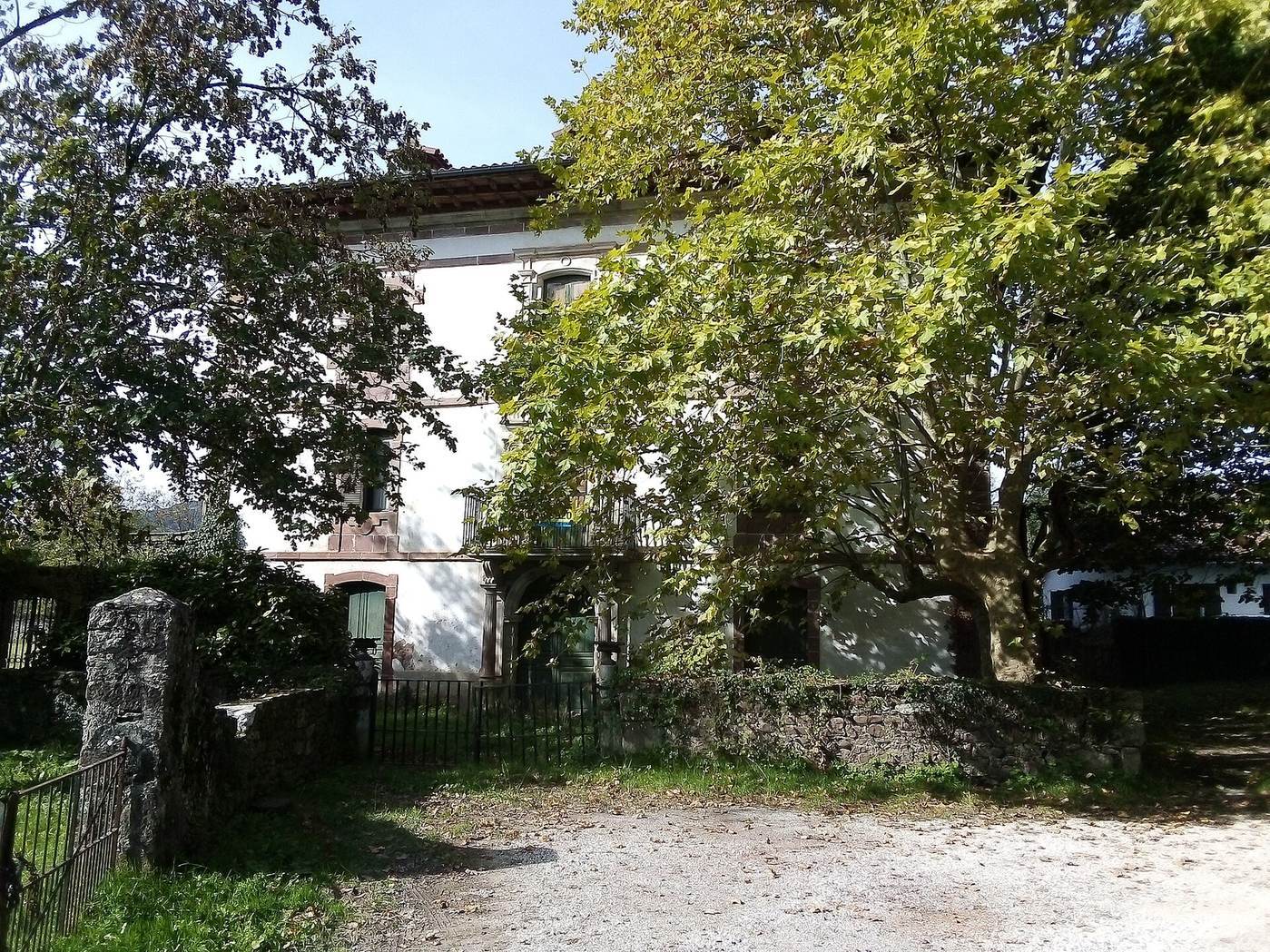
The detached palace has a cubic form, plastered walls, and red stone corner blocks. It rises three storeys beneath a roof sloping on all four sides, with double eaves and small dormers projecting above the roofline. At ground level, a semicircular-arched entrance stands between two fluted Doric columns, a classical column order. Above it, fluted pilasters frame a first-floor balcony and support a broken pediment, a gable whose sloping sides do not meet at the top, extending across the second storey.