Dalkey Castle: A Norman Fortified Warehouse and Civic Centre in Ireland
Site at a Glance
- Rating
- 4.6
- Popularity
- Low
- Country
- Ireland
- Primary era
- Medieval
- External website
- Open
- Eras represented
- Medieval, Modern
- Civilizations
- English
- Site type
- Military
- Remains
- Castle
On this page8 sections
History
Dalkey Castle in Ireland is a Norman fortified warehouse commissioned by local merchants and completed around 1390. Built to protect goods transported to and from Dublin, it formed part of a group of seven merchant-built castles. Dalkey Castle and Archbold’s Castle are the two surviving examples identified from that group.
A port for Dublin
From the fourteenth to the seventeenth century, silting and shoals in the River Liffey made it difficult for Anglo-Norman ships to reach Dublin directly. Dalkey consequently served as a port for the capital. Ships unloaded their cargo there, after which the goods continued towards Dublin, including Ringsend, by boat.
Private ownership and changing names
The Chevers family acquired the castle in the seventeenth century. It became known as Goat Castle, a name associated with the French word for “goat.” Walter Chevers lived there until his death in 1678. The property later passed to the Allen family and then to Sir William Mayne in the mid-eighteenth century.
From residence to local government
Dalkey’s population grew substantially as the settlement developed into a residential suburb of Dublin. Town commissioners were appointed in 1863, and they acquired the castle. From 1869, its first floor served as the commissioners’ council chamber. During the nineteenth century, the building also contained residential rooms and a conference room for the commissioners.
In about 1890, the commissioners added a single-storey building for public meetings. Known as Dalkey Town Hall, it hosted meetings, concerts, and theatrical performances. Éamon de Valera, an Irish revolutionary, statesman, and political leader, delivered a political-rally speech there in the 1930s. In the 1940s, the Irish playwright Hugh Leonard was inspired to write plays after attending Dion Boucicault’s The Colleen Bawn at the hall.
An urban district council replaced the town commissioners in 1899, and the castle’s first floor became the new council’s meeting place. This civic role ended in 1930, when Dalkey became part of the borough of Dún Laoghaire.
Restoration and heritage use
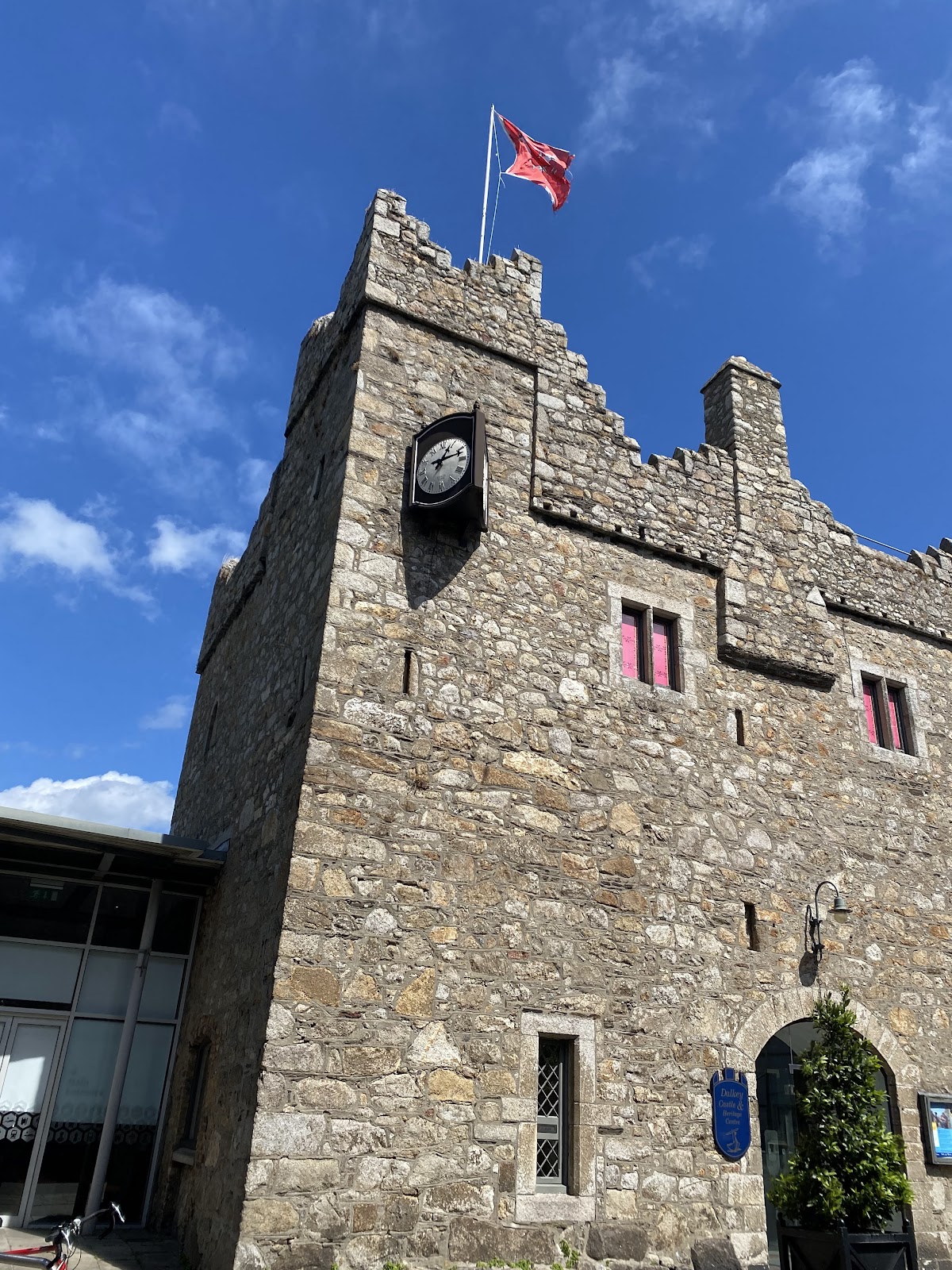
The castle was restored in the mid-1990s and incorporated into a new heritage centre for Dalkey. The complex officially opened on 18 June 1998. Dalkey Castle now houses the Dalkey Heritage Centre, while Dalkey Town Hall occupies the later extension.
Remains
The medieval castle
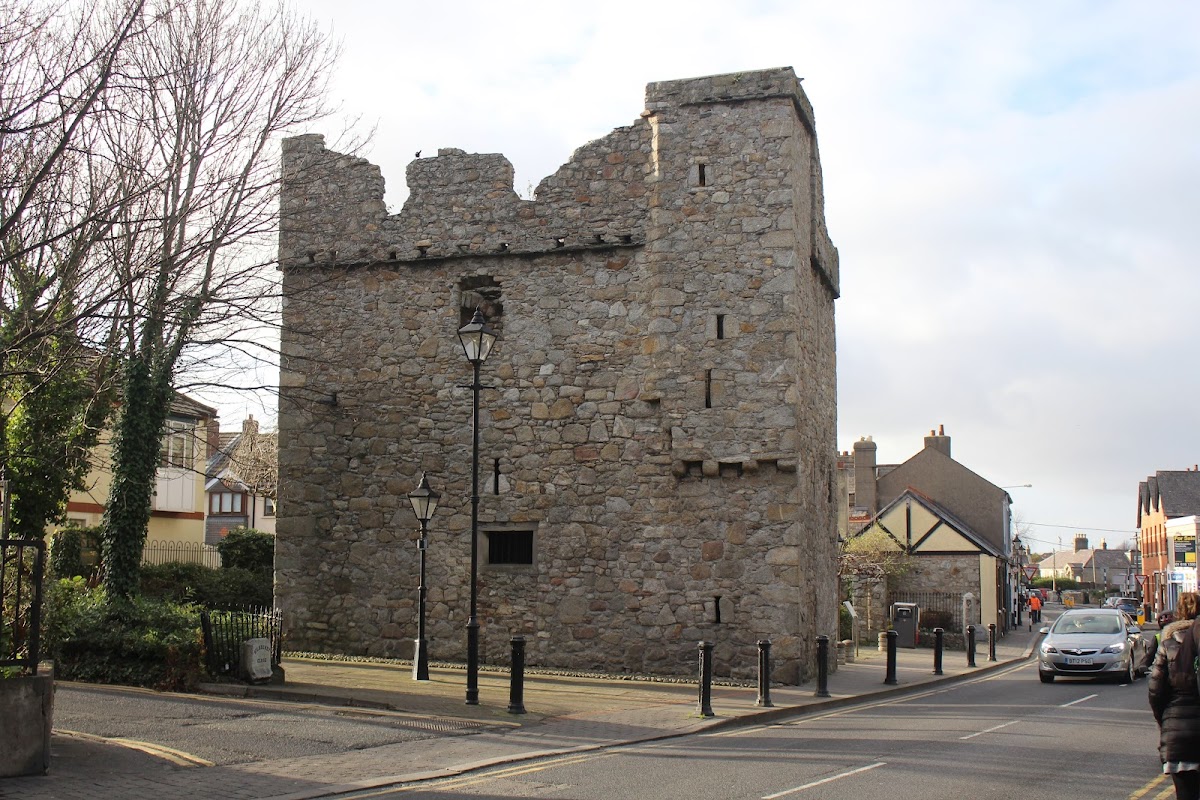
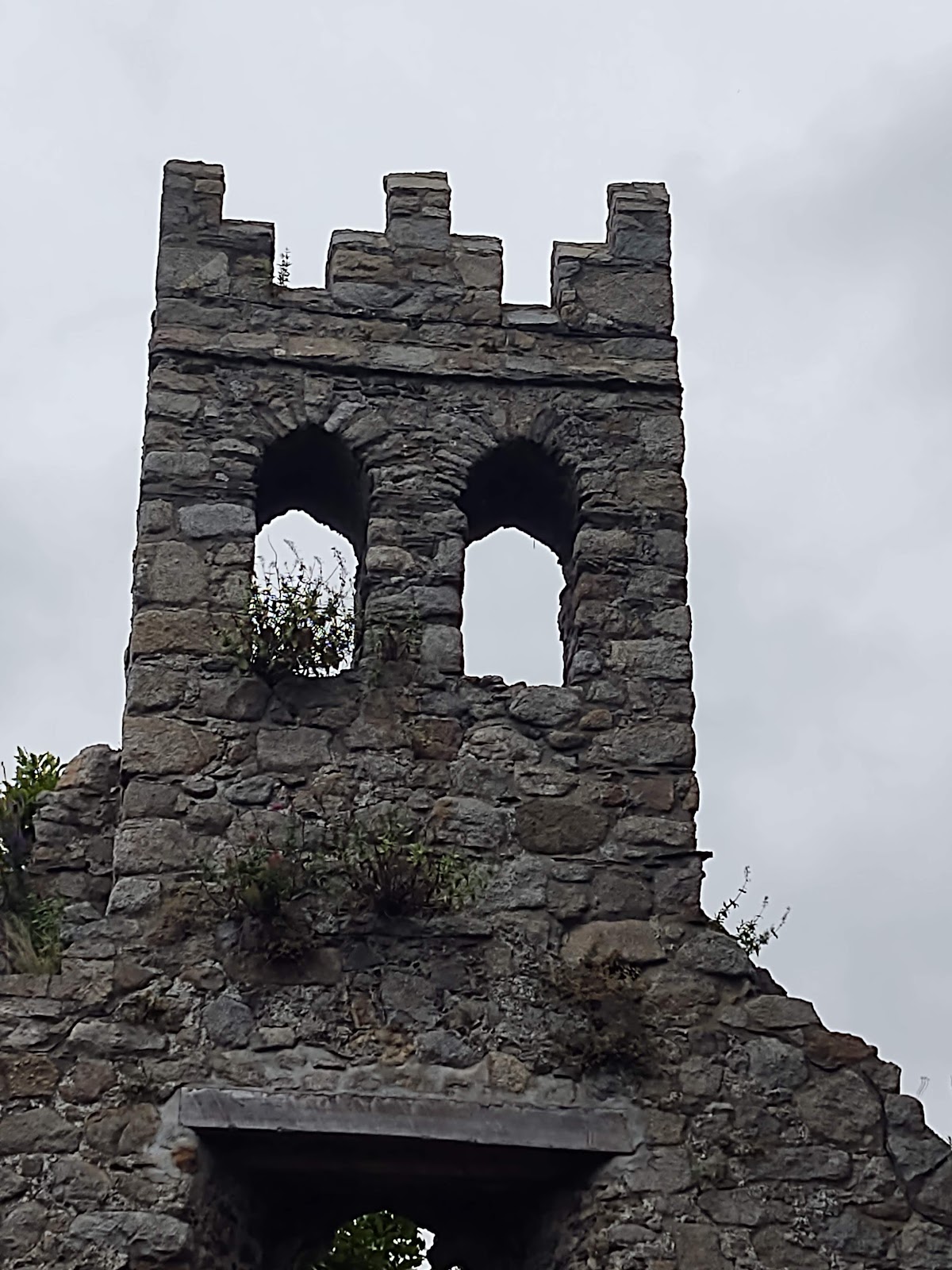
Facing Castle Street, Dalkey Castle is a three-storey medieval structure built from rubble masonry in the Norman architectural tradition. This tradition is associated here with strong masonry construction, defensive elements, and relatively narrow openings. Lancet windows pierce the walls, while machicolations, projecting structures with openings for dropping objects onto attackers, and castellations, the notched parapets of a fortified building, were provided on all sides.
The defensive arrangement also includes loopholes for muskets and cannon, together with a guard position near the battlements. Inside, the principal spaces comprise a ground-floor chamber with a vaulted ceiling and large rooms on both the first and second floors. Vaulted ceilings and niches in the walls provided places for storing goods, reflecting the building’s original use as a fortified warehouse.
Dalkey Town Hall
The town hall is a single-storey extension built behind the medieval castle. It stretches for six bays along White’s Villas and is entered through the castle’s ground floor. The extension forms the later civic component of the complex and continues to accommodate Dalkey Town Hall, while the original castle contains the heritage centre.
Nearby sites