Daichū-ji Temple: A Sōtō Zen Administrative Monastery in Japan

Site at a Glance
- Rating
- 3.9
- Popularity
- Low
- Country
- Japan
- Primary era
- Unclassified
- External website
- Open
- Eras represented
- Unclassified
- Civilizations
- Unclassified
- Site type
- Religious
- Remains
- Monastery
On this page9 sections
History
Daichū-ji Temple is a Sōtō Zen temple in Tochigi, Japan, whose traditional foundation dates to 1154 and whose revival in 1489 is regarded as its effective foundation. It was first established as a Shingon Buddhist temple, a tradition centered on ritual, mantra, and mandala practice, before becoming one of the Kantō Three Monasteries, the senior Sōtō institutions responsible for supervising branch temples and managing sectarian affairs.
Foundation and Sōtō revival
According to tradition, the temple was founded in 1154 as a Shingon institution. Its later history changed direction in 1489, when the local magnate Oyama Shigenari invited the monk Kaian Myōkei to restore it. This revival is treated as the temple’s effective foundation in its Sōtō form. Baishi Shōetsu, who had also revived Tenō-in in Oyama, served as Daichū-ji’s second abbot.
The temple’s religious connections also linked it to important regional figures. Kaisō Ryōkei, one of its monks, was an uncle of Uesugi Kenshin, the sixteenth-century warlord whose power was centered in Echigo. Kenshin is said to have improved Daichū-ji’s buildings because of this family relationship.
Division and restoration
During the middle of the sixteenth century, a dispute between two monks over succession divided the institution while it was under its fifth abbot. Oyama Takatomo established another Daichū-ji at Enomoto, and one of the disputing monks moved there. The Nishiyamada temple then declined, but it was revived in 1562 by a disciple of the other monk. This episode left the temple with a history shaped by both internal religious conflict and the continuing influence of the Oyama family.
Administrative importance
Daichū-ji gained a wider institutional role under the emerging Tokugawa government. In 1591, Tokugawa Ieyasu appointed it to the Sōroku office for the eight provinces of the Kantō region. A Sōroku was a senior monastic administrative office concerned with oversight of Sōtō institutions rather than ordinary local temple affairs.
In 1612, Daichū-ji became one of the three major Sōtō administrative monasteries, alongside Sōneiji in Shimōsa and Ryūonji in Musashi. These three monasteries administered Sōtō affairs in rotation and supervised numerous branch temples. Abbots of Eiheiji were selected from among former abbots of the three institutions, placing Daichū-ji within the highest levels of Sōtō religious administration.
Legends and monastic traditions
Daichū-ji is associated with the “Seven Wonders of Daichū-ji,” a group of legends connected with the precinct and its religious history. One tradition is related to the “Blue Hood” tale in Ugetsu Monogatari, an eighteenth-century collection of supernatural and historical stories. In the tale, Kaian Myōkei subdues a monk who has become a demon through obsessive attachment to an acolyte.
Several traditions concern Satake Tarō Nobutsuna, a local warrior who is said to have sought refuge at Daichū-ji after losing a conflict with the Oyama family. Because the temple was associated with the Oyama clan, assistance was refused. Nobutsuna then killed his horse at the temple’s well and took his own life in a field. Later tradition attributed seven fires at the temple to his resentment.
The same story says that the horse’s spirit appeared in the well. The abbot responded by establishing worship of the Eight Great Dragon Kings beside it. These Buddhist protective serpent deities were associated with water, rainfall, and the safeguarding of Buddhist teaching. The opening was then sealed. Nobutsuna’s spirit was also honored through a sacred stone moved to the summit of a western mountain, where it was worshiped as Teruishi Gongen, a sacred manifestation understood within the historical Buddhist-Shinto tradition as a Buddhist figure appearing in local kami form.
Nobutsuna’s wife is said to have come to the temple seeking news of him. After hearing a horse and seeing him in the pond, she recognized that he had died and took her own life in a toilet. Further suicides and cases of madness were associated with the place, which was eventually sealed and commemorated as a site connected with her spirit.
Other stories preserve memories of monastic discipline. An acolyte is said to have fallen asleep inside a large hearth and died after being burned. His final request led the temple to keep the hearth fire continuously burning in his memory. The monastic community traditionally held three periods of communal sutra recitation each day and devoted the remaining time to seated meditation, or zazen, apart from sleep. A novice who secretly studied at night and stole lamp oil is said to have fallen to his death on a slope, which thereafter became known as Oil Slope and was treated as an ominous route.
Two further traditions concern sounds and sleeping arrangements. When danger threatened the temple, the abbot alone was believed to hear wooden clappers from the eastern mountains. The sound was interpreted through the Zen kōan, or paradoxical religious question, known as the “one-hand sound.” The Pillow-Turning Room was also avoided because a sleeper’s head was believed to face a different direction by morning. In another version, a traveler who slept with his feet toward the temple’s principal image awoke with his head facing it.
Remains
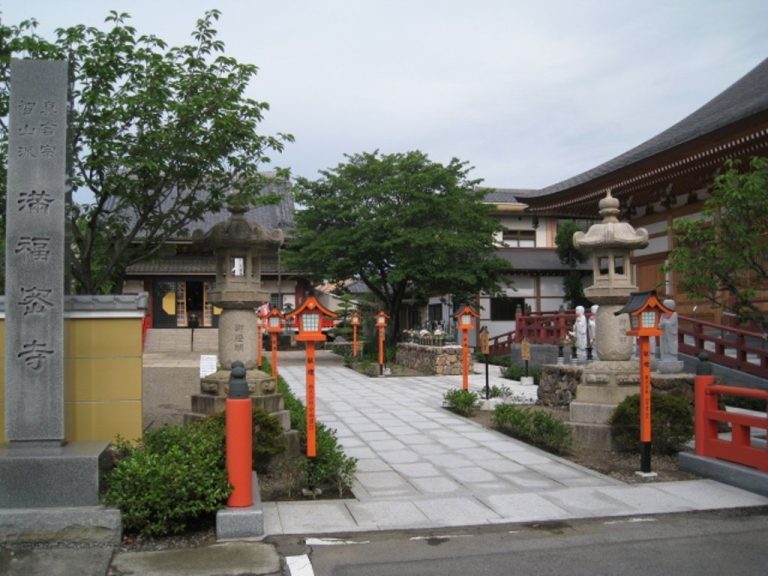
Daichū-ji’s surviving precinct is approached along a route lined with hydrangeas that leads to a mountain gate. Within the grounds are physical features associated with the temple’s legends, including the Rootless Wisteria, the altered remains of the legendary well, the sealed place linked with Nobutsuna’s wife, the large hearth, the former monastic area, and the Pillow-Turning Room.
Rootless Wisteria
The Rootless Wisteria is linked to Kaian Myōkei and the “Blue Hood” tradition. One version says that Myōkei placed his wisteria staff in the ground at the grave of the monk he had subdued, where it took root and grew. Another says that he planted the staff while descending the mountain and declared that its growth would show whether the temple would prosper. The feature remains a physical focus for these two traditions about the temple’s Sōtō revival.
The well and mountain memorial
The well associated with Satake Tarō Nobutsuna began as a pond measuring about eight tatami mats in area. It served as the temple’s drinking-water source. Most of the pond was later filled in, leaving a well-like section enclosed by a fence. The Eight Great Dragon Kings were venerated beside it in connection with the story of Nobutsuna’s horse.
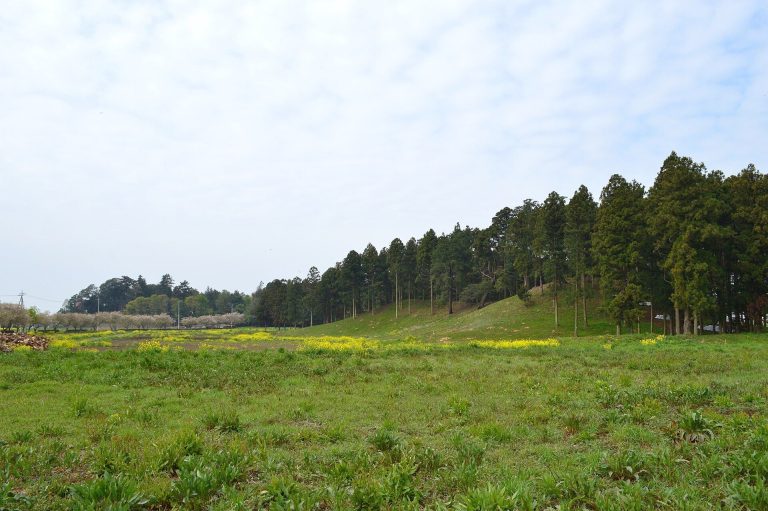
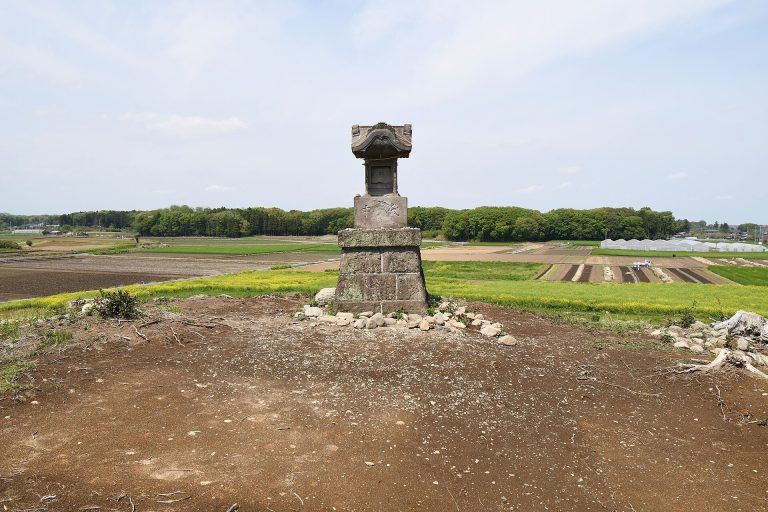
A stone associated with Nobutsuna was moved to the summit of a western mountain and became the object of worship for his spirit as Teruishi Gongen. The mountain consequently acquired the name Teruishiyama, and Nobutsuna was thereafter called Teruishi Tarō. The temple toilet associated with the death of his wife was later sealed and remains identified with that tradition.
Monastic spaces and ritual features
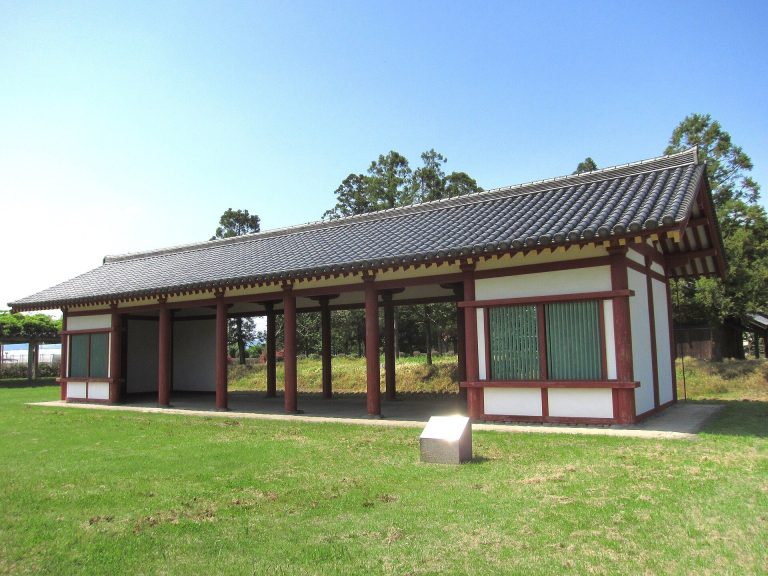
The large hearth connected with the burned acolyte was traditionally maintained with a fire that was not allowed to go out. At the southeast foot of a slope stood a dormitory for monks. The community gathered in the main hall for three daily services and practiced seated meditation in other spaces. The slope associated with the novice who stole lamp oil later became an inauspicious passage.
The precinct also includes the Pillow-Turning Room. Its name and traditional reputation derive from the belief that sleepers’ head positions changed during the night. The room’s physical identity is therefore closely connected with a story about religious danger and the orientation of a sleeper toward the temple’s principal image.