Culcreuch Castle: A Scottish Clan Seat and Historic Tower House
Site at a Glance
- Popularity
- High
- Country
- United Kingdom
- Primary era
- Medieval
- Eras represented
- Medieval, Early Modern
- Civilizations
- British, Kingdom of Scotland
- Site type
- Military
- Remains
- Castle
On this page6 sections
History
Culcreuch Castle, near Fintry in the United Kingdom, was built by Maurice Galbraith in 1296. From 1320 to 1624, it served as the seat of Clan Galbraith, a kinship group associated with a family and territory.
Galbraith and Napier ownership
In 1624, the castle was sold to Alexander Seton of Gargunnock, a cousin, to settle a financial debt. Robert Napier bought it in 1632, and his family held the estate for five generations. In 1654, troops serving Oliver Cromwell were housed at the castle. Cromwell was an English military and political leader whose forces fought in the conflicts in Britain during the mid-17th century. By 1699, the castle had become the home of the Barons of Culcreuch, holders of a rank of nobility.
Later owners and use
Alexander Spiers of Glasgow bought the castle in 1796 and built a cotton mill and a distillery in Fintry. The property changed hands again, passing to J. C. Dunwaters in 1890 and Walter Menzies in 1901. In the 1970s, it passed to Hercules Robinson, the last descendant of that branch of the Menzies family.
Arthur Haslam bought Culcreuch Castle in 1984 and operated it as a hotel. Ownership was transferred to a holding company in Los Angeles in 2007. The hotel ceased operating in 2020, ending more than 700 years of continuous habitation. The castle has a reputation for hauntings, including stories of a harpist. It holds Category A listed status, Scotland’s designation for buildings of exceptional national importance.
Remains
Tower house and extensions
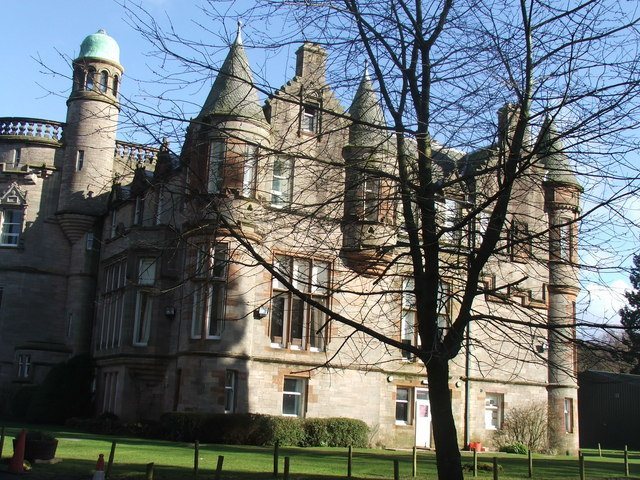
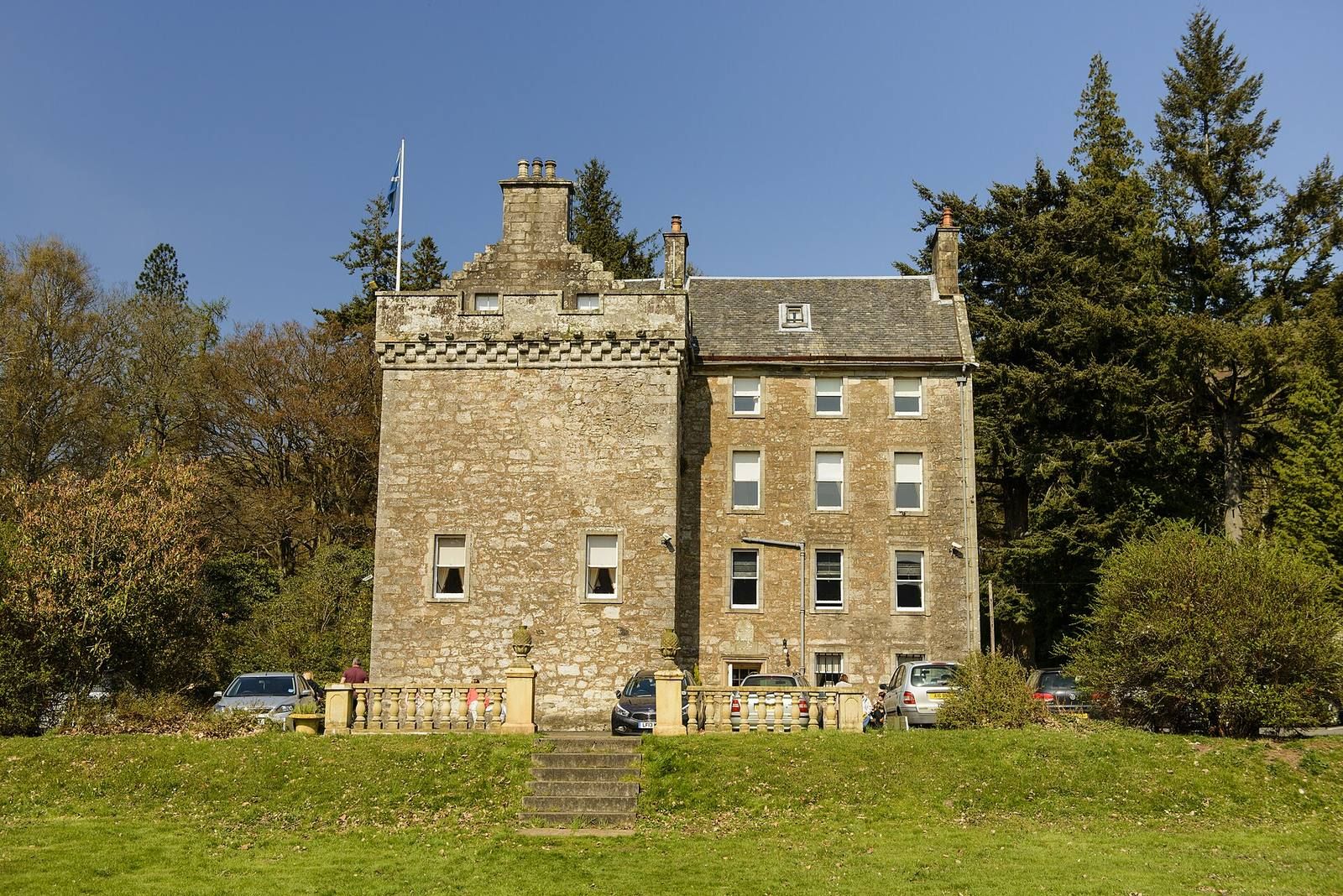
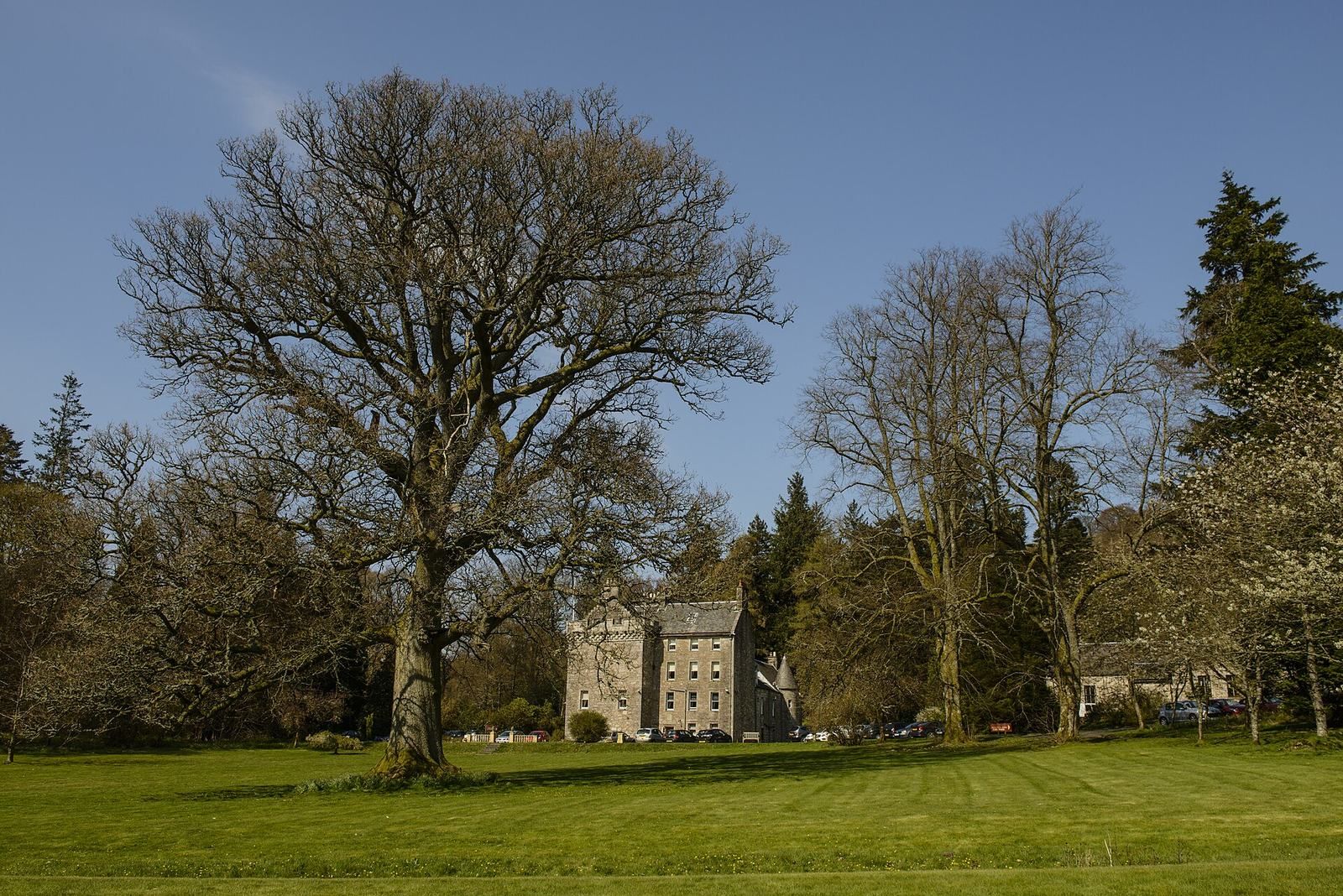
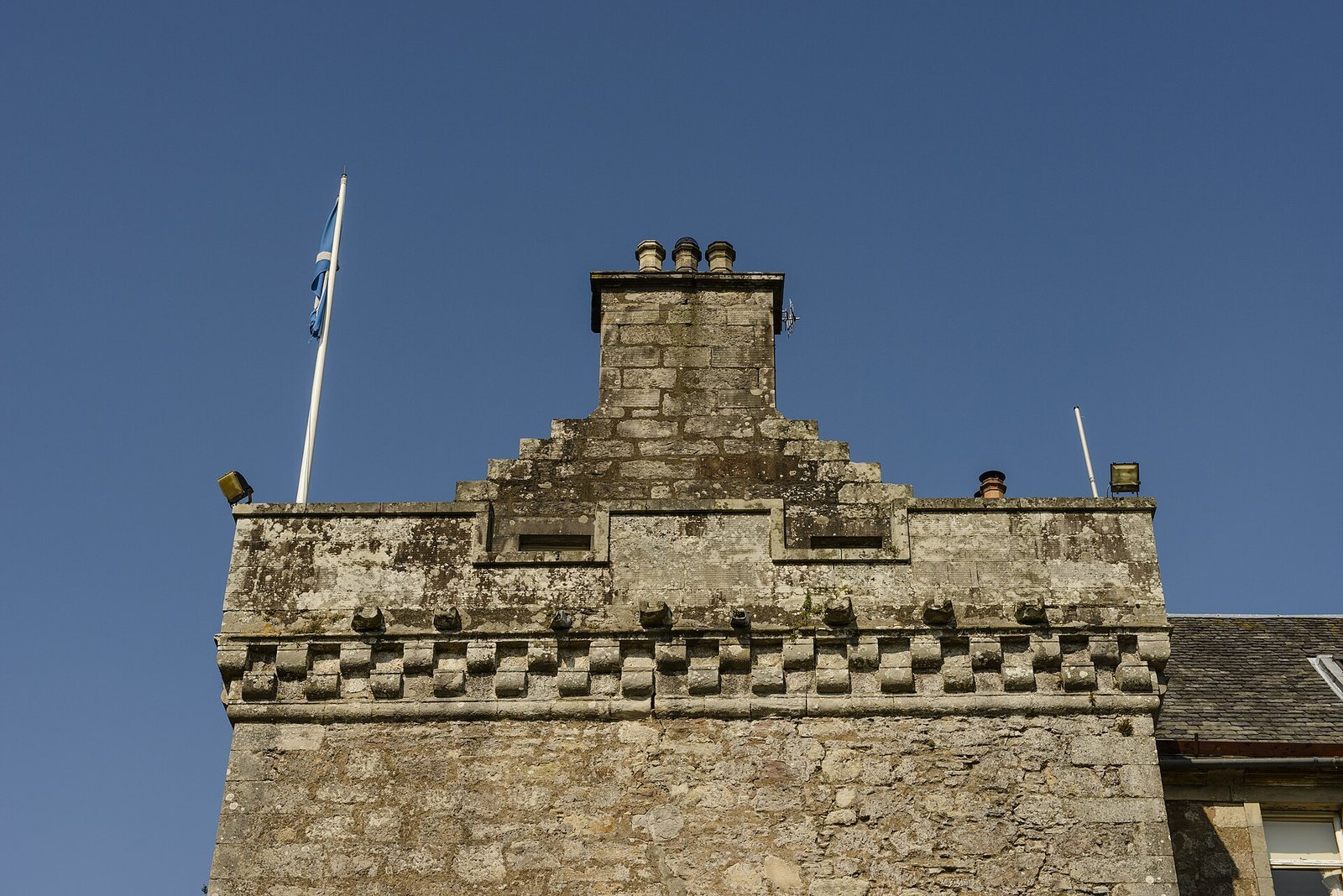
Near Fintry and Loch Lomond, Culcreuch is an L-plan tower house, a fortified residence arranged around a tower, joined to a Jacobean range, a connected wing in a style associated with James VI of Scotland and James I of England. The original rectangular stone tower, built in 1296, has three storeys and an attic. A parapet, or low protective wall, runs along the roof edge, above a slate roof. After 1721, the Napiers added extensions to the north and east, matching them to the original tower.
Chinese Bird Room
The Chinese Bird Room features an 18th-century European decorative style influenced by East Asian design. Its hand-painted wallpaper, installed around 1723, shows a panoramic landscape with birds, butterflies, and floral patterns. The imported Chinese paper is among the oldest and best-preserved examples of its kind in its original setting in the United Kingdom. Its East Asian-inspired decoration contrasts with the castle’s Scottish noble-house architecture.