Contrebia Carbica: The Celtiberian City at Cuarto de Bayona
Site at a Glance
- Rating
- 3.5
- Popularity
- Very Low
- Country
- Spain
- Primary era
- Iron Age
- Eras represented
- Iron Age
- Civilizations
- Celtiberian
- Site type
- Settlement
- Remains
- City
On this page5 sections
History
Contrebia Carbica, the Celtiberian city most widely identified with the Cuarto de Bayona site, was located at Villas Viejas, a hamlet of Huete in Cuenca province, Spain. Its history reaches back to the Iron Age, and recovered materials are broadly protohistoric, from a period known chiefly through archaeological evidence and sometimes early written records.
Contrebia was the shared name of three major Celtiberian settlements: Contrebia Belaisca, Contrebia Leucade and Contrebia Carbica. The name is interpreted from Indo-European elements as “union of houses.” Belaisca and Carbica refer respectively to the Belli and the Carpetani, peoples associated with northeastern and central Iberia.
The city stood on an ancient route between Carthago Nova, now Cartagena, and Complutum, now Alcalá de Henares. Cuarto de Bayona is the most widely accepted location for Contrebia Carbica, although Munda and Segóbriga have also been proposed. One hypothesis suggests that the city may later have been called Segóbriga. It connects this possibility with the abandonment of indigenous towns and the founding of nearby settlements during the Sertorian Wars, conflicts in Hispania involving the Roman commander Sertorius.
Remains
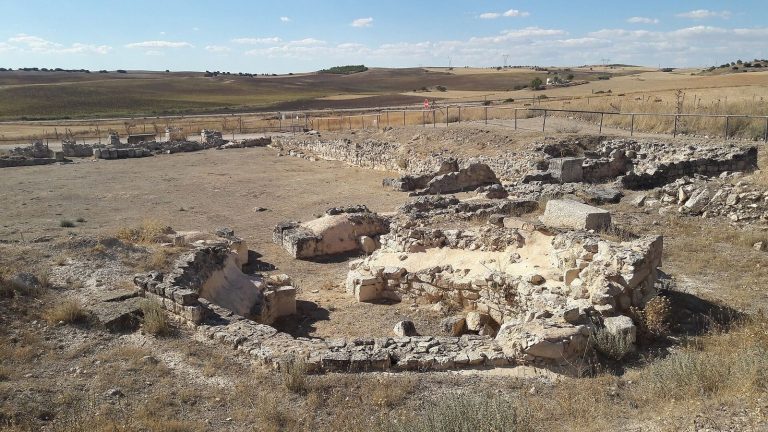
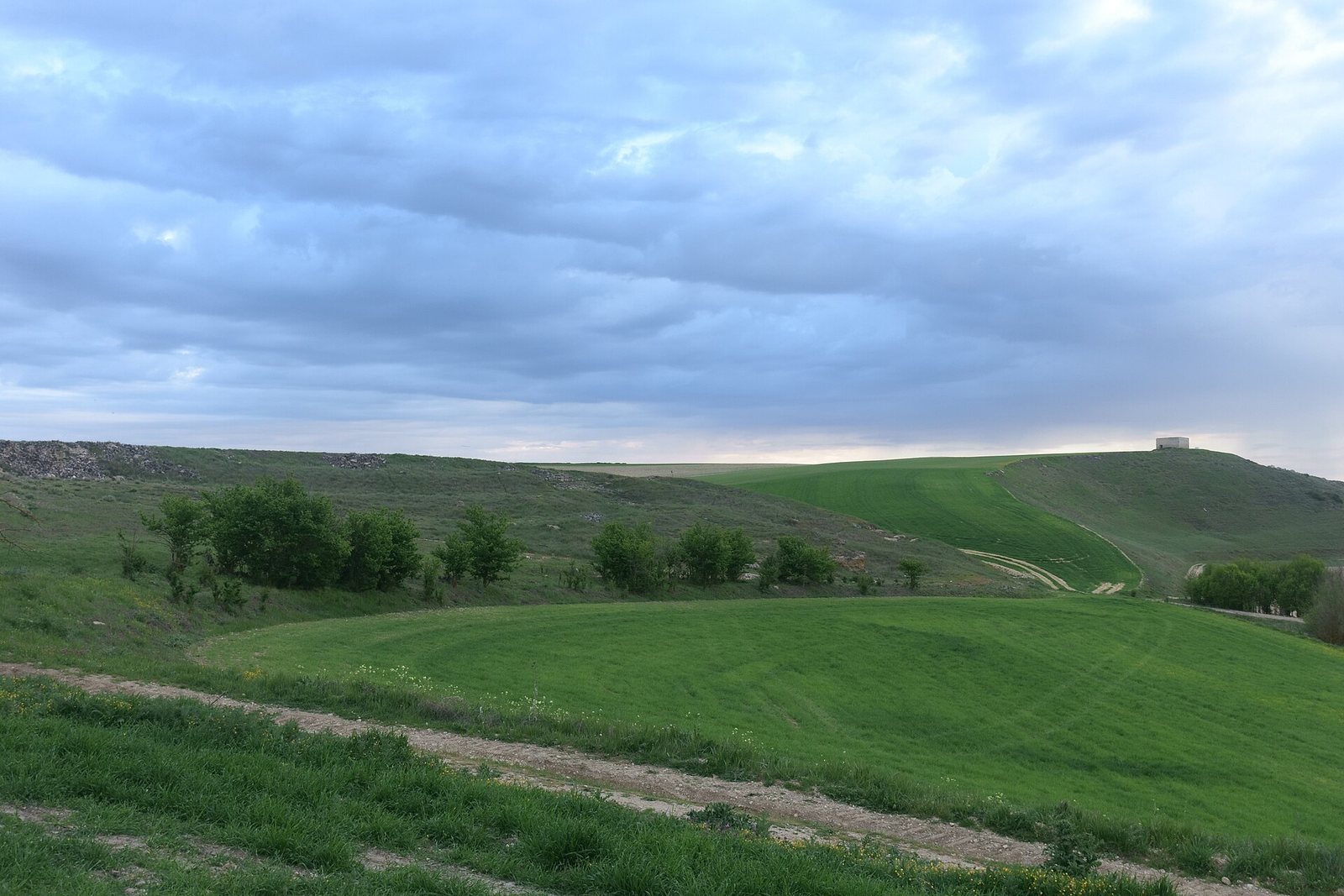
The settlement covered about 33 hectares beside the Gigüela River, in an area associated with the Fosos del Cuarto de Bayona, also called the Fosos de Bayona. A wall and ditch defended the full perimeter. The ruins survive in a highly fragmentary and limited state.
Archaeological finds
Hospitality tokens and coins
Finds from the site include two tokens used to formalize bonds of hospitality, as well as coins. In 1868, two hospitality tokens and coins attributed to Contrebia Carbica were donated to Spain’s Royal Academy of History.
Bronze metalworking forms
A group of cast-bronze forms, or matrices, may have been used to make jewelry and luxury tableware. They suggest that at least one goldsmith’s workshop operated at the site. Finds of this kind are uncommon in Spain; a comparable discovery is associated with the Goldsmith’s Tomb in the Iberian cemetery of Cabezo Lucero, Alicante.