Croy Hill Roman Fort: A Military Site on the Antonine Wall
Site at a Glance
- Popularity
- Medium
- Country
- United Kingdom
- Primary era
- Classical
- Eras represented
- Classical
- Civilizations
- Roman
- Site type
- Military
- Remains
- Wall
On this page9 sections
History
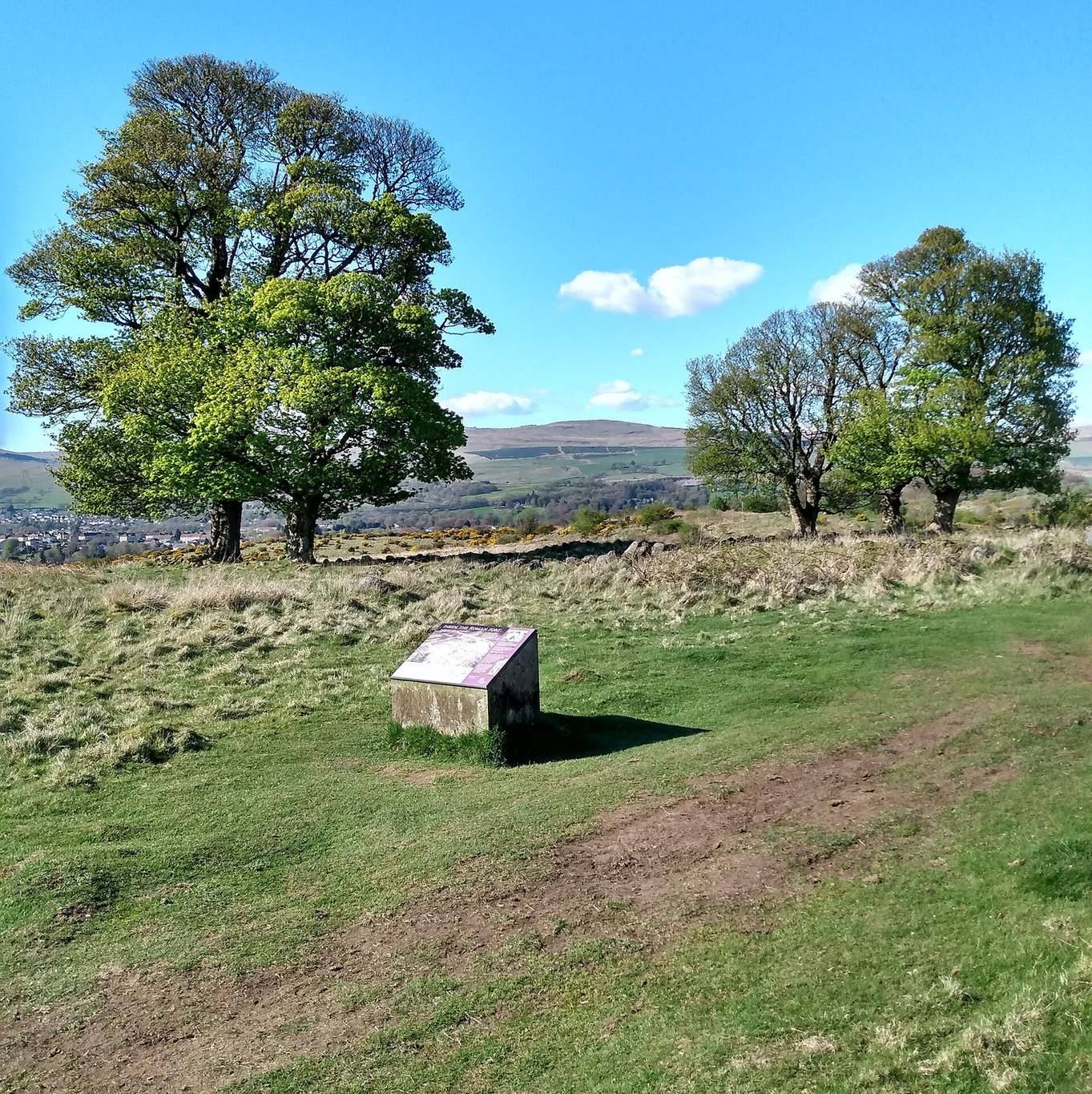
Croy Hill Roman fort stood on the eastern side of Croy Hill, northeast of the village of Croy in Scotland, United Kingdom. It formed part of the Antonine Wall, the Roman frontier barrier built across Scotland from about AD 140 under Emperor Antoninus Pius. The Wall marked the northwestern edge of the Roman Empire, and Croy Hill was one of its 16 known forts. Its fort was among those added after the Wall’s initial construction.
A large civilian settlement probably lay near the site. Larger forts elsewhere along the Wall, not Croy Hill, could accommodate cohorts, units of the Roman army, of up to 1,000 men. They probably also sheltered women and children, although soldiers were not permitted to marry.
Alexander Park excavated at Croy Hill in 1890-91. George Macdonald investigated the site in 1920, 1931, and 1935, and further excavations took place between 1975 and 1978. William Hanson was also associated with archaeological work at the site.
Remains
Military remains
Fort and bathhouse
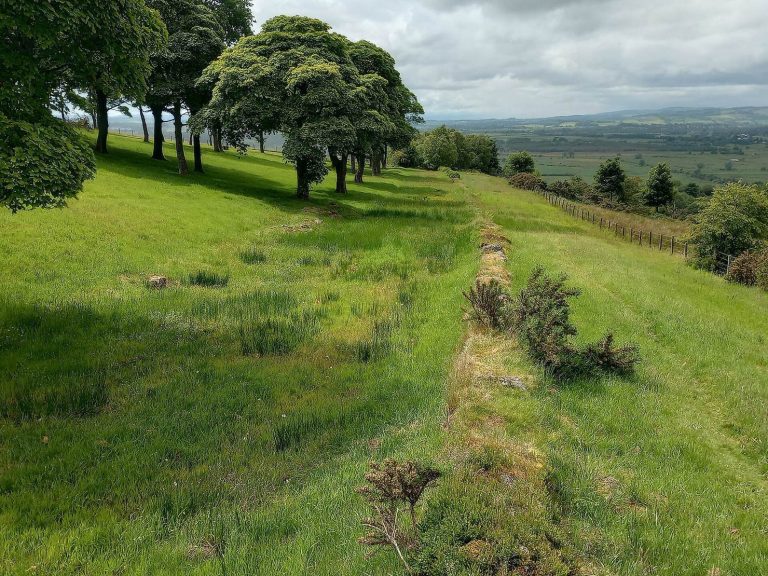
The fort stood on the eastern side of Croy Hill, between Barr Hill fort to the west and Westerwood fort to the east. A bathhouse was situated just outside it.
Fortlet, camp, and signal platforms
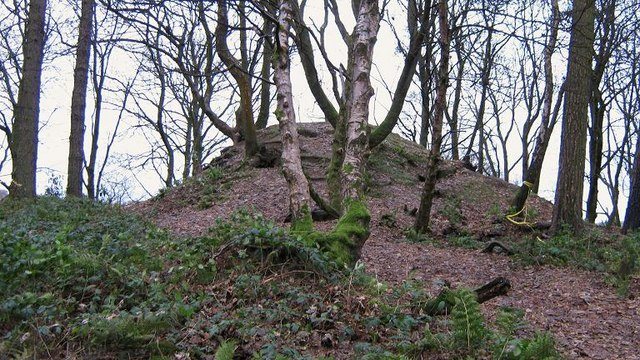
The wider site also included a smaller fortlet and a probable temporary camp. Two raised platforms west of the fortlet, known as expansions, were probably used by soldiers to relay signals.
Antonine Wall
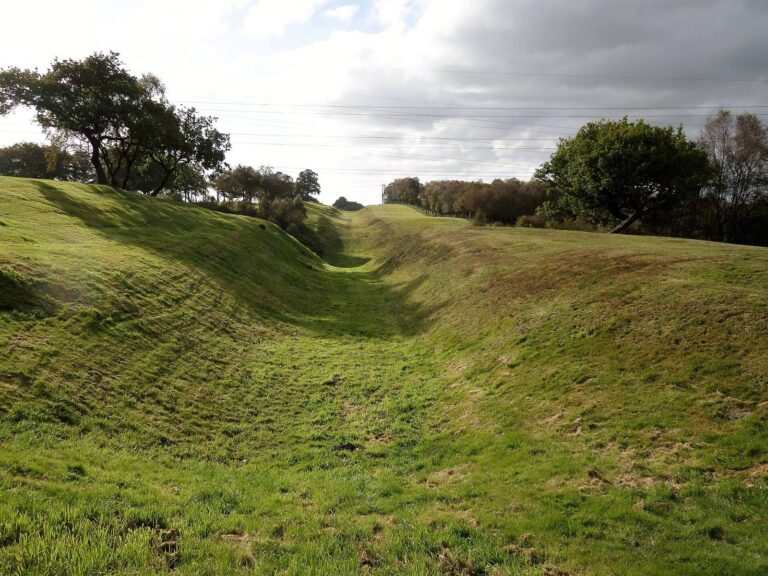
Clear traces of the Wall cross the hill. Its hard basalt and dolerite likely made excavation with Roman tools difficult.
Finds
Religious objects
Religious finds include fragments of a relief of Jupiter Dolichenus, a Roman-period deity associated with Jupiter whose cult originated at Doliche; an altar dedicated to the Nymphs, divine beings associated with nature; and an altar to Mars, the Roman god of war.
Other objects and gravestone
Other finds include a bronze arm purse, a storage jar filled with ashes, and a fragment of a face-mask jar. These objects are held at the Hunterian Museum in Glasgow. Four coins were found near the fort, and an axe was found near the hill. A gravestone from Croy Hill depicts a soldier with several other men, who may have been his sons.