Church of Saint George in Bežanija: A Serbian Orthodox Parish Church
Site at a Glance
- Rating
- 4.9
- Popularity
- High
- Country
- Serbia
- Primary era
- Modern
- Eras represented
- Modern
- Civilizations
- Austria-Hungary, Habsburg
- Site type
- Religious
- Remains
- Church
On this page5 sections
History
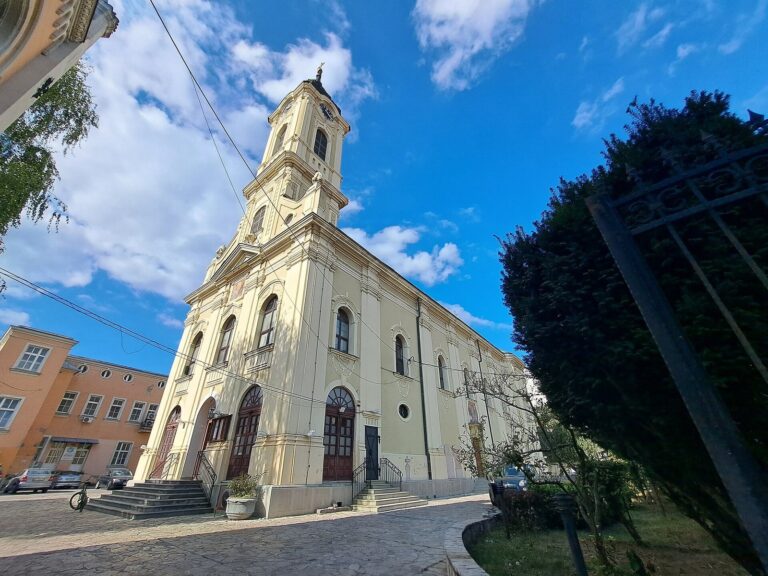
The Church of Saint George in Bežanija is a Serbian Orthodox parish church in Belgrade, Serbia, built in 1878. Its design combines neoclassical, Baroque, and Neo-Romantic elements. The parish is affiliated with the Archdiocese of Belgrade-Karlovci, an ecclesiastical district headed by an archbishop. Bežanija is first mentioned in 1645, and the church continues a local history of worship begun before the present building.
First church
The settlement’s first church is mentioned in 1733. Dedicated to Saint George the Great Martyr, an honorific for a particularly revered Christian martyr, it did not begin holding services until a bishop consecrated it in 1753. The building used unfired brick, with an unpaved floor, a shingle roof, and a ceiling made of boards. Its altar and men’s section were also built of unfired brick, while the women’s section used fired brick. The weak materials prompted repairs and enlargement, and a bell tower and bells were added later. The church stood until 1827, when donations were collected toward a replacement.
Present church
The present church was built in 1878. A major repair followed in 1938, altering the building’s interior. The church serves as a Serbian Orthodox parish in the Archdiocese of Belgrade-Karlovci.
Remains
Present church
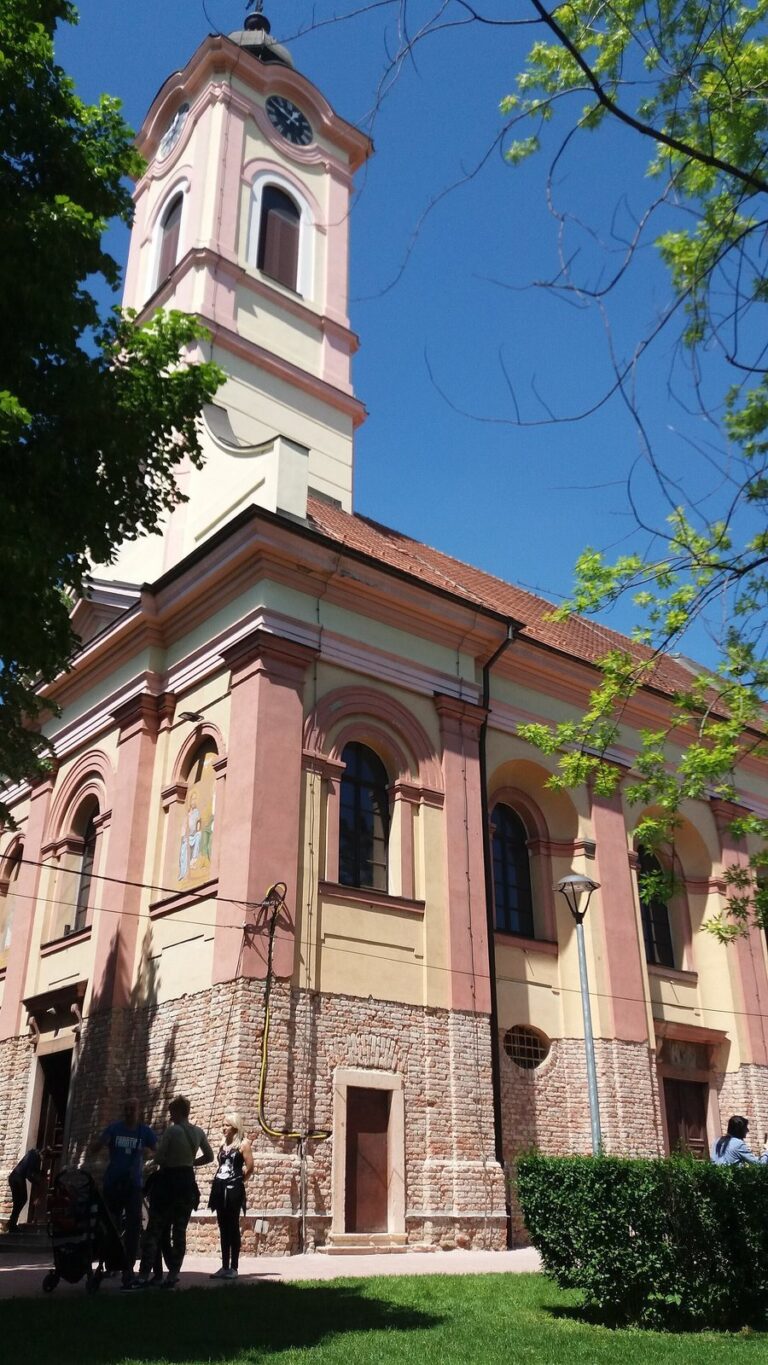
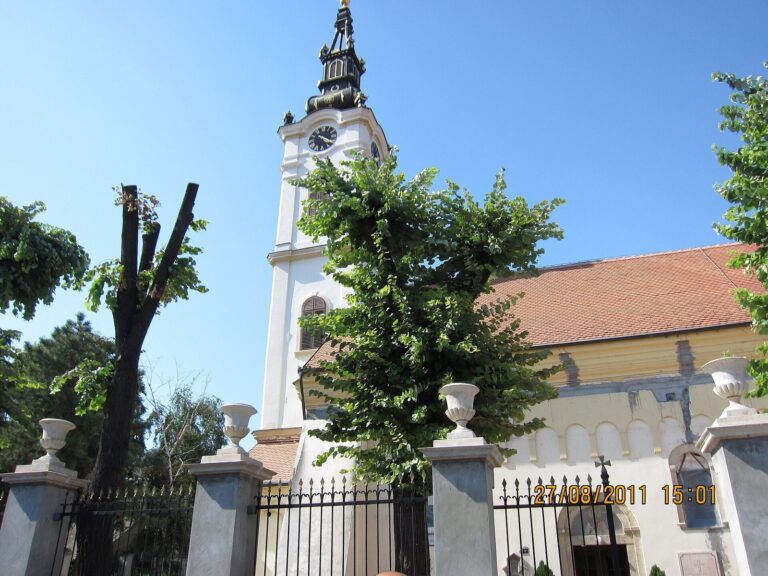
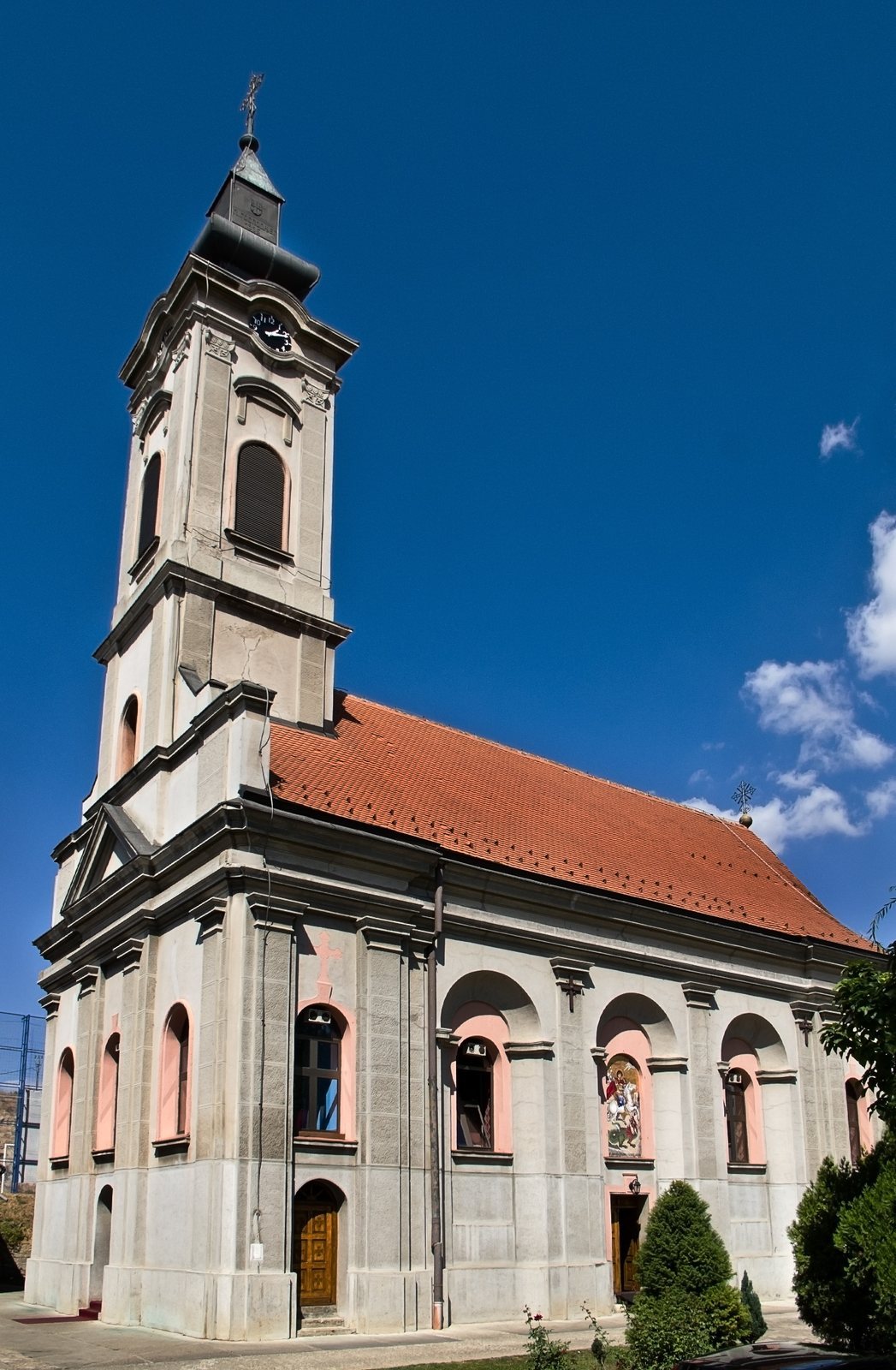
The present church has a single nave and a semicircular apse, a projecting sanctuary end, to the east. At the west end, a narthex, or entrance area, contains a choir and a tall, three-storey bell tower. Neoclassical, Baroque, and Neo-Romantic features shape the design, without one style governing the whole building. Inside, arches and pilasters, shallow wall projections resembling columns, divide the space into four bays, or sections defined by structural supports. The main facade reflects the same division. The 1938 repair introduced a new iconostasis, a screen of icons separating the sanctuary from the main church, and wall paintings by Russian artist Andrej Bicenko. The earlier church’s iconostasis included Royal Doors, the central entrance to the sanctuary, and throne icons displayed on its main tier. Some of its icons remain in Bežanija, while other elements were transferred to the church in Kupinovo.