Church of the Nativity of the Theotokos in Zemun: A Serbian Orthodox Church
Site at a Glance
- Rating
- 4.9
- Popularity
- High
- Country
- Serbia
- Primary era
- Early Modern
- Eras represented
- Early Modern, Modern
- Civilizations
- Austria-Hungary, Habsburg, Habsburg Austria
- Site type
- Religious
- Remains
- Church
On this page14 sections
History
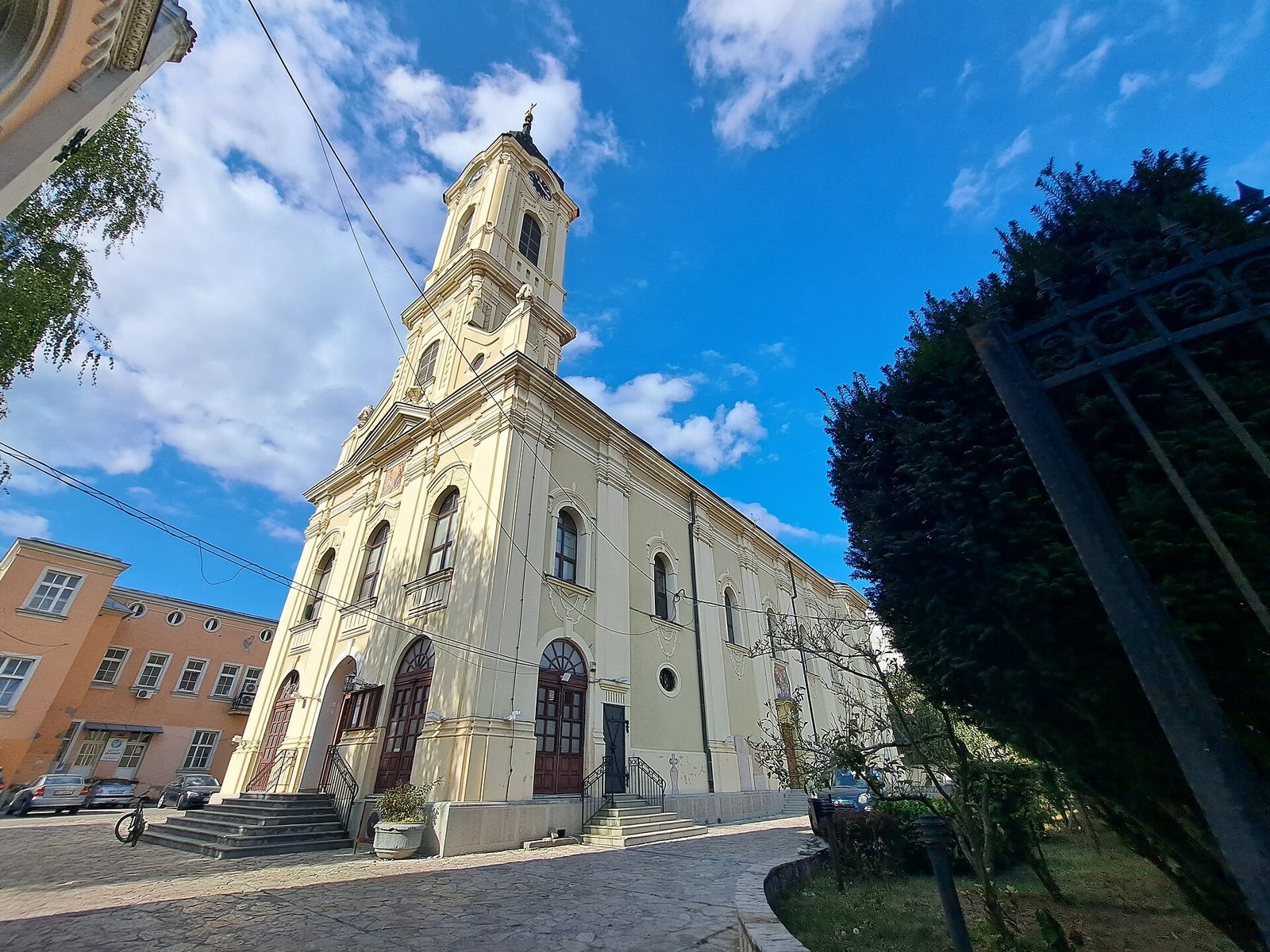
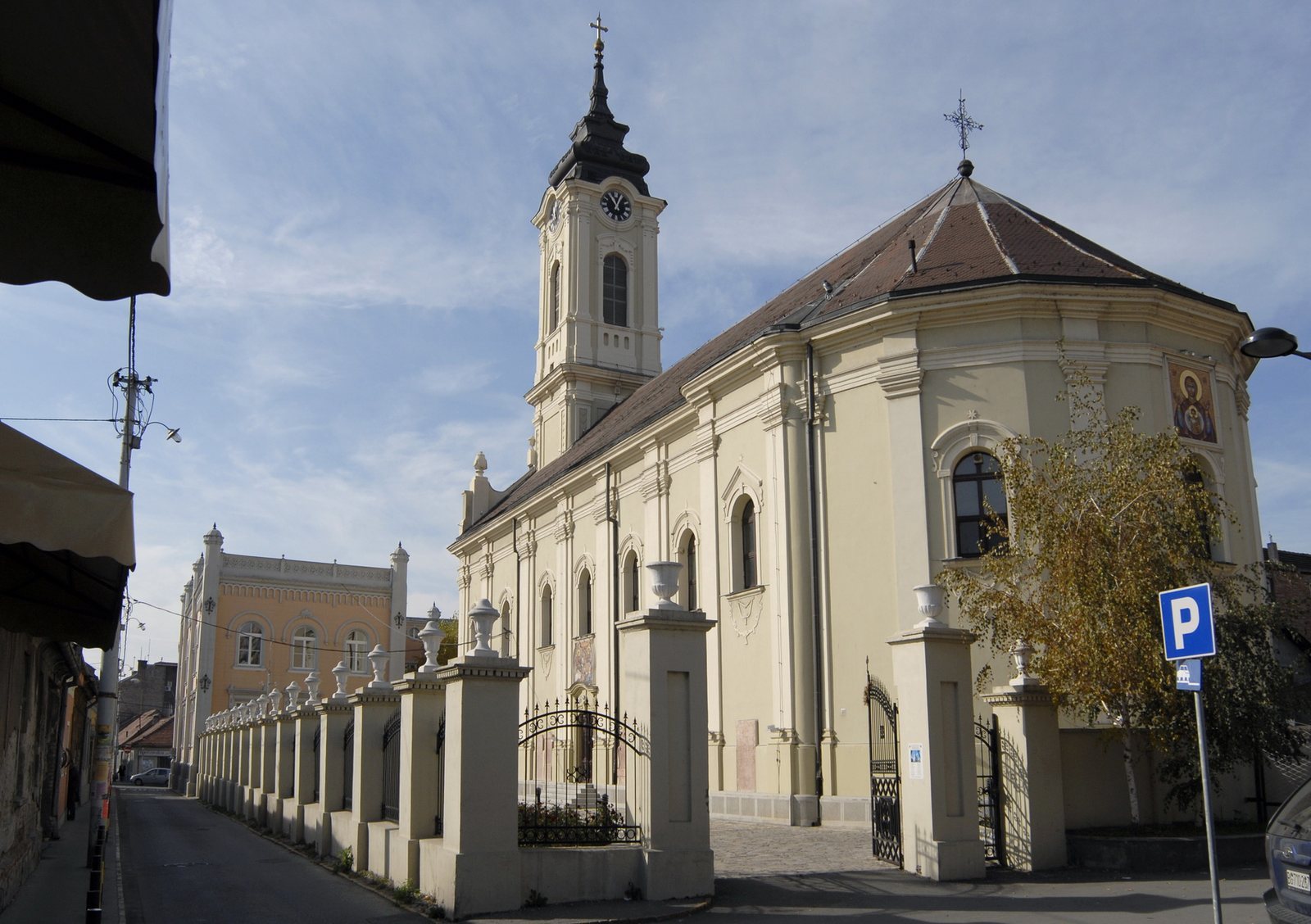
The Church of the Nativity of the Theotokos in Zemun is a Serbian Orthodox church in Serbia, founded in 1774 and built in the late Baroque style. The Theotokos is a Christian title for Mary meaning “Mother of God,” and her Nativity refers to her birth. The cornerstone was laid in the summer of 1776 in the western part of Zemun’s Old Core, and construction was completed in 1780. Serbian, Greek, and Aromanian residents, members of a distinct southeastern European people, financed the church. It belongs to the Serbian Orthodox Church, an Eastern Orthodox church, and the Archdiocese of Belgrade and Karlovci, an ecclesiastical jurisdiction within it.
Foundation in a border town
The Treaties of Passarowitz in 1718 and Belgrade in 1739 settled conflicts between the Habsburg and Ottoman empires and ended Ottoman rule in southeastern Syrmia. Zemun then lay on the imperial border. Following changes in administration, it became a free military community within the Habsburg Military Frontier, a militarized border region administered for defense. The ensuing peace and economic growth supported the town’s expansion and its diverse population.
Locally called the “new church,” the building served Serbs, Greeks, and Aromanians who shared the Orthodox faith and supported its upkeep. Services were held in Church Slavonic, a historical liturgical language used by Slavic Orthodox churches, and on certain days in Greek, until 1914.
Religious and civic life
During the nineteenth century, the church and its courtyard became a center of Serbian religious, educational, and cultural activity in Zemun. The city’s first observance of Saint Sava’s feast as a school celebration took place in 1812. A Serbian school was built in 1822, followed by the establishment of a library in 1825. The Serbian Orthodox Church Municipality’s representative building was erected in 1909.
A tall bell tower was added to the church’s western side in 1794–1795. A large bell installed in 1815 symbolized victory over Napoleon. Serbian Orthodox patriarchs also celebrated liturgies in the church on several occasions.
Restoration campaigns took place in 1880, 1890, 1937, 1944–1947, 1958, 1979–1980, 1999, and 2000–2001. The church was reconsecrated in December 1937. It is designated a cultural monument and lies within the protected cultural-historical ensemble of Zemun’s Old Core.
Remains
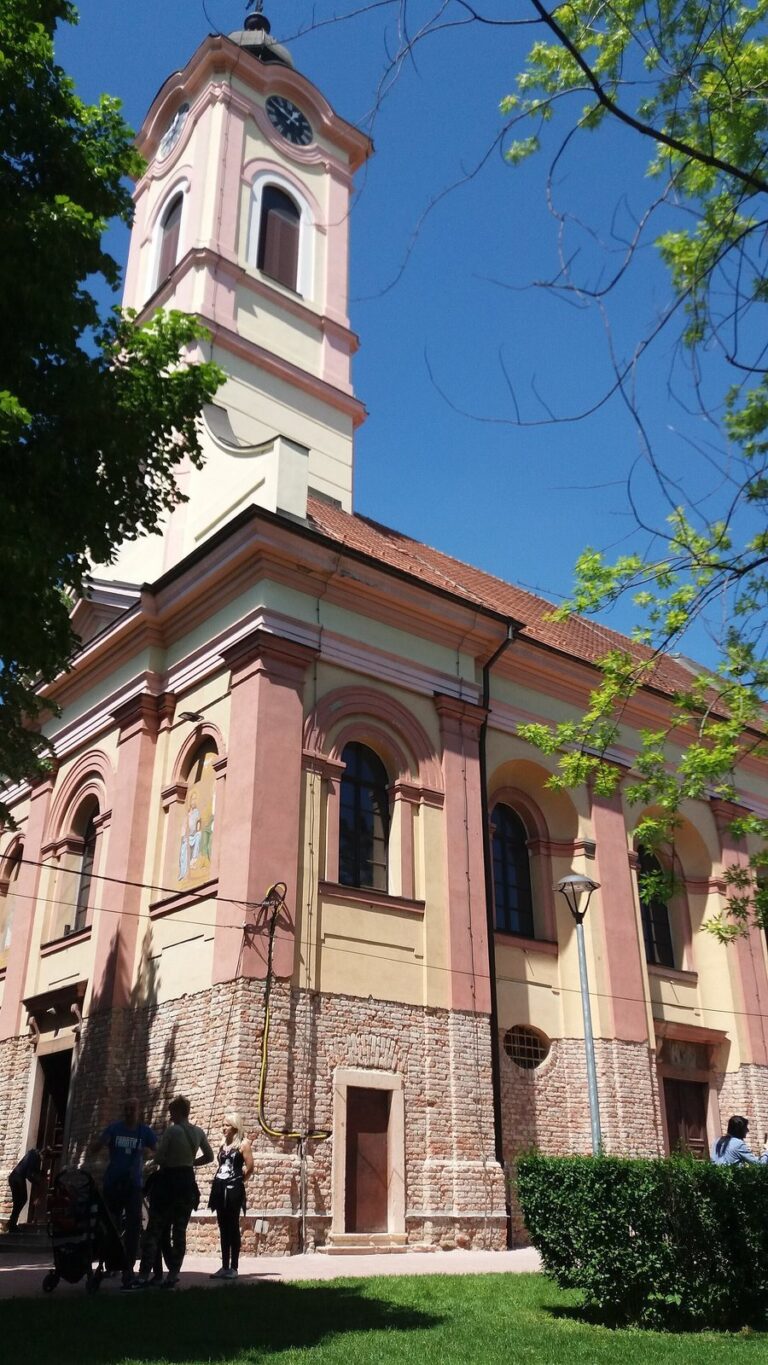
The church stands on Rajačićeva Street in central Zemun and is the largest church in the Old Core. Its late-Baroque plan has a single main body, shallow choir spaces for singers, and a semicircular apse, a rounded projection at the altar end.
Exterior and plan
Bell tower
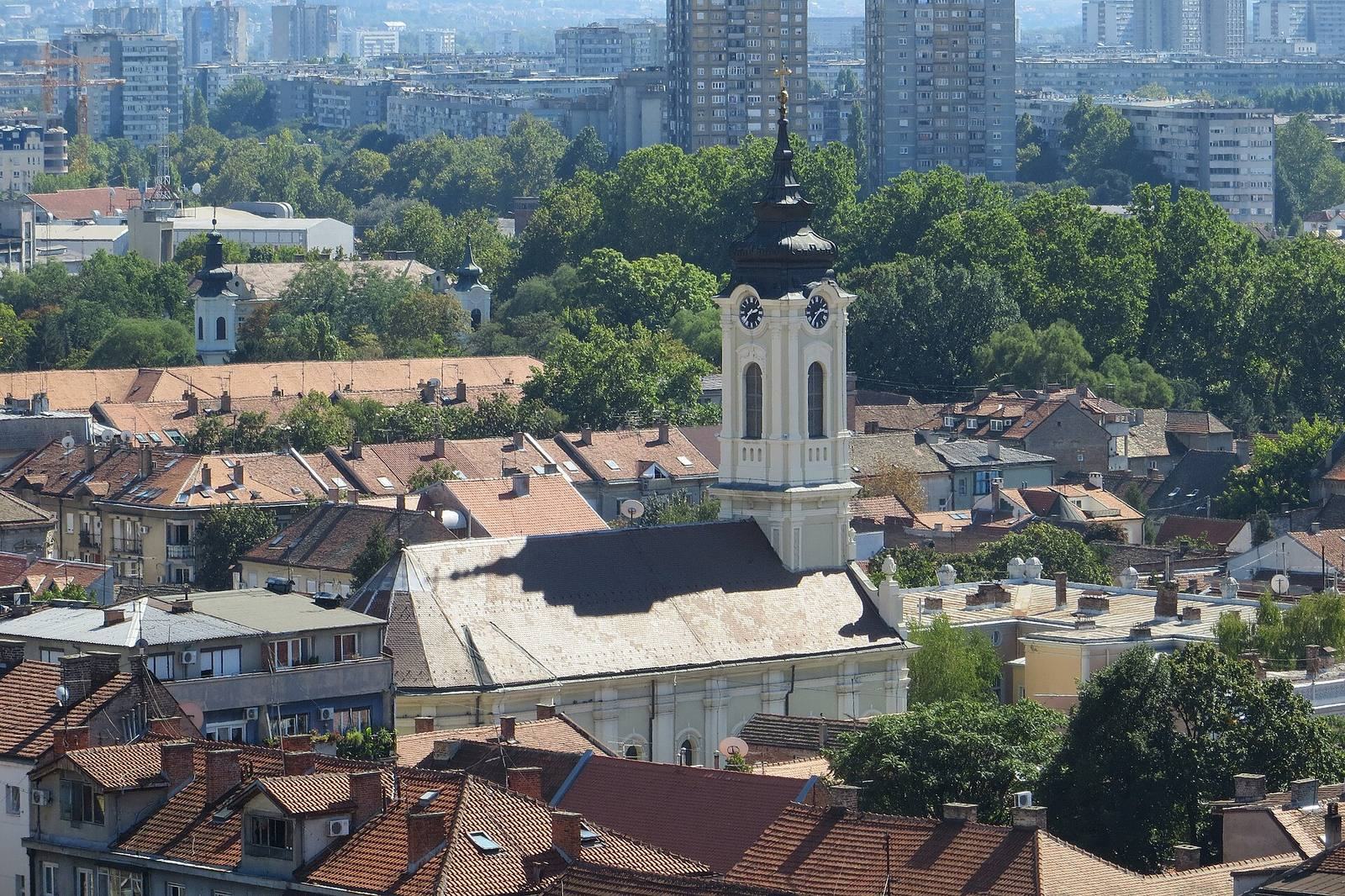
The two-storey bell tower rises above the western façade. It forms a strong vertical feature in Zemun’s roofline and contributes to the city’s silhouette as seen from the Danube, Gardoš, and Ćukovac. The original bell survives alongside two bells added later. Beneath the tower is an underground repository designed for human remains but never used for that purpose. Its design followed conventions maintained chiefly in Greek Orthodox monasteries.
Façade grave slabs
Grave slabs set into the north and south façades bear inscriptions in Greek and Church Slavonic. The slabs were restored in 2010.
Interior furnishings and paintings
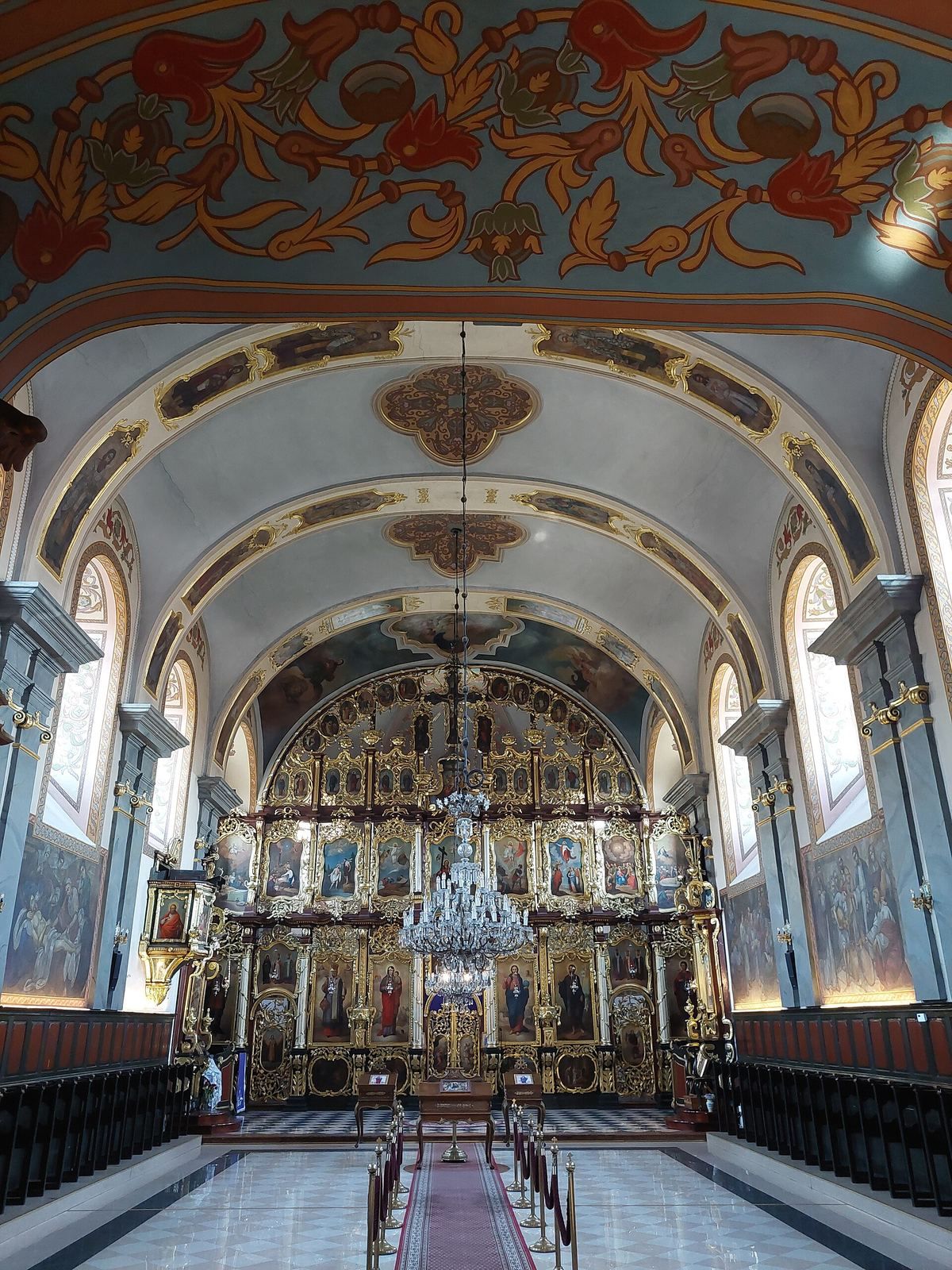
Icon screen and icons
The richly carved iconostasis, an icon screen separating the sanctuary from the main body of an Eastern Orthodox church, was made in 1788 by the woodcarver Aksentije Marković, a member of a noted craft family. Arsenije Teodorović painted its icons and applied principles of Classicism to the screen in 1815. He also painted the ceiling vault beneath it and the arch before the altar. His image on the bishop’s throne shows Saint Sava reconciling his brothers over their father’s grave.
The throne of the Theotokos bears a late-eighteenth-century icon of Mary as Protectress, set against a gold background with Baroque ornament. At its base is the icon “Life-Giving Spring,” painted in 1864 by Živko Petrović.
Wall paintings
In 1937, Russian painter Andrei Bitsenko painted scenes from the life of Christ on dry plaster in the entrance vestibule, main worship space, choir areas, and altar. The choir includes a monumental composition of the Sermon on the Mount that depicts Nicholas II, the last emperor of Russia.
Associated buildings and collections
Church Municipality building
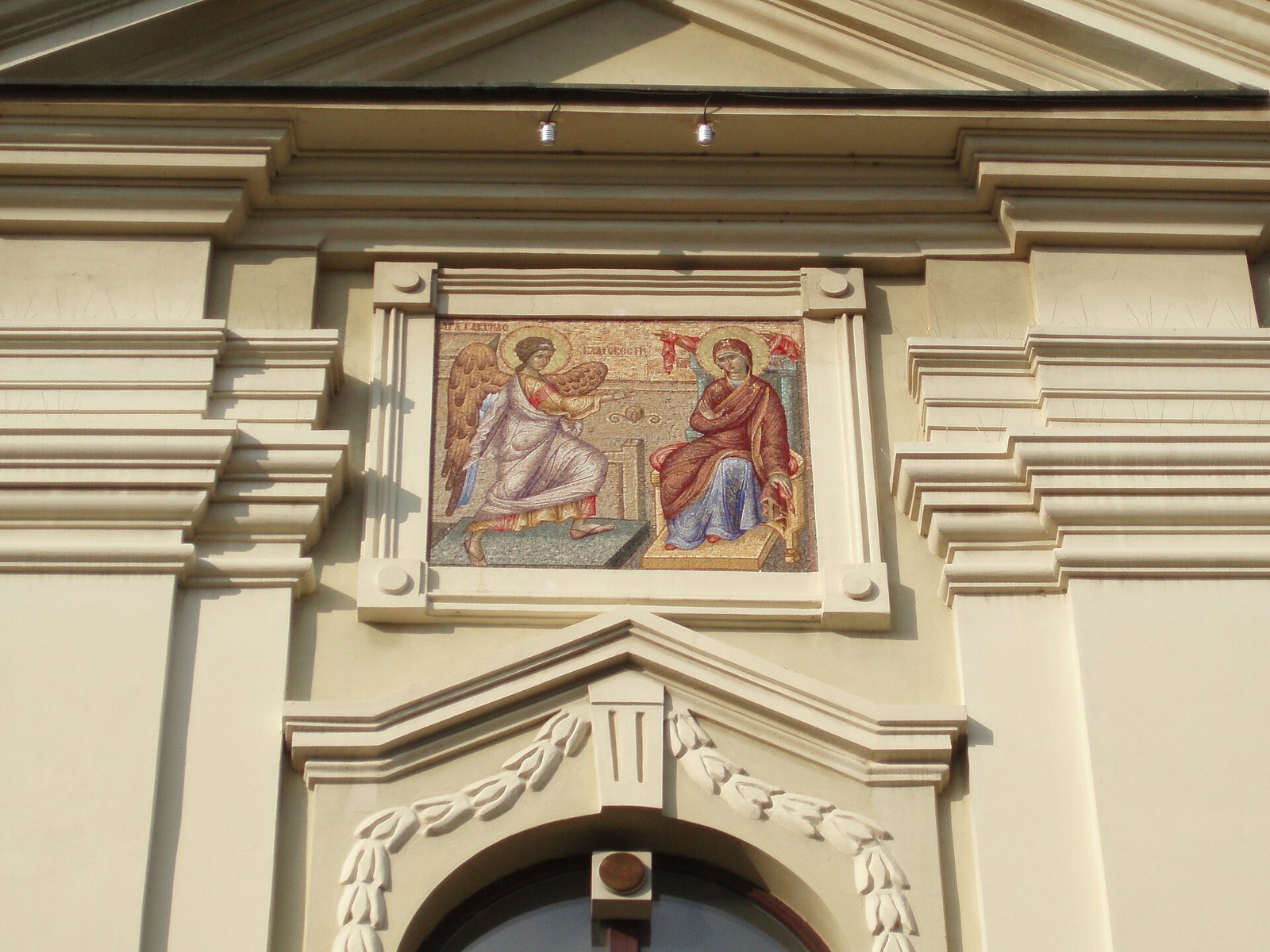
The Serbian Orthodox Church Municipality building shares the church’s plot and forms part of the same complex. Mosaics decorate its front and side façades. Inside is Živko Petrović’s 1841 oil painting “Saint Sava Blessing Serbian Children.”
Treasury and archive
The church has a treasury and a collection of books and archival material. Among these is a Moscow Gospel dated 1782, with drawings made in 1788 by Hadži Ruvim, an Orthodox archimandrite, a senior rank in monastic clergy.
Restoration of the interior
During the 2000–2001 restoration, the wall paintings were renewed, and new flooring and underfloor heating were installed.