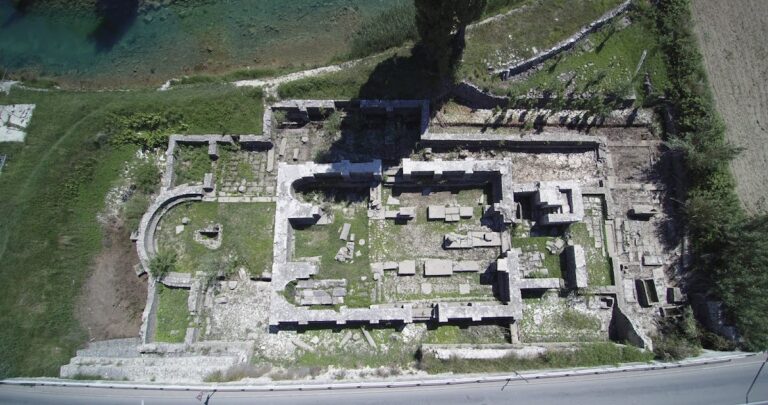
Crkva sv. Jurja na Putalju: A Ninth-Century Church in Croatia


Site at a Glance
- Rating
- 4.9
- Popularity
- Very Low
- Country
- Croatia
- Primary era
- Modern
- Eras represented
- Medieval, Modern
- Civilizations
- Unclassified
- Site type
- Religious
- Remains
- Church
On this page4 sections
History
Crkva sv. Jurja na Putalju is a Roman Catholic church in Croatia, standing above Kaštel Sućurac. Croatian Duke Mislav commissioned it in 839 as a pre-Romanesque church, an early medieval architectural form that preceded the widespread development of Romanesque architecture. Founded on royal land, it became an important religious foundation whose name contributed to the later name of Kaštel Sućurac.
Mislav’s Foundation and Early Charters
Mislav endowed the church with estates at Lažane and Tugare in Poljica. His successor, Duke Trpimir, confirmed these rights in a charter issued on 4 March 852 at the ruler’s court in Bijaći near Trogir. The document reinforced the church’s possessions and its place within the institutional landscape of the early medieval Croatian duchy.
The church was placed under the authority of the Archbishop of Split, but that jurisdiction was challenged by Adelfred, Bishop of Nin. Duke Muncimir later issued a new charter in 892 at the Church of St Martha in Bijaći, confirming the church in favour of the Archdiocese of Split.
Destruction and Enlargement
The original ninth-century church was demolished in the seventeenth century. A late-medieval apse survived the destruction and was restored when a new church was enlarged in 1927. That work incorporated the medieval element into the present building, linking the modern church with the earlier history of the site.
Remains
Putalj lies above Kaštel Sućurac, where the present church incorporates the surviving apse of the late-medieval building. An apse is the usually rounded or polygonal end of a church, commonly positioned behind the altar. The restored apse forms the principal surviving architectural link with the site’s medieval phase, while the surrounding church reflects the enlargement carried out in 1927. The earlier structure belonged to the pre-Romanesque tradition and dated to the ninth century.