Conservatorio Giuseppe Martucci: Salerno’s Music Conservatory
Site at a Glance
- Popularity
- Low
- Country
- Italy
- Primary era
- Medieval
- Eras represented
- Medieval
- Civilizations
- Lombard
- Site type
- Civic
- Remains
- School
On this page7 sections
History
Conservatorio Giuseppe Martucci is a music conservatory in Salerno, Italy, in the historic center’s Plaium Montis area and part of the Umberto I complex. Its palace began as an 11th-century monastery, while the music school that developed into the conservatory was founded in 1819. The building and the school thus have related but distinct histories.
Monastery and orphanage
The palace began as a Benedictine monastery, a house of the Catholic order whose members follow the Rule of Saint Benedict. It was established during Lombard rule, a period of early medieval political authority in southern Italy, and remained a monastery until 1407. The building subsequently served different purposes. After Italian unification, it became an orphanage. When Umberto I, king of Italy, came to the throne, the orphanage took his name, which the complex retained until recently.
Foundation and development of the music school
The school that preceded the conservatory opened at the San Ferdinando hospice in early 1819. A decree issued that year set out its administration, staffing and operations. The hospice had been designated as a shelter for beggars by Gioacchino Murat, a French military commander who ruled Naples, on 1 November 1813. It received the name San Ferdinando in 1816, honoring Ferdinand I, king of the Two Sicilies, a pre-unification state in southern Italy and Sicily. The hospice occupied premises beside the convents of San Nicola and San Lorenzo. These premises had been taken from the Reformed Franciscans, a branch of the Franciscan Order that emphasized stricter observance of its rule, under laws of 1807 and 1811 suppressing religious orders in the Kingdom of the Two Sicilies.
The school trained orphans for employment in trades including tailoring, shoemaking and carpentry, with particular emphasis on music. Gabriele da Forio d’Ischia became its first teacher and director in 1819, holding the post until 1855, when Domenico Ansalone succeeded him. Later teachers included Antonio Pipitone, Raffaele Caravaglios and Temistocle Marzano. After Marzano’s sudden death, Augusto Ruggiero followed him and was soon replaced by Vincenzo Grandine. Changes in the teaching leadership continued through 1869.
Recognition and autonomy
Carlo Cammarota directed the school from 1933 to 1939, leaving after winning a position at the Santa Cecilia Conservatory in Rome. The directorship then remained vacant until war began, and the school came close to closing. Luigi Marino helped revive it by rebuilding its band and arranging weekly concerts at locations chosen by the Civic Administration.
Under Domenico D’Ascoli, the school gained its first formal legal recognition as equivalent to a state music school. In 1950–51, it had 136 students and offered courses in violin, cello, double bass, oboe, trumpet, trombone, flute, clarinet and horn. By then, it bore the name of Giuseppe Martucci, an Italian composer and pianist. After the Second World War, the former orphanage had become a state music conservatory named for Martucci.
The school became a branch of Naples’s San Pietro a Majella Conservatory, a historic music conservatory, in 1963. The two institutions signed an agreement in 1964 to strengthen music education in Salerno, but Naples’s lack of commitment led to efforts to secure independence for the Martucci. Alfonso Menna, administrator of the Umberto I institution, made the first attempt to obtain autonomy in 1975. Further attempts failed until Salvatore Valitutti, Minister of Public Instruction, ratified the conservatory’s autonomy in 1980.
Recent development
Since 2013, enrollment has exceeded 1,200, and the conservatory has been the only university-level institution within Salerno’s municipal boundaries. Interior renovation was completed at the end of 2014. Work began in 2015 on a 350-seat auditorium and the renovation of the building’s façades.
Remains
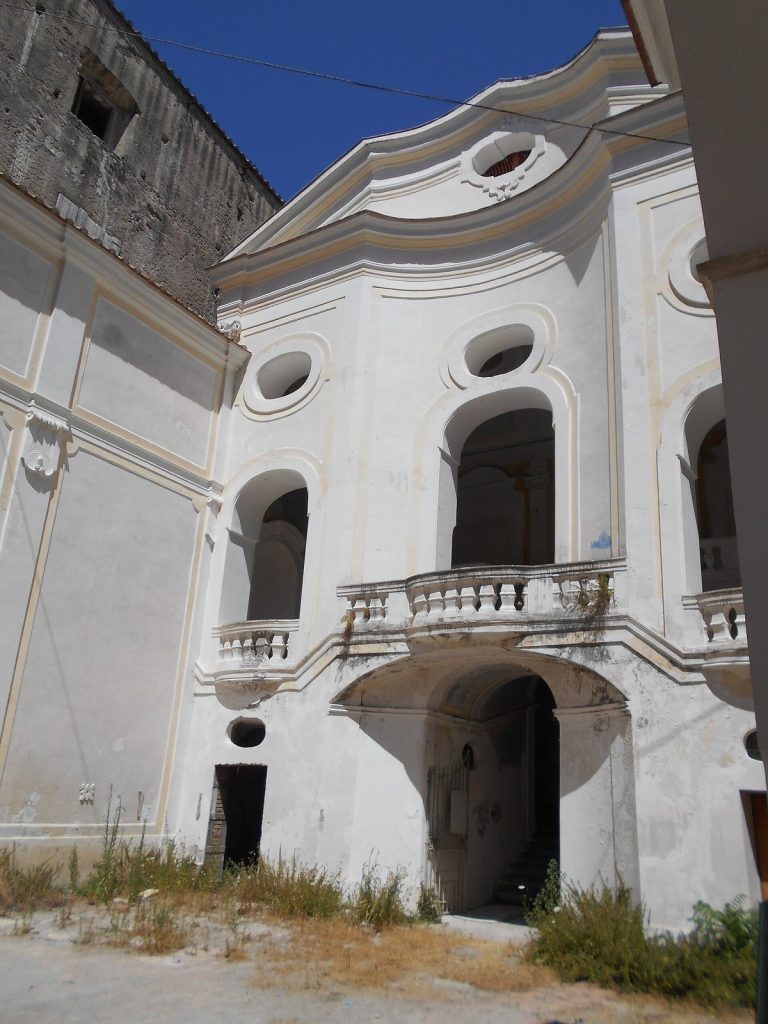
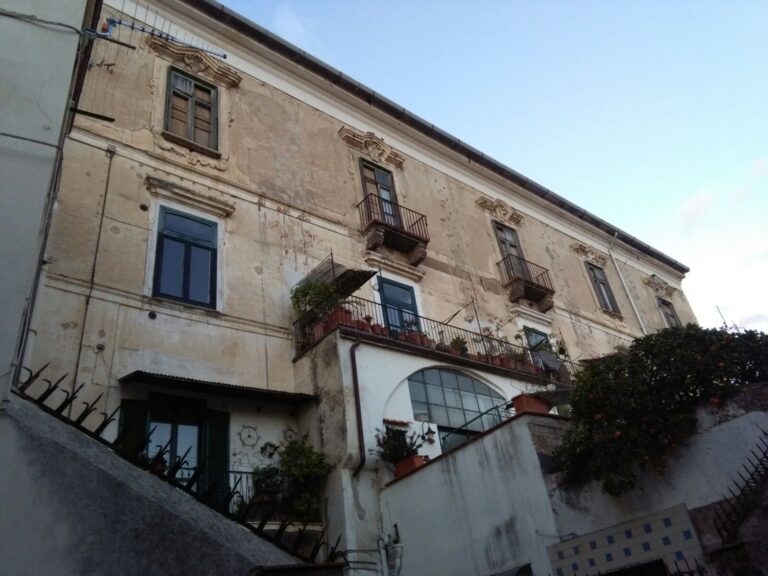
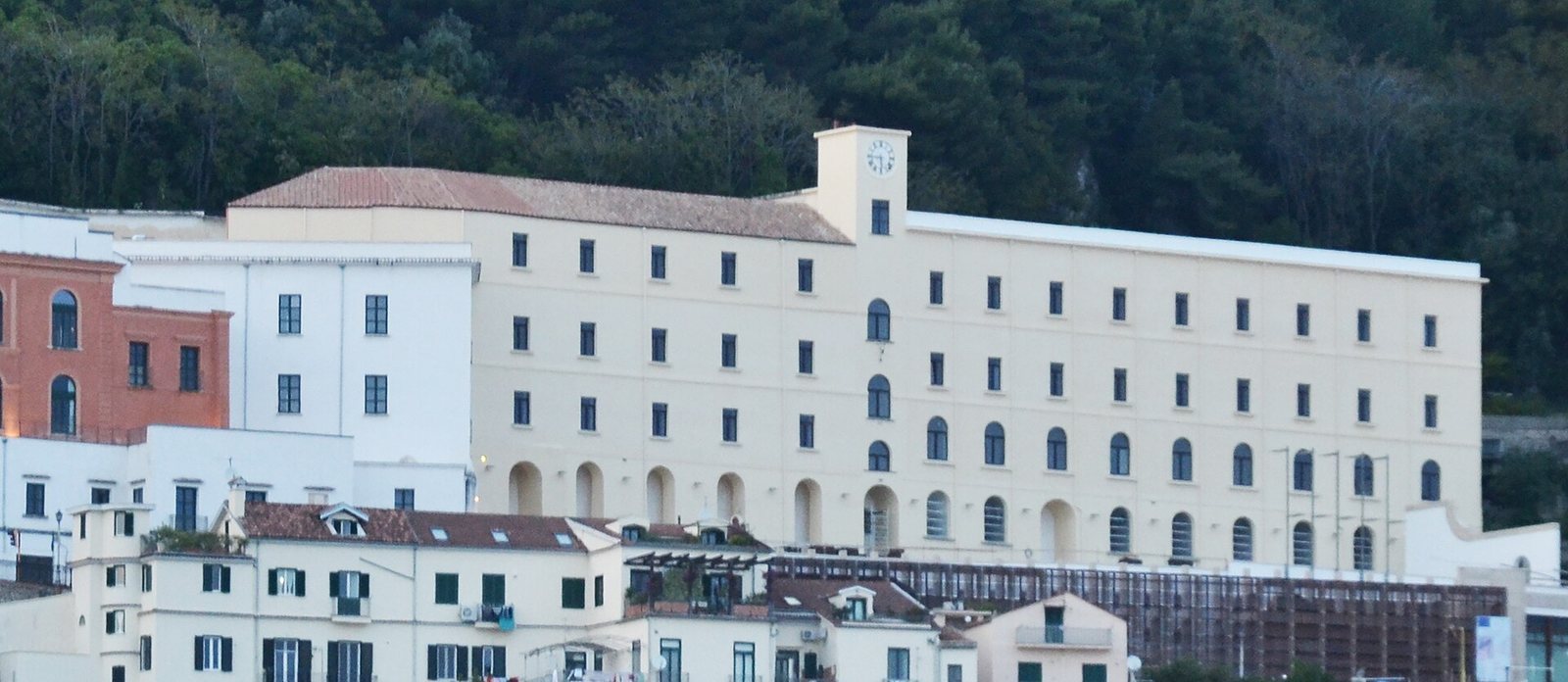
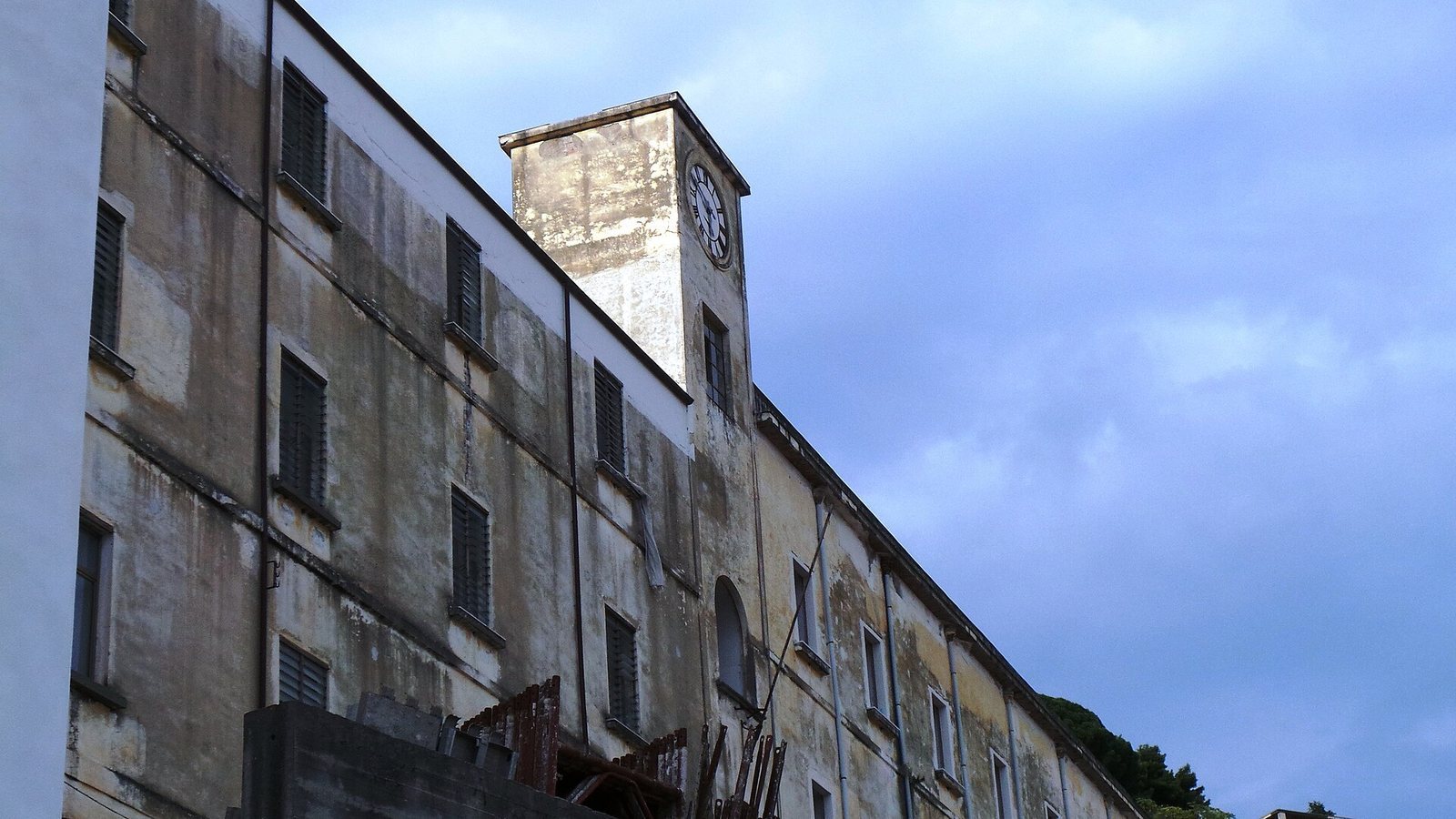
Palace structure and fabric
The Umberto I palace has a rectangular plan organized around a courtyard. Four floors rise beneath a small central clock tower, which forms a fifth level and brings the building to about 25 metres in height. Its walls use mixed masonry incorporating tuff, a volcanic stone, and are covered with plaster and paint. The upper floors have a simple structural form; the lower levels contain vaulted ceilings in barrel-shaped, sail-like, intersecting and tent-like forms. Two principal staircases each have two flights. Exterior decoration includes shallow, column-like pilasters on plastered walls and some stucco cornices, or projecting ornamental bands. A small section of the palace predates the monastery and belonged to the neighboring convent of San Lorenzo, founded in 963 by Gisulfo I, a Lombard prince of Salerno.