Conserva di Valverde: Renaissance Water Cistern in Bologna
Site at a Glance
- Rating
- 4.4
- Popularity
- Low
- Country
- Italy
- Primary era
- Early Modern
- External website
- Open
- Eras represented
- Early Modern
- Civilizations
- Papal States
- Site type
- Infrastructure
- Remains
- Cistern
On this page9 sections
History
Conserva di Valverde, also known as the Bagni di Mario, is a Renaissance underground water-collection and settling system built in Bologna, Italy, in 1563. Designed by the architect Tommaso Laureti, it formed part of an urban-renewal programme promoted by Pope Pius IV after the Council of Trent, the sixteenth-century Catholic council whose reforms reshaped religious and institutional life across Catholic Europe.
Construction and papal waterworks
The project was carried out under Cardinal Legate Carlo Borromeo, a church reformer representing the pope in the territory, and Vice-Legate Pier Donato Cesi, the legate’s subordinate representative. The cistern collected, stored, and purified water entering from the Valverde area. This supply was combined with water from the Remonda spring and directed towards Bologna’s Neptune Fountain and the Old Fountain beside the north front of the Apostolic Palace, a papal residential and administrative complex now known as the Palazzo Comunale.
The same system served other parts of the palace complex, including the Cavalleggeri Basin and the Garden of Simples in the area now occupied by Sala Borsa. A more private supply for the Cardinal Legate was later installed within the palace complex. In 1587, a well was constructed there to a design by Terribilia.
Nineteenth-century name and modern conservation
The name Bagni di Mario became established during the nineteenth century, when the cistern was incorrectly identified as a Roman Republican thermal complex supposedly built during the consulship of Gaius Marius, a Roman statesman and general. The water system’s Renaissance origin is reflected in its design and association with the works of Tommaso Laureti.
The complex underwent restoration in 2016 and opened to the public in 2017. It is owned by the Municipality of Bologna.
Remains
The Conserva survives as a two-level underground installation for capturing, collecting, and settling water. It lies approximately 2 kilometres from the Neptune Fountain and retains a Renaissance architectural arrangement in good condition. Water entered through conduits extending into the Valverde hill, passed through settling basins, and continued through a lower-level tunnel towards the wider supply network.
Upper-level chambers
Vestibule and octagonal hall
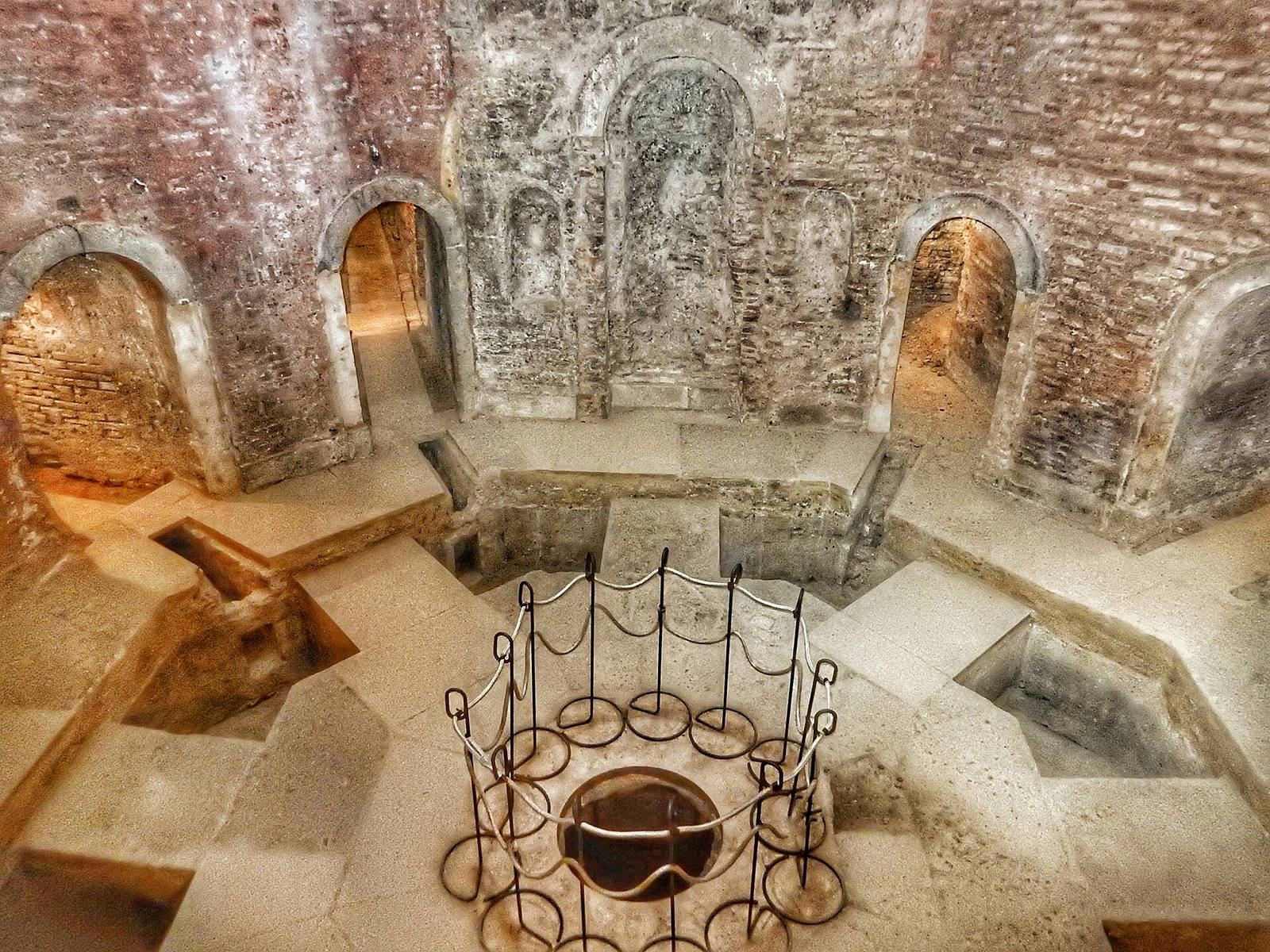
The upper level begins with a vestibule and opens into a large octagonal hall covered by a broad octagonal dome. Eight small basins cut into the floor received water from four conduits extending into the hill. These basins acted as settling basins, allowing suspended material to fall to the bottom before the water moved onward. The first conduit also contains a ventilation shaft, which is completely covered by centuries-old calcareous deposits.
Cisternetta
A second small octagonal chamber, known as the Cisternetta, contains another settling basin. A short staircase links it to the principal hall, while a pipe carried water from the chamber down to the lower level.
Lower-level tunnel and water connection
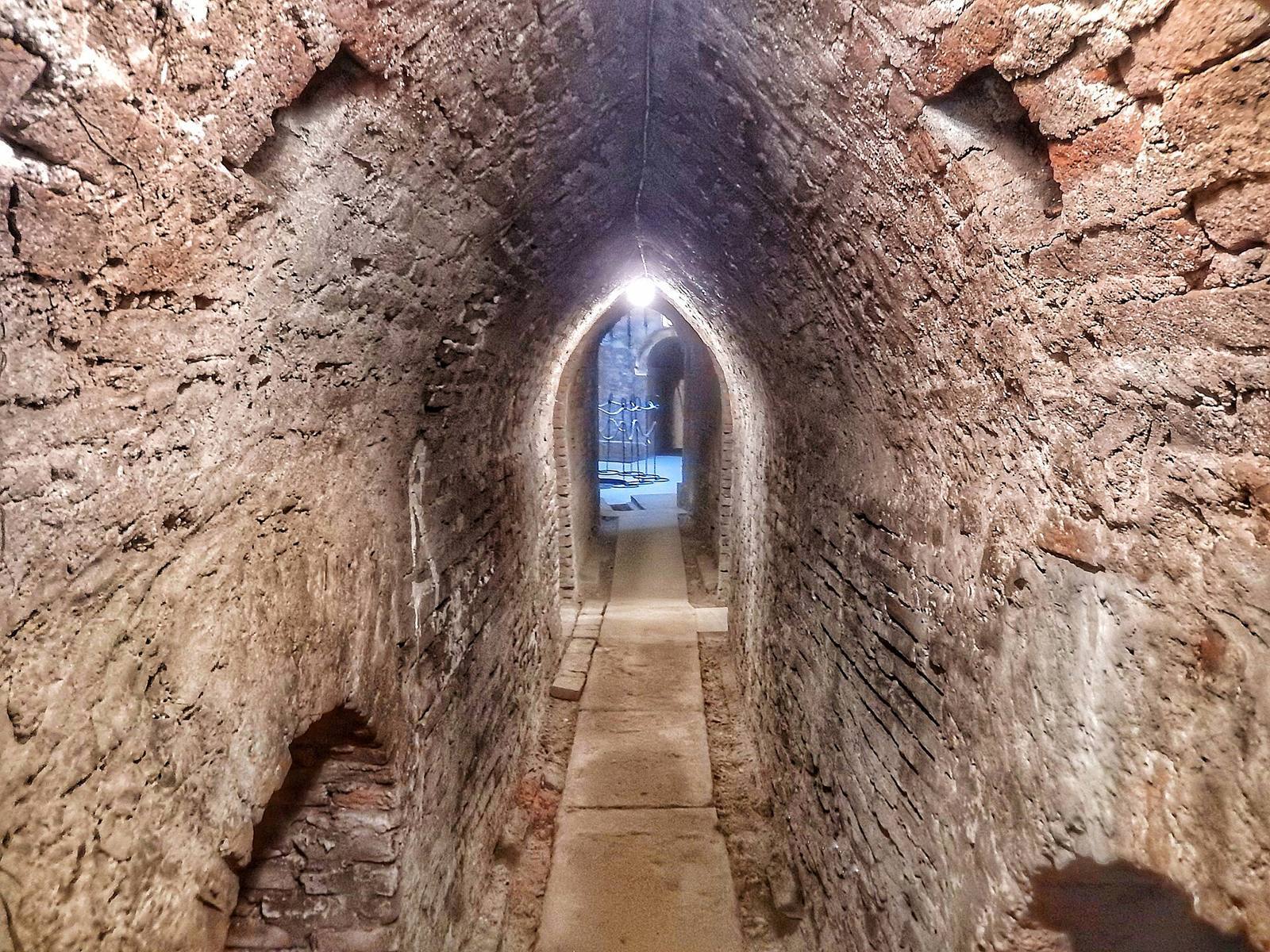
From the upper level, water passed through a brick tunnel towards the vicinity of the church of Santa Maria dell’Annunziata. There it joined water from the Remondato conduit, which was associated with the Remonda spring and collected water emerging from San Michele in Bosco. The tunnel contains both round-arched and pointed-arch sections, preserving evidence of the system’s varied underground construction.
Plans and surviving record
Tommaso Laureti designed a plan and section showing the cistern and its conduits. A surviving etching based on this design was engraved by Domenico Maria Bonavera after a drawing by Marc’Antonio Chiarini. The print is preserved in Bologna’s Biblioteca Comunale dell’Archiginnasio.