Church of Saint Kilian: A Roman Catholic Filial Church in Czechia
Site at a Glance
- Rating
- 4.5
- Popularity
- Very Low
- Country
- Czechia
- Primary era
- Early Modern
- Eras represented
- Medieval, Early Modern, Modern
- Civilizations
- Duchy of Bohemia, Habsburg, Holy Roman Empire, Kingdom of Bohemia
- Site type
- Religious
- Remains
- Church
On this page9 sections
History
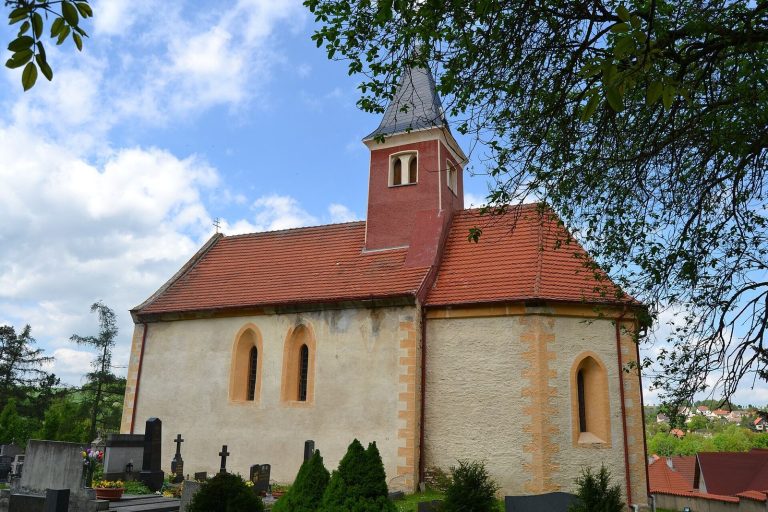
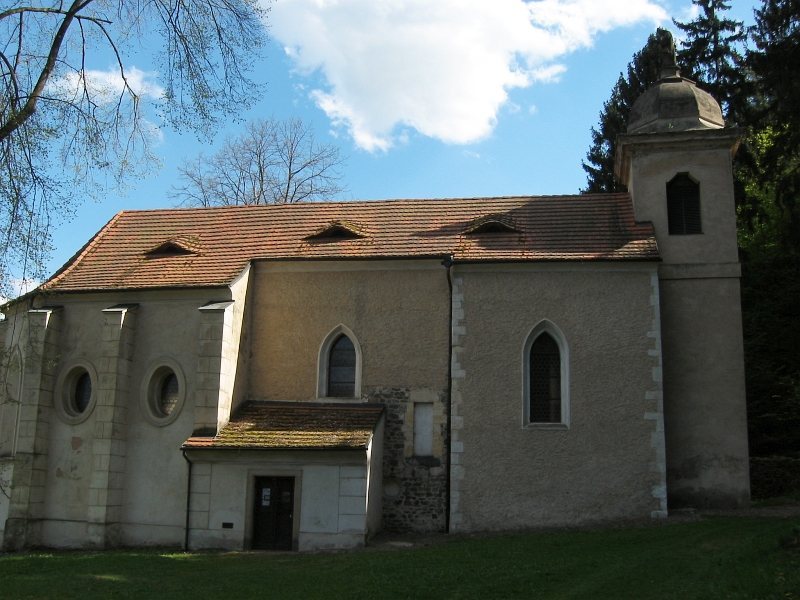
The Church of Saint Kilian is a Roman Catholic filial church in Davle, Czechia, built by Benedictines around 1160 in the Romanesque period. Dedicated to Saint Kilian, an Irish-Scottish missionary who became bishop of Würzburg and was martyred there, it is associated with the nearby Ostrov Monastery. The dedication is described as the only one to Saint Kilian in Bohemia.
Benedictine foundation and medieval rebuilding
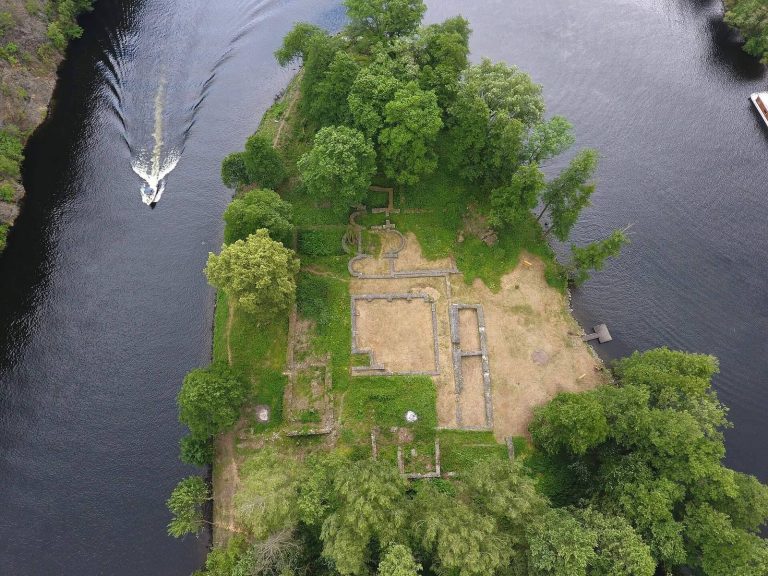
The church stood on the left bank of the Vltava beside Ostrov Monastery, founded around 999 and regarded as the second-oldest male monastery in Bohemia. A male monastery housed monks rather than nuns. Saint Kilian was venerated as a patron of the Benedictine order, whose members followed the Rule of Saint Benedict.
The adjoining rectory was recorded in 1323, while the church itself first appeared in writing in the register of papal tithes in 1352. For a long time, the building was therefore considered Gothic. Surviving Romanesque masonry discovered in the 1980s pushed its foundation back to the mid-twelfth century.
The original church was badly damaged in 1278 during the Brandenburgers’ invasion of Bohemia, an attack that also affected the neighbouring craft settlement of Sekanka. It was rebuilt in the Early Gothic style and received further Gothic alterations during the second half of the fourteenth century.
Baroque transformation and later changes
Major enlargements and rebuilding in the Baroque period gave the church its present architectural character. A serious fire in 1692 led to restoration that was completed only in 1775. The rectory later housed a one-class primary school, established there in 1778. A choir loft was added inside the nave in 1842.
Another fire affected the church in 1992 and was followed by a final Baroque alteration. The building’s successive Romanesque, Gothic, and Baroque phases consequently remain central to its historical interpretation.
Archaeology and protection
Archaeological investigation began in the nineteenth century. In the 1930s, research directed by Karel Guth, an archaeologist associated with the National Museum, uncovered important architectural remains. The Archaeological Institute of the Czechoslovak Academy of Sciences continued the work in the 1960s after the Second World War, completing it about two decades later.
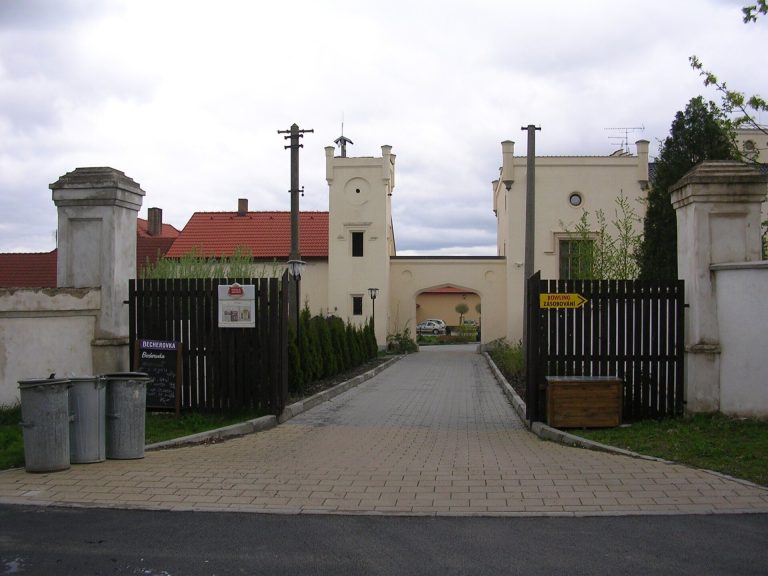
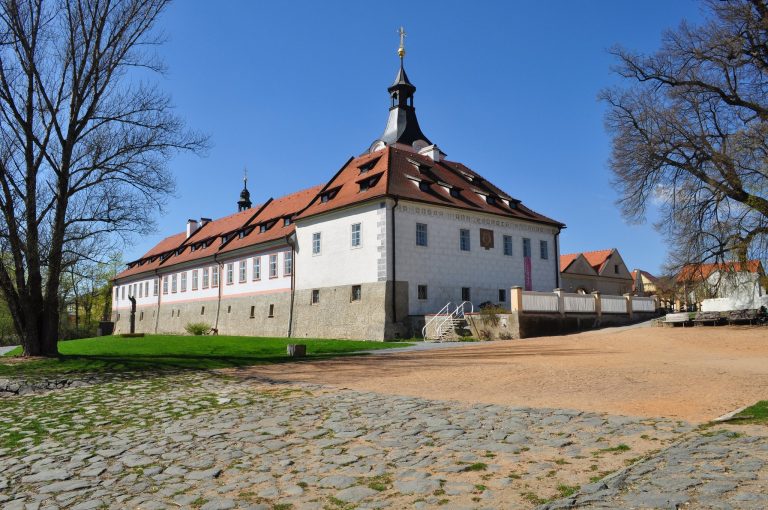
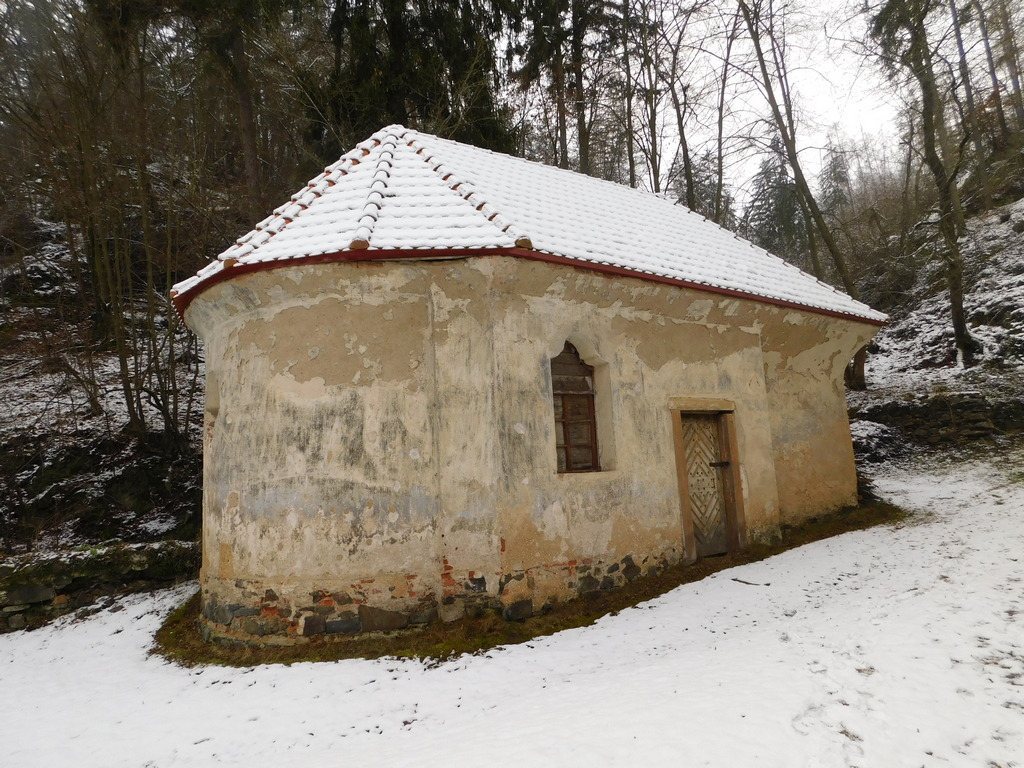
Following this research, the church complex was declared a protected cultural monument. The protected group includes the Church of Saint Kilian, the Chapel of the Holy Sepulchre, the bell tower, the former cemetery wall, the rectory, and the Chapel of Saint John of Nepomuk. The rectory now serves as a restaurant.
Remains
Layout and construction
The complex is enclosed by a boundary wall that also surrounds the grounds of the former cemetery. The church occupies the southern side, with the Chapel of the Holy Sepulchre farther south. Its plan consists of a single rectangular nave and a presbytery, the area reserved mainly for the altar and clergy, ending in three sides.
Church building
The presbytery is covered by a barrel vault, a continuous semicircular ceiling, with lunettes, or curved openings intersecting the vault. The nave has an imitation barrel vault, and its western part contains the choir loft inserted in 1842. The building incorporates surviving Romanesque masonry alongside the later Gothic and Baroque work.
Bell tower and surrounding buildings
A free-standing bell tower from 1768 stands west of the church and is topped by a small statue of Saint Kilian. The rectory lies north of the church, while the Chapel of Saint John of Nepomuk stands farther north. The Chapel of the Holy Sepulchre occupies the southern part of the enclosed complex.
Altars, paintings, and furnishings
The Baroque main altar carries a painting of the Virgin Mary with Saint Kilian, probably dating from around 1725. The altar of Saint Barbara dates from 1741, and the altar of Saint John of Nepomuk from 1770. A 1724 painting of Saint Benedict includes a view of Ostrov Monastery. The furnishings also contain a Renaissance pewter baptismal font dated 1556.