Olival da Pêga Megalithic Complex: Two Prehistoric Burial Tombs
Site at a Glance
- Popularity
- Low
- Country
- Portugal
- Primary era
- Stone Age
- Eras represented
- Stone Age
- Civilizations
- Unclassified
- Site type
- Burial
- Remains
- Necropolis
On this page7 sections
History
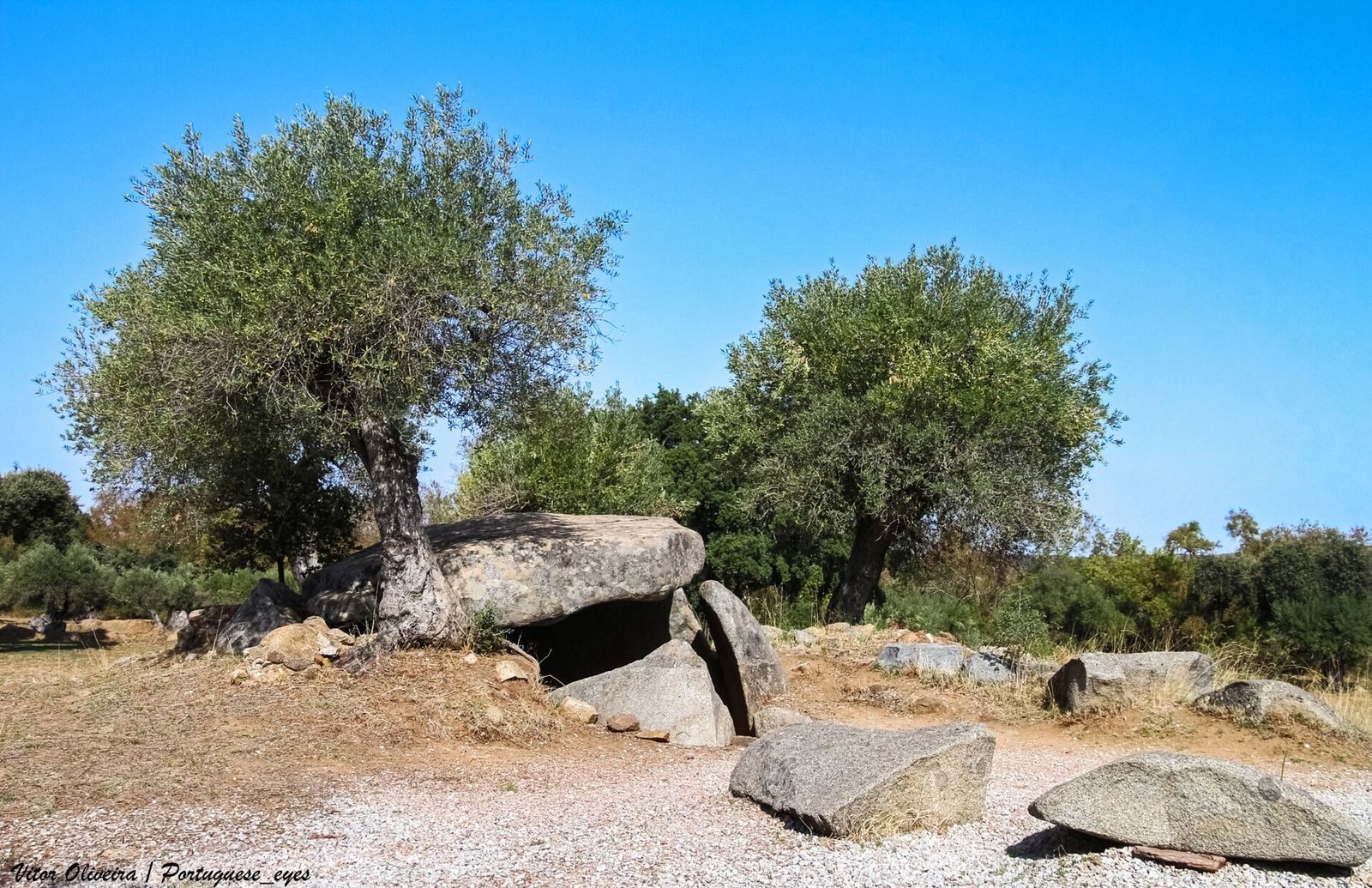
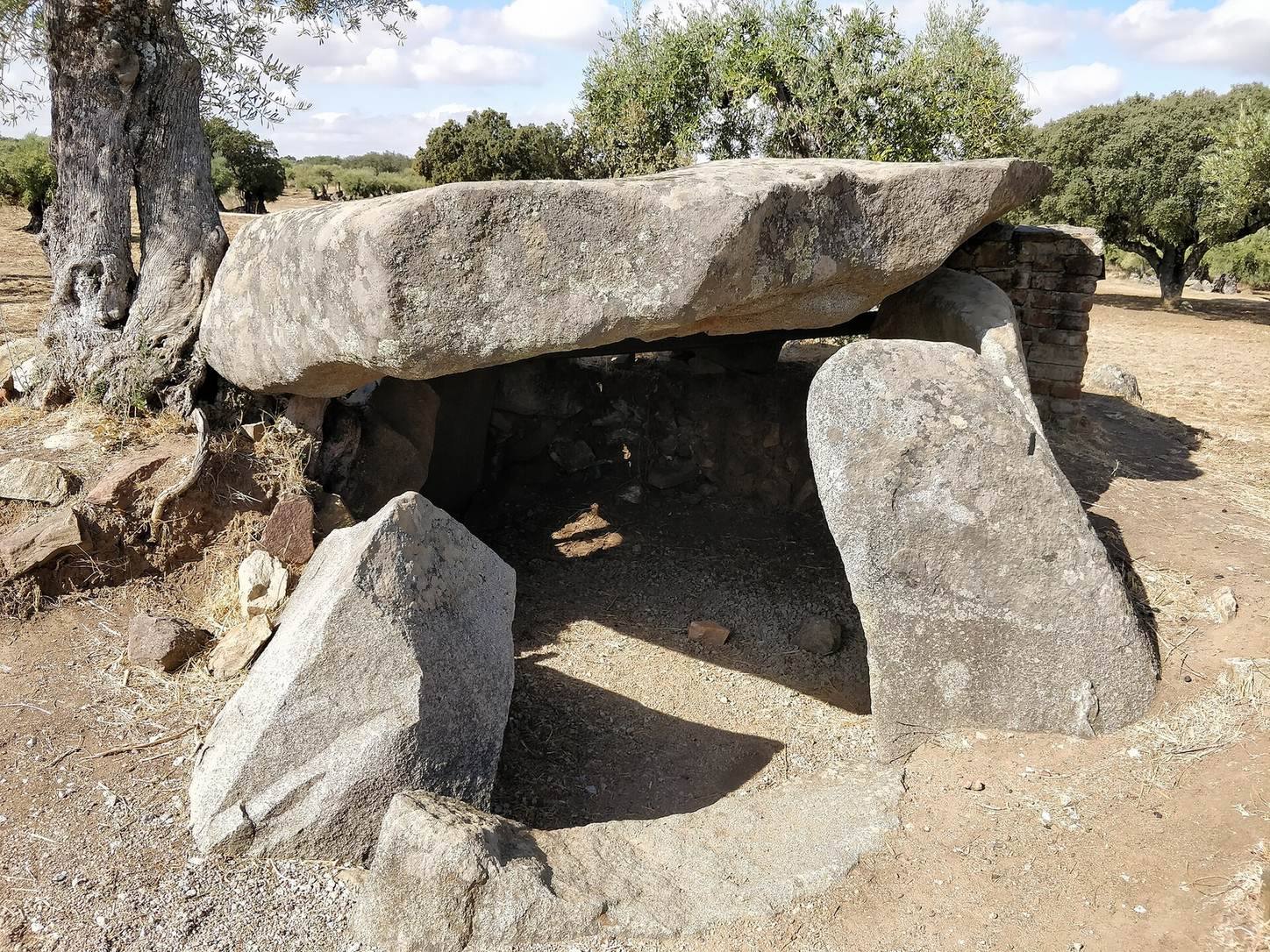
The Olival da Pêga Megalithic Complex is a pair of prehistoric tombs near Telheiro, in the municipality of Reguengos de Monsaraz, Évora District, Portugal. Anta 1 and Anta 2 are antas, the Portuguese term for single-chamber megalithic tombs. They were used from the Late Neolithic through the Chalcolithic, a prehistoric period when copper was used alongside stone tools. Anta 1 dates to about 2500 BCE, while Anta 2 dates to about 3250 BCE.
More than 100 people were buried in each tomb. The pair is understood as one megalithic complex.
Archaeological study and protection
German archaeologists Georg and Vera Leisner first identified the tombs and excavated Anta 1. Their investigations eventually led to the identification of four complexes. The Leisners assigned Anta 1 to the third millennium BCE. They first reported Anta 2 in 1951 but did not excavate it because its capstone was poorly supported and at risk of breaking.
Archaeologists Victor Gonçalves and Ana Catarina Sousa of the University of Lisbon’s Centre of Archaeology excavated Anta 2 between 1990 and 1997. Since 2013, the complex has been classified as a Portuguese Property of Public Interest.
Remains
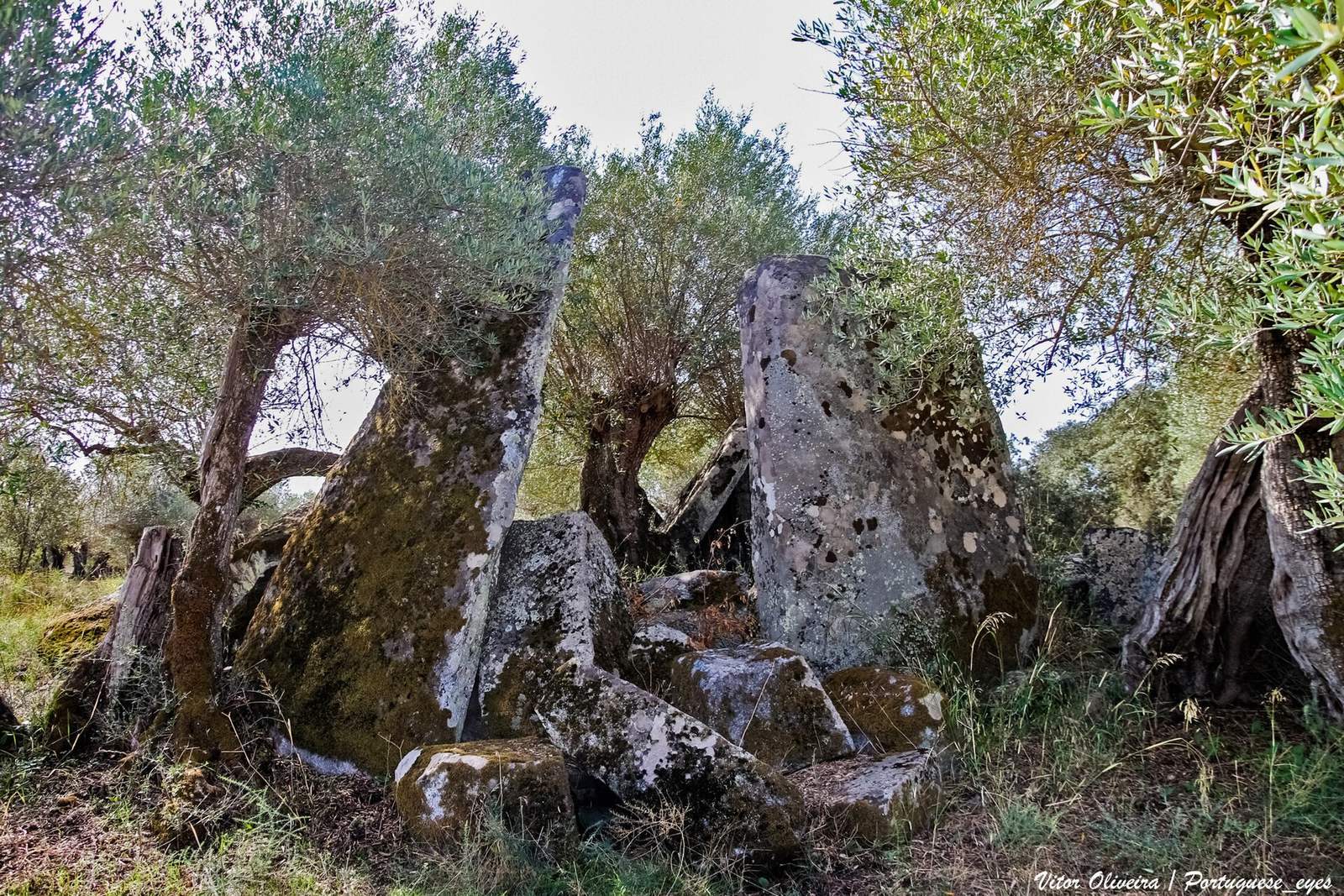
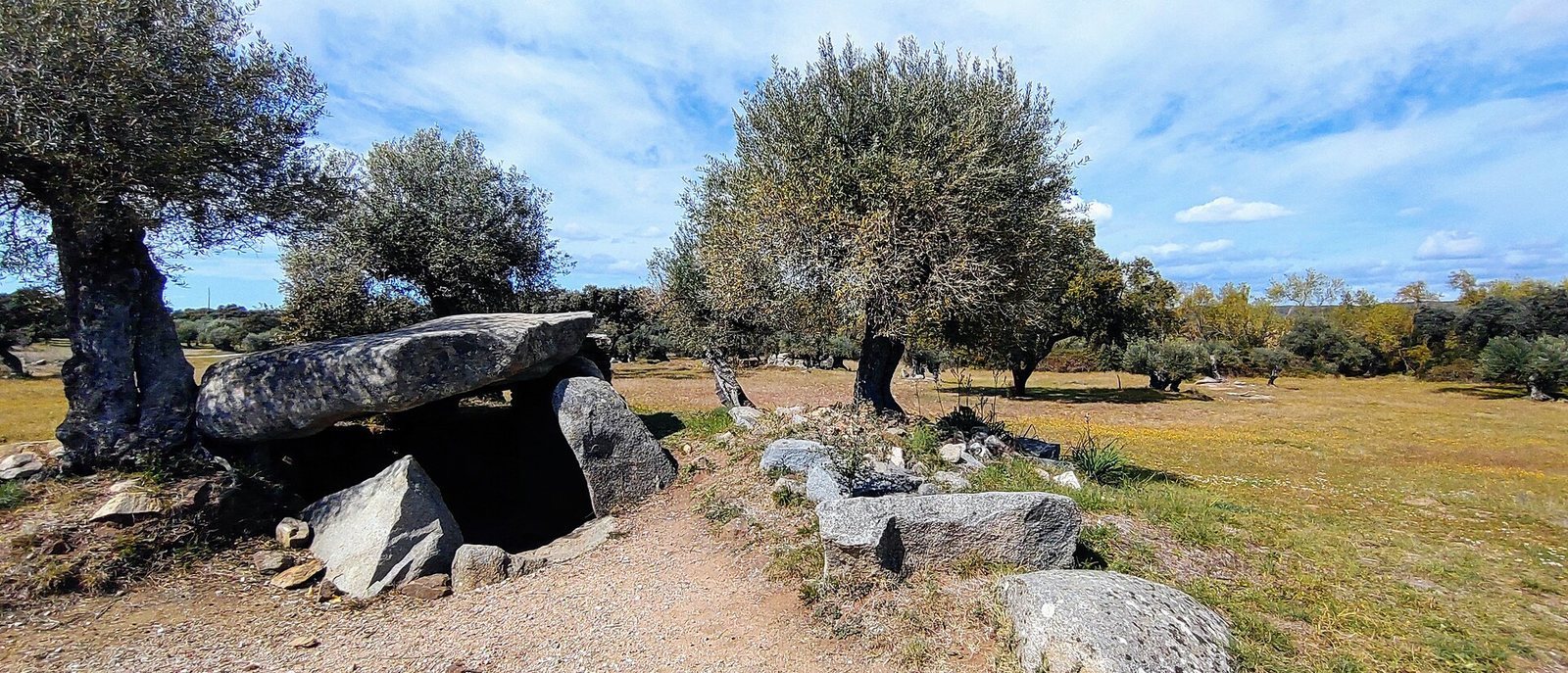
The complex comprises two single-chamber tombs about 300 metres apart, with upright stones visible at both. Their surviving features include burial chambers, corridors, paved courtyards and associated funerary structures.
Anta 1
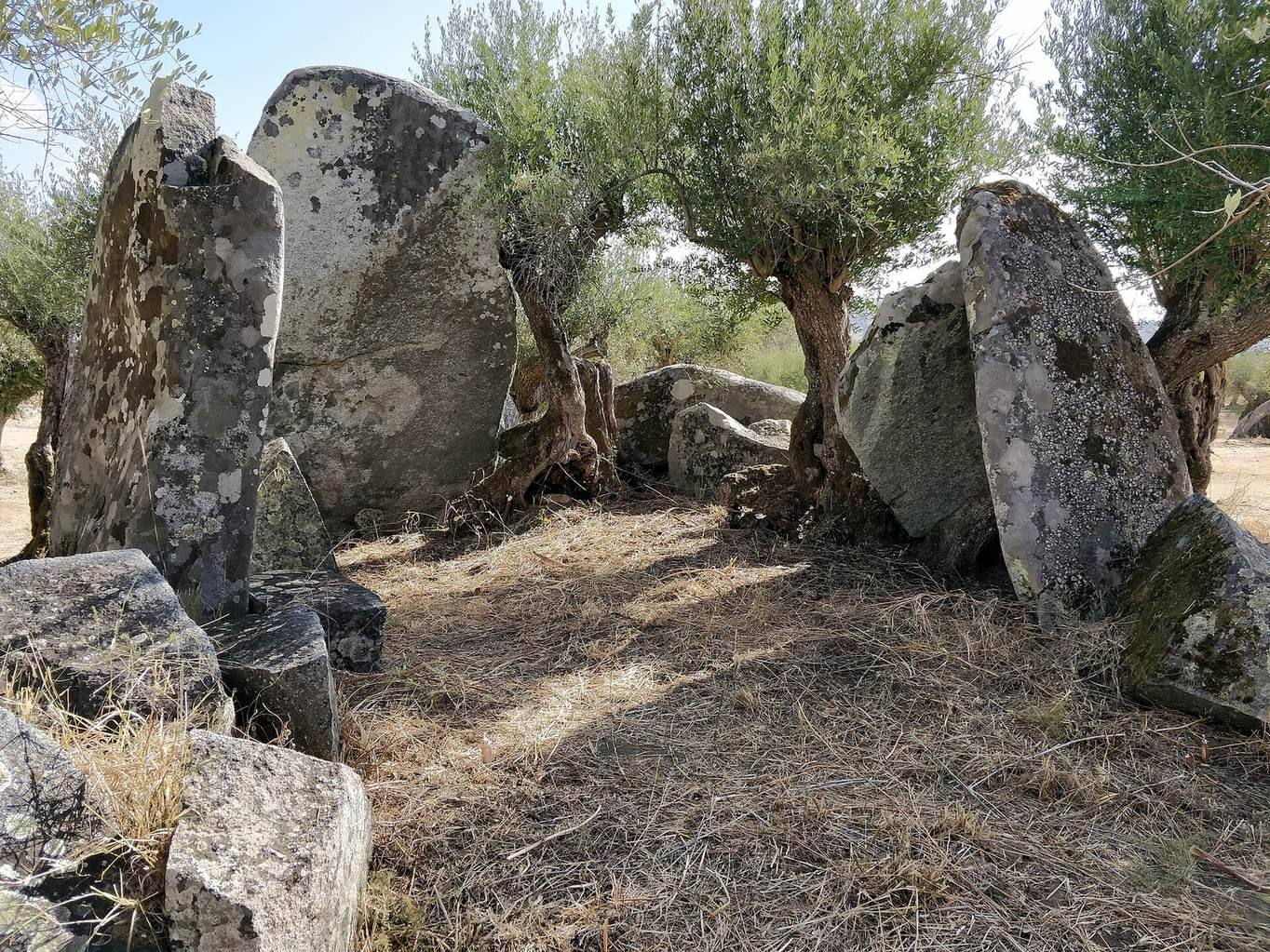
Anta 1 is among Portugal’s tallest single-chamber megalithic tombs. Its large, polygonal burial chamber has a broad access, while the entrance corridor is relatively narrow. A large area at the head of the chamber is flanked by two side stones. Finds include necklace beads made of quartz and other materials, bone figurines shaped as rodents and rabbits, and ceramic fragments representing as many as 200 vessels, four of them decorated. Excavators also found 134 schist plaques, a small schist idol, two upright stone slabs in the corridor and a paved courtyard.
Anta 2
Burial chamber and connecting corridor
Today, the only visible part of Anta 2 is its burial chamber, measuring 3.4 by 4 metres; the capstone remains in place. Excavation exposed a 16-metre corridor connecting the tomb with four other funerary structures: three beehive-shaped tombs and a grave. The corridor appears to have been built in two phases. During the second phase, two elaborately decorated schist columns were installed, in contrast to the granite used elsewhere in the complex. Two upright stone slabs and a paved courtyard were also found in the corridor area.
Finds from an associated tomb
One of the beehive-shaped tombs yielded finds dated to about 2900–2500 BCE. They include bones, blades made from flint, chert and rhyolite, arrowheads, dart tips, axes, polished-stone objects, hairpins, necklace beads, pottery, a copper dagger and a bone fox figurine. Most of these objects are held by the University of Lisbon’s Centre of Archaeology, known as UNIARQ.