Confluenta: A Roman Town in Segovia, Spain
Site at a Glance
- Popularity
- Medium
- Country
- Spain
- Primary era
- Classical
- Eras represented
- Classical
- Civilizations
- Roman
- Site type
- Settlement
- Remains
- City
On this page12 sections
History
Confluenta, probably identified with the Los Mercados archaeological site near Duratón in Segovia, Spain, was a Roman town founded in the early first century BCE. It became the capital of a community and its territory, and later received municipal status under Vespasian. The name, also given as Confluentia, may refer to a meeting of rivers or roads.
Foundation and early growth
In the second century CE, the geographer Ptolemy listed Confluentia as a city among the Arevaci, a Celtiberian people of inland Hispania. A few Iron Age ceramic fragments suggest that a small village may have occupied Los Mercados in the third or second century BCE, but this possibility remains uncertain. The Roman town itself was established on a site without an earlier pre-Roman city.
Confluenta was probably founded as a new settlement following a Roman political decision during the Fourth Celtiberian War, a conflict between Rome and Celtiberian communities that lasted from 104 to 92 BCE. Around 98 BCE, the Roman commander Titus Didius conquered the neighboring Celtiberian settlement at Sepúlveda. Didius and a senatorial commission may then have decided to move its inhabitants from their elevated settlement to a safer, more deliberately planned location at Los Mercados. Confluenta also drew people from the large settlement at Los Quemados, near Carabias, and from smaller communities in the upper and middle Duratón valley. Those settlements were abandoned during the first century BCE.
Municipal status, territory, and routes
From its foundation, Confluenta served as the center of a Roman civic community and its surrounding territory, probably at first a tributary community. It expanded considerably between the first century BCE and the first century CE. Around 75 CE, under Vespasian, the first emperor of the Flavian dynasty, it received municipal status with Latin legal rights, which did not confer full Roman citizenship. Evidence for this change includes a bronze fragment associated with a municipal law and Vespasian’s grant, an inscribed stone naming a sexvir (a member of a six-person college of officials), and an inscription from the sanctuary of Bonus Eventus near Sepúlveda that mentions a local council. Confluenta was one of three Roman municipalities in the area of today’s Segovia province, along with Segovia and Cauca. Its territory also included parts of what is now northern Madrid province.
The city’s central territory encompassed the upper Duratón valley, formerly the territorial core of the Celtiberian settlement at Sepúlveda. Its northern boundary probably followed the Serrezuela hills, while boundaries to the east and west are associated with the Riaza, Valdanzo, Cega, and Pirón valleys and the lands of neighboring cities. The southern limit is less certain. It may have followed the summits of the Guadarrama, Somosierra, and Ayllón ranges, or Confluenta’s territory may have extended south of the mountains. A boundary stone at Colmenar Viejo may have marked a meeting point between Confluenta and neighboring territories.
Several routes connected Confluenta with cities and regions to its north, south, east, and west. One linked Termes, Confluenta, and Segovia along the northern flank of the Central System, joining the upper Duero area with lands toward Extremadura. Another connected Complutum with Rauda and Clunia by way of Talamanca del Jarama, Torrelaguna, the Lozoya valley, and the Somosierra pass. Branches led toward Segontia Lanca, Segontia del Henares, Cauca, and Pintia. The route to the salt-producing area around Sigüenza was economically important for supplying the middle Duero. In the medieval period, two royal livestock roads crossed in the Duratón valley, possibly following long-distance routes already used in Roman or earlier times.
Decline and archaeological investigation
As the wider Roman system broke down, Confluenta may have gradually contracted into a village from the fifth century CE. Occupation continued at least into the seventh century. From the ninth century, Sepúlveda became the principal center of the upper Duratón.
Antiquarian work at Los Mercados in 1795 and 1796, directed by royal architect Juan de Villanueva, sought objects for the court of Charles III. Excavations followed in 1948 and 1949 and resumed in 2001, confirming an urban Roman settlement. Confluenta has been designated an Asset of Cultural Interest since 1994. Looting and continued cultivation of the field are causing ongoing damage to the site.
Remains
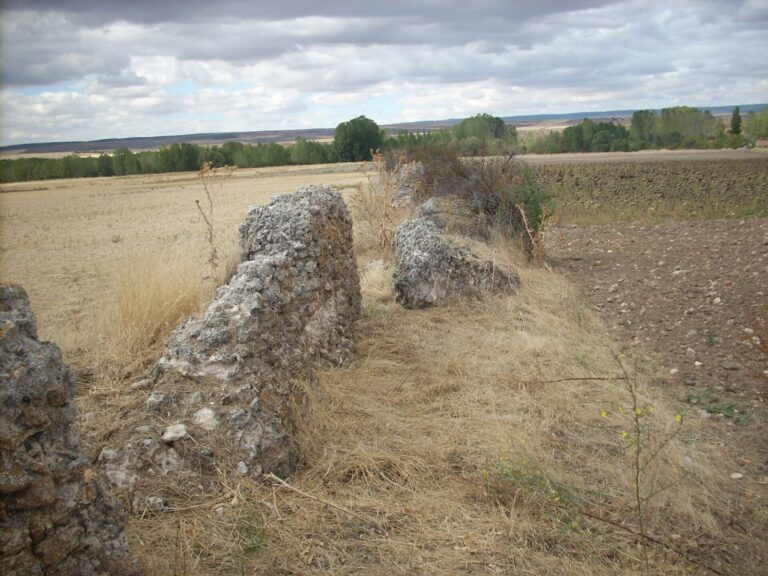
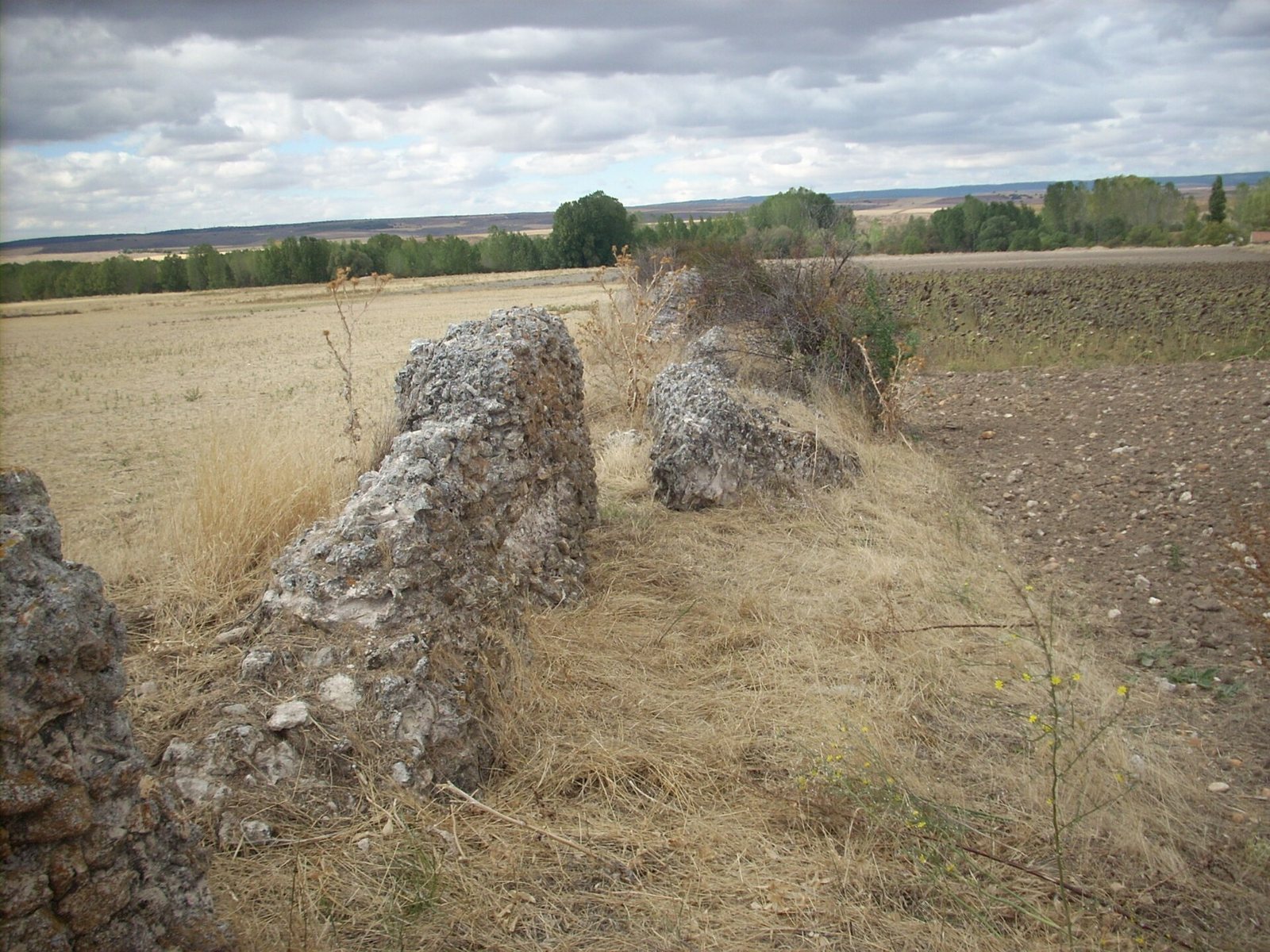
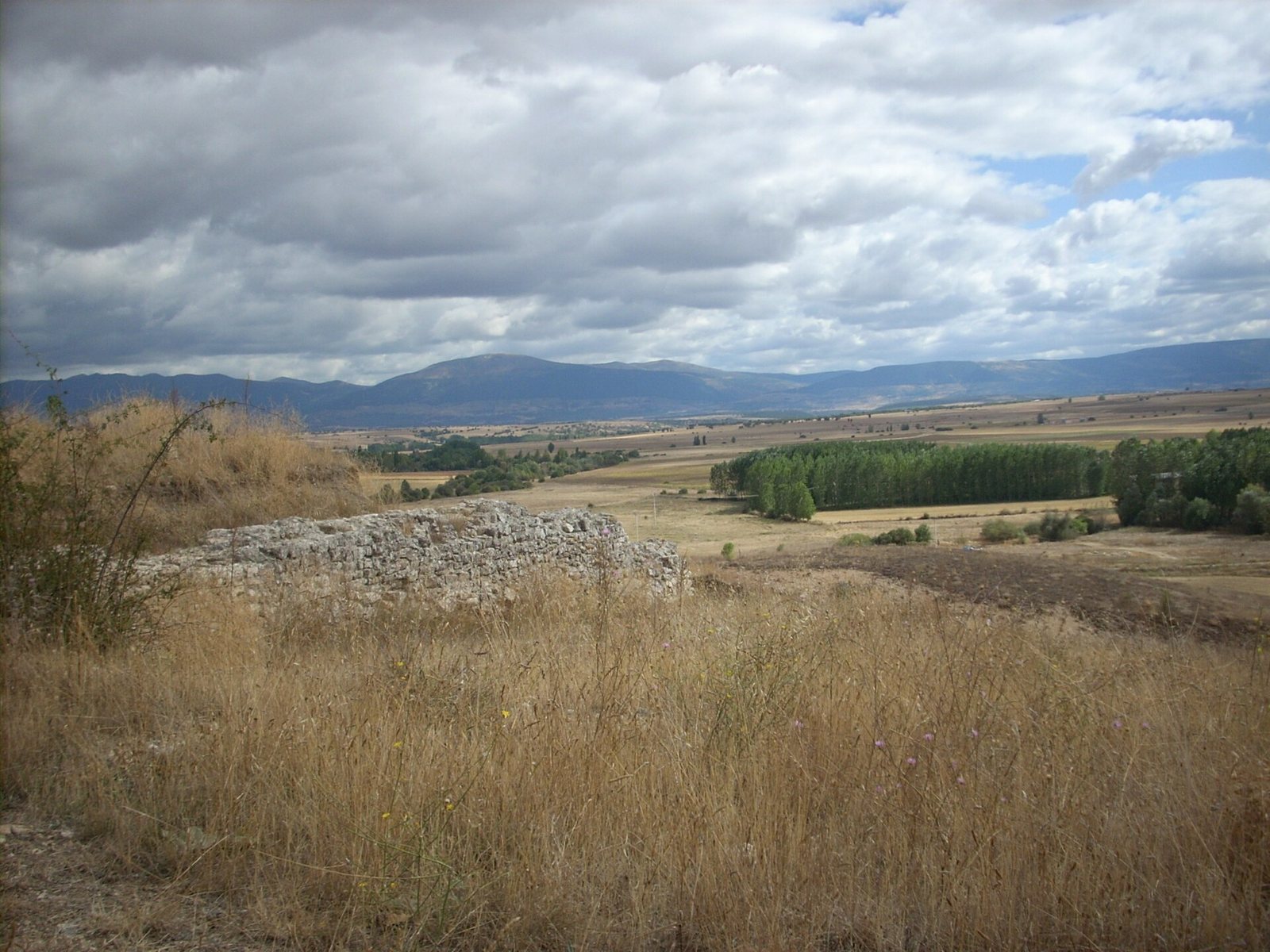
The remains cover about 50 to 60 hectares on a plateau near the meeting of the Duratón and Serrano rivers. Excavation and aerial photography reveal a regularly planned town laid out along organized axes. The relatively level ground offered few natural obstacles to this orderly plan.
Public spaces and access
Southern access ramp
A monumental ramp in the southern part of the town was supported by a terrace wall. The excavated section is 25 metres long and 4 metres wide.
Central square space
In the central area, an excavated square space measures 7 metres on each side. A sewer or urban water channel runs beneath it. The space served as an entrance and distributor for a large building, which may have been a bath complex.
Housing and eastern enclosure
Roman houses
Several Roman houses are known in the southwestern part of the site.
Las Paredes enclosure
At the eastern edge of the town, the Las Paredes enclosure has been identified as a livestock market and open public ground. It is square, with sides measuring 150 metres, and was surrounded by a wall 2.1 metres high. It was built in the first or second century CE. Mosaics recovered in 1795 and 1796 were taken to decorate the Casa del Ermitaño at the Palace of Aranjuez. Most have since been lost, while a remnant is held at the National Archaeological Museum in Madrid.
Finds
Excavated finds include a marble torso of Apollo, altars dedicated to the mother deities known as the Matres, and numerous inscriptions. Most of the material recovered at Los Mercados is held at the Segovia Museum.