Complex of the Castle of Guiglia: A Historic Castle and Carmelite Convent Complex in Italy

Site at a Glance
- Rating
- 4.2
- Popularity
- Low
- Country
- Italy
- Primary era
- Early Modern
- External website
- Open
- Eras represented
- Medieval, Early Modern
- Civilizations
- Holy Roman Empire
- Site type
- Domestic
- Remains
- Castle
On this page13 sections
History
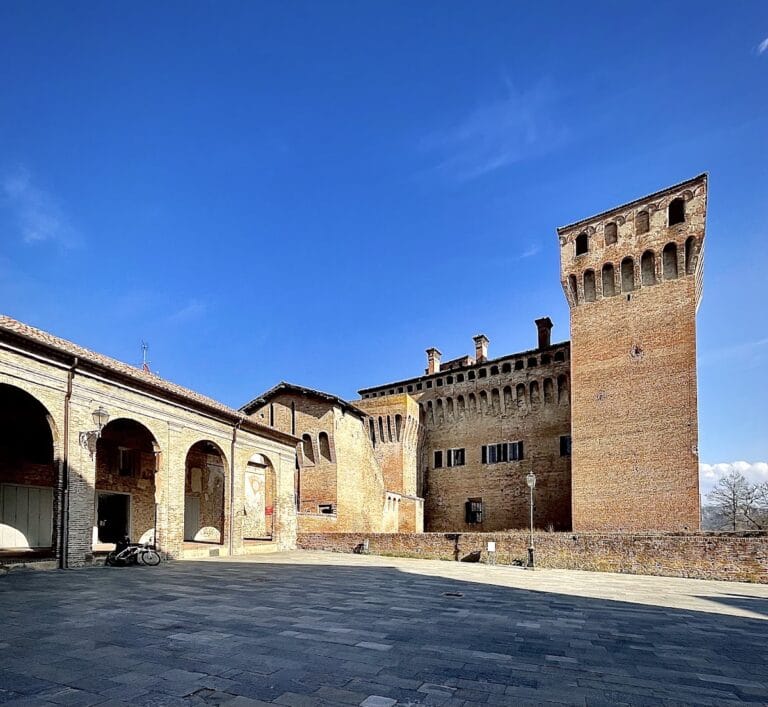
The Complex of the Castle of Guiglia is a historic castle and former Carmelite religious complex in Guiglia, Italy. Associated with the fourteenth century, it developed from a fortified site into a noble residence known as Castello Montecuccoli and Conventino. The present castle replaced an earlier fortress on Monte Vallaro, which had defended the Reno valley before being destroyed by fire.
Origins and medieval conflicts
The beginnings of the present castle are uncertain. They have been placed in the late ninth century, possibly when fortified settlements were being strengthened against Magyar invasions, or in the tenth century. Guiglia itself appears in a charter issued by Nonantola Abbey in 890. In the following centuries, the surrounding territory became part of the lands of Matilda of Canossa, an eleventh-century noblewoman whose possessions extended across much of northern and central Italy.
The castle became involved in the long conflicts between Modena and Bologna. In 1326, papal troops commanded by Versuzio Lando occupied it, after which it passed under Este rule. The Este, the dynasty that governed Modena and neighboring territories for much of the medieval and early-modern period, granted the fief to Taddeolo da Guiglia. After his death, Marquis Aldobrandino assigned it to Giacomo dell’Abbazia in 1353.
Giacomo refused to submit to Modena and allied himself with the Visconti, the powerful Milanese dynasty that opposed the Este. On 16 June 1361, the castle was destroyed by fire, possibly as retaliation for his defiance. Rebuilding began in 1362 and continued for about forty years. An oratory was founded near the castle in the same year, establishing the religious presence that later gave the wider complex its name.
The Carmelite foundation and Este administration
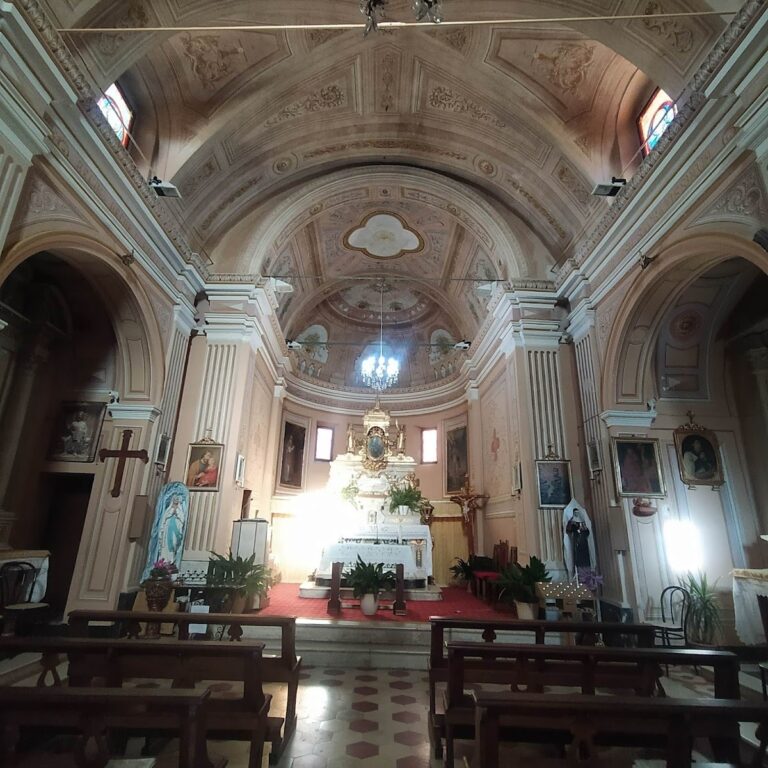
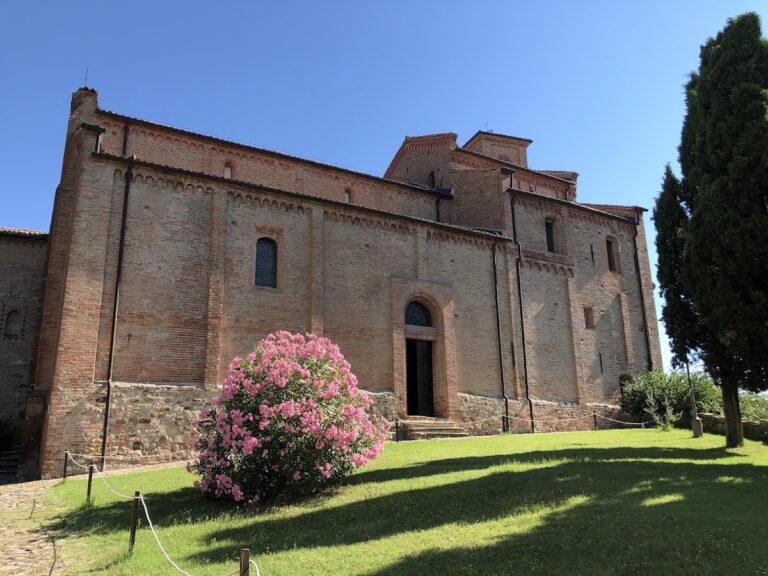
The oratory was later entrusted to Carmelites of the Ancient Observance, a branch of the Carmelite order that maintained the older form of its religious practices. As the foundation grew in importance, it developed into the Church of Our Lady of Mount Carmel and a convent. The resulting combination of fortress, church, and religious house became known as the Conventino.
Guiglia returned to Este rule in 1405. Niccolo III d’Este then granted it to the Pio family of Carpi, and the castle was incorporated into the podesteria of Rocca Malatina, a territorial jurisdiction administered by a podesta. Guiglia shared the unsettled history of the wider Frignano area while Modena and Bologna struggled for control.
The Pio family retained lordship of Guiglia until 1510. Alberto III Pio allied himself with Pope Julius II, whose active territorial policy brought him into conflict with the Este. Emperor Charles V consequently declared Alberto a high traitor and claimed his lands and castles. Forces supporting the pope and Guiglia’s lord, led by Domenico Amorotto, fought Charles V’s army under Cato da Castagneto.
During the following decades, the Tanari and Montecuccoli families disputed control of the castle. In 1585, Duke Alfonso II d’Este granted the fief to Ercole Aldrovandi in return for a substantial payment that was never honored. In 1596, Guiglia became a marquisate. Ferrante Estense Tassoni held it first, followed by Ugo Pepoli, who retained it until 1621.
Montecuccoli-Laderchi transformation
During the years of plague, Francesco I d’Este granted Guiglia to Count Francesco Montecuccoli, the husband of Sigismonda Laderchi. Francesco initiated a radical conversion of the fortress into a noble residence. The work, begun around 1630, expanded the living quarters, closed the former eastern gate, removed the drawbridge, and created a more prestigious entrance.
The castle suffered repeated damage. An earthquake in 1571 caused various injuries to the structure, while the earthquake of 1624 brought down parts of the walls and turrets. Papal troops damaged it again in 1643. These events formed part of the building’s continuing transition from a military stronghold to a residential palace.
In 1768, Duke Francesco III d’Este suppressed the Carmelite religious house, which had declined, and required the remaining friars to leave permanently. The nearby Carmelite property was purchased by Marquis Giuseppe Montecuccoli-Laderchi. The castle remained under Este rule until 1796, when the French Revolution abolished feudal privileges and Guiglia was incorporated into the Department of the Reno.
From private estate to civic use
At the end of the nineteenth century, the heirs placed the castle on the auction market. Giovanni Beusch, a Swiss engineer who had married a woman from Guiglia, purchased it and converted it into a thermal hotel and hydro-electrotherapeutic establishment. The operation used an iron-bearing mineral spring on the property. The hotel closed shortly before the Second World War.
In 1919, the complex was sold to the Municipality of Reggio Emilia, which established a children’s colony there. In 1939, the podesta of Guiglia purchased it. During the Second World War, the buildings were adapted as a military hospital because of their proximity to the Gothic Line, the German defensive line across northern Italy. They also sheltered works of art from the Estense Gallery, the art collection associated with the Este court in Modena.
Allied bombing damaged the castle and several village buildings on 15 April 1945, only a few days before liberation. After the war, the Municipality of Guiglia converted the Conventino complex into an exhibition and recreational venue. A casino opened in two large ground-floor rooms in May 1946, but it closed when new national gambling regulations came into force. The castle complex is recognized as Italian national heritage.
Remains
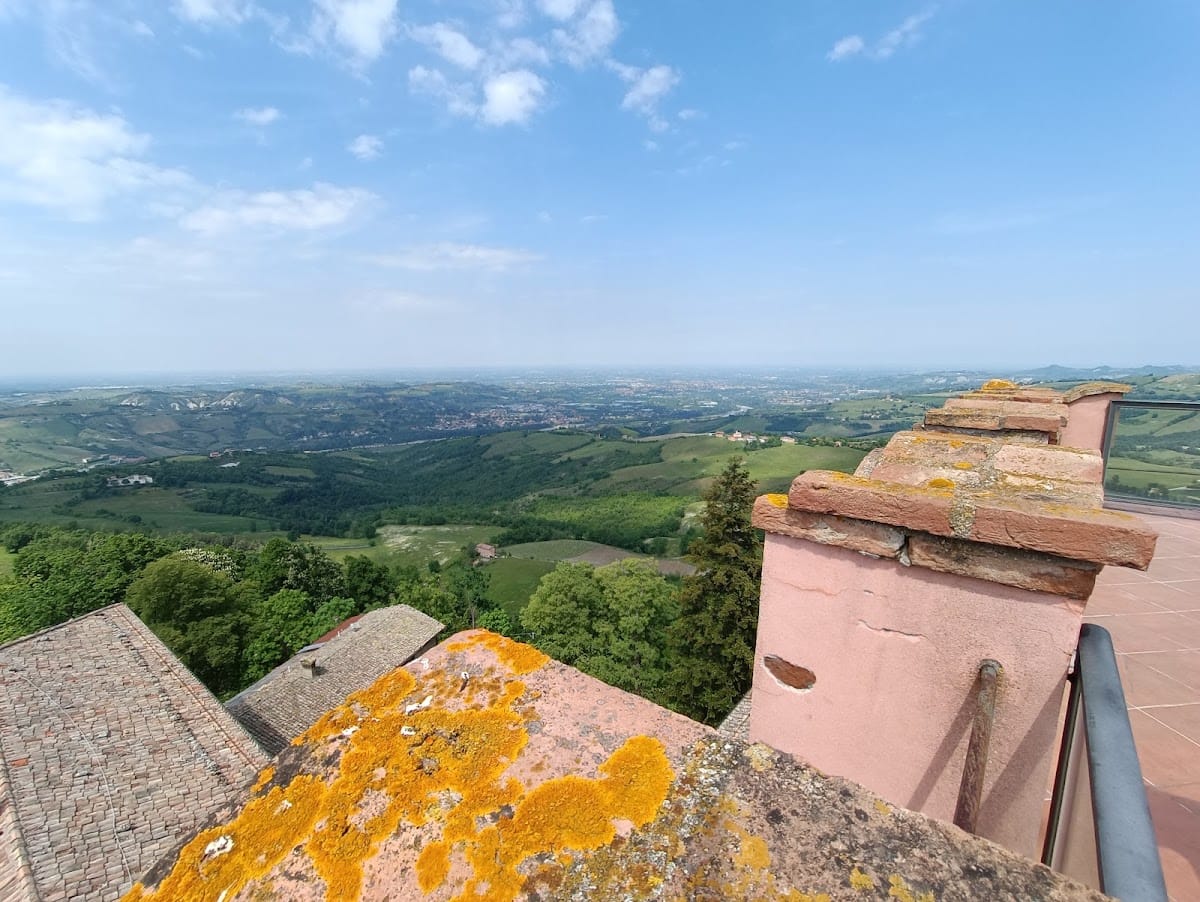
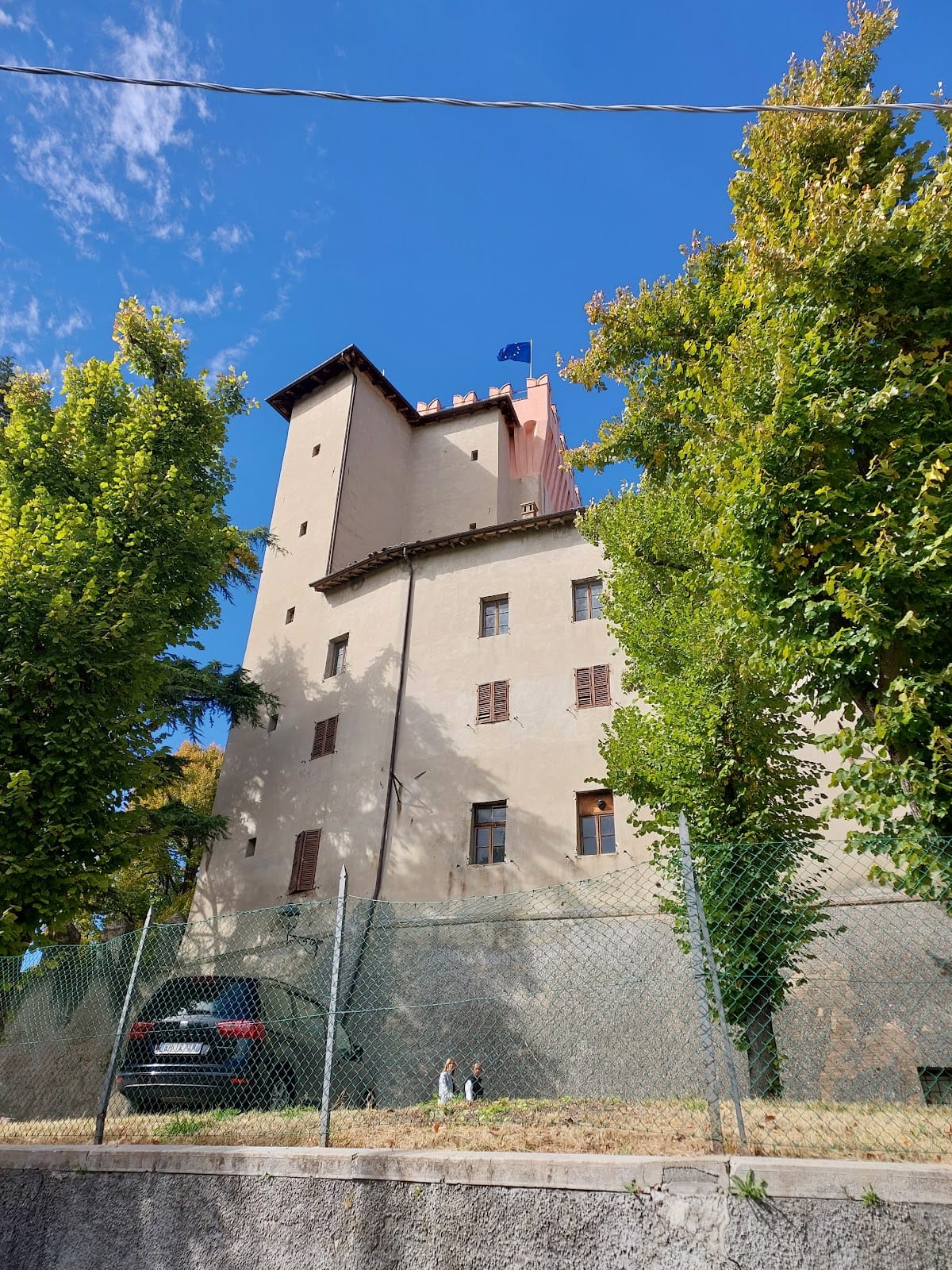
The complex occupies the summit of a hill above the village of Guiglia, overlooking the valley of the Panaro River. Its surviving fabric combines plastered brick masonry, remnants of the medieval defensive enclosure, the transformed residential palace, and buildings connected with the Carmelite foundation. Repeated rebuilding and later restoration have left the site with both fortified and aristocratic elements.
Castle and Conventino
Residential castle
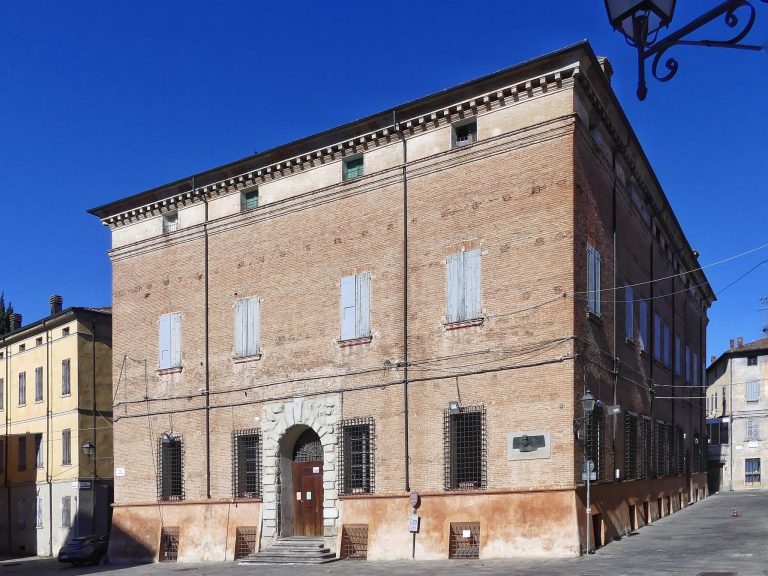
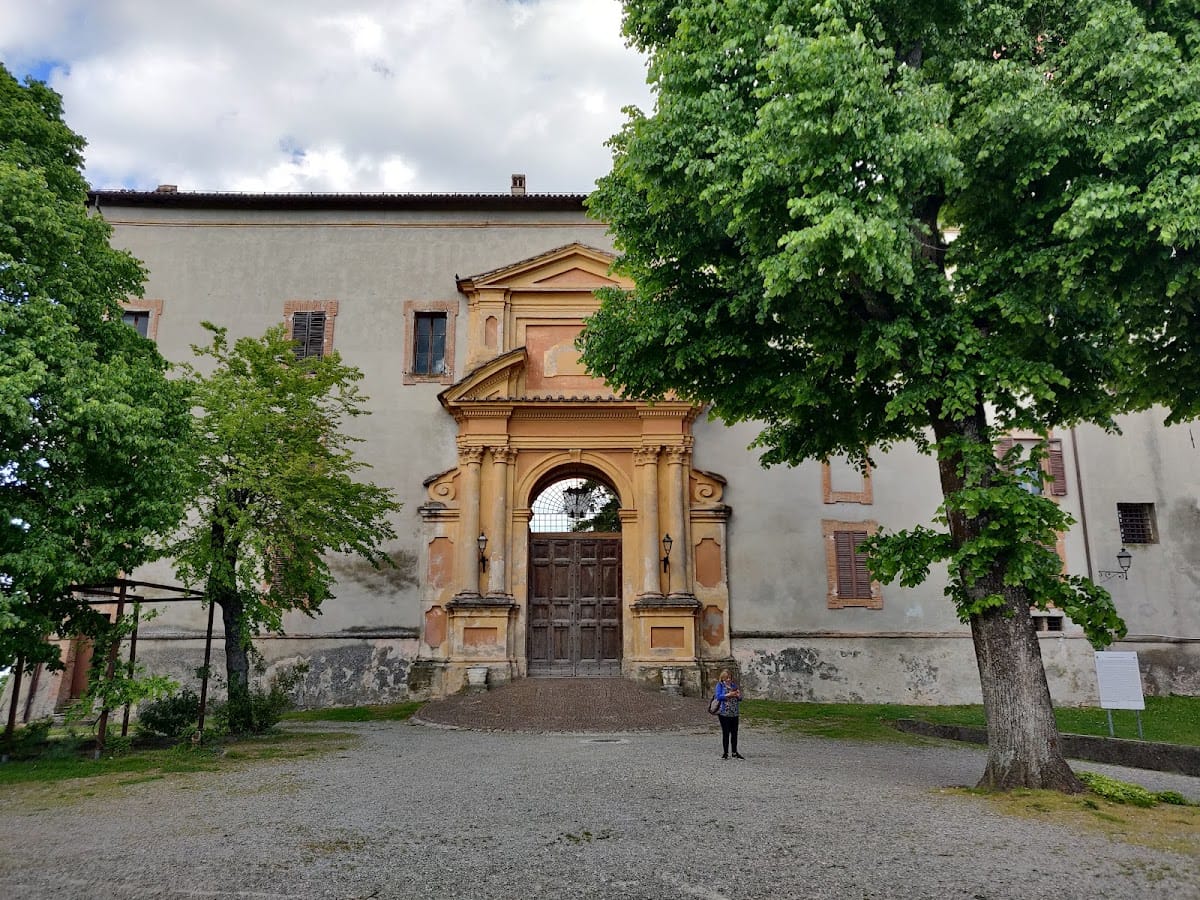
The castle’s military character survives in the crenellated fifteenth-century tower incorporated into the residential structure during the works begun around 1630. The former eastern entrance was closed, the drawbridge was removed, and a new entrance was created as part of the palace conversion. This entrance consists of a tall portal with a tympanum, the triangular architectural feature above a doorway, supported by columns. It opens onto a loggia, or covered gallery, with a three-arched portico facing the inner courtyard. A decorated terracotta portal gives access to the courtyard.
The interior was enriched with furnishings, stucco, polished scagliola decoration, and frescoes by Francesco Vellani, who lived from 1688 to 1768. Scagliola is a polished, pigmented plaster used to imitate marble. Within the castle enclosure, recognizable remains of the former Carmelite convent and Church of Mount Carmel preserve the religious component of the complex.
Former Carmelite church theatre
In 1745, Giuseppe Montecuccoli-Laderchi created a theatre in the square facing the castle, using spaces belonging to the former Carmelite church. The theatre hosted various performances and formed part of the complex’s transformation into an aristocratic and civic setting after its principal military role had declined.
Structures outside the castle walls
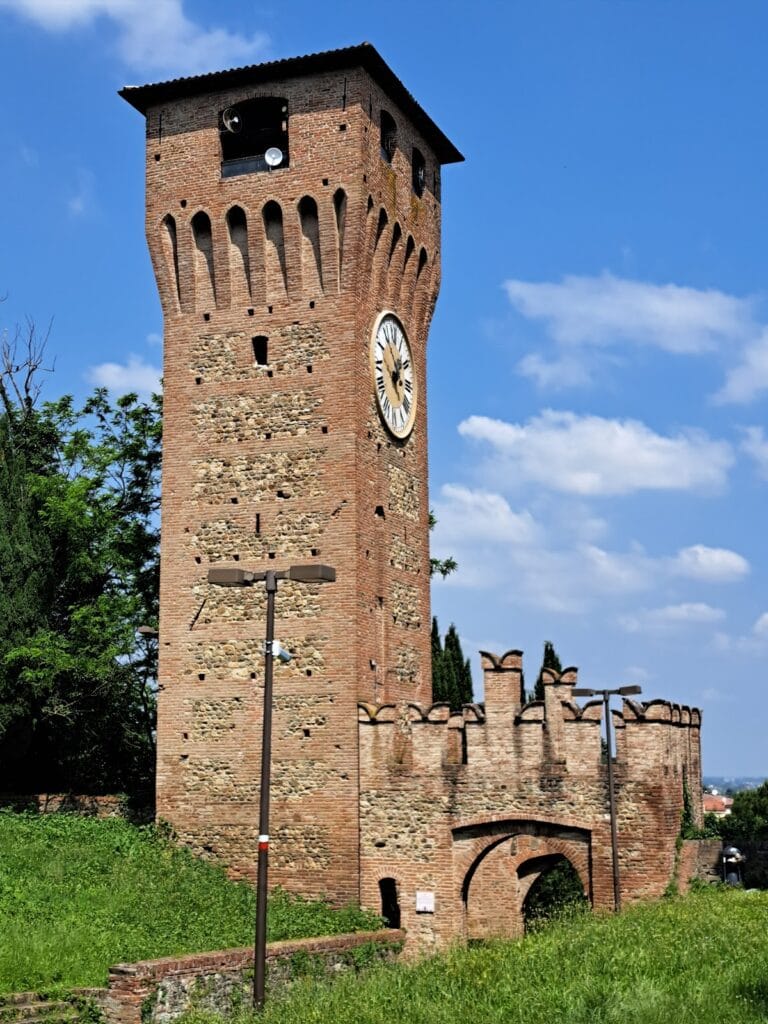
Clock Tower
The Torre dell’Orologio, or Clock Tower, stands outside the walls opposite one of the entrances. It is dated 1535 and forms part of the group of structures associated with the approach to the castle.
Public Tower
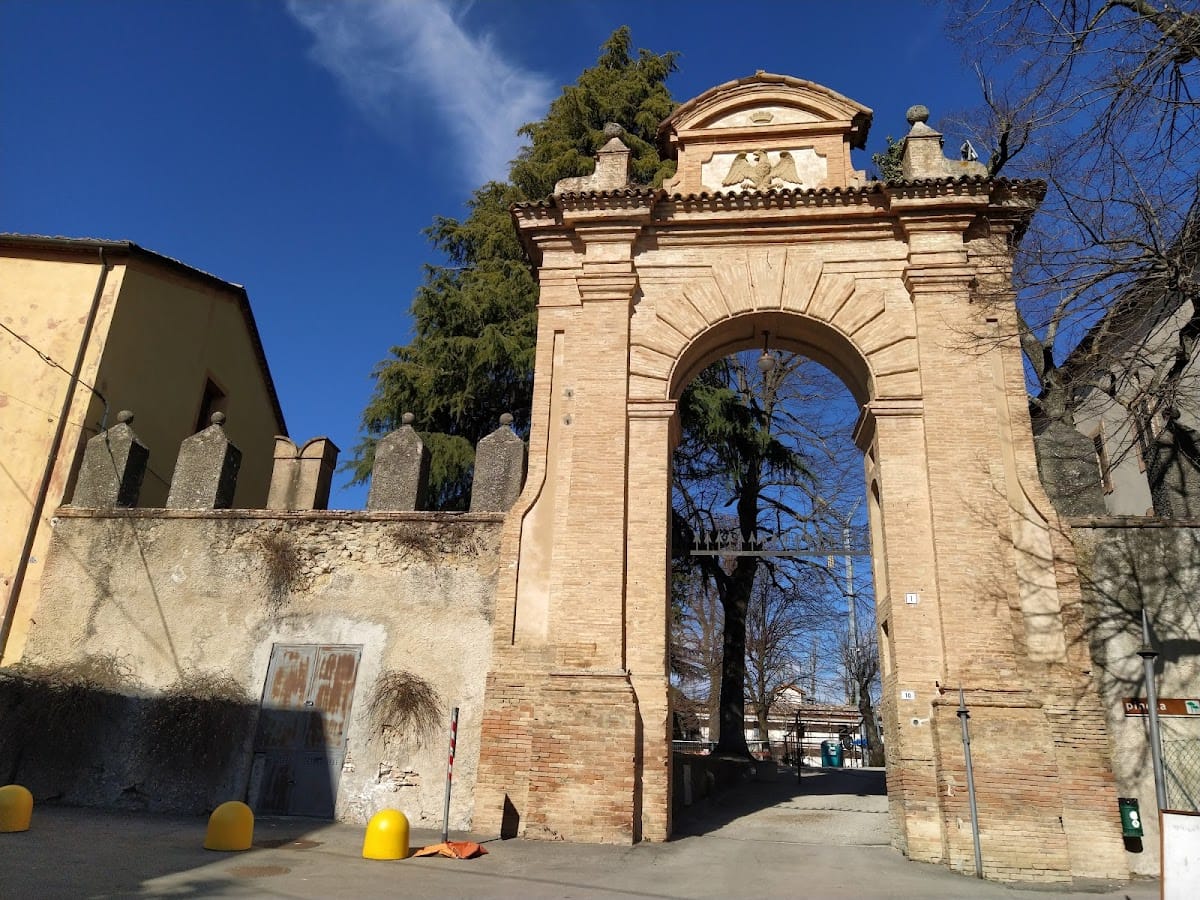
The Torre del Pubblico formerly served as an entrance to the castle. It has a square plan and a basket-handle-arched portal made of terracotta. Its belfry contains a seventeenth-century bell. The neighboring building probably functioned as a casella, a place used for municipal assemblies.
Oratorio della Madonnina
The Oratorio della Madonnina was built in the pine grove near the castle between 1690 and 1715. An oratory is a small building intended for prayer and worship. The structure is a miniature version of the Sanctuary of San Luca in Bologna, a major Marian shrine, and its design expresses the Montecuccoli family’s devotion to the Madonna of San Luca.
The oratory contains a single room with three niches. The central niche holds the altar, while a storeroom and sacristy occupy the sides of the entrance. A circular lantern crowns the dome. Three tombs of Montecuccoli-Laderchi marquises lie inside, together with numerous votive tablets made by visitors. The building later served as a burial place for the family, adding a memorial function to its original religious purpose.