Collegiate Church in Sieradz: A Gothic Parish and Collegiate Church in Poland


Site at a Glance
- Rating
- 4.7
- Popularity
- Low
- Country
- Poland
- Primary era
- Medieval
- External website
- Open
- Eras represented
- Medieval, Early Modern, Modern
- Civilizations
- Kingdom of Poland, Polish–Lithuanian Commonwealth
- Site type
- Religious
- Remains
- Church
On this page8 sections
History
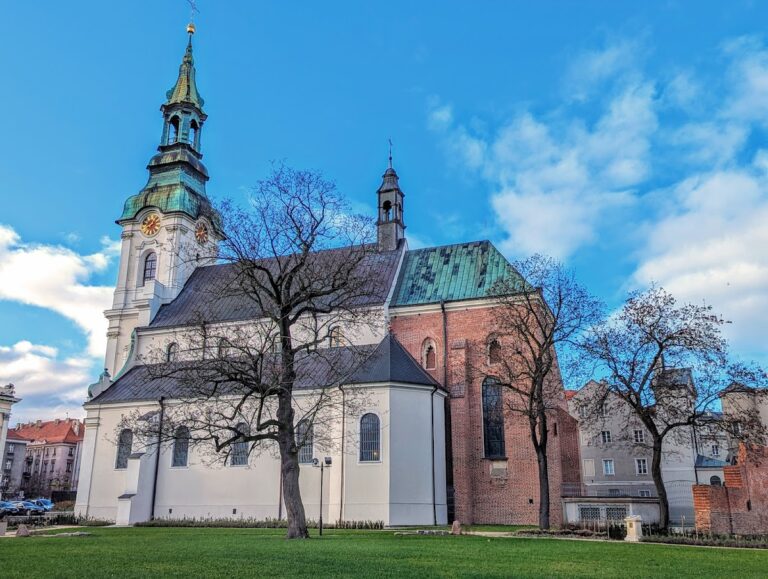
The Collegiate Church in Sieradz, Poland, is a Gothic brick parish and collegiate church dedicated to All Saints, completed in 1370. In the Middle Ages, it was the most important church in Sieradz. A collegiate chapter, a body of clergy associated with the church, continues to operate there.
Medieval foundation and later additions
Construction took place during the second half of the fourteenth century, producing a church in the Gothic tradition. A square-plan bell tower with five storeys was added in 1585. During the seventeenth century, the building was remodelled and its interior acquired a predominantly Baroque character.
Modern religious and historic status
The church entered the heritage register on 28 December 1967 under registration number 841. On 10 April 2011, a monument commemorating the victims of the Polish Tu-154 disaster at Smolensk was unveiled beside the church. Pope Francis raised the church to the status of a minor basilica on 19 March 2018, a title granted to Catholic churches because of their religious, historical, or pastoral importance. On 20 March 2023, it was established as a sanctuary of Saint Joseph, a central Christian figure traditionally identified as the husband of Mary and the foster father of Jesus.
Remains
Gothic structure and Baroque interior
The church is a Gothic brick pseudo-basilica, a basilica-like arrangement in which the central nave rises above the side aisles without the fully developed upper window level of a true basilica. It has one church tower. The seventeenth-century remodelling left the interior decorated mainly in Baroque and Rococo styles, while several Gothic sculptures survived. The mid-eighteenth-century main altar incorporates the coat of arms of the Sieradz region. Paintings by Wojciech Gerson, a nineteenth-century Polish painter, illustrator, and art teacher, are also preserved inside, together with valuable seventeenth- and eighteenth-century liturgical equipment.
Built-in castle fragments
Fragments of doorframes and other building elements from the former Sieradz castle were incorporated into the church’s exterior walls in 1925. They form part of the visible fabric of the building and connect the church’s later construction history with the earlier castle site.
Organ
The present organ was built by Adolf Homan and is housed in a case with a late-Baroque prospect, or decorated front. Dating from the nineteenth century, it is a well-preserved example of Polish late-Romantic organ building. The instrument has 25 stops, two manuals, and a pedal. It uses cone windchests and two float bellows, while an electric blower is installed in the church tower. New stops were added in the 1980s. In 2015, a comprehensive renovation of the case and a general overhaul were decided on; the work restored five original stops while retaining the later additions.
Memorial beside the church
The monument beside the collegiate church commemorates the victims of the Polish Tu-154 disaster at Smolensk.