Kolegiata św. Pawła Apostoła w Kaliszu: A Romanesque Collegiate Church
Site at a Glance
- Popularity
- Very Low
- Country
- Poland
- Primary era
- Medieval
- Eras represented
- Medieval
- Civilizations
- Kingdom of Poland
- Site type
- Religious
- Remains
- Church
On this page11 sections
History
The Collegiate Church of Saint Paul the Apostle in Kalisz, Poland, was a Romanesque church founded by Mieszko III the Old and built after 1145 in Kalisz-Zawodzie. Completed in the twelfth century, it served as a collegiate church, meaning that it was administered by a college of clergy rather than monks, and became an important religious and dynastic centre.
Earlier Churches and the Foundation of the Collegiate Church
The collegiate church replaced an earlier single-nave wooden church and was partly constructed over the foundations of a pre-Romanesque stone building. That earlier structure used slab construction and was built before the first half of the eleventh century. It may have served as the cathedral of an earlier Diocese of Kalisz, an ecclesiastical jurisdiction governed by a bishop. This diocese is mentioned in the Dialogue on the Life of Saint Otto, Bishop of Bamberg. Pope Gregory VII established it in 1075, but it was abolished in 1124 and incorporated into the Archdiocese of Gniezno.
Excavations between 1983 and 1992 revealed the foundations of an even earlier log-built church within the foundation footing of the Romanesque collegiate church. Dated to the turn of the tenth and eleventh centuries, this building was known as the Church of Saint Adalbert. It was one of the two oldest known wooden churches in the Polish lands, alongside the earliest phase of the Church of Saint Adalbert in Kraków.
Piast Burial Place and Episcopal Role
The church was used as a burial place for members of Poland’s Piast dynasty. Mieszko III the Old, a Piast ruler who served as High Duke of Poland, and his son Mieszko Młodszy were buried there in 1202. Mieszko Młodszy had died nine years earlier. Bolesław Mieszkowic, another medieval Piast prince, was probably buried at the church as well.
The building also hosted the consecration of the bishops of Wrocław and Płock. These burials and episcopal ceremonies connected the church with both the ruling dynasty and the ecclesiastical organisation of medieval Poland.
Destruction and Archaeological Rediscovery
A fire destroyed the church in 1233, probably during the invasion led by Henry the Bearded, a Piast duke of Silesia. The building was rebuilt, but it was destroyed again in 1331 during a Teutonic invasion. Afterward, the church fell into ruin, and its building material was recovered over the following centuries.
Włodzimierz Demetrykiewicz discovered the remains in 1903, and Krzysztof Dąbrowski uncovered them in 1958. Excavations directed by Dąbrowski from 1958 to 1963 exposed the ducal tombstones and recovered a wooden processional cross covered with gilding. The remains were entered in the register of historic monuments in 1964.
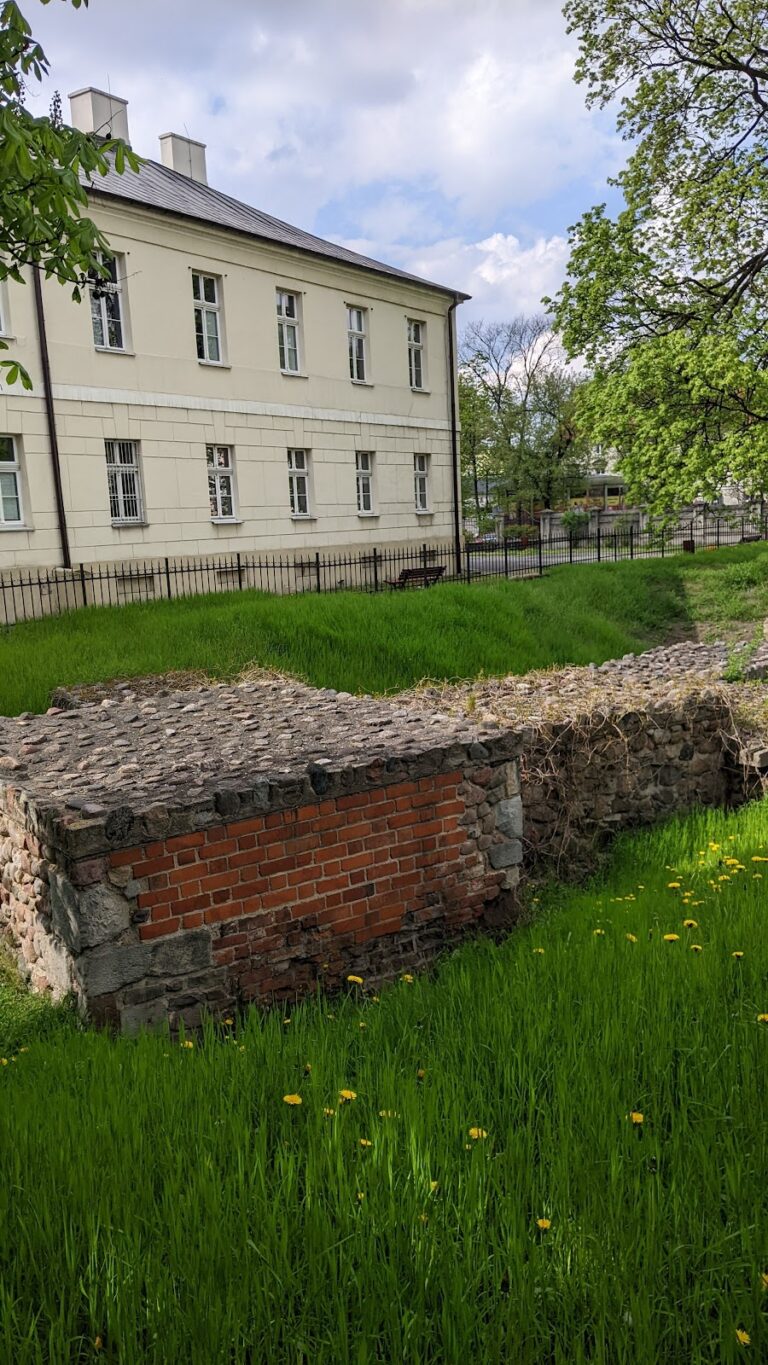
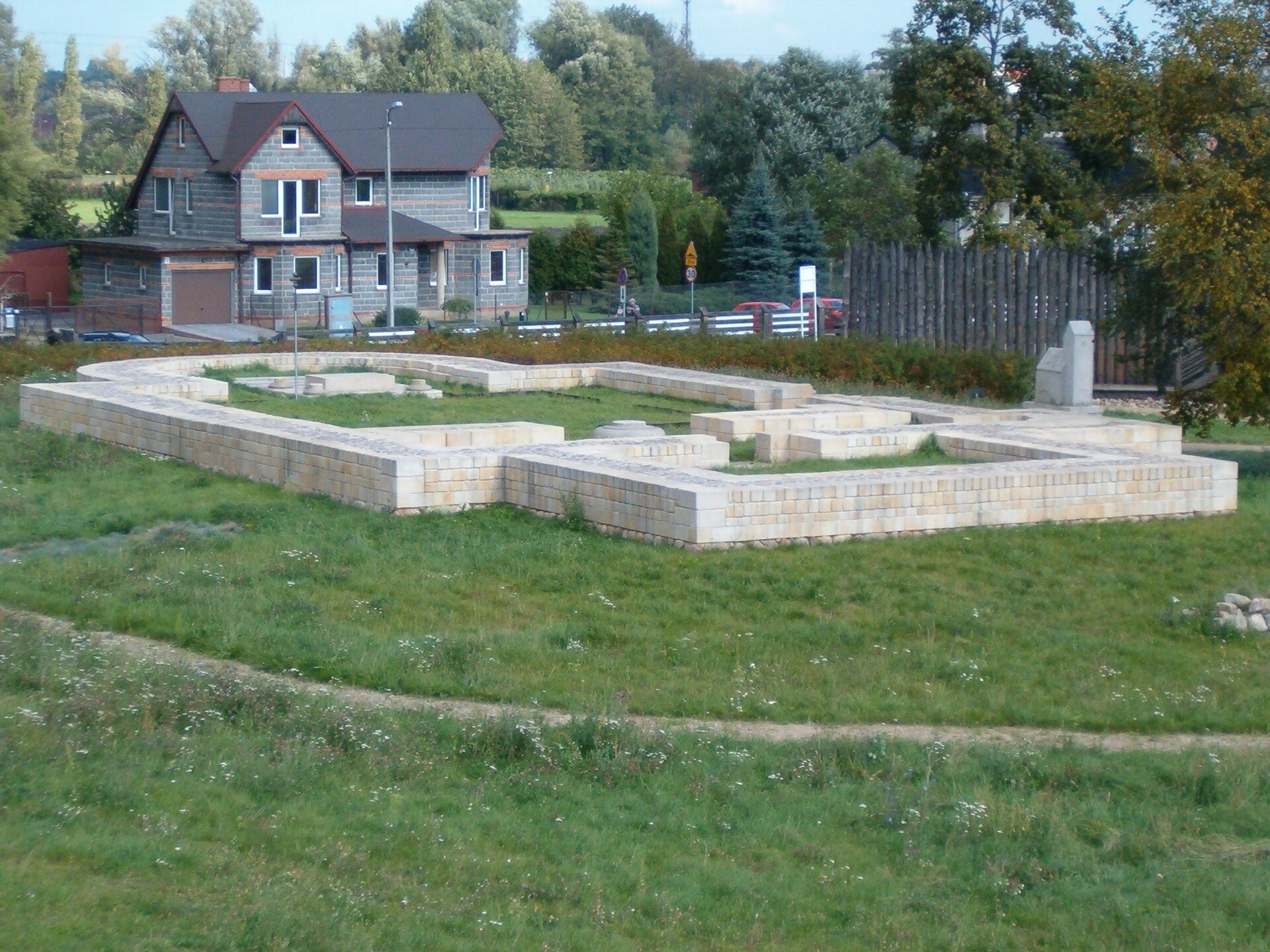
On 25 January 2007, earth from the location of the ducal burial crypt was placed in urns in the Church of Saint Adalbert in Kalisz and at the Cistercian abbey in Ląd. The ground-level portion of the collegiate church was reconstructed at full scale in 2007. In 2008, the Kalisz-Zawodzie Archaeological Reserve, also called the Kalisz Piast Stronghold, opened around the remains, and the site is now used as an archaeological park.
Remains
The Romanesque Church
Ground Plan and Construction
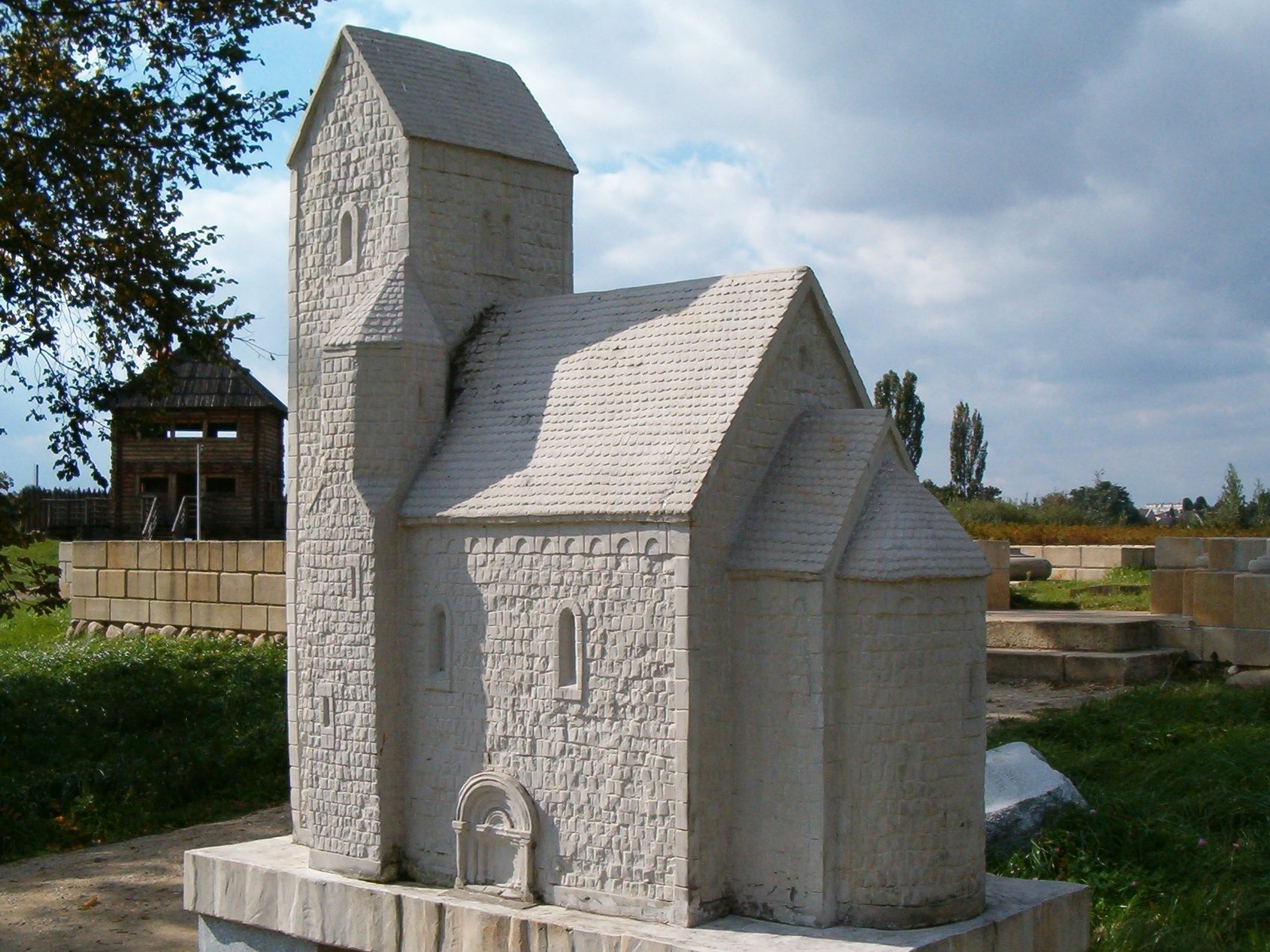
The collegiate church was a single-nave Romanesque building made of dressed stone. Its plan included a nave, a chancel ending in an apse, one tower, and an upper gallery, a raised internal level overlooking the nave. The windows contained stained glass. The ground-level portion reconstructed in 2007 reproduces the building at a 1:1 scale within the Kalisz-Zawodzie Archaeological Reserve.
Ducal Burials and Recovered Objects
Archaeological work uncovered the tombstones of Mieszko III the Old and Mieszko Młodszy. The excavations of 1958 to 1963 also produced a wooden, gilded processional cross. These finds belong to the surviving archaeological evidence for the church’s dynastic and religious functions.
Earlier Structures Beneath the Church
Pre-Romanesque Stone Building
Part of the Romanesque church was built over the foundations of an earlier stone structure constructed in slab technique before the first half of the eleventh century. Its foundations remain part of the layered archaeological evidence beneath the collegiate church.
Log-Built Church
The remains of an earlier wooden church lie beneath the Romanesque building’s foundation footing. Built with logs and dated to the turn of the tenth and eleventh centuries, the Church of Saint Adalbert represents an early phase of construction at the site.