Church of Trinity in Khokhly: A Russian Orthodox Church in Moscow
Site at a Glance
- Popularity
- Very High
- Country
- Russia
- Primary era
- Early Modern
- Eras represented
- Early Modern, Modern
- Civilizations
- Russian
- Site type
- Religious
- Remains
- Church
On this page13 sections
History
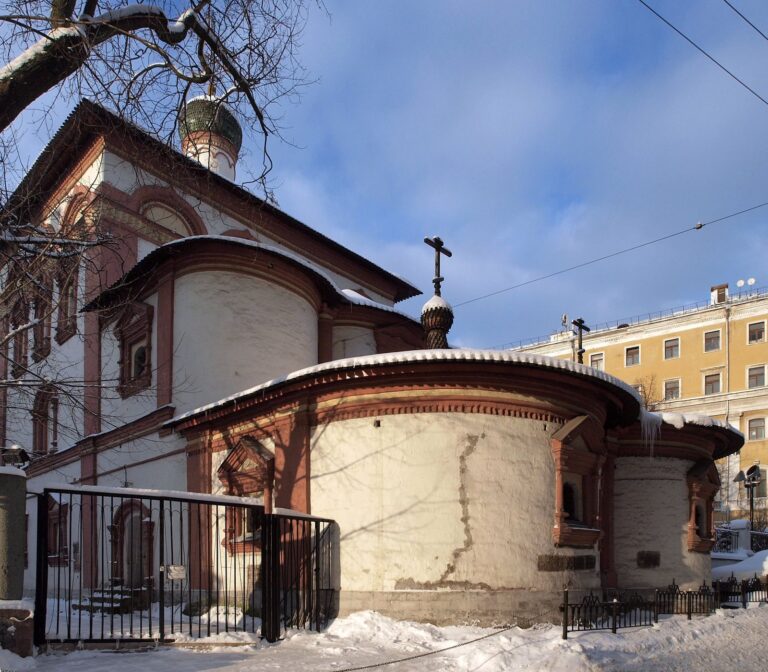
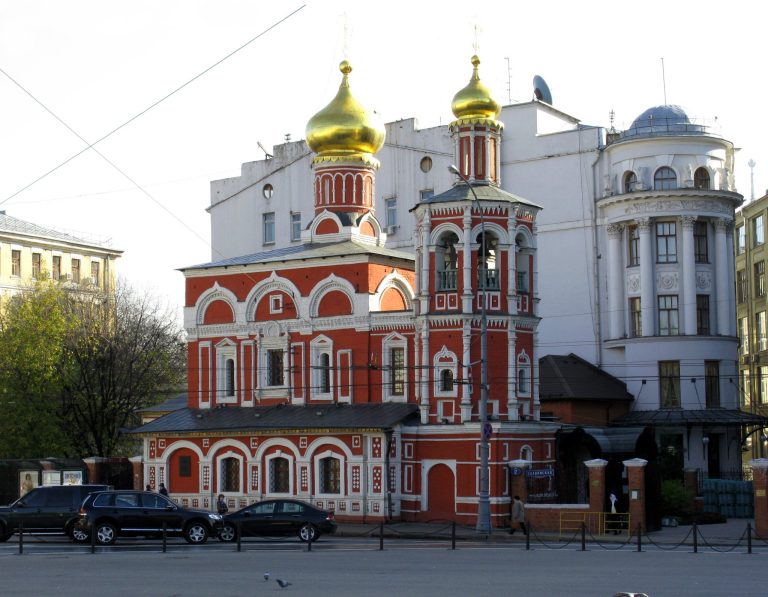
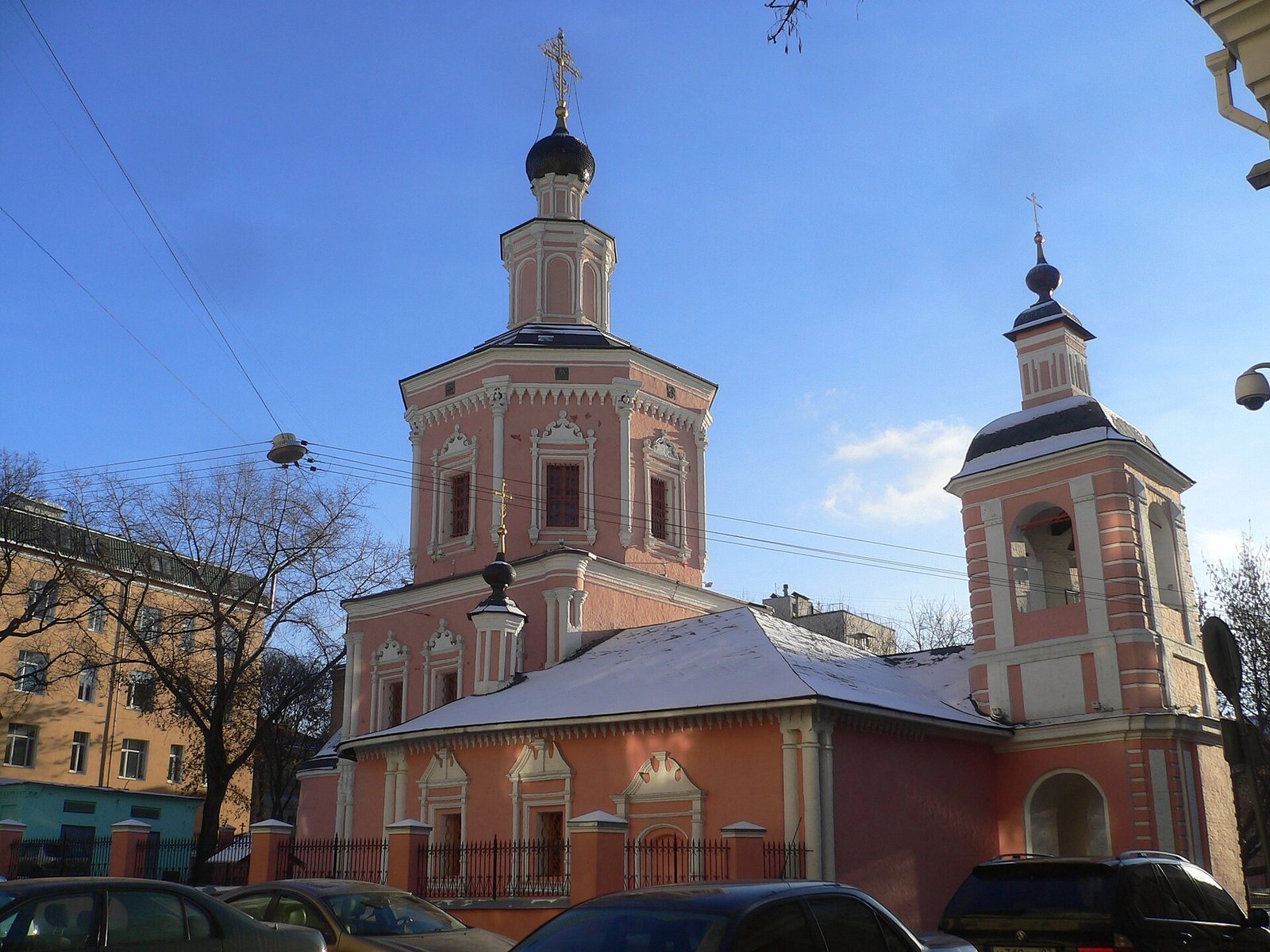
The Church of Trinity in Khokhly is a Russian Orthodox church in Moscow, Russia. Its present building was erected in 1696 in the Moscow Baroque, a Russian architectural style that flourished in the late seventeenth and early eighteenth centuries. The church belongs to the Moscow diocese and Epiphany deanery, a district grouping of Orthodox parishes.
Early church and rebuilding
A church on the site was active by 1610, when it appeared on the Sigismund Plan, and it is also mentioned in records from 1625. A stone church stood there by 1657, followed by alterations in the 1670s and later in the seventeenth century. In 1681, its side altars, secondary altars within a church, were dedicated to Saint Sergius of Radonezh and the Descent of the Holy Spirit.
In 1696, Evdokia Chirikova, daughter of Abram Lopukhin and wife of a high-ranking court official, rebuilt the church in fulfillment of a vow commemorating her daughter Neonila. Patriarch Adrian blessed the project, and Yemelyan Ukraintsev may also have contributed to its cost. The principal altar was dedicated to the Holy Trinity.
Khokhlovka and eighteenth-century upheavals
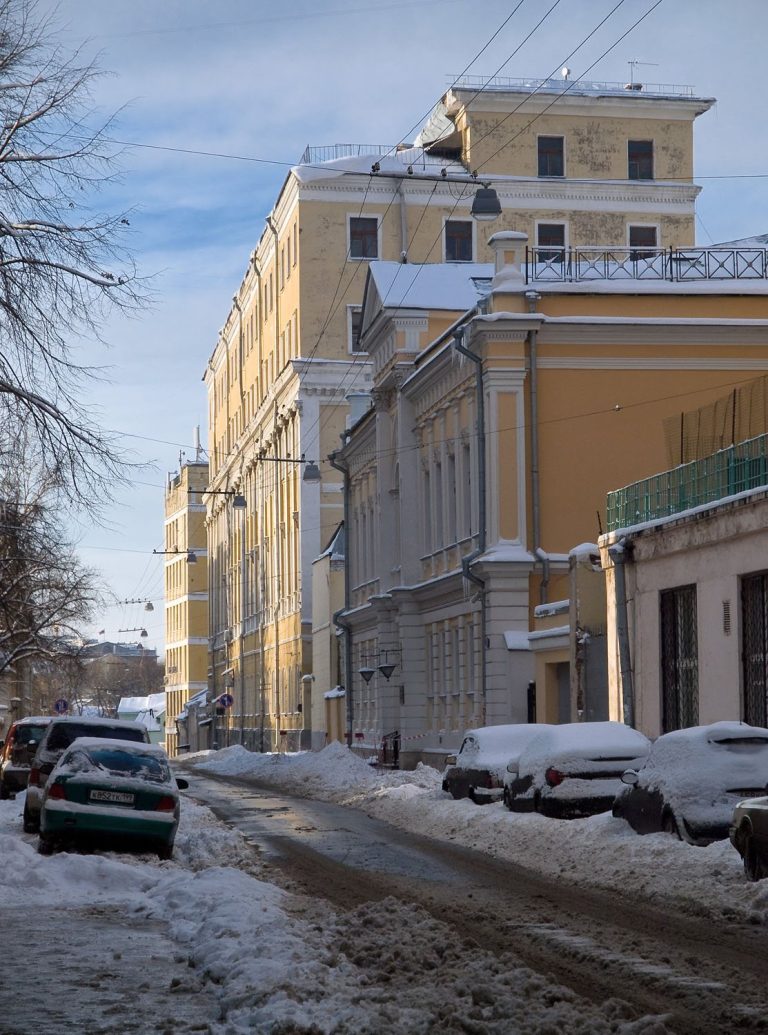
The church stood in Khokhlovka, where Dnieper Cossacks settled after their host entered Russian allegiance in 1654. Ivan Mazepa, a Cossack political and military leader known as a hetman, had a residence in the district. Its earlier landscape included a hill crossed by the Rachka stream, a summer palace built by Vasily I in the fifteenth century, and princely gardens that gave the church its alternative name, “in the Old Gardens.” Tsar’s stables and a wooden church dedicated to Saints Florus and Laurus also stood there. A chapel to the Three Hierarchs, used as a metropolitan’s house church, was later attached to the church of Florus and Laurus.
A fire devastated the church in 1737, destroying its furnishings apart from the altar tables. After restoration, the side altar of Saint Demetrius of Rostov was consecrated in 1757. A bell tower was probably built around this time. Another Moscow fire damaged the church in 1761, and it underwent renovation in 1790. Its mid-eighteenth-century furnishings included a silver-covered icon screen carved to resemble draped fabric, icons, and a chandelier.
Nineteenth-century repairs and parish life
The altar end of the church was rebuilt in the early nineteenth century. During the French occupation of Moscow in 1812, the church suffered losses but kept its icon screen and icons. It was one of ten Moscow churches where services were permitted during the occupation. Repairs followed in the 1820s. In 1824, Metropolitan Filaret authorized work on the altar and dome, consecrated the cloth used on the Trinity altar, and allowed the rector to teach Christian religious instruction at the Konstantin Land Surveying School.
The parish had 363 members in 1863. Because the congregation was small, Metropolitan Innokenty ordered a two-person clergy staff, one priest and one psalm-reader, to be re-established in 1873. Cracks appeared in the walls in 1887, and the altar area was in very poor condition. Repairs were carried out in 1888 and 1889.
Closure and return to worship
In 1910, five rooms on the ground floor of the two-storey clergy house became a daytime shelter associated with Grand Duchess Elizabeth Feodorovna, known for her charitable work. Patriarch Tikhon awarded rector Nikolai Uspensky a pectoral cross in 1921. In 1923, he directed that a later rector, Dmitry Muraveisky, receive an epigonation, a diamond-shaped vestment conferred as a church distinction.
Church valuables were seized in 1922. Soviet authorities closed the church during the interwar years, and the neglected building lost its cupolas, Baroque icon screen, and other furnishings. State institutions used it in turn, including a geophysics institute and an engineering information center. Restoration began in the mid-1970s. By 1983, the main building, window surrounds, and openwork cross had been restored, although the interior furnishings had not been recovered.
The Russian Orthodox Church regained the building in 1992 and transferred it to the Brotherhood of Saint Vladimir, an Orthodox religious brotherhood. Worship resumed, and the parish, formerly shared with the Church of St Vladimir Equal to the Apostles, became independent in 1998. On 31 October 2010, Patriarch Kirill performed the Orthodox rite formally consecrating the church for worship. An icon of Nicholas II, said to stream myrrh, a fragrant oil, was kept there for several weeks.
Remains
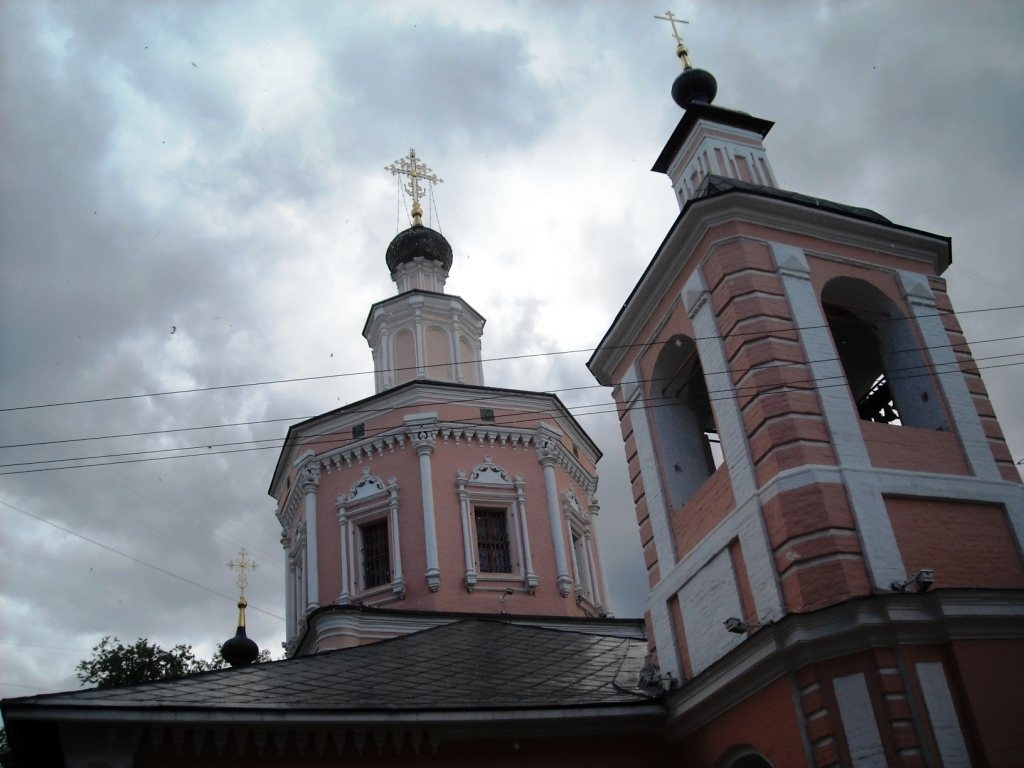
The brick church is arranged around a cubic main body with a rectangular nave, an octagonal drum (the raised support beneath a dome), a lantern (a small raised structure above it), and an onion-shaped dome. The dome has an external diameter of two metres. Carved white stone ornaments enrich the exterior.
Church fabric and connected spaces
Main church
The main church’s central form rises from its rectangular nave to the octagonal drum and lantern. Its exterior retains carved white stone ornament, while the dome’s two-metre external diameter gives a measurable feature of the upper structure.
Bell tower
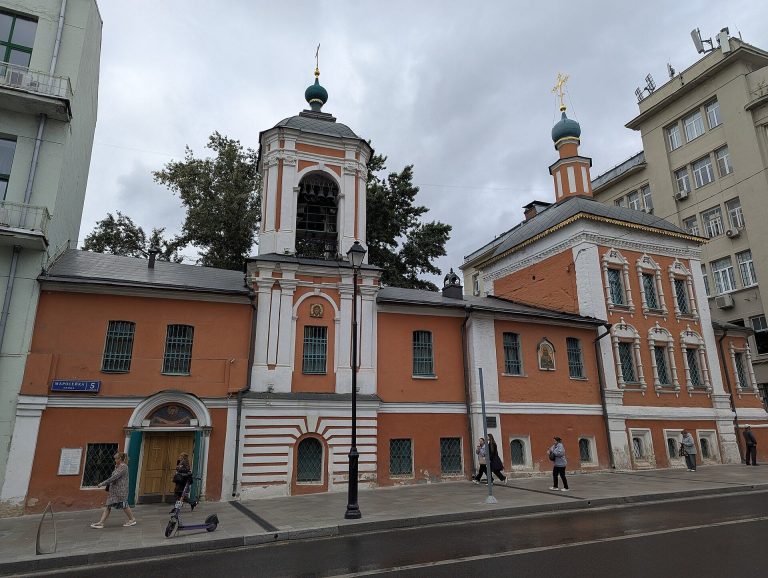
A bell tower is associated with the church and was probably constructed around the middle of the eighteenth century.
Vestibule and passage
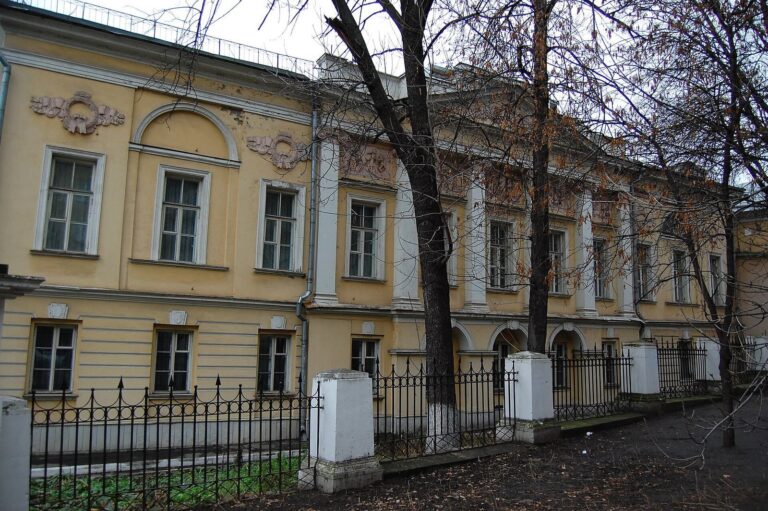
A spacious vestibule contains the northern altar dedicated to the Vladimir Icon of the Mother of God, with a small dome above it. The church may once have been linked to Yemelyan Ukraintsev’s nearby residence by a wooden passage. The passage was still present after the palace had passed to the Golovkin family.
Altars and sacred images
Altars
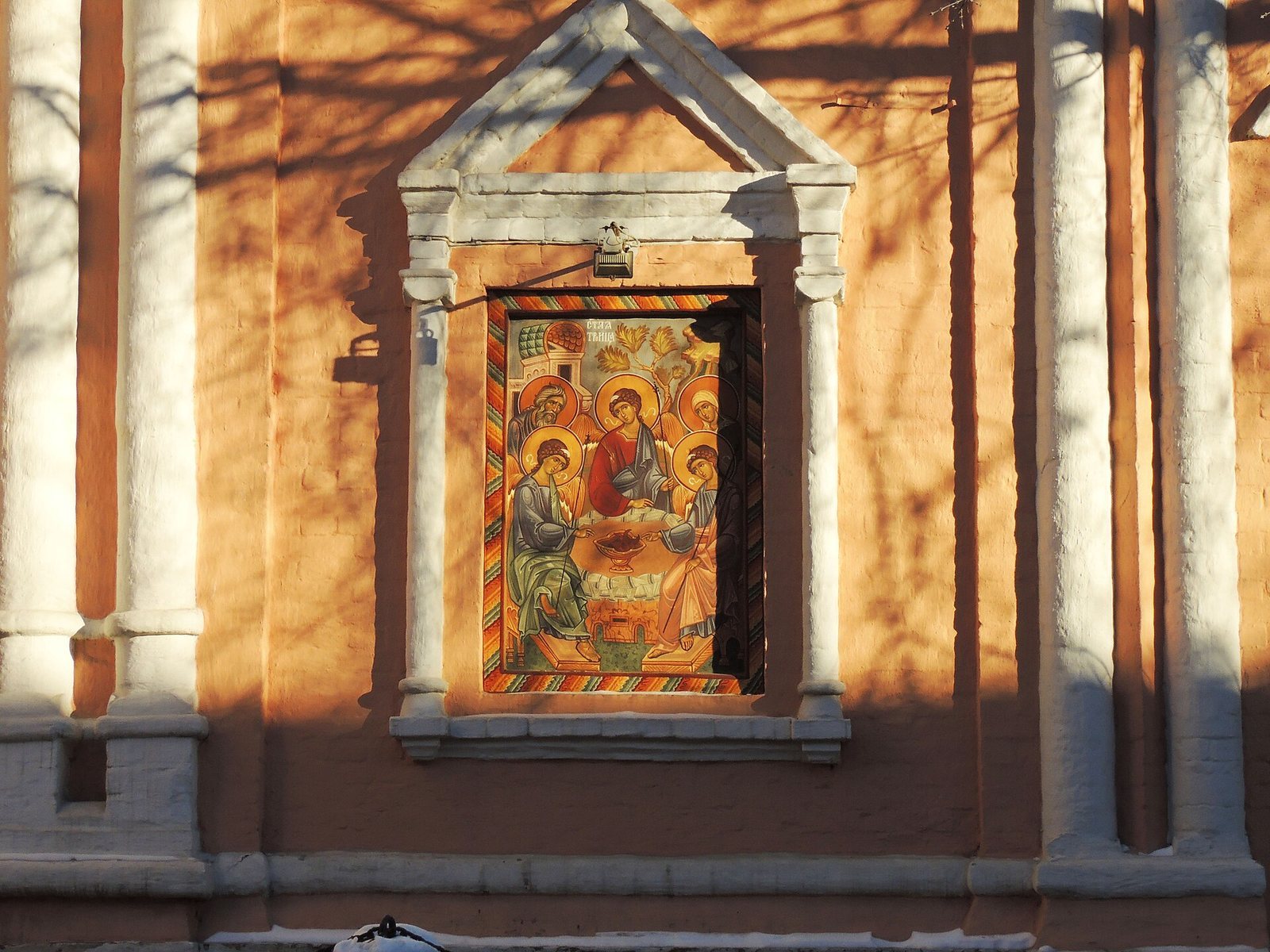
The principal altar is dedicated to the Holy Trinity. The side altars are dedicated to the Vladimir Icon of the Mother of God and Saint Demetrius of Rostov. A new icon screen was installed after the church returned to Orthodox use.
Relics and venerated icons
The consecrated cloth on the Trinity altar contains a fragment of the relics of Saint John of Riga; the cloth on the Vladimir altar contains a fragment of the relics of Saint John the Greek. Venerated images include an icon of the Mother of God known as “Seeking the Lost,” an image of the Council of the Optina Elders containing relics, and an icon of Saint Sergius of Radonezh. Other icons containing relics are kept in the altar.