Church of the Visitation in Kotłów: A Romanesque Parish Church in Poland
Site at a Glance
- Rating
- 5
- Popularity
- Very Low
- Country
- Poland
- Primary era
- Medieval
- External website
- Open
- Eras represented
- Medieval, Early Modern, Modern
- Civilizations
- German, Kingdom of Poland, Polish–Lithuanian Commonwealth
- Site type
- Religious
- Remains
- Church
On this page9 sections
History
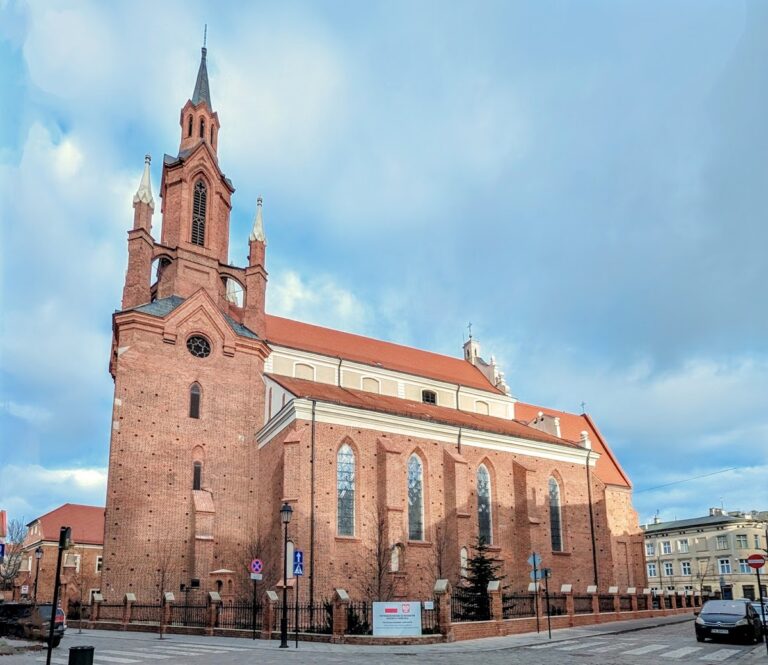
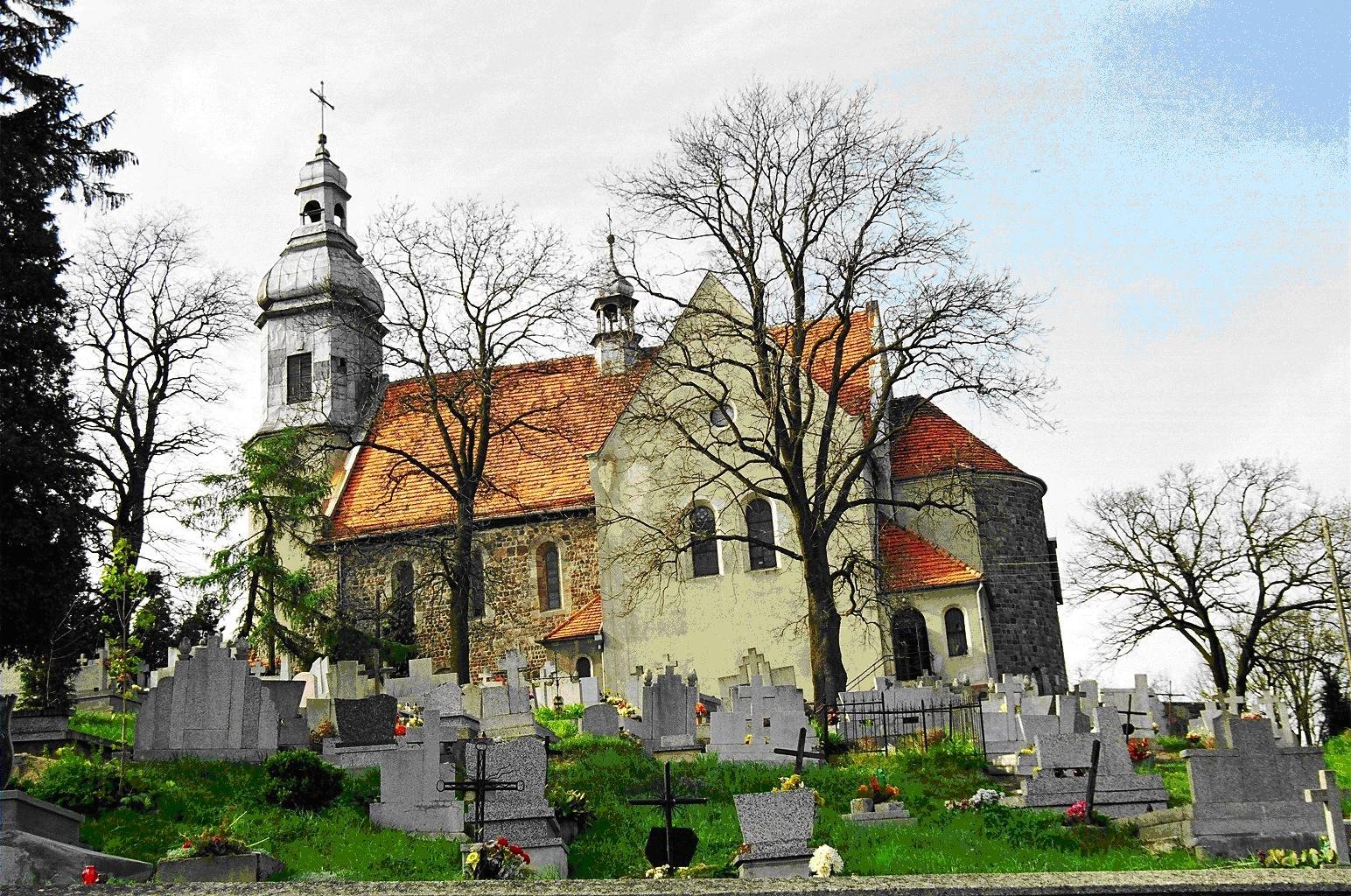
The Church of the Visitation in Kotłów is a historic Roman Catholic parish church in Poland, known in the parish tradition as the Church of the Nativity of the Blessed Virgin Mary. Its Romanesque origins are dated either to 1108 or to the middle of the twelfth century, although the foundation date and founder remain disputed. The church is regarded as one of the oldest surviving examples of Romanesque architecture in Greater Poland.
Disputed Romanesque foundation
One interpretation places the church’s foundation in 1108 and attributes it to Piotr Włostowic, a powerful twelfth-century Polish magnate traditionally associated with founding religious institutions. This date appears in the chronicle of Jan Długosz, a fifteenth-century Polish chronicler. Another interpretation assigns the construction to the mid-twelfth century, based on the plan of the nave, the semicircular apse vault, and the way the portal was built. Under this interpretation, Duke Mieszko III the Old, a Piast ruler of twelfth-century Poland, may have been the founder.
Whatever its precise foundation date, the church belongs to the Romanesque period, a medieval architectural style characterized here by massive masonry, semicircular forms, and relatively small openings. Its design has been connected with the architectural program of the Collegiate Church of Saint Paul the Apostle in Kalisz.
Later ownership and rebuilding
In 1457, King Casimir IV Jagiellon granted the church to the Canons Regular of the Lateran from Kalisz. This Catholic congregation consists of priests who live according to the Rule of Saint Augustine. The canons retained ownership until monastic property was secularized and the church was taken over by the Kingdom of Prussia during the 1820s.
The building underwent several rebuilding campaigns. A Baroque tower was added in 1721, while a transept, the part of a church that crosses the main nave, was constructed between 1905 and 1908. These changes produced the church’s present overall form. The building entered the heritage register under number 460/Wlkp/A on 31 December 1990.
Religious furnishings and devotion
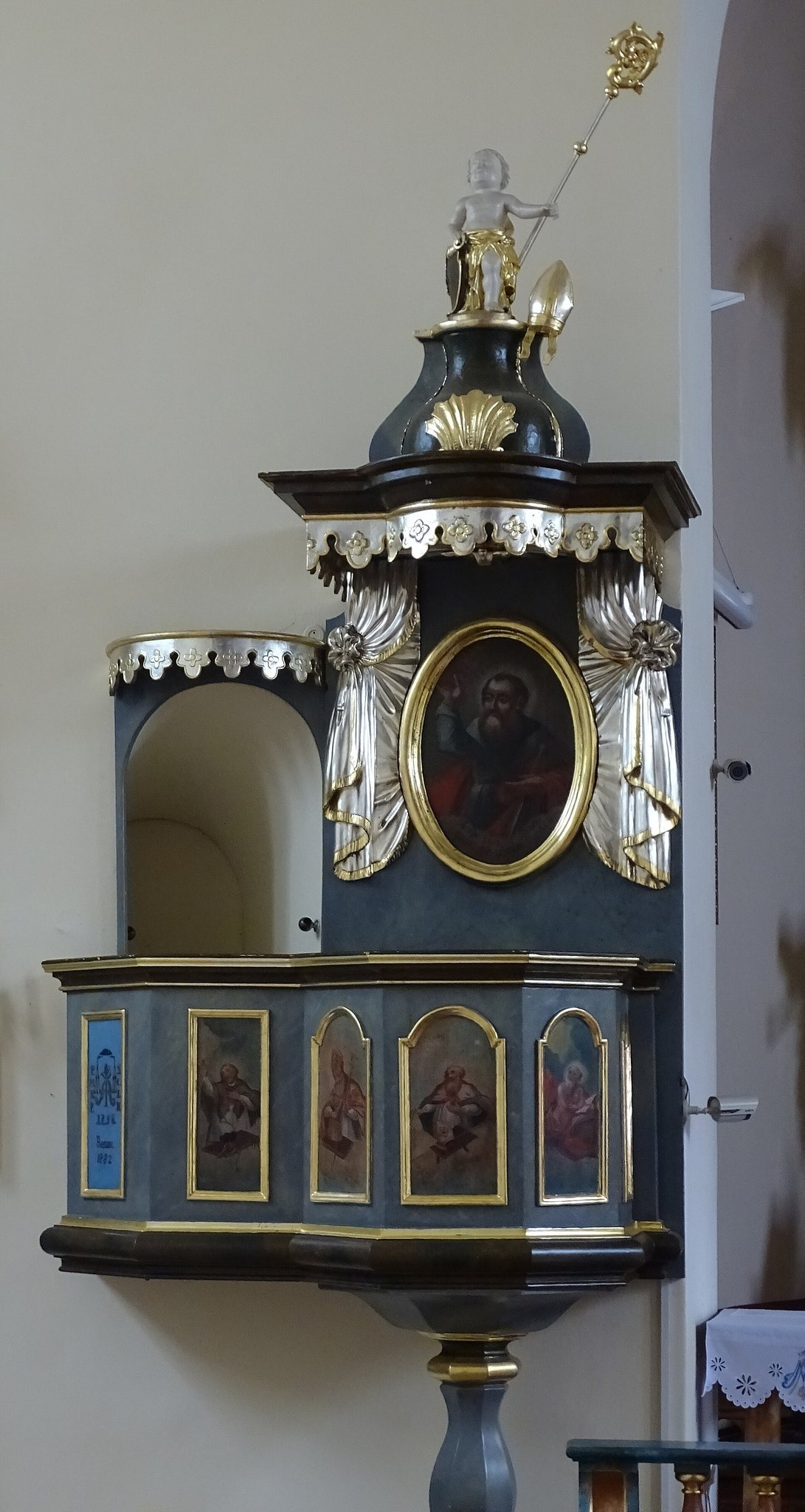
The principal interior furnishings are chiefly Baroque and Rococo, dating from the eighteenth century. The high altar contains a 1605 painting of Our Lady of Kotłów with the Infant Jesus, Saint Stanislaus, and Saint Adalbert. Saint Stanislaus was a bishop of Krakow and a major Polish patron saint, while Saint Adalbert was a tenth-century missionary bishop venerated as a patron saint in Central Europe. The image attracted numerous pilgrims to the church for centuries.
Remains
The church stands on a hill approximately 230 metres above sea level, on a remnant of a glacial terminal moraine. The adjoining cemetery and the hill are enclosed by granite walls. The elevated position also forms part of a wider group of hilltop church sites, since the churches at Kotłów, Wysocko Wielkie, Chełmce, and Ołobok are mutually visible across the surrounding region.
Romanesque masonry
The Romanesque walls are approximately 1.4 metres thick and were built from dressed granite. The stones were shaped with hammers into roughly cubic blocks and laid in clearly visible horizontal courses. Worked granite blocks form both the outer and inner faces of the walls, bonded with lime mortar. The cores were packed with stone-working rubble or smaller stones and then filled with lime mortar. The nave retains original Romanesque windows and two blocked portals.
Portal and carved details
The portal is made of sandstone, a material used especially to frame openings in Romanesque churches. Sculptural decoration survives on structural elements, including a human head, animal masks set on horns with a bunch of grapes between them, and a striding lion with its mouth open.
Later architectural elements
The Baroque tower added in 1721 stands alongside the earlier Romanesque fabric. The transept constructed between 1905 and 1908 also forms part of the present building configuration, crossing the nave and contributing to the church’s later plan.
Interior furnishings
The interior is furnished chiefly in the Baroque and Rococo styles of the eighteenth century. The high altar preserves the painting of Our Lady of Kotłów made in 1605, showing the Virgin and Child together with Saint Stanislaus and Saint Adalbert.