Church of the Protection of the Theotokos in Izmaylovo: A Russian Orthodox Church
Site at a Glance
- Popularity
- High
- Country
- Russia
- Primary era
- Early Modern
- Eras represented
- Early Modern, Modern
- Civilizations
- Russian
- Site type
- Religious
- Remains
- Church
On this page12 sections
History
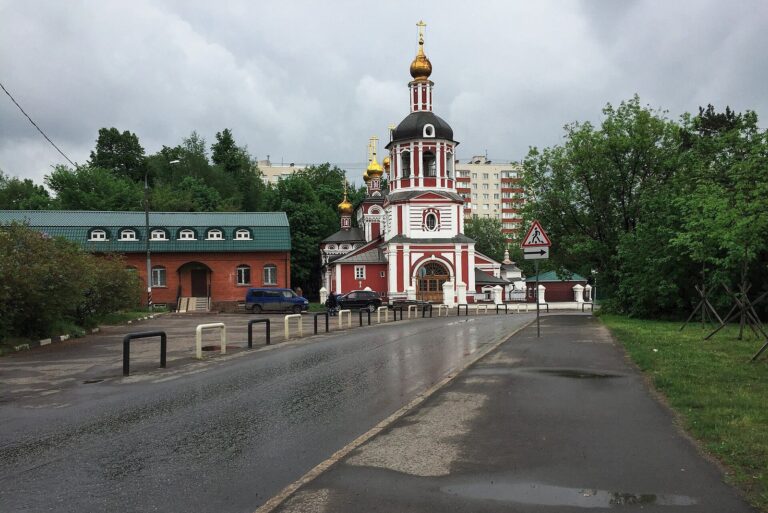
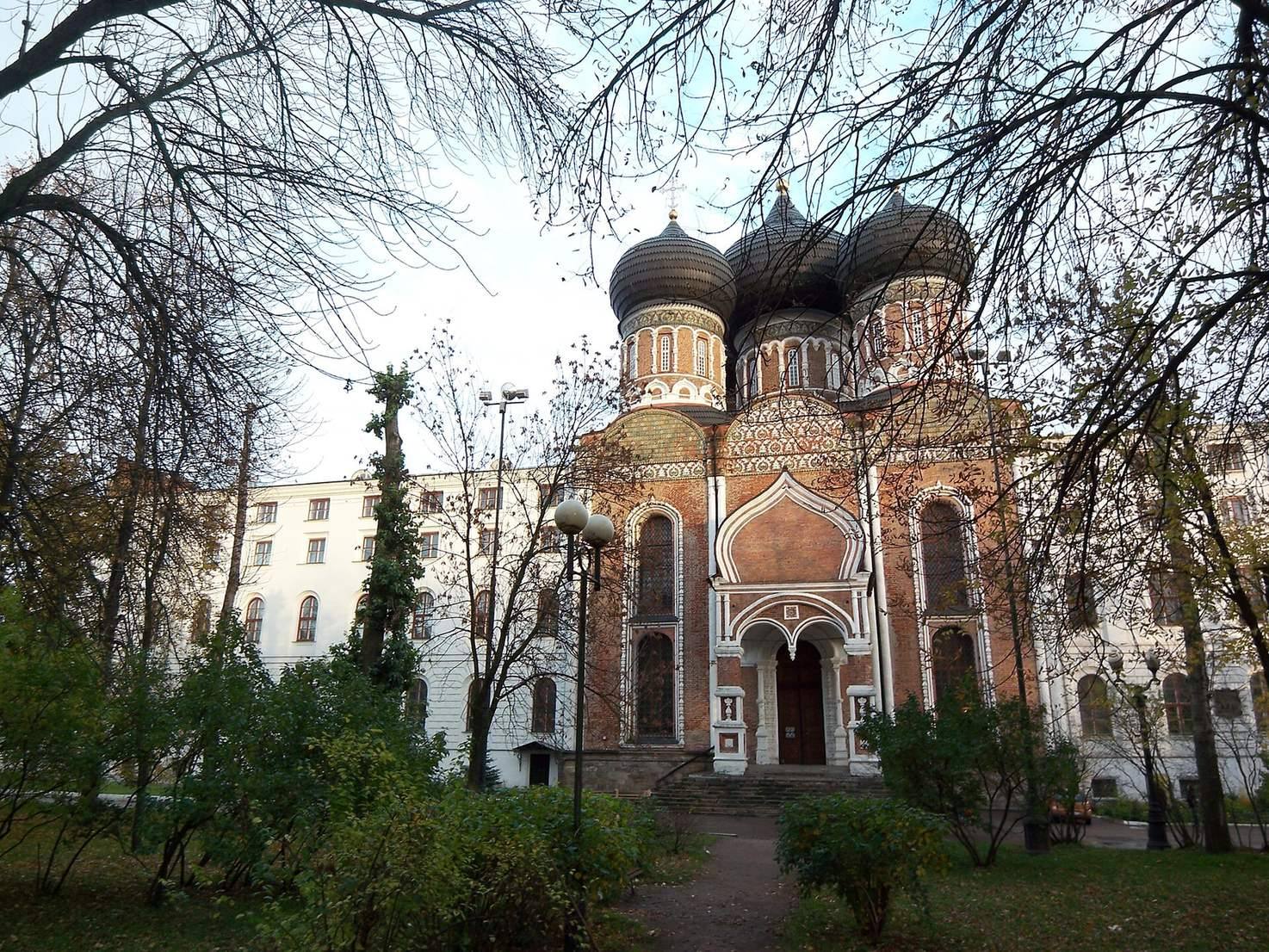
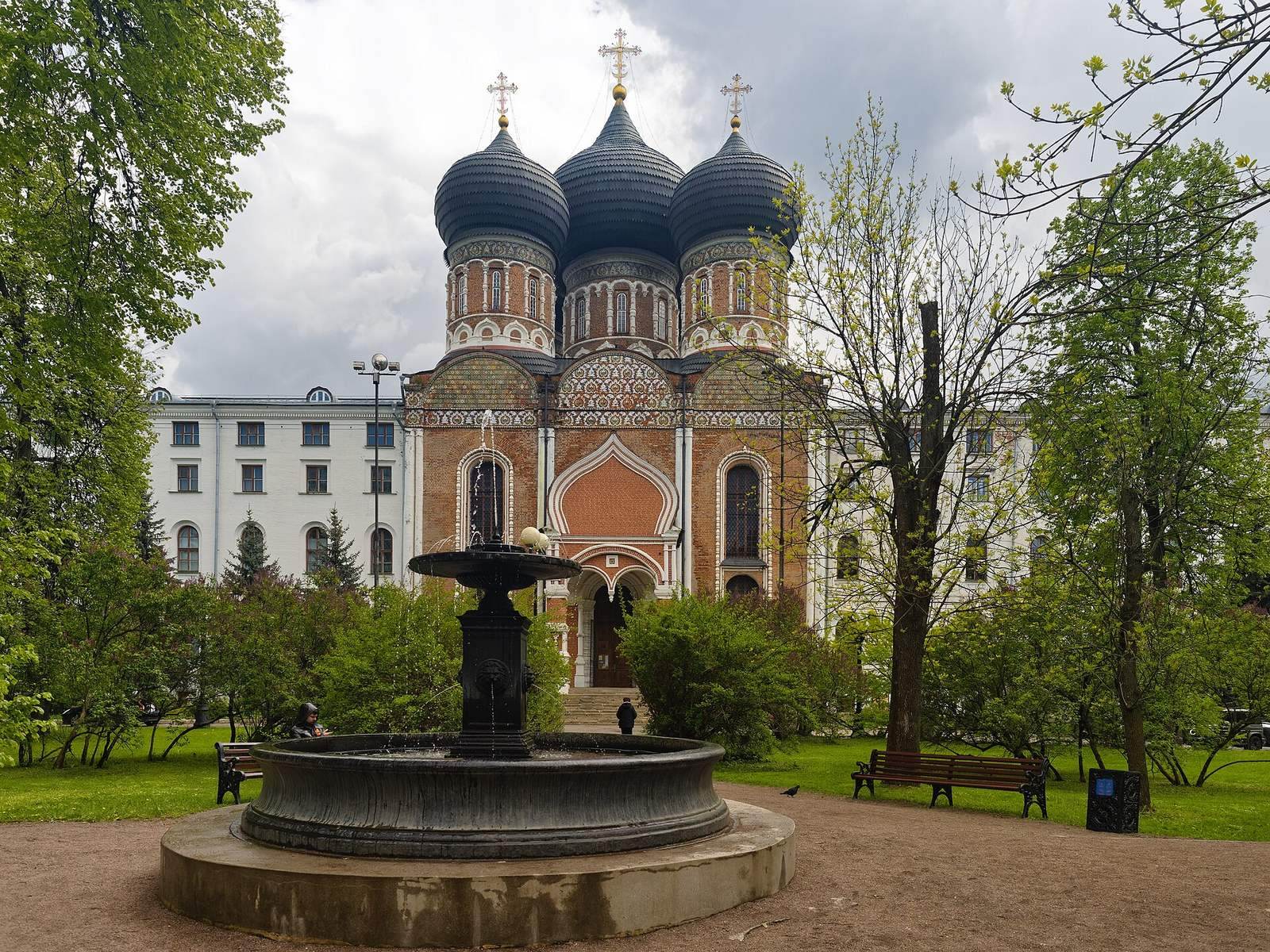
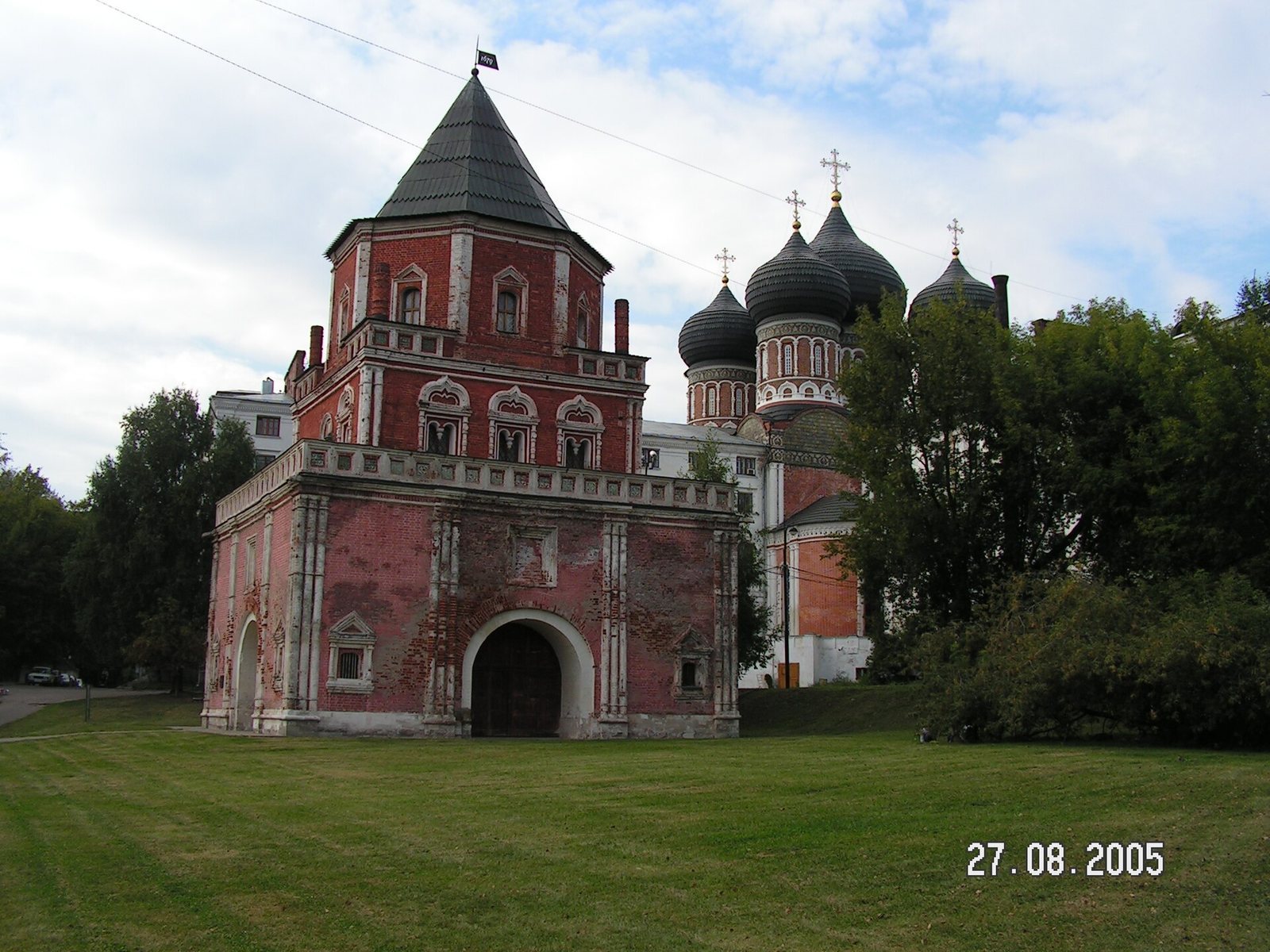
The Church of the Protection of the Theotokos in Izmaylovo is a Russian Orthodox church on an island in the Serebryano-Vinogradny Pond in Moscow, Russia. Built for the Izmaylovo royal estate from 1671 to 1679, it is an example of Naryshkin style, a late-seventeenth-century Russian architectural style.
Early churches and the royal stone building
A church at the site is first mentioned in the fifteenth century. A wooden church stood there by the late fifteenth or early sixteenth century and was probably burned during the invasion led by Crimean khan Devlet I Giray. Boyar Nikita Ivanovich Romanov, a high-ranking noble and court figure, built another wooden church with three steep, tent-shaped roofs in the late 1610s or early 1620s.
The stone church was built during the reigns of Tsars Alexei Mikhailovich and Fyodor Alekseyevich. Kostroma craftsmen Grigory and Fyodor Medvedev carried out the work under architect Ivan Kuznechik, who is considered its probable designer. Patriarch Joachim, a senior leader of the Russian Orthodox Church, consecrated the building in 1679 in the presence of Tsar Fyodor. Its design was to follow the Pokrovsky Cathedral, now called Trinity Cathedral, at Alexandrov Sloboda, a former royal residence. In 1682, the Izmaylovo church itself provided a model for a church at Florishcheva Hermitage, an Orthodox monastery.
The main altar is dedicated to the Feast of the Protection, which commemorates the Virgin Mary’s protective intercession in Eastern Christian tradition. A side chapel is dedicated to Michael, Prince of Chernigov, and his boyar Theodore, both venerated as saints. The church belongs to the Moscow Diocese and Nativity Deanery of the Russian Orthodox Church.
Damage and nineteenth-century restoration
During the French invasion of Russia in 1812, French troops lit fires inside the church, causing severe damage. Its foundation began to deteriorate, a crack appeared in the facade, and the central dome tilted. Services stopped in the mid-1820s. An almshouse for disabled veterans of the War of 1812, when French forces invaded Russia, developed around the church and later accommodated veterans of other nineteenth- and early twentieth-century conflicts. Worship resumed as the institution grew, and in 1849 the church became its chapel.
Restoration in the 1840s followed a design by architect Konstantin Thon and included repairs to the church’s icon furnishings. Engineer Nikolai Amosov devised a pneumatic heating system for the building. An Izmaylovo copy of the Jerusalem Icon was kept in the church from 1854 to 1922. It is now at the Nativity Church in Izmaylovo, while another copy remains in the Church of the Protection.
Closure and return to worship
The church and almshouse closed in 1918. From 1928, an archive of the Soviet People’s Commissariat for Internal Affairs, or NKVD, occupied the building. Valuable icons, including works from the seventeenth-century interior, disappeared. The building was later used as a fruit warehouse, and large icons served as shelves before being transferred to the Andrei Rublev Museum of Ancient Russian Art in the 1960s.
In the 1970s and 1980s the building was a warehouse for the Informelectro research institute; its interior was later adapted as a concert hall. Religious use resumed in the 1990s, and some surviving icons were returned. The church is designated a cultural heritage monument of federal significance in Russia.
Remains
The church is built of brick with details in white stone. Four pillars support its vaults, and the plan has three aisles and three apses, projecting sanctuary spaces of equal height. The building has five domes and no basement, and stands taller than the Alexandrov Sloboda church that served as its model. Its original foundation is only 60–70 centimetres deep. The central dome, 8.5 metres across, rests on a drum, the structure supporting a dome, that is larger and taller than those beneath the corner domes. Windows in the drums bring light into the interior.
Exterior and access
Walls and entrances
The exterior walls are arranged in three sections, with the middle section wider than either side. Paired white-stone half-columns, set on cubic bases and finished with capitals, divide the wall bays; groups of three mark the corners. The side bays contain large, arched windows extending across two levels, each pair joined by a shared decorative frame. The north, south, and west entrances were framed by perspectival portals, doorways surrounded by successively recessed frames. Stepped porches with barrel-shaped roofs led to them; after nineteenth-century changes, the western porch was the one that remained.
Almshouse additions
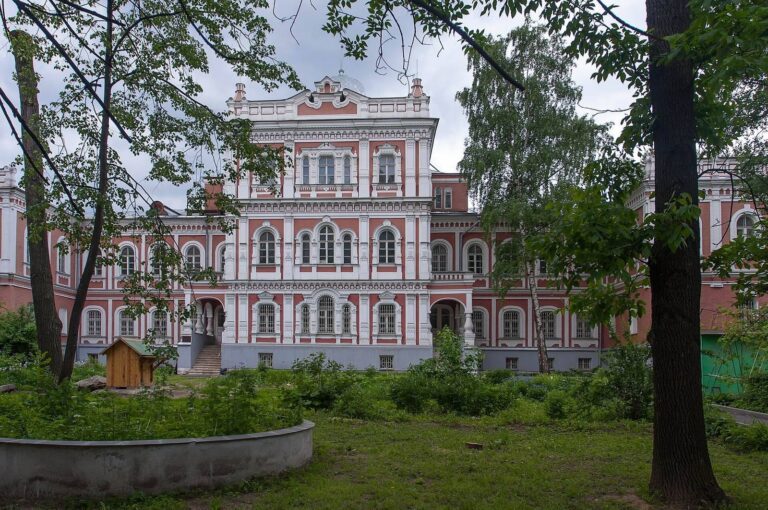
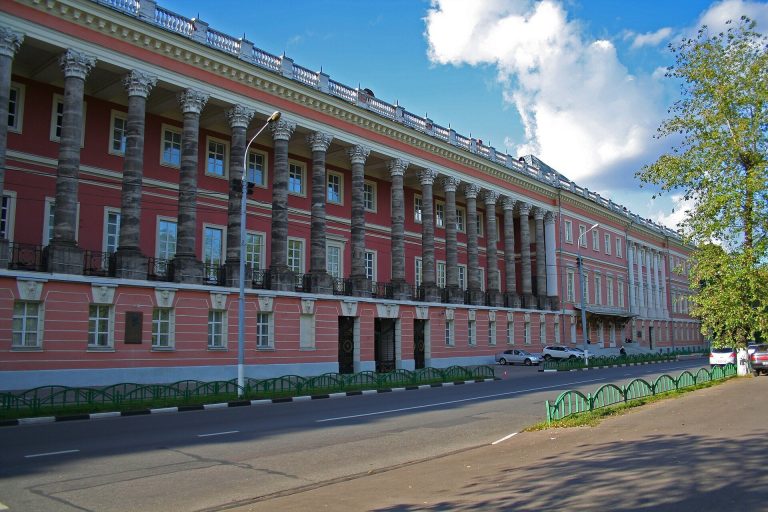
During nineteenth-century alterations, the ground around the church was raised by nearly 1.5 metres, changing its proportions. Residential wings of the almshouse were added on the north, east, and south sides. The north and south porches were removed.
Ceramic decoration
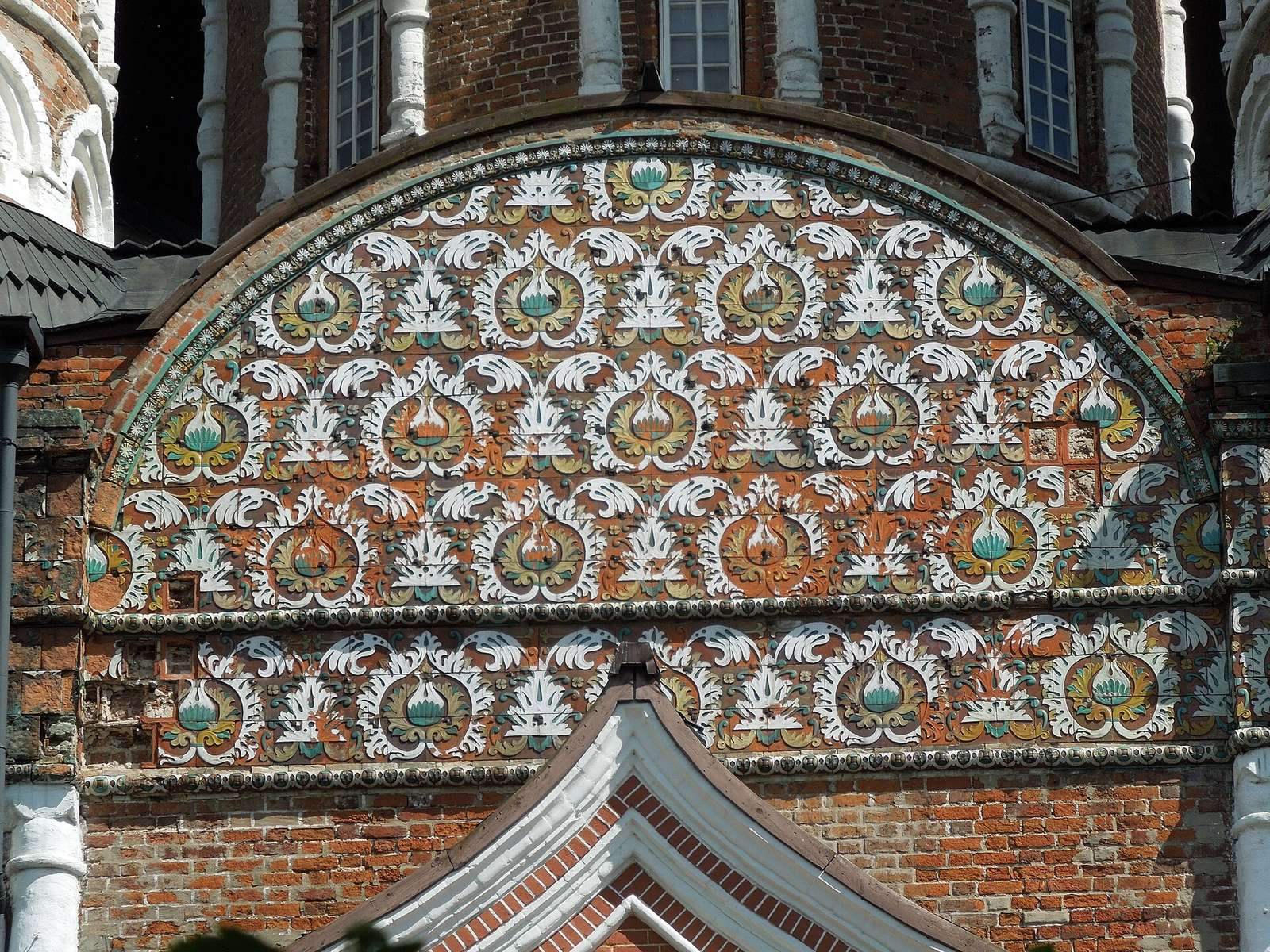
Multicoloured ceramic tiles adorn the panels within the arched gables, the arches, and the friezes around the dome drums. The central gable panels carry a peacock-eye pattern, while the side panels have stylized flowers and rosettes in eleven designs. The tiles were made in 1673 and installed in 1674–1675. Their makers included Stepan Ivanov, known as Polubes, and Ignat Maksimov.
Interior features
Icon screen
The church’s original interior decoration has been lost. Its former five-tier iconostasis, a screen of icons separating the sanctuary from the main worship space, was destroyed. A new icon screen was installed in 2001–2002.
Relics and reliquary
A reliquary, a container for sacred relics, holds relics associated with the Optina elders, monks known for spiritual guidance in Russian Orthodox tradition. They include Isaac, Hilarion, Anthony, Barsanuphius, Leo, Nectarius, Anatoly, Joseph, Moses, Ambrose, Macarius, and Anatoly I. The reliquary also contains relics associated with the saints Acacius, Charalampus, Panteleimon, and Theodore Tiron, as well as a fragment of the Oak of Mamre, a biblical tree linked with Abraham’s story.