Church of the Dormition of the Theotokos in Uspensky Vrazhek: An Orthodox Church in Moscow
Site at a Glance
- Popularity
- Medium
- Country
- Russia
- Primary era
- Modern
- Eras represented
- Modern
- Civilizations
- Russian
- Site type
- Religious
- Remains
- Church
On this page12 sections
History
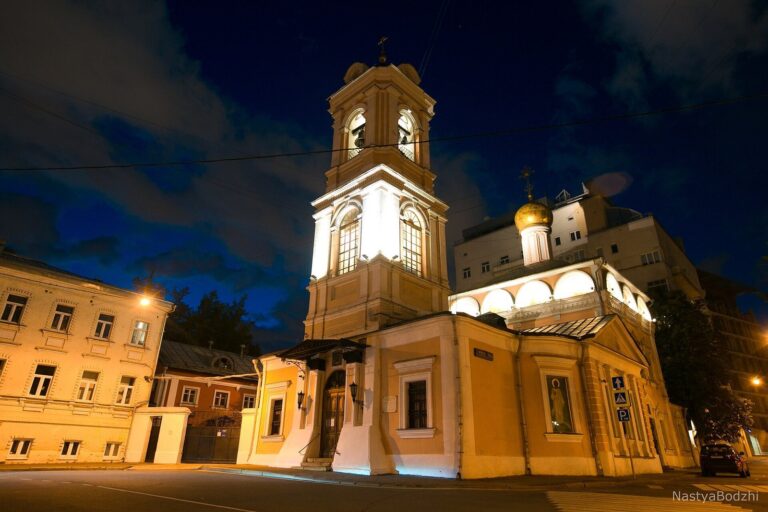
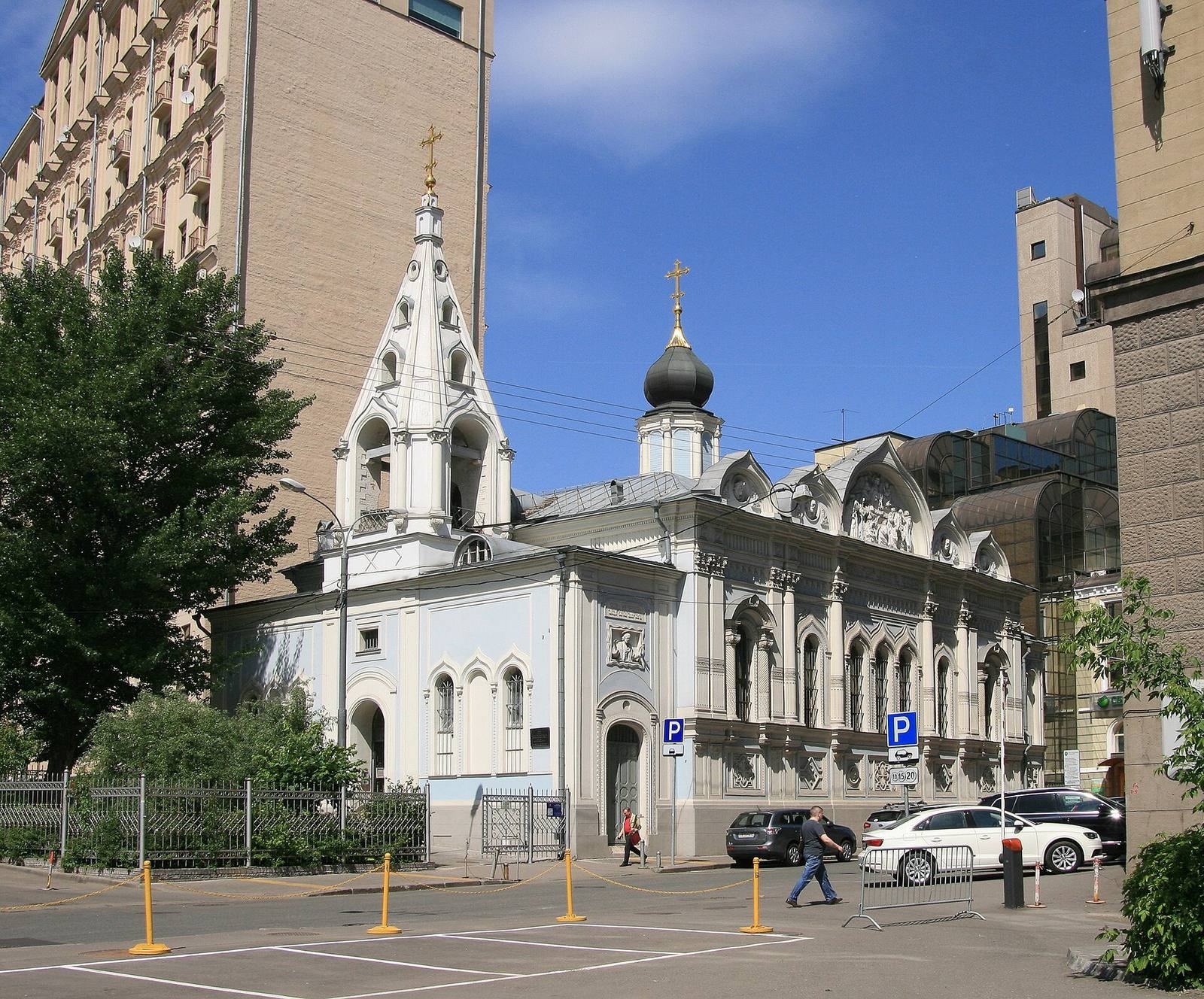
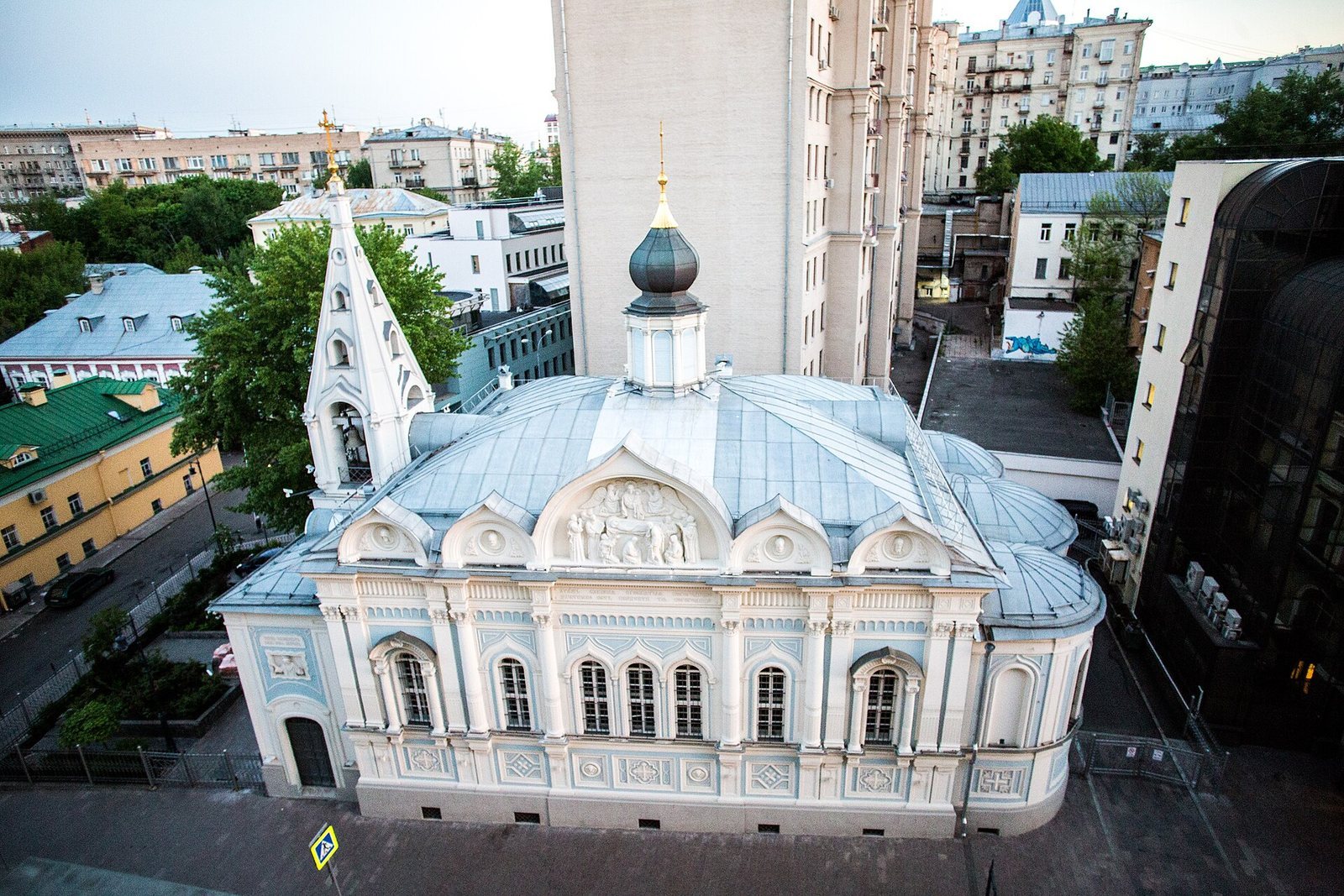
The Church of the Dormition of the Theotokos in Uspensky Vrazhek is an Orthodox church in Moscow, Russia. Its dedication commemorates the Dormition, the Orthodox feast of Mary’s death and assumption into heaven; Theotokos, meaning God-bearer, is a title for Mary. The present building is the third religious structure on the site, rebuilt in 1857–60 in an eclectic style incorporating Russian motifs.
Wooden and stone churches
A wooden church dedicated to the Dormition stood beside the ravine called Uspensky Vrazhek by the early sixteenth century. The place-name appears in the Nikon Chronicle, a major medieval Russian chronicle compilation, in 1531. The first written reference to the one-altar wooden church dates to 1625.
After the wooden building was dismantled, Grigory Gorikhvostov erected a stone church there in 1647, with chapels dedicated to St Nicholas and John the Baptist. In 1775, the St Nicholas chapel was taken down and replaced by a separate stone church dedicated to the same saint.
The nineteenth-century rebuilding
The present church was rebuilt between 1857 and 1860 with funds from merchant Sergei Afanasyevich Zhivago, who also served as churchwarden, a lay parish officer responsible for practical and property matters. Its design drew on the architectural style of Konstantin Thon, and its construction coincided with that of the Cathedral of Christ the Savior.
Metropolitan Filaret (Drozdov), a leading nineteenth-century Orthodox hierarch and Metropolitan of Moscow, initially refused to consecrate the altars because the church seemed to him more like a Catholic basilica than an Orthodox building. Zhivago pressed him to reconsider, and Filaret consecrated the altars in 1860. After the consecration and first service, Filaret praised the church and awarded Zhivago a medal.
Closure and revival
The church closed in 1924, and its building was first used by the Moscow Regional Historical Archive. Following repairs in 1979, it housed an intercity telephone exchange. A cashier’s window was installed in the altar area where the Royal Doors, the central doors of the icon screen leading into the sanctuary, had been.
A Moscow government decree in 1992 provided for the church’s return to the Russian Orthodox Church. In 1996, the parish received use of the crypt, which was consecrated to St Nicholas. The first service there took place on Thomas Sunday, the first Sunday after Orthodox Easter, and services resumed that year. The upper church was transferred to the parish in 1999. Parishioners from the churches of Cosmas and Damian in Shubin and the Dormition in Pechatniki supported rector Vladimir Lapshin and the congregation from the outset of the revival. Lapshin has served at the church since 1996 and is its honorary rector. The parish belongs to the Moscow Diocese, a regional church jurisdiction, and the Iveron deanery, a grouping of parishes named for the revered Iveron Icon of the Theotokos.
Remains
The church stands beside the ravine that ran between Nikitskaya and Tverskaya streets. Its basilican plan, an elongated central nave flanked by side aisles, is combined with an eclectic design incorporating Russian motifs.
Structure and exterior
Plan and spaces
Three naves, divided by columns, extend along the building. At the eastern end, three semicircular apses, rounded extensions at a building’s end, serve the altar, a deacon’s chamber (a service room beside the sanctuary), and a room for preparing Eucharistic gifts. A small dome crowns the church, while a tent-roofed bell tower rises above the porch. The upper church has chapels dedicated to Sergius of Radonezh, a medieval Russian monastic leader, and the Beheading of John the Baptist, the prophet who baptized Jesus. The crypt, a space beneath a church, is dedicated to St Nicholas, an early Christian bishop widely venerated as a saint.
Cast-iron columns
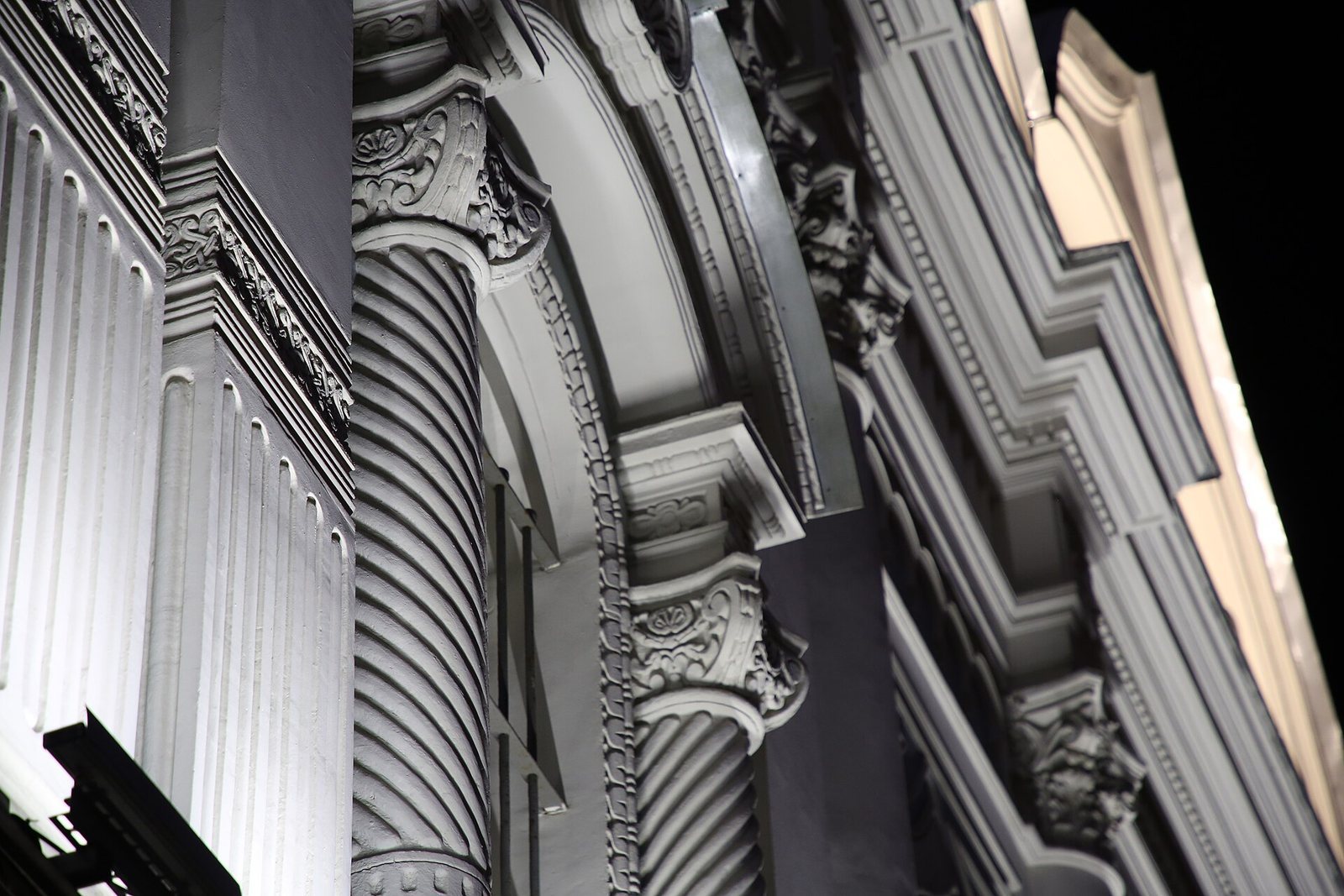
The hollow cast-iron columns were filled with a special mixture during installation to stabilize them. They extend to the attic, where a metal band holds them in place. A framed maker’s stamp at each base names iron-smelting, casting, and metalworking works associated with Princess Ekaterina Bibarsova in Tarusa district, Kaluga province. The frame indicates that the stamp was applied after the 1812 fire, while the dots in its abbreviation remained in use until 1926. Repeated repainting covered the columns; removal of the layers revealed dense red paint matching the window reveals and pilasters, shallow wall projections resembling columns. Traces of gilding appeared on the capitals, the crowning parts of the columns, on other architectural details, and on bands around the columns. Each capital carried four cast-iron cherubs.
Facade reliefs
Sculptor A. P. Semynin recreated the sculptural facade reliefs in 2003. Their original maker is unknown. They may have been produced by someone who worked on the Cathedral of Christ the Savior, possibly the sculptor Nikolai Ramazanov.
Interior decoration and images
Lower-church mosaic
An arch in front of the lower church’s altar bears a mosaic, an image made from small pieces, depicting the Last Supper in an early compositional form. Christ and the apostles recline around a semicircular table. Christ is positioned to the right of the other figures, John leans against him, and Judas reaches toward the dish.
Icon screen and sacred images
The church has one iconostasis, a screen of icons separating the sanctuary from the worship space. Alexander Kornoukhov painted its altar-screen icons using fresco, a technique in which pigment is applied to wet plaster. They include his versions of very early images of Christ and the Theotokos associated with the icon collection at Saint Catherine’s Monastery on Sinai, along with images of Sergius of Radonezh and Nicholas. An icon of Metropolitan Filaret is also part of the screen. Among the church’s shrines is an icon of Grand Duchess Elizabeth Feodorovna, a member of the Russian imperial family who became an Orthodox nun and martyr, accompanied by relics, venerated remains or objects associated with a saint.