Church of the Bernardine Friars in Rzeszów: Parish Church and Marian Sanctuary
Site at a Glance
- Rating
- 4.6
- Popularity
- Medium
- Country
- Poland
- Primary era
- Early Modern
- External website
- Open
- Eras represented
- Early Modern
- Civilizations
- Polish–Lithuanian Commonwealth
- Site type
- Religious
- Remains
- Fortified Church
On this page9 sections
History
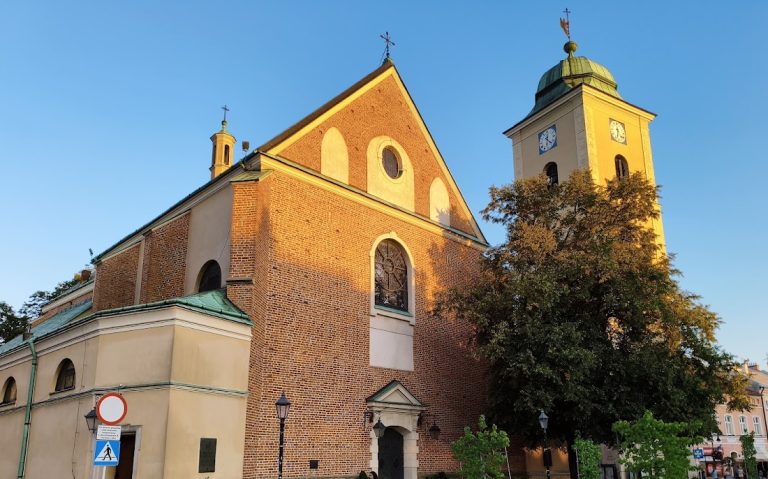
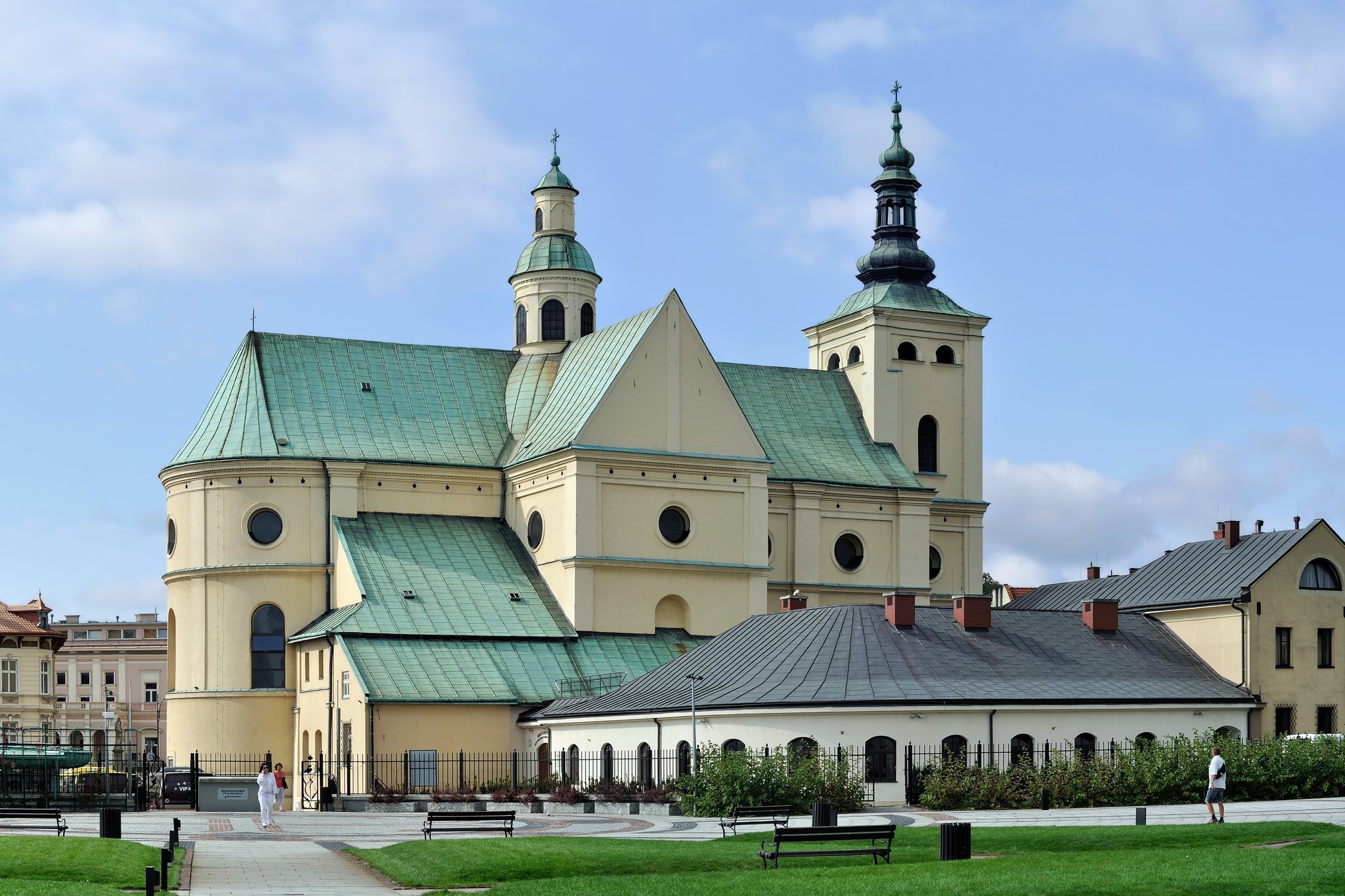
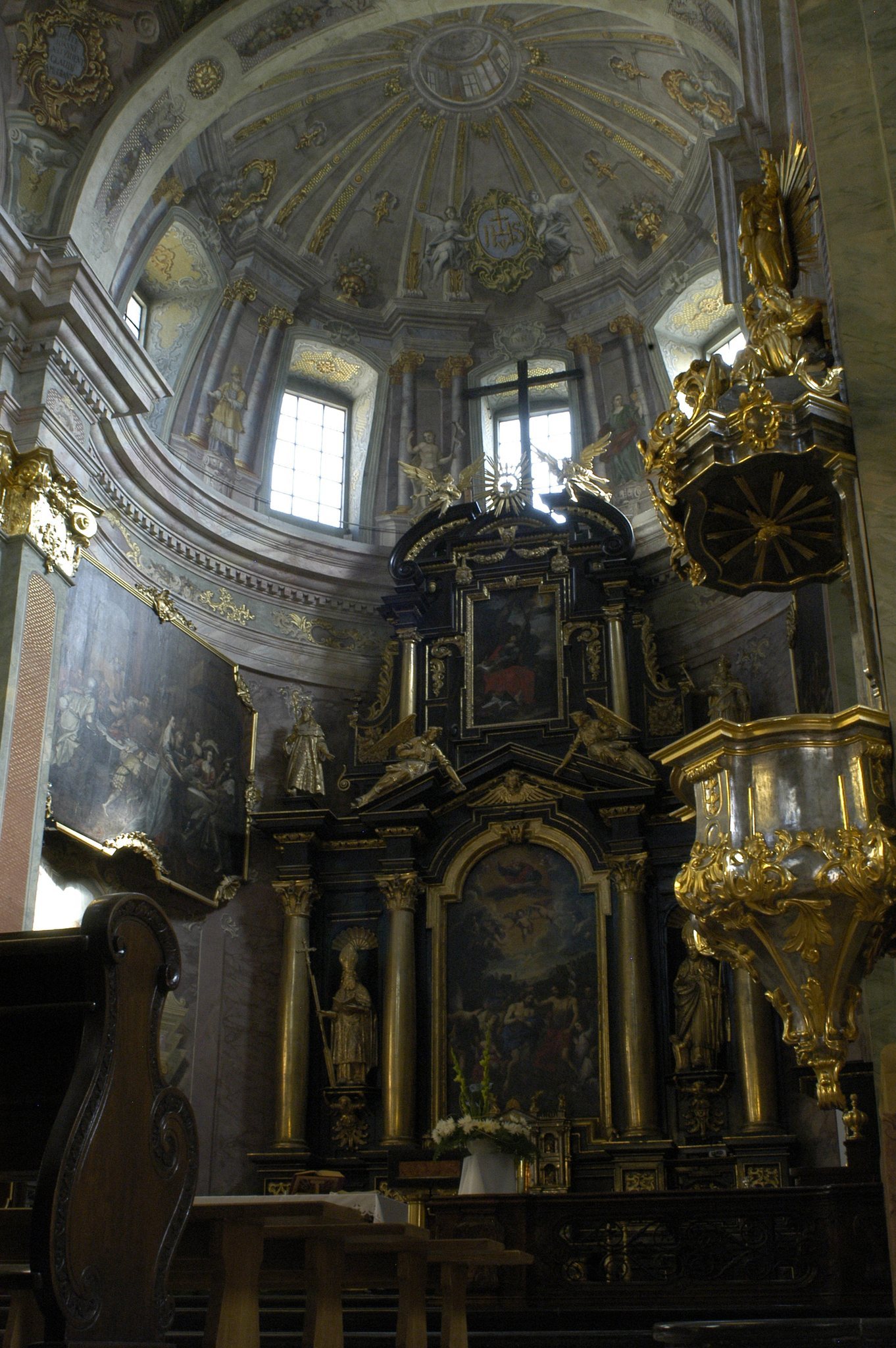
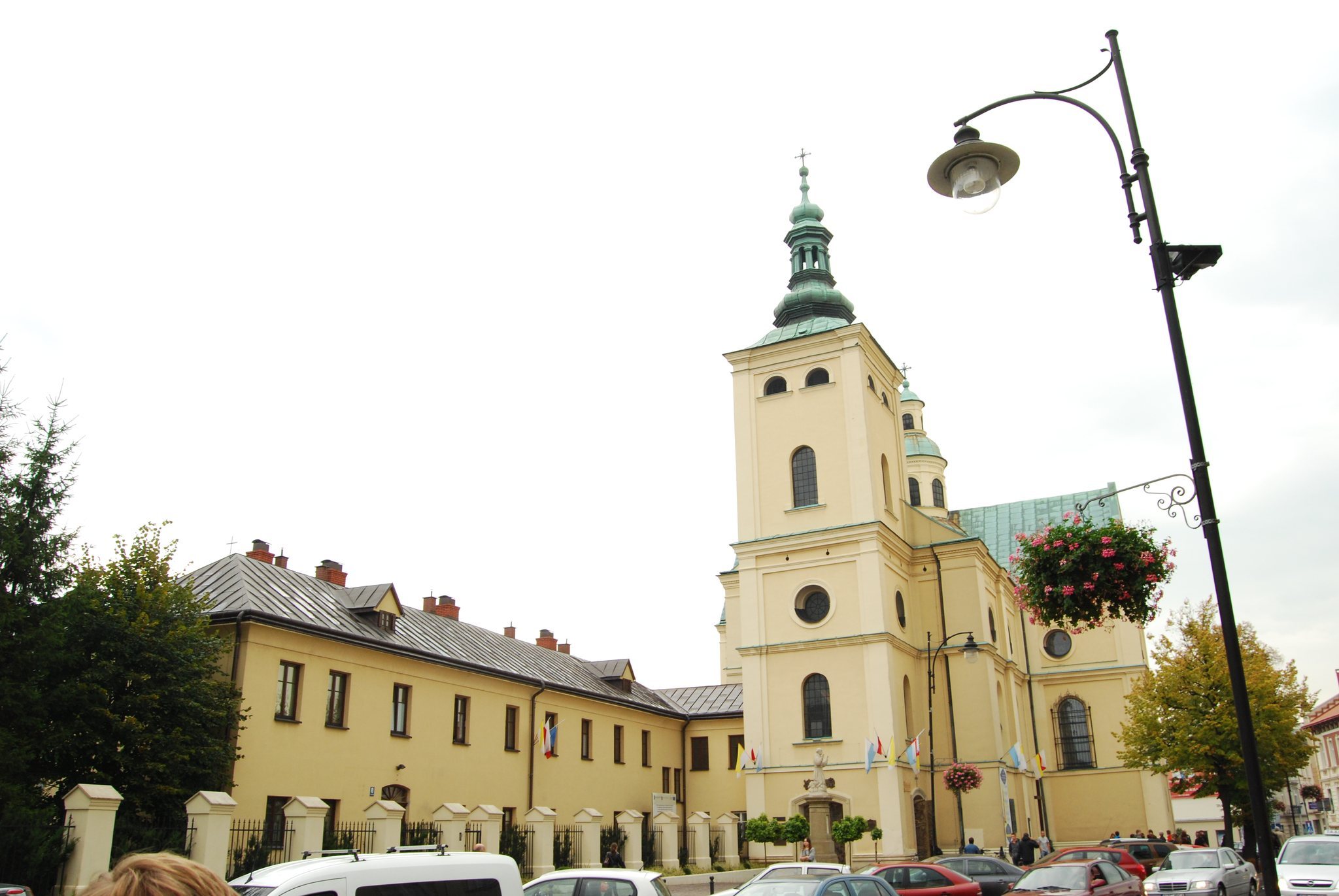
The Church of the Bernardine Friars in Rzeszów is a Roman Catholic parish church and Marian sanctuary in Poland, dedicated to the Assumption of the Virgin Mary. Built in brick between approximately 1624 and 1629, it combines Late Renaissance, Mannerist, and Early Baroque elements with rich Rococo decoration. The church stands on the western edge of Rzeszów’s historic centre and forms a complex with the Bernardine friary.
Early churches and the Marian tradition
A reference from 1475 to a church dedicated to the Virgin Mary at Wola Stara, then a suburb of Rzeszów on the road to Kraków, is generally understood to refer to an earlier wooden building on the site. Wola Stara belonged to the Rzeszów parish during the fifteenth century. Local tradition places the origin of the later Marian cult on 15 August 1513, when a poor villager named Jakub Ada reportedly saw a vision associated with a pear tree and a wooden statue of the Virgin and Child was found there. The tradition was preserved by the monastic chronicle, although the earlier reference shows that a church already stood at the location before that date.
A small wooden church dedicated to the Dormition and Assumption of the Virgin Mary was probably built between 1531 and 1536. Tradition connected it with the apparition and the statue, while its form may also have had a defensive purpose. The statue is regarded as a late-Gothic work of the fifteenth century, making it earlier than the chapel tradition associated with the apparition.
Ligęza’s foundation and the fortified church
Mikołaj Spytek Ligęza acquired Rzeszów through his marriage to Elżbieta Rzeszowska in 1584 and became the principal founder of the present church. He began acquiring land for it by 1618. Between 1621 and 1627, he purchased and cleared Wola Stara while creating fortifications around Rzeszów. The former village was flooded by a Bernardine lake in front of the defences.
Construction of the present church probably began around 1624 and was completed in 1629. The builders were probably architects brought from Leipzig. Ligęza intended the church to serve as a mausoleum for his family, while its position made it part of Rzeszów’s new fortified system. He brought Bernardine friars to the town and entrusted the completed church to them on 25 March 1629. The Bernardines, the observant branch of the Franciscan Order, combined religious work with preaching, charitable activity, and the operation of pilgrimage sanctuaries. Provincial superior Michał Heller and three friars initially settled at the site, and the monastery was soon enlarged. Ligęza died in 1637 and, according to his wishes, was buried beneath the church threshold.
The church and friary were incorporated into the town’s defensive system. The church occupied a rise beside an artificial lake near the Mikośka stream and acted as a projecting western corner fort, flanking the Walled Gate. During danger it could shelter civilians. Loopholes in the tower formed part of its defensive equipment, while an outlet controlled the lake’s water level. The lake also supplied the moat around the castle.
The sanctuary and later religious history
Bernardine activity in the eastern Polish-Lithuanian Commonwealth included efforts to convert Orthodox inhabitants to Catholicism and to renew local religious life. The Rzeszów centre developed into a Marian sanctuary and also gained recognition as a Passion sanctuary. After Ligęza’s death, patronage continued through his daughter Konstancja and her husband, Jerzy Sebastian Lubomirski. The sanctuary later became associated with reported miraculous healings, including healings attributed to members of the Lubomirski family.
Pope Benedict XIV authorized the coronation of the Marian statue. Wacław Hieronim Sierakowski, Archbishop of Lviv, carried out the ceremony on 8 September 1763 during the pontificate of Clement XIII, with the crowns funded by Jerzy Ignacy Lubomirski. In 1787, during the Austrian partitions, the Bernardines avoided a threatened dissolution of one of Rzeszów’s mendicant orders because Bishop Antoni Gołaszewski considered them particularly useful to the city. Their social services included a soup kitchen for the poor, a guesthouse for pilgrims, cultivation of approximately 15 hectares, and the sale of fruit, vegetable, and flower seedlings.
The centenary of the image’s coronation was marked in 1863 by a gathering of approximately 100,000 worshippers, mainly from Galicia. The crowns were stolen three years later, and a new coronation took place in 1896, performed by Karol Hryniewiecki, Archbishop of Vilnius, before approximately 60,000 people. The four-hundredth anniversary of the apparition tradition was observed in 1913.
Wartime history and modern status
After German forces occupied Rzeszów on 9 September 1939, a field gendarmerie unit was quartered in the friary buildings. From the second half of September, a firing squad associated with the unit executed approximately 40 prisoners from the castle prison in the Bernardine gardens. The victims were reportedly men condemned for possessing weapons. At least one further execution in the gardens was recorded in November 1939.
The complex was entered in the heritage register in 1949. The church became a minor basilica, an honorary papal title granted to churches of particular religious or historical importance, when Pope Benedict XVI conferred the title in 2008. The church and friary complex is protected as a historic monument.
Remains
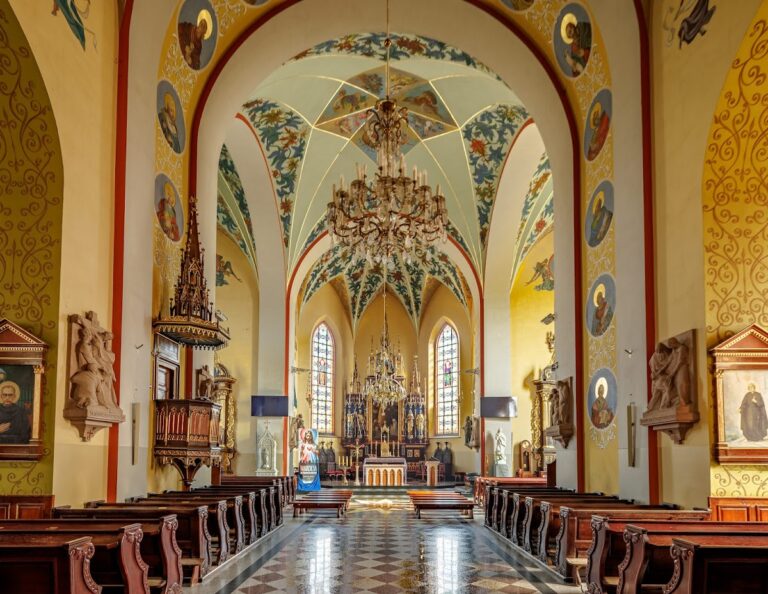
The surviving church is a brick, single-nave building arranged on a cross-shaped plan. A long chancel ends in a rounded apse, barrel vaults cover the cross arms, and a dome rises over the crossing. A single bell tower stands above the entrance and retains loopholes connected with the building’s former defensive role. The foundation document of 25 March 1629 described a cross-shaped church with domed chapels, indicating that domed vaulting formed part of the original design. The organ has 23 stops, two manuals, and a pedal division.
Marian Chapel
The right transept contains the Marian Chapel, decorated during the first half of the eighteenth century with financial support from Jerzy Ignacy Lubomirski. Its central object is the late-Gothic wooden statue of the Virgin and Child from the predecessor church, placed within a gilded wooden Baroque altar. Medallion-shaped paintings beside the altar show the Annunciation, the Visitation of Saint Elizabeth, the Nativity of Christ, the Presentation in the Temple, and the Assumption of the Virgin Mary. An oval image of the Immaculate Virgin surmounts the altar, with two angels supporting it and the Holy Spirit and God the Father represented above. Votive paintings on the chapel walls depict graces received through the intercession of the Rzeszów Madonna.
Ligęza family mausoleum
The chancel contains the Ligęza family mausoleum, with eight life-size alabaster figures of prominent family members shown as orants, figures represented in prayer. Attributed to Sebastian Sala and dating from before 1637, the sculptures are set into the northern and southern chancel walls, with each figure turned toward the altar. Seven wear knightly dress, while the bishop wears pontifical vestments. Marble plaques with funerary texts appear below the niches. The northern wall represents Mikołaj Ligęza, castellan of Wiślica; Zygmunt Ligęza, grand crown cup-bearer; Stanisław Ligęza, castellan of Żarnowiec and starost of Lubaczów; and Mikołaj Ligęza of Bobrka, the founder. The southern wall represents Hermolaus Ligęza, grand crown treasurer; Jan Ligęza, voivode of Łęczyca; Feliks Ligęza, Archbishop of Lviv; and probably another Jan Ligęza, the voivode’s son. The group is described as the largest collection in Europe of alabaster orant figures.
Chancel furnishings and archaeological evidence
The chancel stalls are made of oak to a design by Zygmunt Hendel of Kraków. They consist of seven enclosed seats with high backs and narrow canopies, enriched with carved Baroque and Régence decoration. Régence refers to the style associated with the transition from Baroque to Rococo in early eighteenth-century Europe. The chancel also contains a wooden baptismal font with seventeenth-century Baroque features. It is shaped like a chalice, and its lid is decorated with acanthus leaves and an inverted cone or pine-cone-like ornament.
In August 2001, possible remains of three people were found within the church’s exterior wall near the entrance, about three metres above ground level. They have been interpreted as possibly originating from the medieval cemetery associated with the earlier church.