Revesby Abbey: A Medieval Cistercian Monastery and Country Estate
Site at a Glance
- Rating
- 4.6
- Popularity
- Very Low
- Country
- United Kingdom
- Primary era
- Medieval
- External website
- Open
- Eras represented
- Medieval
- Civilizations
- English
- Site type
- Religious
- Remains
- Monastery
On this page12 sections
History
Revesby Abbey is a former medieval monastery in the United Kingdom, founded by William de Roumare, Earl of Lincoln, in 1142 or 1143. The house belonged first to the Savignian congregation, a monastic group absorbed into the Cistercian Order in the 12th century, and became Cistercian in 1147. Its foundation was intended to secure prayers for William and his ancestors, and William later entered the community as a monk and was buried there.
Foundation and Cistercian development
The first monks came from Rievaulx Abbey in Yorkshire, Revesby’s mother house within the institutional lineage of Clairvaux. One tradition identifies Aelred of Rievaulx as Revesby’s first abbot. He is recorded at Revesby between 1143 and 1147 before returning to become abbot of Rievaulx, although another record names William as the first abbot.
The monastery was established on land occupied by three settlements. Their inhabitants were offered alternative land, the freedom to move, or the opportunity to become lay brothers, who generally carried out practical and agricultural work for a monastery. The settlements were then abandoned or cleared for the new foundation. Until the abbey church was built, the monks worshipped in an existing church dedicated to Saint Laurence.
Revesby received land at Revesby, Scithesby, and Thoresby, together with the legal rights to nominate priests to the churches of Hagnaby and Scithesby. In the mid-12th century, tenants at Scithesby and Thoresby were offered land elsewhere if they relocated. All 13 families left Scithesby, and all 11 families left Thoresby, leaving both settlements unpopulated. The monastery later held or controlled the manors of Claxby, East Keal, Hagnaby, Hameringham, Mareham-le-Fen, Mavis Enderby, Sibsey, Stickney, and Toynton.
Growth, wealth, and medieval difficulties
Revesby had sufficient resources to establish Cleeve Abbey in Somerset in 1198, although its finances also required borrowing, including loans from Jewish lenders. In 1216, during the First Barons’ War, Prince John arrested a Revesby monk on suspicion of involvement in the conflict. An investigation concluded that the monk had entered the monastery before the war began.
In the 14th century, the abbey acquired the manor of Mareham and received permission to hold a weekly market and an annual fair there. Its income was assessed at £1,287 2 shillings and 4½ pence in 1534, while another assessment in 1535 gave a figure of £287. Despite these resources, the monastery was described in 1538 as being in great ruin and decay, and its buildings were already considered ruinous before it closed.
Dissolution and the country estate
Revesby was dissolved and demolished during the 1530s under Henry VIII’s Dissolution of the Monasteries, the programme through which the king’s government closed and confiscated England’s monasteries. By 1545, the former monastic property had been transferred to Charles Brandon, 1st Duke of Suffolk.
After the dissolution, the estate passed through the Carsley family before William Cecil, 1st Baron Burghley, bought it in 1575. It later moved through the Cecil and Exeter families, following the marriage of Lady Elizabeth Cecil to Thomas Howard, 1st Earl of Berkshire, and subsequently passed to members of the Howard family.
Craven Howard, who died in 1700, built a new country house on the former abbey estate, positioned away from the principal monastic remains. In 1711, Henry Howard, 11th Earl of Suffolk, sold the house and roughly 2,000 acres to Joseph Banks I for £14,000 under the Earl of Berkshire’s Estate Act. The grounds were extensively landscaped in the mid-18th century.
The Banks family and modern preservation
The estate later became associated with the botanist Sir Joseph Banks, who lived there and sailed with Captain James Cook, the British naval officer and explorer whose voyages charted parts of the Pacific. Banks died in 1820. The property then passed to his relative James Hamilton Stanhope, who died in 1825, and subsequently to his minor son James Banks Stanhope.
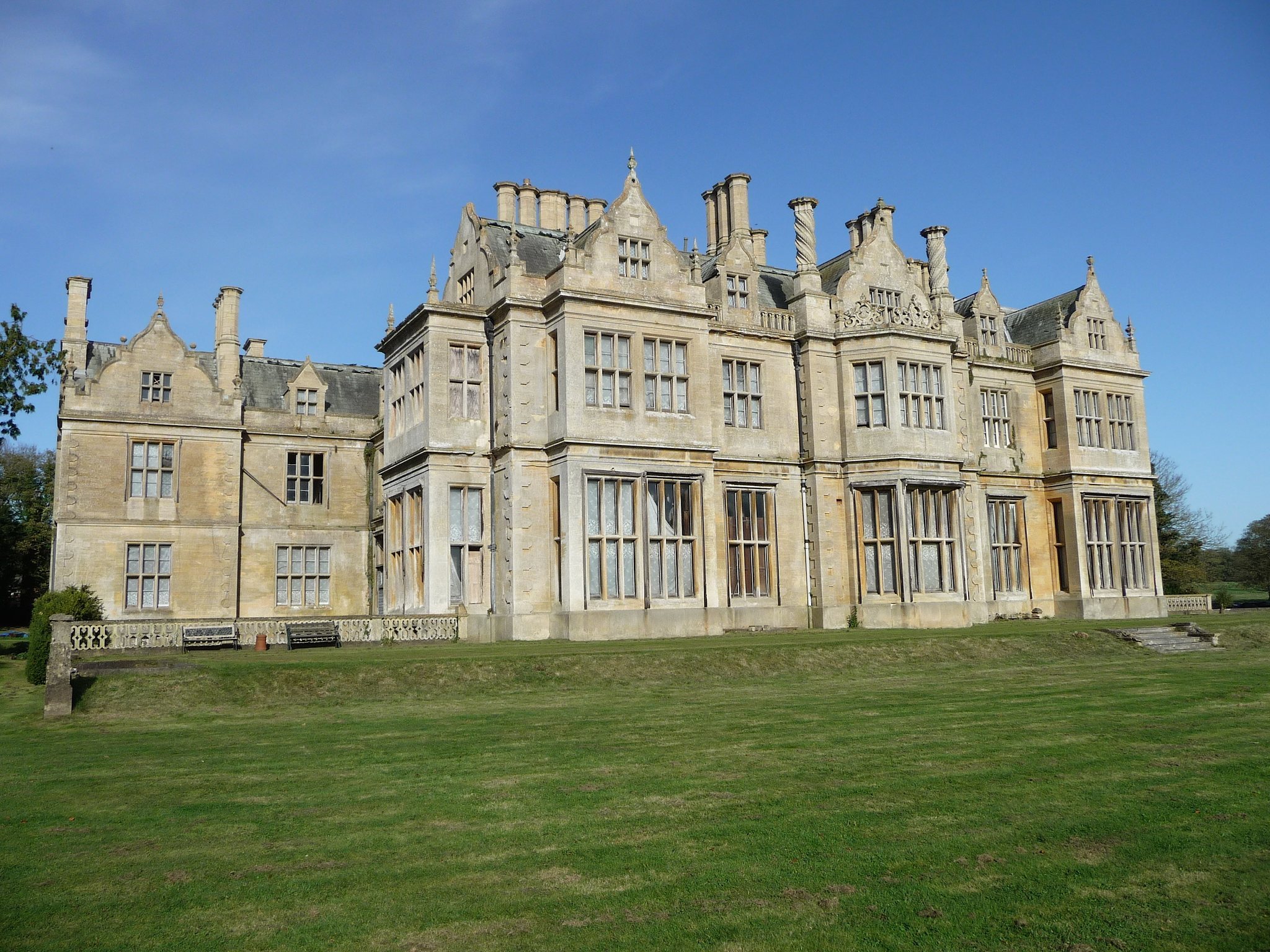
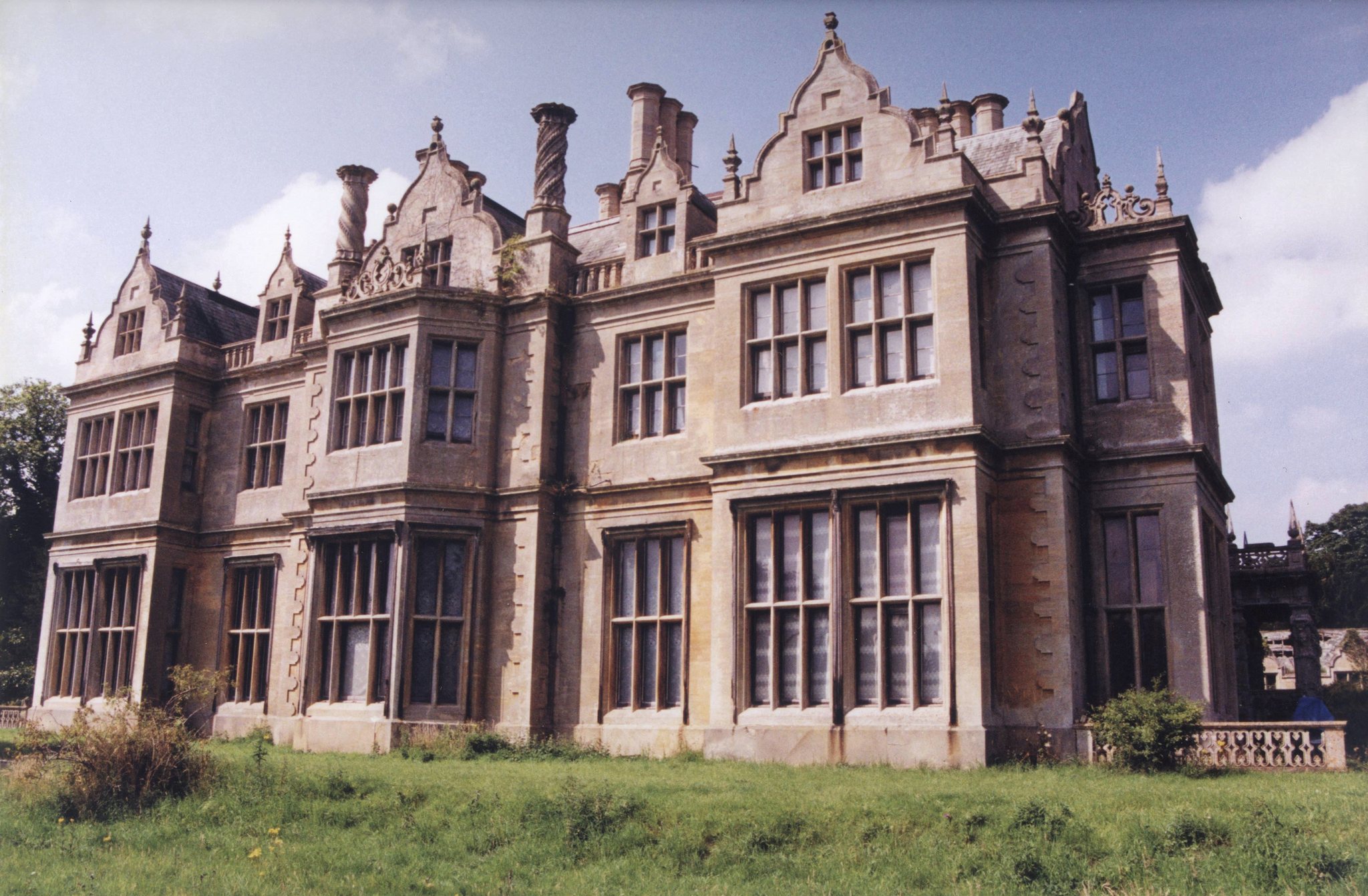
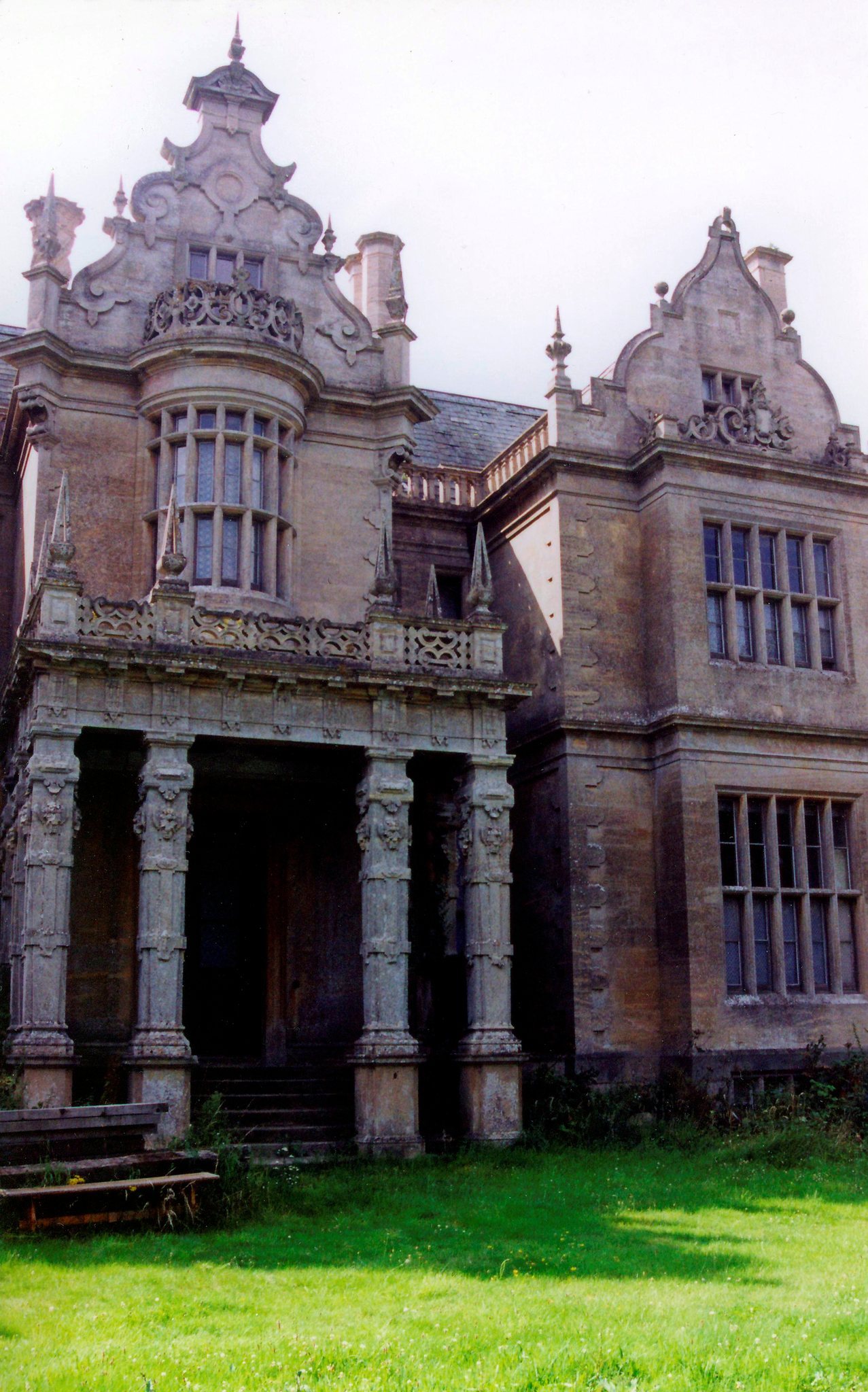
William Burn rebuilt the present country house for James Banks Stanhope in 1845 in the Jacobethan style, a 19th-century revival combining Tudor-derived forms with Renaissance details. The earlier house was being dismantled at the same time: its contents were auctioned in 1843, followed by its timber, cornices, and fittings in 1844. Archaeological investigation began in 1869, locating the abbey church and cloister, and skeletons of several monks were found in 1870.
The former abbey precinct has been protected as a designated monument since protection was recorded in 1966, while the country house has separate Grade I listed status. The house has been unoccupied since the 1960s. After a demolition application in 1977, English Heritage carried out urgent works in 1987 under section 101 of the Town and Country Planning Act 1971. The property was placed on Historic England’s 2023 Heritage at Risk Register. Repairs to the stable block had progressed, while the main house remained in very poor condition and at serious risk.
Remains
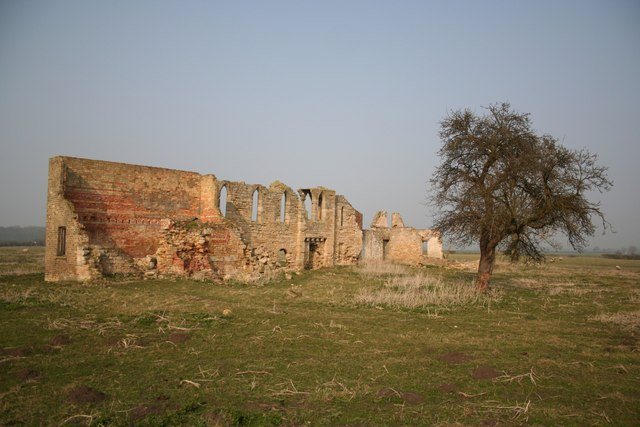
Revesby’s former monastic precinct lies near Revesby in Lincolnshire, south-west of the present country house and the village. The area is now open pasture or grazing land. Earthworks mark the extent of the precinct, and aerial views reveal further traces of the complex. Three rectangular fishponds form part of the surviving earthworks, while the position of the former high altar has been marked in the ground since 1890.
Monastic precinct
Abbey church and cloister
The excavated abbey church followed a Latin-cross plan, with a long central axis crossed by a shorter transept. It had seven or eight bays in the nave, a rectangular choir, and several chapels. The cloister, a covered walkway around an open courtyard, stood south of the church and appears to have followed the customary arrangement of Cistercian monasteries. Fragments from the former abbey are incorporated into the tower of the 19th-century parish church.
Earthworks and fishponds
The principal visible remains of the monastery are the earthworks spread across the pasture. They indicate the former precinct and preserve the locations of associated features, including three rectangular fishponds. The marked position of the high altar identifies part of the church’s internal arrangement within the surviving archaeological landscape.
Country house and estate buildings
Jacobethan house
The present country house stands on the former abbey estate but was built away from the principal monastic remains. Designed by William Burn and completed in 1845, it is a Jacobethan building. Its sub-basement contains brickwork substantially older than the 1845 structure, believed to come from Craven Howard’s earlier country house.
Stable block
The associated stable block has undergone repair and renovation. It forms part of the later country estate rather than the medieval monastic complex, whose surviving physical character is chiefly represented by the pasture earthworks and archaeological traces.