Church of the Assumption in Polanów: A Gothic and Neo-Gothic Parish Church
Site at a Glance
- Rating
- 4.7
- Popularity
- Very Low
- Country
- Poland
- Primary era
- Early Modern
- Eras represented
- Early Modern, Modern
- Civilizations
- Brandenburg-Prussia, Duchy of Pomerania, Holy Roman Empire
- Site type
- Religious
- Remains
- Church
On this page7 sections
History
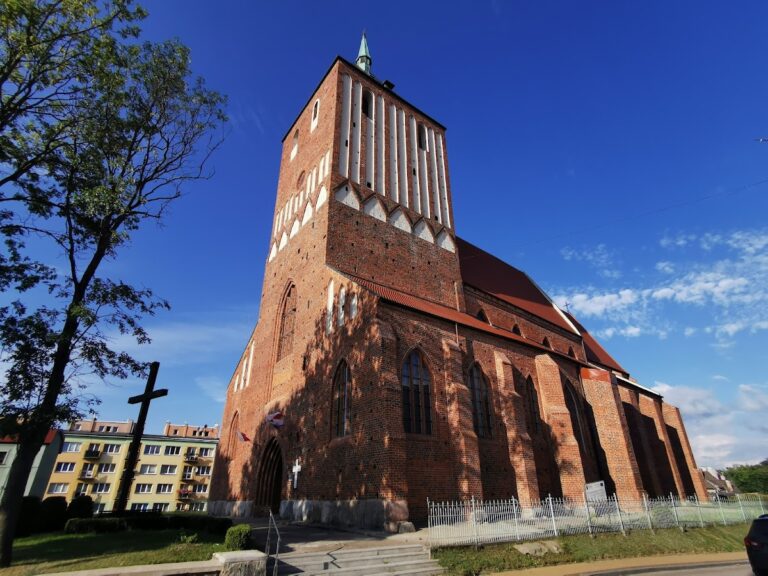
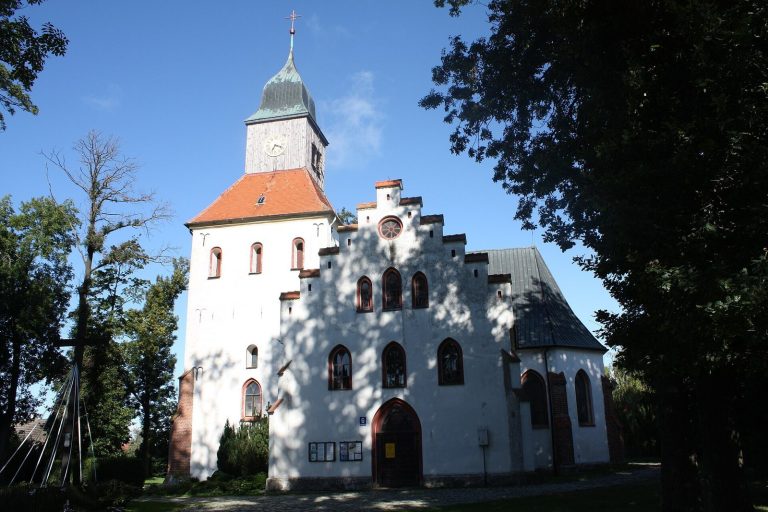
The Church of the Assumption in Polanów is a Roman Catholic church in Poland, completed in 1613 in the Gothic tradition and later altered with Neo-Gothic elements. It belongs to the Parish of the Exaltation of the Holy Cross in Polanów, the Polanów deanery, the Diocese of Koszalin-Kołobrzeg, and the Szczecin-Kamień ecclesiastical province. Although described as an auxiliary church, it is currently used as the parish church.
Evangelical beginnings and rebuilding
The building served Polanów’s Evangelical community after its construction and rebuilding. An Evangelical church is a Protestant church associated with traditions that emerged from the Reformation. In 1736, a fire destroyed the church along with several dozen other buildings. Reconstruction continued for five years, and religious services resumed in the rebuilt church in 1741.
The reconstructed church received a tower clock, new organs, and a pulpit. Further remodelling and renovation took place in 1858 and 1881, bringing Neo-Gothic features into the building’s earlier Gothic architecture.
Wartime destruction and Catholic consecration
The church was destroyed during the Second World War. In 1946, it was closed and severely damaged by wartime operations. Father Hruza then asked the municipal authorities to assign the former Evangelical church for Catholic use. The church was consecrated on 15 August 1946, and Catholic services began there afterward.
The building was entered in the heritage register under number 538 on 30 December 1965. It is dedicated to the Assumption of the Blessed Virgin Mary, the Christian doctrine and feast commemorating Mary’s being taken bodily into heaven. Its listed liturgical commemoration is 15 September.
Remains
Plan and exterior
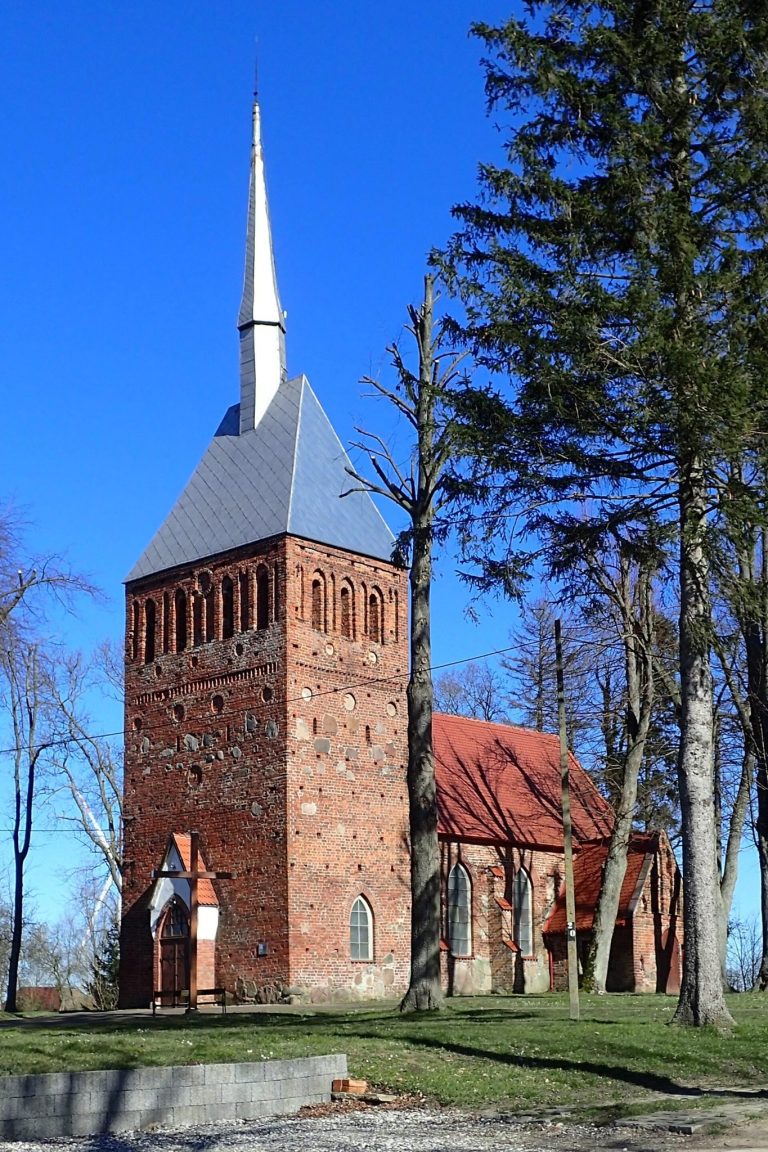
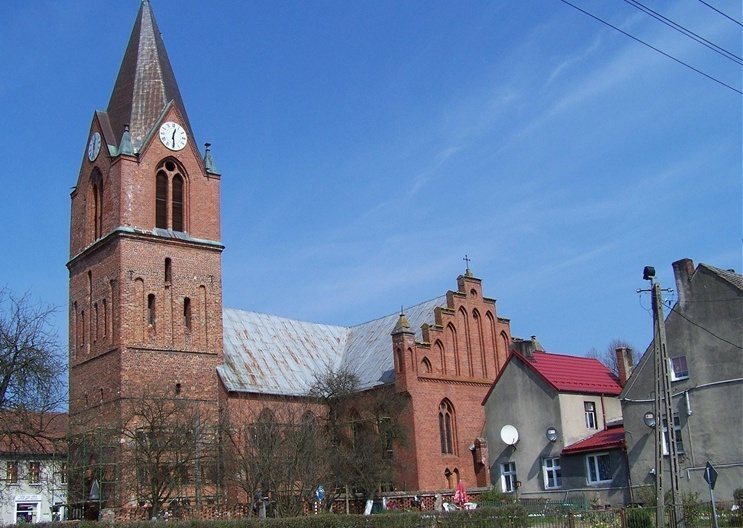
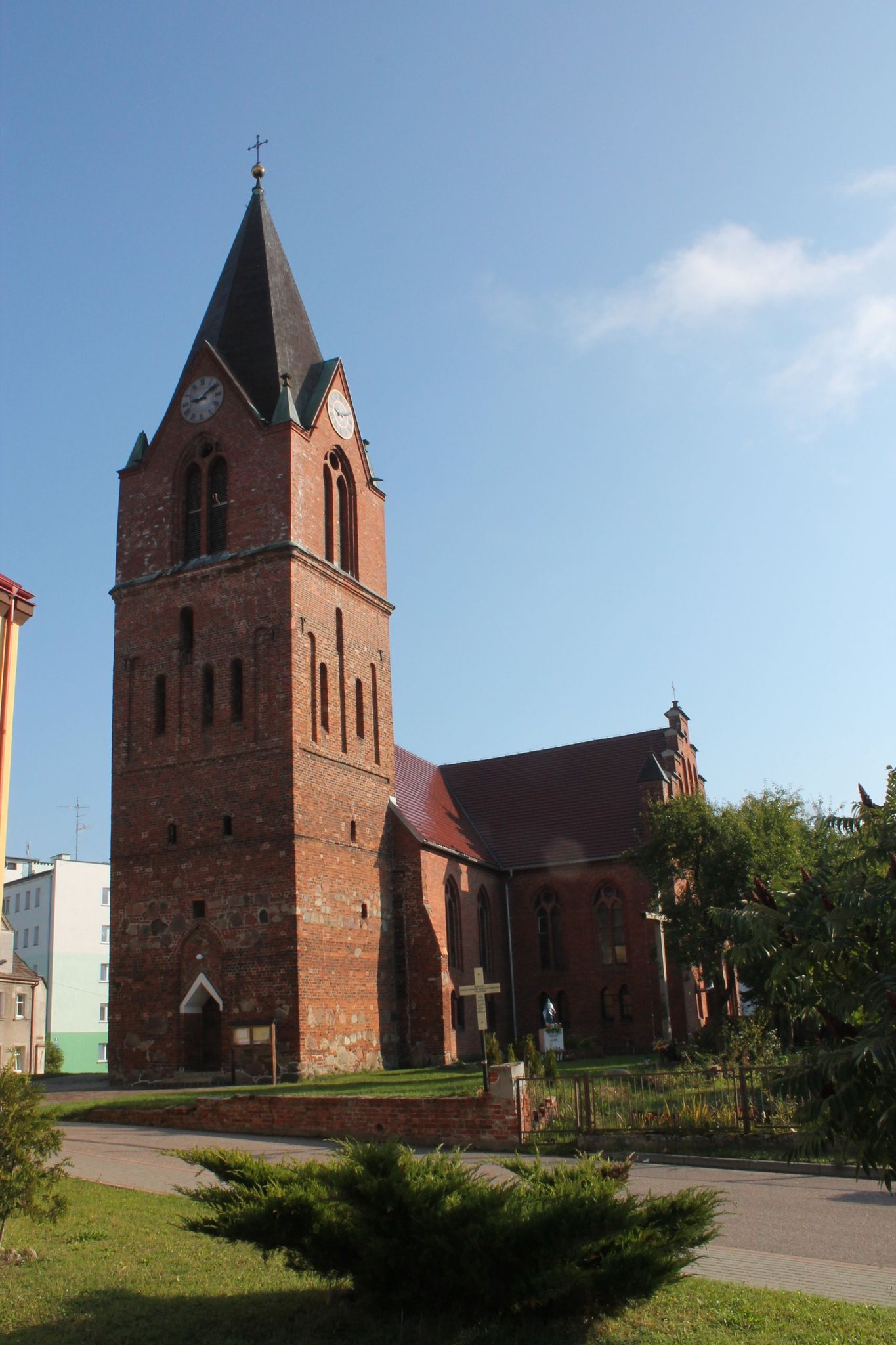
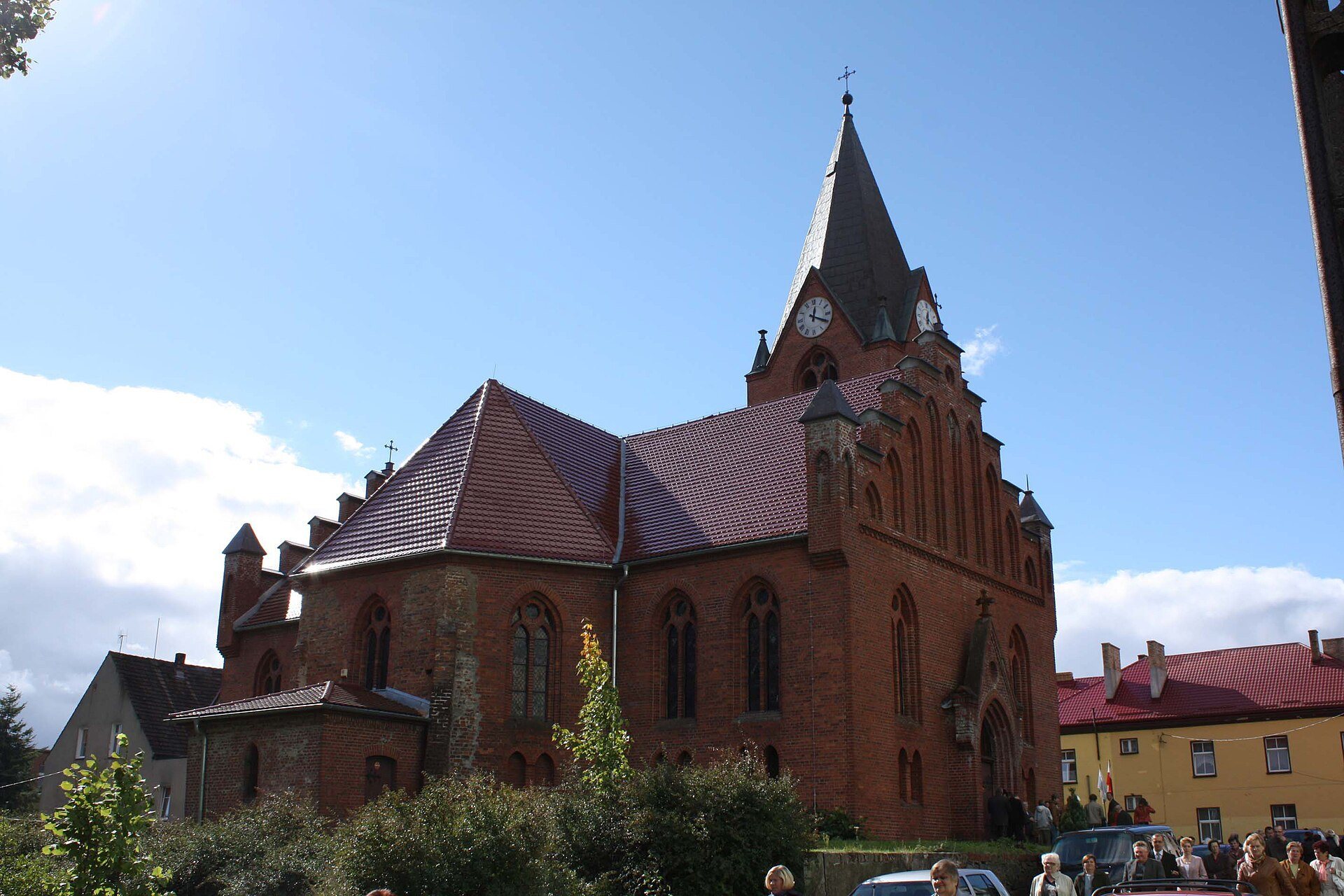
The church is a brick, single-nave building in the Gothic style with Neo-Gothic elements. A transept crosses the nave, creating a cross-shaped plan, while the chancel has an irregular polygonal form. A single tower stands on the western side and is connected to the main nave. The tower has been covered with copper sheeting since 1992.
Interior and furnishings
Inside, ribbed cross vaults cover the church. A ribbed cross vault is supported by intersecting masonry ribs. The main altar dates from 1897 and was funded by Carl Corduan, a resident of Polanów at the time. Stained-glass windows in the chancel represent the seven sacraments of the Roman Catholic Church: baptism, confirmation, Eucharist, penance, anointing of the sick, holy orders, and matrimony.
Two paintings are displayed on the main altar at different times of the liturgical year. During Lent, the church presents Ecce Homo, a Christian subject showing Jesus crowned with thorns before his crucifixion; the painting was restored in 1997. For the remainder of the liturgical calendar, the altar displays a painting of Our Lady of the Assumption, the church’s patroness. The organ was also restored in 1997.
Commemorative elements
The choir contains the coat of arms of General Friedrich Wrangel, a nineteenth-century Prussian military commander. Polanów granted him honorary citizenship in 1864, and the coat of arms was renewed in 1996.