Church of St Michael and All Angels, Somerton: A 13th-Century Anglican Church
Site at a Glance
- Rating
- 4.7
- Popularity
- Low
- Country
- United Kingdom
- Primary era
- Medieval
- Eras represented
- Medieval, Early Modern
- Civilizations
- English
- Site type
- Religious
- Remains
- Church
On this page8 sections
History
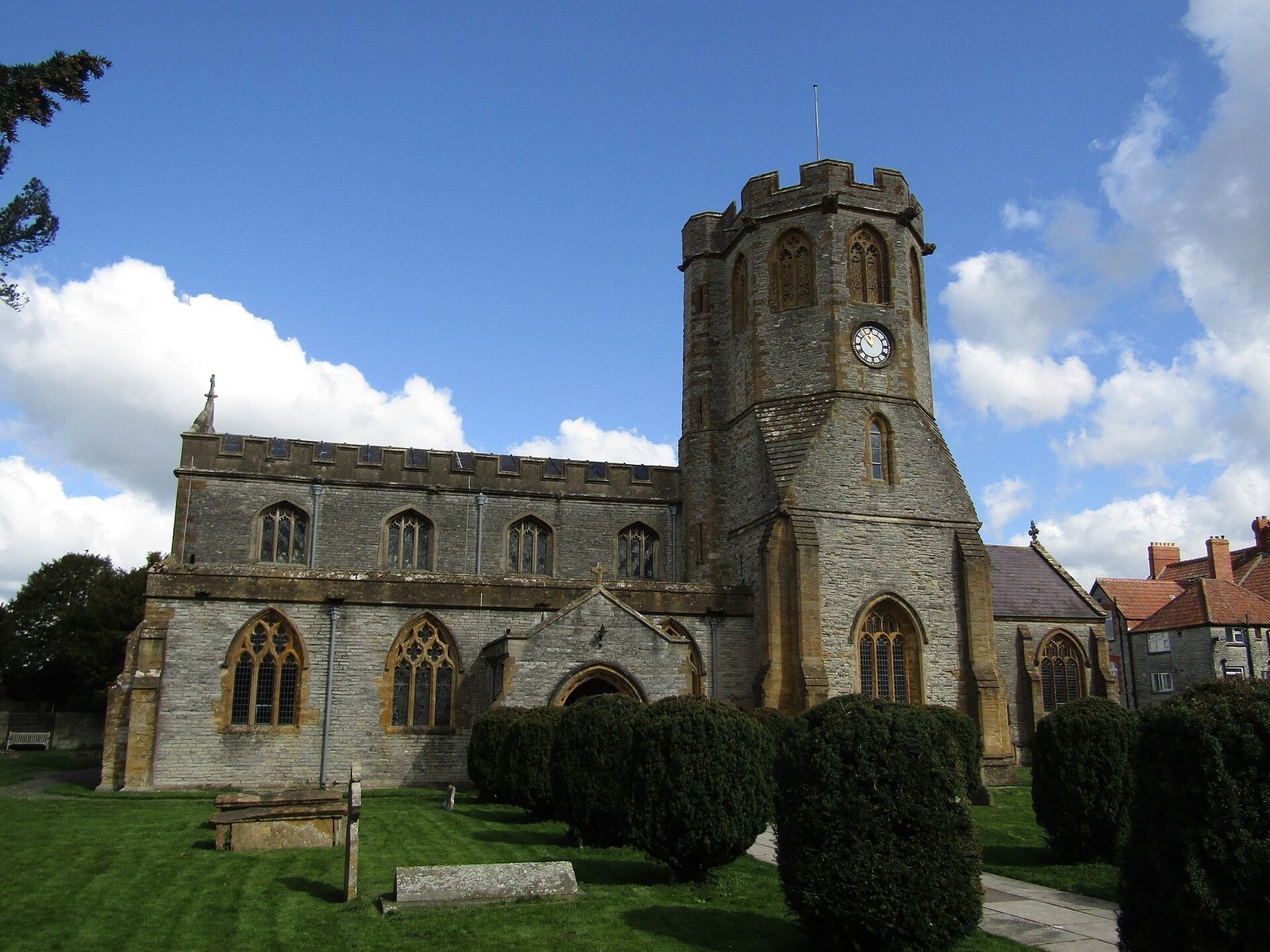
The Church of St Michael and All Angels is an Anglican church in Somerton, United Kingdom, with a building dating from the 13th century.
Ecclesiastical status in the 12th century
The church began as a daughter church of Queen Camel, meaning it was subordinate to that church. Like many churches in the area, it belonged to the Crown until the time of Empress Maud, daughter of Henry I and a claimant to the English throne. As Somerton grew during the 12th century, efforts were likely made to improve the church’s standing. Around 1140, Maud permitted a grant that gave it burial rights and made it a mother church. The monks of Muchelney Abbey appointed its vicar.
The medieval church and later changes
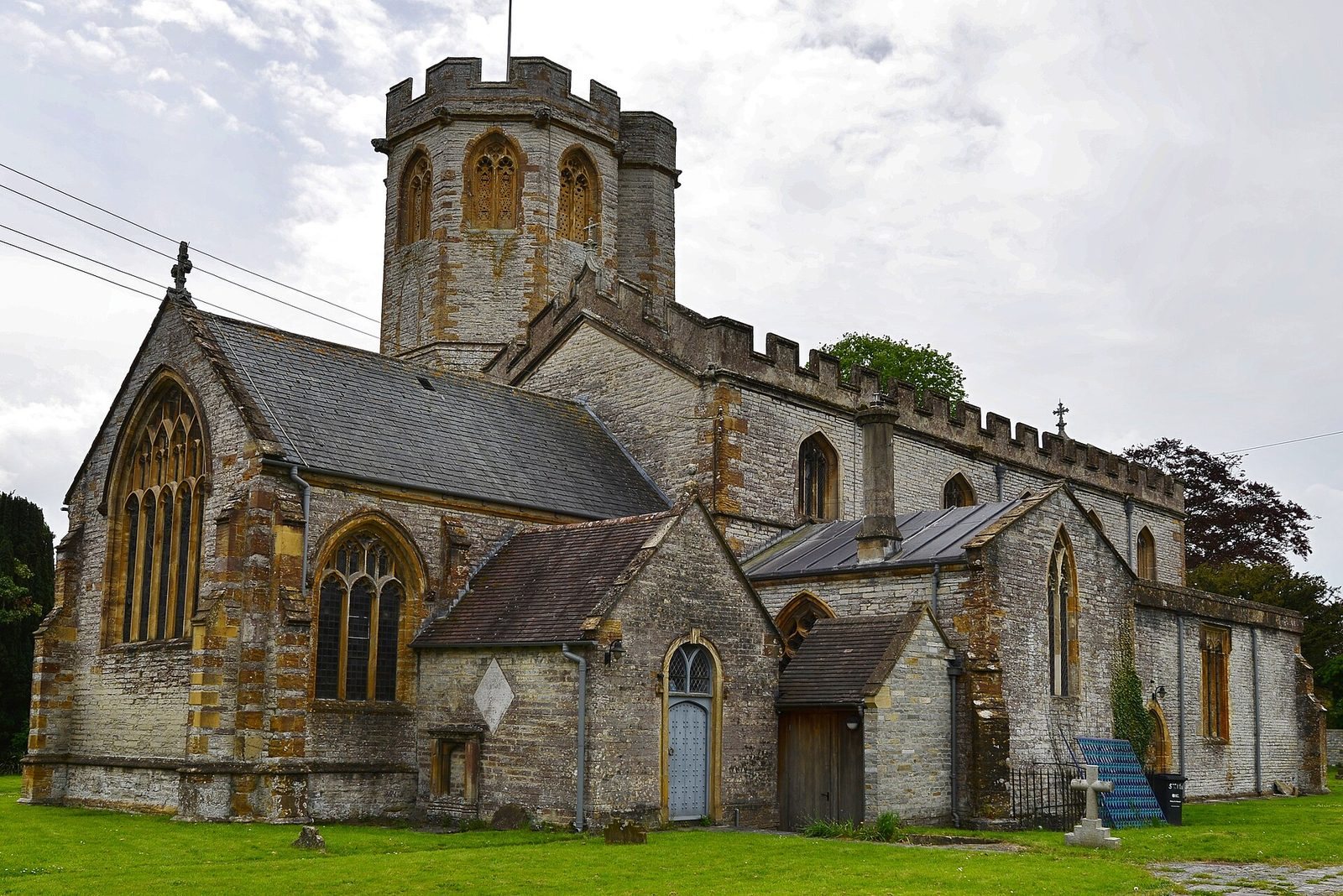
The church building dates from the 13th century and underwent major reshaping in the mid-15th century. It was restored in 1889. In 1959, it was designated a Grade I listed building, England’s highest category of listed-building protection, reserved for buildings of exceptional interest.
Remains
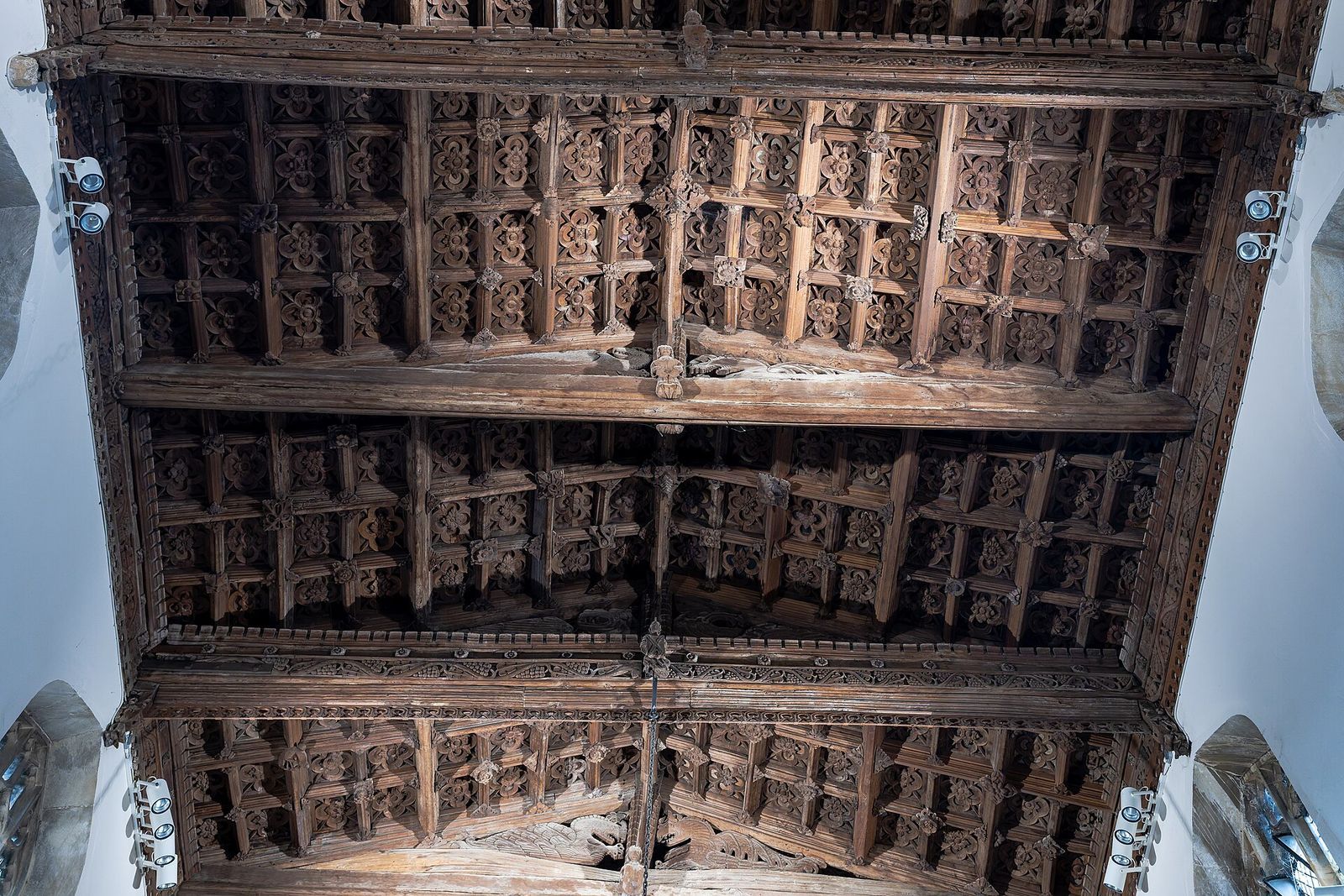
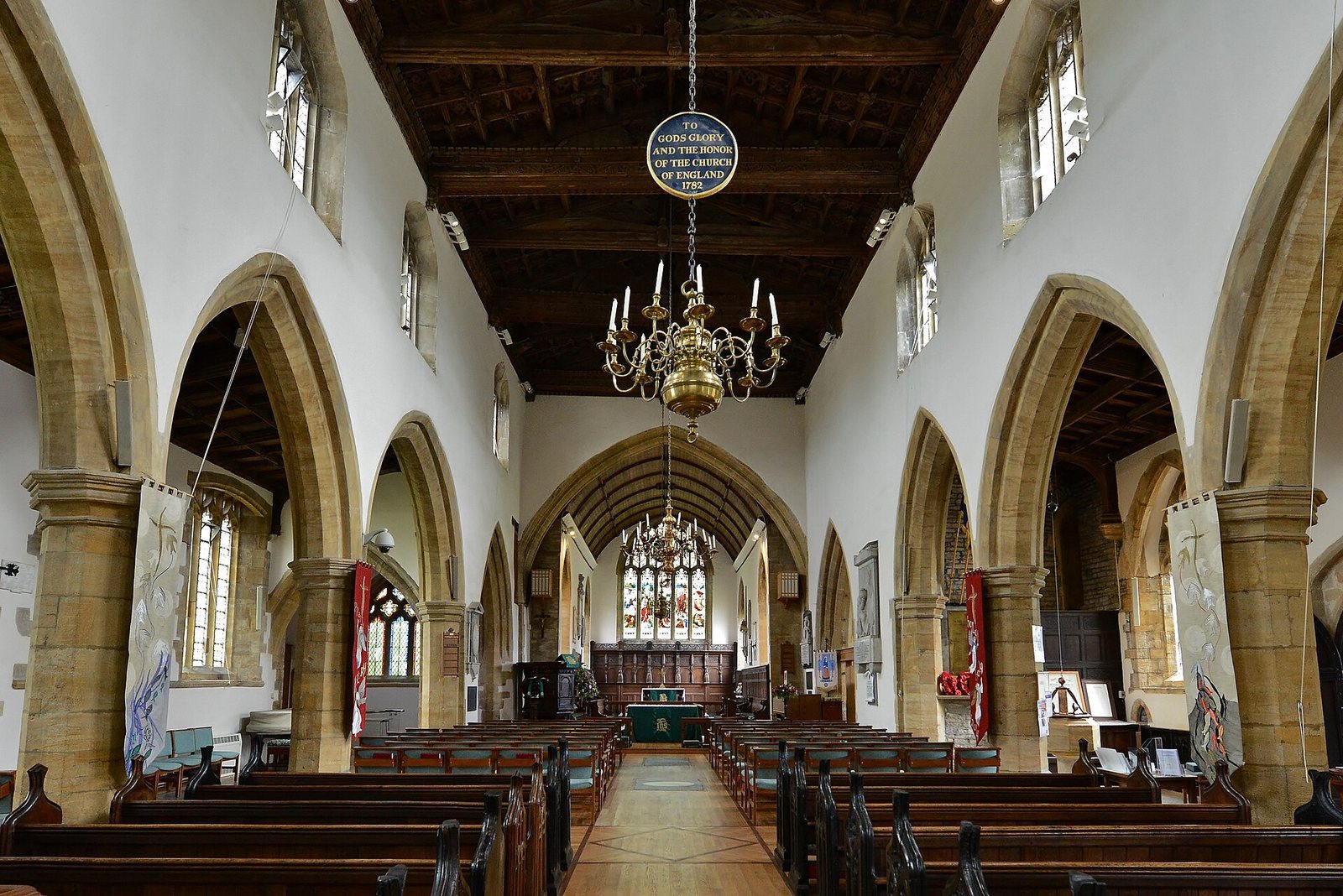
The church has a plain exterior of cut, squared local lias stone, with Hamstone details. Inside, an elaborate timber roof forms its most distinctive architectural feature, alongside historic wooden furnishings.
Building and timber roof
Stone exterior
The walls are built from local lias stone that has been cut and squared. Hamstone is used for the architectural details, giving the otherwise plain exterior its principal contrast in material.
Carved timber roof
The shallow-pitched wooden roof rests on substantial decorated horizontal beams and short upright supports. Its framework is divided into 640 square panels, each carved with the same quatrefoil, or four-lobed, pattern. Carved ornaments mark the points where the timbers meet.
Carved angels and 22 dragons decorate the roof. The dragons are wyverns, heraldic creatures shown with two legs and wings, and are arranged in facing pairs in the triangular spaces above the beams. They represent Somerset, where Somerton was formerly the county town. Two small cider-barrel carvings are also part of the roof and are reputed to have been made by monks of Muchelney Abbey. Holes in the roof timbers are said to have been made by soldiers who camped in the church.
Interior furnishings
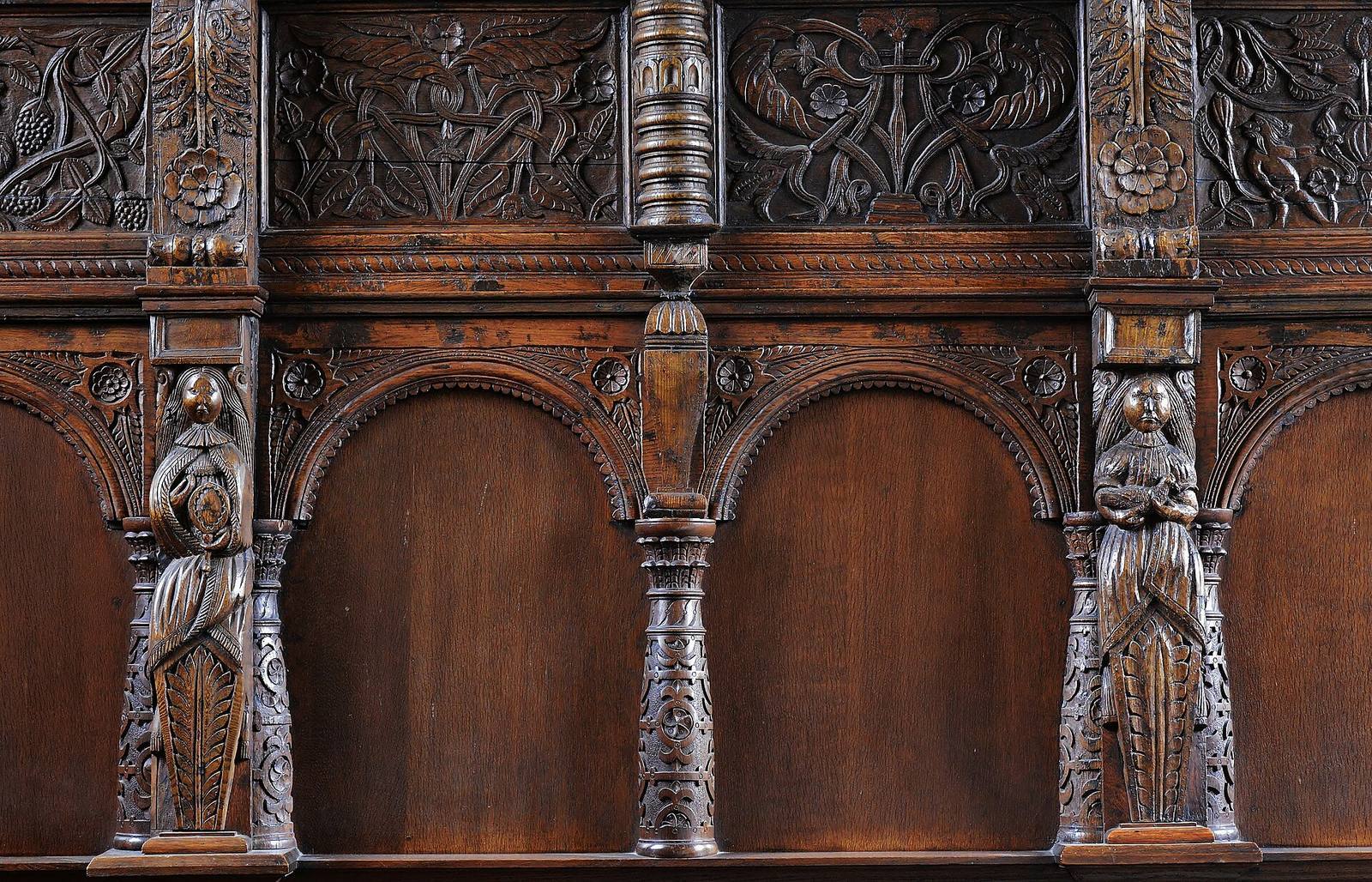
A 17th-century pulpit and altar table feature Jacobean woodwork, a style associated with the reign of James I. An inscription on a candelabrum inspired Sir John Betjeman, the English poet and architectural preservationist.